





— Blogs —
—Products—
 Consumer hotline +8618073152920
 WhatsApp:+8615367865107
Address:Room 102, District D, Houhu Industrial Park, Yuelu District, Changsha City, Hunan Province, China
Product knowledge
Time:2026-08-03 09:36:36 Popularity:106
An online pH sensor for wastewater dosing control should be selected around cleaning access, calibration discipline and signal integration, not only around the pH range. Most failed dosing loops do not fail because 0-14 pH is too narrow. They fail because the electrode is coated, the neutralization tank is poorly mixed, the PLC receives a drifting value, or the maintenance team has no written cleaning interval.
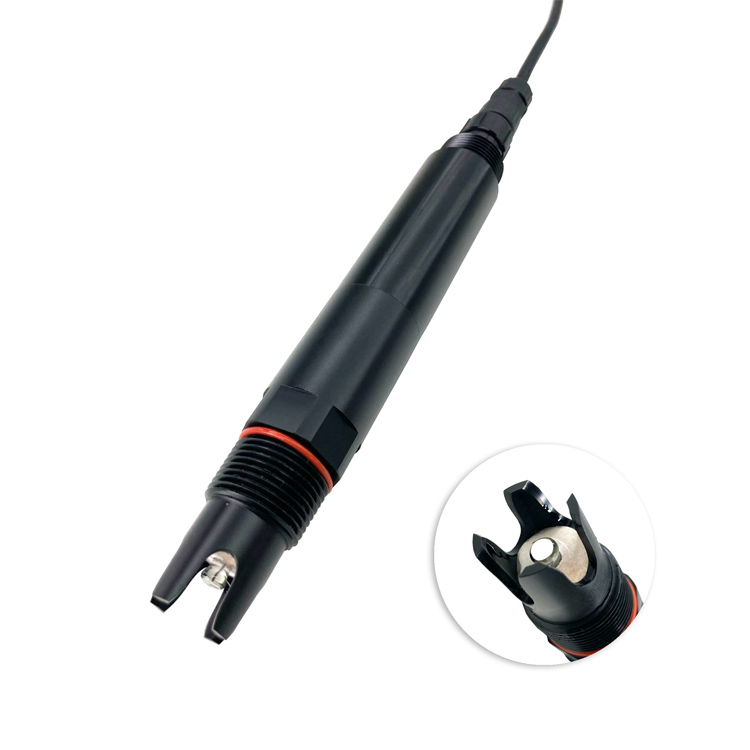
Industrial wastewater pH varies with batch discharge, chemical dosing, flow changes and temperature. A single grab sample may miss a short acid or alkaline slug. For system integrators, the sensor becomes part of a control chain: probe, cable, RS485 or 4-20 mA signal, PLC logic, chemical pump, alarm and operator confirmation. If any part is weak, the pH number may look precise while the discharge result is not stable.
Use an online pH sensor when the process needs continuous neutralization, automatic dosing or data records for operation review. Use a portable pH meter only when the plant needs spot checks or laboratory confirmation. It is not wise to use online pH as the only control input in a tank with poor mixing; add a mixing check or a downstream confirmation point.
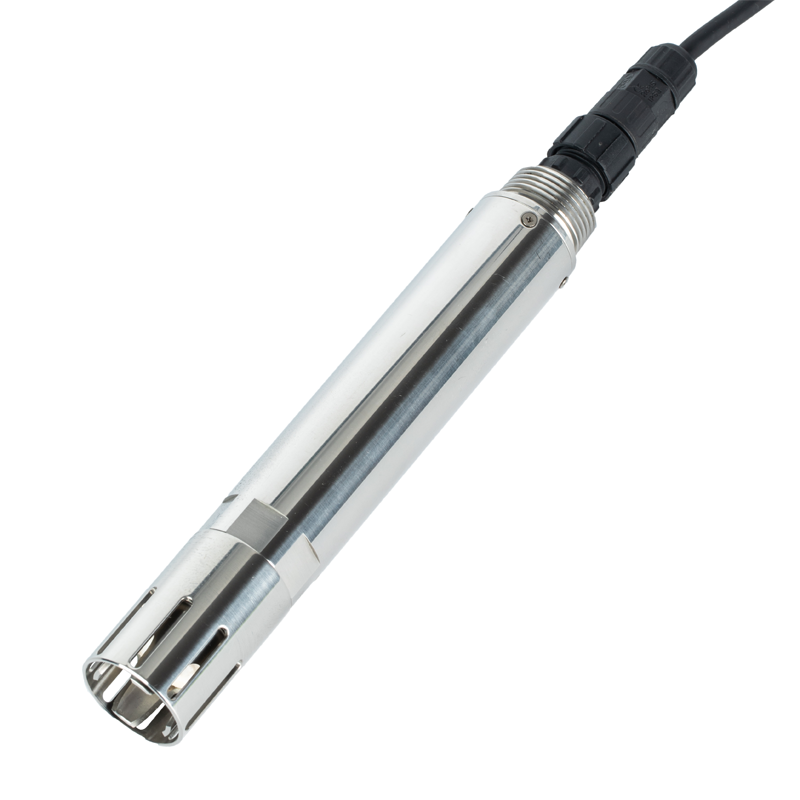
The NiuBoL online pH sensor is installed in an immersion point, pipe fitting or tank location where the water is representative and the electrode remains wet. The product page lists 0-14 pH range, 0.01 pH resolution, +/-0.1 pH accuracy, 12-24 VDC supply, RS485 Modbus RTU output, automatic temperature compensation, 3/4 NPT thread, 5 m cable and IP68 protection. In a PLC or IoT system, those details allow the integrator to define address mapping, polling interval, alarm thresholds and calibration records before commissioning.
| Parameter | Verified or project value | Why the buyer should care |
|---|---|---|
| Measurement range | 0-14 pH | Covers normal wastewater neutralization and most industrial process water. |
| Resolution | 0.01 pH | Useful for trend control; do not confuse resolution with process accuracy. |
| Accuracy | +/-0.1 pH, +/-0.3 deg C | Enough for most dosing loops when calibration and mixing are controlled. |
| Power supply | 12-24 VDC | Matches PLC panels, RTU cabinets and solar-powered stations. |
| Output signal | RS485 Modbus RTU | Allows digital integration without local transmitter scaling errors. |
| Power consumption | 0.2 W at 12 V | Low load for distributed monitoring cabinets. |
| Protection | IP68 | Suitable for submerged installation when cable sealing is handled correctly. |
| Operating temperature | 0-65 deg C | Check hot industrial discharge before confirming model. |
| Cable and mounting | 5 m cable, customizable; 3/4 NPT thread | Cable length and mounting hardware should be settled before quotation. |
| Application | Field challenge | Integration approach | Project value |
|---|---|---|---|
| Neutralization tank | Chemical dosing creates local pH gradients near injection points. | Install the probe after mixing, route RS485 to PLC, and use delay logic before pump changes. | Reduces pump hunting and improves discharge stability. |
| Electroplating wastewater | High ionic strength and coating risk can shorten electrode service life. | Specify cleaning access, replacement electrodes and periodic laboratory comparison. | Maintenance becomes planned rather than reactive. |
| Food wastewater | Grease and organic film coat the glass bulb and reference junction. | Use an installation point that can be pulled for cleaning without stopping the line. | Lower drift and fewer false dosing corrections. |
| Remote discharge station | Operators cannot visit daily to confirm readings. | Combine online pH with data logger alarm and maintenance log. | Supports remote troubleshooting with traceable data. |
For aggressive wastewater, give priority to maintenance access, electrode replacement path and cable routing before asking for price. If the site has strong solids or oil, put a cleaning plan into the purchase specification. If the PLC panel is far from the tank, confirm RS485 cable length, shielding and grounding. For dosing control, ask for the Modbus register map early so the integrator can test value units and alarm behavior before chemical dosing starts.
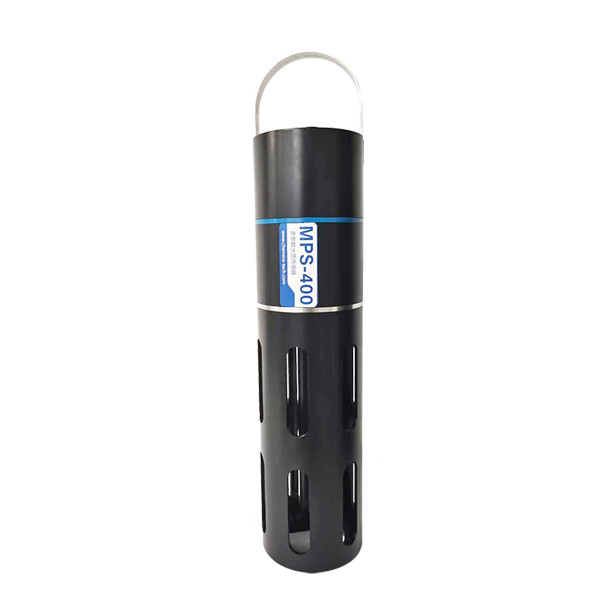
Set the sensor address before installing multiple RS485 devices on the same bus. Keep the shield grounded at the cabinet side unless the site grounding design says otherwise. Do not run the sensor cable in the same conduit as pump power cables. During acceptance, record two buffer checks, one process sample comparison and one simulated alarm. A stable pH page in SCADA is not enough; the operator must know how to clean, calibrate and replace the electrode.
Before approving a water quality sensor order, compare offers by project completeness rather than by sensor name. A useful offer should state the exact model, measuring range, wetted material, output interface, cable length, mounting method, calibration method, accessories, warranty handling and delivery condition. When two quotations look far apart, the difference is often in controller, cleaning device, mounting hardware, cable, packaging, documents or after-sales support rather than the sensor core alone.
For overseas projects, packaging and documentation also matter. Ask whether the shipment includes product label, wiring definition, Modbus register document, installation notes and calibration guidance. For distributors, these documents reduce repeated questions from end users. For contractors, they make handover easier because the site team can verify the same points that were promised during quotation.
| Approval item | What to check | Why it matters |
|---|---|---|
| Model and range | Match the selected range with normal and upset values. | Prevents saturation or poor low-end resolution. |
| Output and protocol | Confirm RS485 address, baud rate, register units and analog output if needed. | Avoids PLC rework during commissioning. |
| Installation accessory | Confirm bracket, flow cell, thread, immersion depth or bypass line. | A correct sensor in the wrong mount still gives weak data. |
| Maintenance plan | Define cleaning, calibration, spare parts and comparison method. | Keeps data reliable after the first month. |
| Acceptance record | Check one reference comparison, one alarm test and one data export. | Creates evidence for project handover. |
The article topic should also decide the acceptance standard. For control applications, prove that the signal reaches the controller and triggers the intended logic. For monitoring applications, prove that the value, timestamp and unit are stored correctly. For unmanned stations, prove that the cabinet, cable gland and sensor position can survive routine site conditions. These checks are simple, but they separate a workable project from an instrument-only purchase.
A buyer comparing water quality sensors should look at the first-year cost, not only the unit price. The first-year cost includes the probe, cable, mounting part, controller or gateway, calibration work, site labor, spare parts, replacement consumables where applicable, packaging and freight. A slightly cheaper sensor can become more expensive when the installer must redesign the bracket, add a signal converter, or revisit the site because the Modbus document was missing.
For distributors and project contractors, the article-level information should be turned into a short project sheet before requesting price. One sheet per project is enough: site name, water type, parameter, range, quantity, power, communication, installation drawing, expected delivery date and contact person. NiuBoL can then check whether the standard product fits, whether customization is required, and whether the product should be quoted with accessories or only as a sensor. This prevents vague RFQs and makes the reply more useful for the buyer's own customer.
Also state where the sensor should not be used. If the site cannot provide cleaning access, stable power, a representative water point or a person responsible for calibration records, an online sensor may disappoint the buyer even when the product itself is correct. In that case, the project should add a sampling bypass, a service platform, a protective pipe, a data logger with fault alarms, or a simpler manual verification plan before ordering hardware.
This boundary statement is useful for serious buyers because it shows whether the supplier understands field operation. It also helps the purchasing team explain why a complete sensor package can cost more than a bare probe but reduce commissioning time and later service calls.
For a usable quotation, send NiuBoL the water type, target parameter, expected range, installation method, pipe or tank details, cable length, power supply, output interface, quantity and the data destination. For this topic, the most useful extra information is: wastewater source, expected pH swing, solids or oil content, tank mixing condition and required control output.
| Information from buyer | Why it changes selection |
|---|---|
| Water and process | Determines electrode fouling risk and installation point. |
| Control target | Neutralization, alarm or record-only use changes PLC logic. |
| Cable route | Affects shielding, junction box and cabinet design. |
| Maintenance access | Decides whether immersion, flow-through or retractable mounting is practical. |
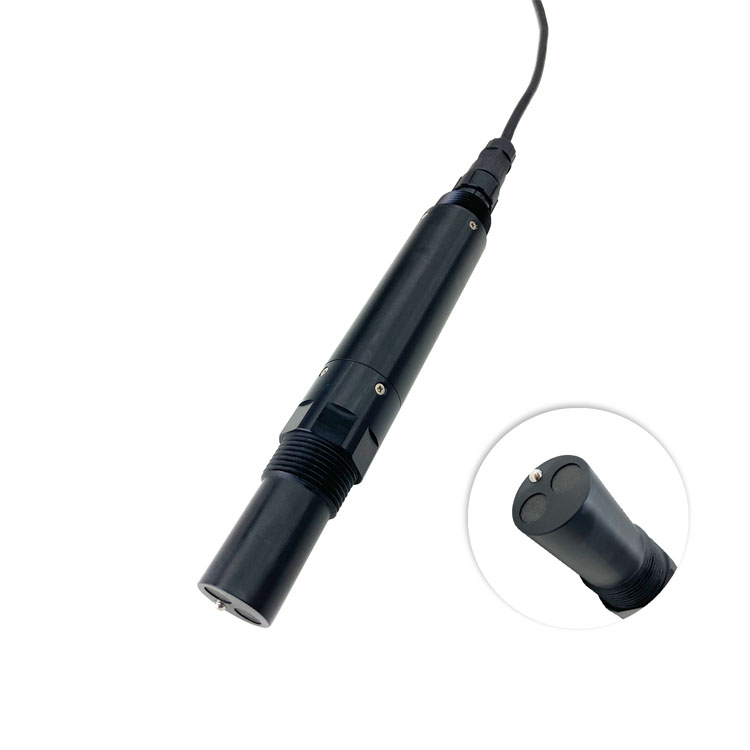
For clean water, monthly calibration may be enough. In wastewater with oil, high solids or chemical shocks, weekly or biweekly checks are safer until the site has stable drift records.
RS485 Modbus is better when the system needs digital values, device address management and multiple sensors on one bus. 4-20 mA is useful for older PLC analog input cards or long single-point loops.
Usually the sensor sends data to a PLC, controller or gateway. The dosing pump should be controlled by logic that includes mixing delay, high and low limits, alarm lockout and manual override.
Common causes are coated glass, clogged reference junction, dry storage, poor calibration buffer, electrical noise, temperature mismatch and installation too close to chemical dosing.
Use immersion for tanks, channels and basins with service access. Use pipe or flow-through installation when the line pressure, flow and maintenance bypass can be controlled.
Ask for sensor model, cable length, mounting accessories, output protocol, Modbus document, calibration guidance, spare electrode option and expected delivery time.
One sensor may be enough for a well-mixed small tank. Large or critical systems often need an upstream process point and a downstream confirmation point.
Send water type, pH range, temperature, pressure, tank or pipe drawing, power supply, communication interface, cable length, quantity and whether the signal is used for dosing or monitoring.
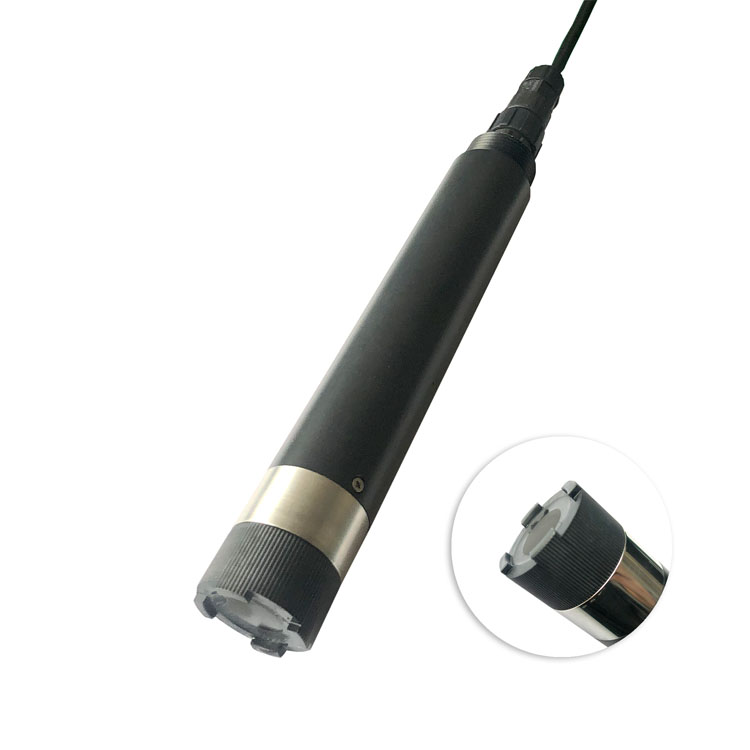
A reliable wastewater pH project is a maintenance and integration decision as much as a sensor decision. Define the mounting point, cleaning interval, calibration record and Modbus integration before comparing offers. That gives the buyer a pH sensor package that can be commissioned and maintained, not only a probe with a range printed on a datasheet.
Prev:How to Request a Useful Quote for a Water Monitoring System
Next:Dissolved Oxygen Sensor Placement for Aeration Control in Aquaculture and STP Projects
Related recommendations
Sensors & Weather Stations Catalog
 Agriculture Sensors and Weather Stations Catalog-NiuBoL.pdf
Weather Stations Catalog-NiuBoL.pdf
Agriculture Sensors Catalog-NiuBoL.pdf
Water Quality Sensor Catalog-NiuBoL.pdf
Related products
 Combined air temperature and relative humidity sensor
 Soil Moisture Temperature sensor for irrigation|NBL-S-THR
 Soil pH sensor RS485 soil Testing instrument soil ph meter for agriculture |NBL-S-PH
 Wind Speed sensor Output Modbus/RS485/Analog/0-5V/4-20mA
 Tipping bucket rain gauge for weather monitoring auto rainfall sensor RS485/Outdoor/stainless steel
 Pyranometer Solar Radiation Sensor 4-20mA/RS485

Screenshot, WhatsApp to identify the QR code
WhatsApp number:+8615367865107
(Click on WhatsApp to copy and add friends)

