





— Blogs —
—Products—
 Consumer hotline +8618073152920
WhatsApp:+8615367865107
Address:Room 102, District D, Houhu Industrial Park, Yuelu District, Changsha City, Hunan Province, China
Product knowledge
Time:2026-06-03 14:10:59 Popularity:430
Quick Answer: ORP meter applications include tracking oxidation and reduction conditions in treatment tanks, chemical processes and circulating water. ORP is a potential measurement in mV, not a direct reading of chlorine, dissolved oxygen or a particular contaminant. Choose an online ORP sensor when the process decision depends on a validated redox trend; retain direct chemical tests where concentration or treatment completion must be demonstrated.
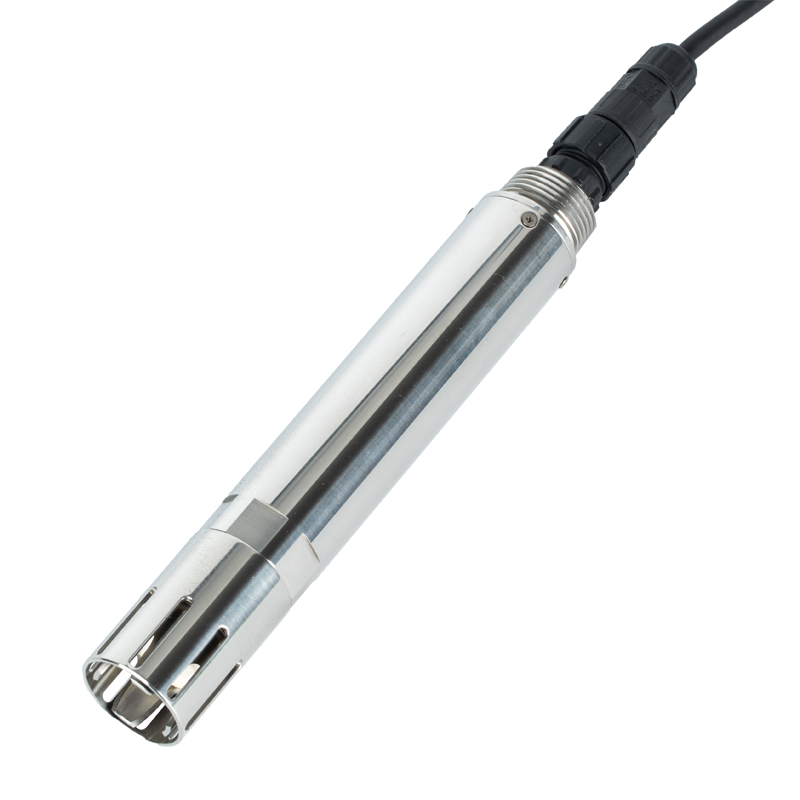
A process ORP reading reflects the measuring electrode's response relative to its reference system. Several electroactive species may influence it. The same mV value in two different waters does not establish equivalent oxidant concentration or treatment performance.
This distinction determines whether an ORP meter is useful. A stable water matrix and a repeatable reaction sequence can make the trend informative. Changing pH, feed chemistry, fouling or sample location can change that relationship. Before selecting a setpoint, compare the ORP record with the independent result the operator actually needs.
| Application | Decision ORP can support | What must be checked separately |
|---|---|---|
| Biological wastewater treatment | Identify recurring transitions in redox conditions across operating phases | DO, relevant nutrient results, pH and actual treatment performance |
| Industrial oxidation or reduction stage | Track reaction progress after site-specific validation | Target chemical concentration, pH, mixing and residence time |
| Oxidizing biocide treatment in circulating water | Observe changes associated with dosing and water demand | Applicable residual measurement, treatment program and microbiological checks |
| Surface water or aquaculture observation | Provide redox context alongside other water measurements | DO, temperature and parameter-specific water-quality limits |
In a treatment basin, ORP may change as aeration, mixing and available reactants change. A transition that repeats with a biological operating phase can help an operator investigate the cycle. It does not establish a universal mV boundary for every denitrification or aeration process.
Place the probe where mixed water reaches the sensing end and where it can be cleaned. A sensor in a stagnant pocket may describe that pocket rather than the basin. Record aerator and mixer state with the ORP trend, then compare the transition with laboratory or process measurements over representative operating cycles.
If feed composition changes, review the old relationship before continuing to use it for control. A controller can receive a technically valid ORP value while the interpretation that justified the setpoint is no longer valid.
For an oxidation or reduction stage, specify the required treatment result first. ORP can become a supporting control signal only after the relationship between potential, pH and the target reaction has been established for the actual process. Do not transfer a setpoint from a different wastewater stream solely because both streams use the same reagent.
Local chemical injection may expose a probe to a concentrated plume before the tank is mixed. This can cause an early response that does not represent reaction completion throughout the vessel. Review the dosing point, mixing path and measurement location together. Allowing more controller delay does not correct an unrepresentative location.
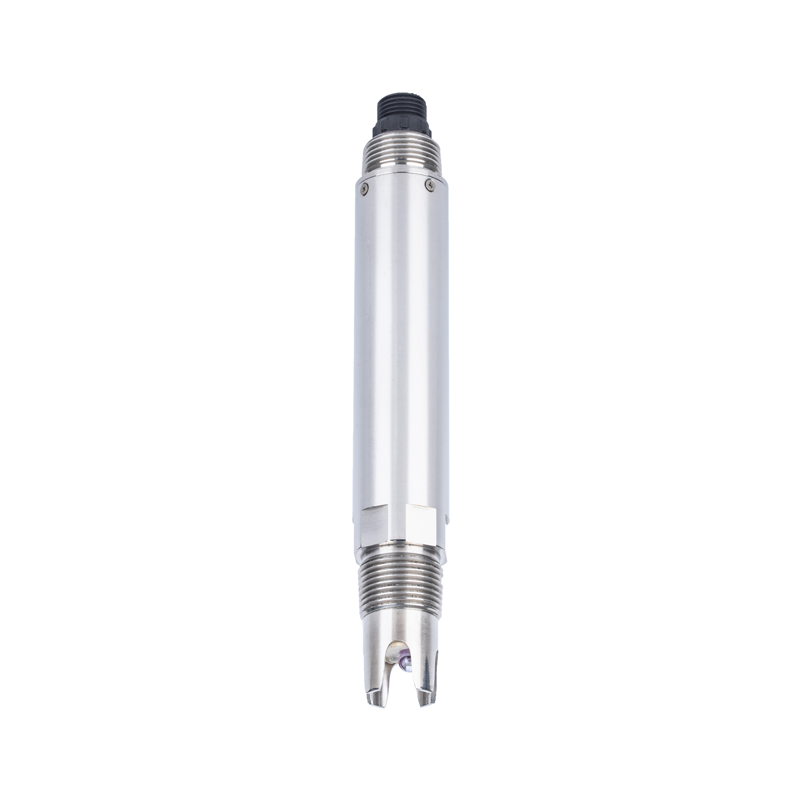
The probe assembly shown below is an example of an online ORP instrument. Confirm the supplied model, wetted materials and reference system against the particular chemicals; appearance alone does not establish chemical compatibility.
Cooling circuits and other recirculating systems can use ORP trends to observe changes associated with oxidant addition and water demand. However, pH and other reducing or oxidizing constituents also affect the potential. A change in the ORP trend should prompt an investigation rather than an automatic claim that the chlorine concentration has changed by a known amount.
If the treatment program specifies residual chlorine in mg/L, use an appropriate direct measurement and its prescribed verification method. ORP may remain a companion signal. This is particularly important when a dosing system could continue adding chemical because a fouled ORP electrode responds slowly.
A safe control design also limits dose independently, identifies sensor failure and distinguishes an old value from a current observation. These protections should follow the process risk assessment, not a generic sensor brochure.
The NiuBoL NBL-WQ-ORP is a standalone digital probe. Its specification is not interchangeable with every multiparameter ORP channel or another model suffix.
| Parameter | NBL-WQ-ORP |
|---|---|
| Measuring principle | Platinum electrode method |
| Range / resolution / accuracy | -1500 to +1500 mV; 1 mV; +/-20 mV |
| Response / calibration | T90 below 30 s; one-point calibration |
| Supply / consumption | 12-24 V DC; 0.2 W at 12 V |
| Output | RS485 Modbus RTU |
| Operating water conditions | 0-50 degrees C; pressure at or below 0.2 MPa |
| Housing / protection | ABS/PC alloy; IP68 |
| Installation / cable | Immersion or suitable pipe installation; 3/4 NPT; standard 5 m cable, with length options |
| Cable and electrode suitability | Confirm cable jacket, wetted parts and reference system for the actual process chemicals and cleaning method |
The response specification describes the sensor, not the full tank's reaction time. Sample transport, mixing and chemical reaction can add delays. Do not infer a safe dosing cycle from T90 alone. This model reports raw potential without a universal temperature correction; record temperature and pH where they affect interpretation.
The signal path is probe to RS485 interface, then PLC, RTU or data logger, followed by the operating display or remote platform. A gateway provides a data route; it does not turn ORP into a chemical concentration analyzer.
Verify the actual register type, scaling, byte order, address and serial settings. Include both positive and negative mV values in the test, because signed-value errors can invert the process interpretation. Store acquisition time and validity with the reading. If an analog input is mandatory, confirm a suitable transmitter or conversion arrangement rather than assuming that this standalone probe has 4-20 mA output.
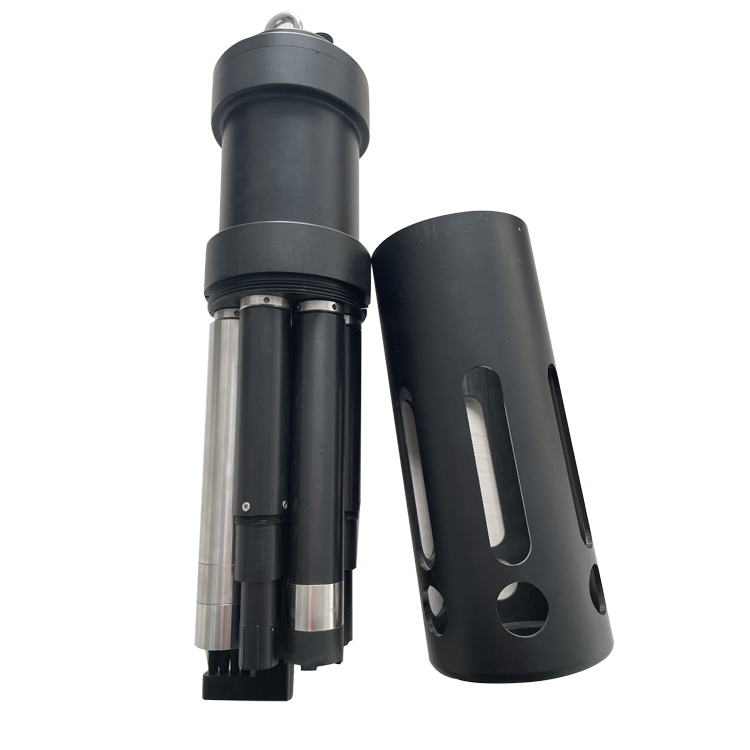
Where several parameters share one monitoring assembly, map each fitted channel separately. The multiparameter instrument below illustrates a different assembly; its channels and performance must be ordered and checked individually.
Only applications with a validated relationship between the ORP signal and the required process result, plus suitable safeguards. Repeatability during normal conditions is insufficient if feed changes or sensor fouling could cause unsafe dosing.
No. ORP and DO describe different quantities. Use DO where the decision requires dissolved oxygen concentration; ORP can add context about redox changes during the operating cycle.
No. The reading alone does not establish disinfectant concentration, contact time or microbiological performance. Verify the applicable treatment requirements with the specified measurements.
No. Compare the required operating band and allowable measurement error with the actual model. For NBL-WQ-ORP, use -1500 to +1500 mV and +/-20 mV in the specification review, not the values of a different version.
Describe the reaction or operating decision, water chemistry, pH, temperature, pressure, mounting position, cable route and controller interface. State whether ORP is for observation, an alarm or closed-loop control, and which independent test establishes success.
Reject ORP as the sole measurement when the required result is a particular chemical concentration or when the process has no demonstrated relationship between that result and potential. Choose the direct measurement first, then assess whether an ORP trend adds useful context.
An ORP meter is useful when its trend answers a specific process question. Select the sensor around the water and installation, then validate the interpretation against treatment results. NiuBoL can review the probe and data interface for a defined duty; the application description should make clear what the operator will do with each mV reading.
Prev:Turbidity Measurement Interference: Aeration, Flow and Sampling Location
Next:pH Meter Working Principle: Glass Membrane, Reference and Digital Output
Related recommendations
Sensors & Weather Stations Catalog
 Agriculture Sensors and Weather Stations Catalog-NiuBoL.pdf
Weather Stations Catalog-NiuBoL.pdf
Agriculture Sensors Catalog-NiuBoL.pdf
Water Quality Sensor Catalog-NiuBoL.pdf
Related products
 Combined air temperature and relative humidity sensor
 TDR Soil Moisture & Temperature Sensor for irrigation| RS485 |4-20mA| NBL-S-THR
 Soil pH sensor RS485 soil Testing instrument soil ph meter for agriculture |NBL-S-PH
 Wind Speed sensor Output Modbus/RS485/Analog/0-5V/4-20mA
 Tipping bucket rain gauge for weather monitoring auto rainfall sensor RS485/Outdoor/stainless steel
 Pyranometer Solar Radiation Sensor 4-20mA/RS485


Screenshot, WhatsApp to identify the QR code
WhatsApp number:+8615367865107
(Click on WhatsApp to copy and add friends)

