





— Blogs —
—Products—
 Consumer hotline +8618073152920
 WhatsApp:+8615367865107
Address:Room 102, District D, Houhu Industrial Park, Yuelu District, Changsha City, Hunan Province, China
Product knowledge
Time:2026-06-06 09:36:27 Popularity:374
Quick Answer: ORP sensor temperature effects cannot normally be removed with a universal correction to 25 degrees C. Temperature can change the sample chemistry, electrode response and reference potential. Compare readings at documented water conditions, verify the reference scale and check the electrode before treating a shift as a process change. The NiuBoL NBL-WQ-ORP reports potential in mV; it is not a direct oxidant concentration measurement.
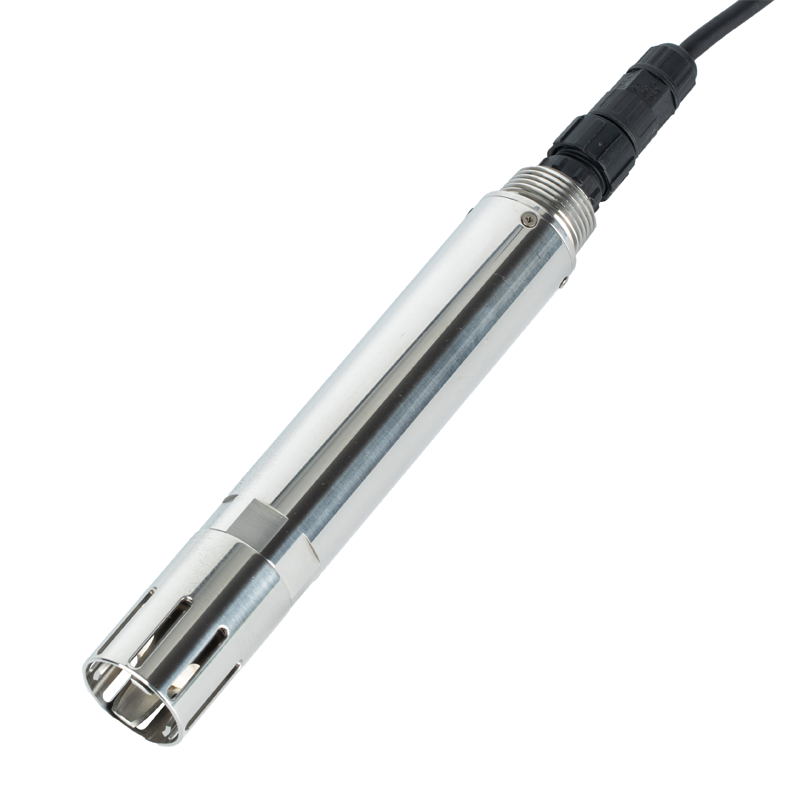
A platinum ORP electrode responds to electroactive species at its surface relative to a reference electrode. In process water, several reactions may contribute to the observed potential. Heating or cooling can change reaction behavior and the relative contribution of those species. A stable temperature sensor alongside the ORP channel helps document this change, but does not identify which reaction caused it.
There are three separate questions: did the water condition change, did the measuring assembly change, and are the two readings expressed on the same reference scale? Correcting a reference potential answers only the last question. It does not reconstruct what a chemically complex sample would have measured at another temperature.
The EPA field ORP procedure calls for recording temperature and pH with the measurement and identifying the reporting reference. That distinction is useful when comparing a field probe with a portable meter; it does not establish a product approval or a universal controller correction.
| Parameter | NBL-WQ-ORP |
|---|---|
| Measuring principle | Platinum electrode method |
| Range / resolution / accuracy | -1500 to +1500 mV; 1 mV; +/-20 mV |
| Response / calibration | T90 below 30 s; one-point calibration |
| Water conditions | 0-50 degrees C; pressure at or below 0.2 MPa |
| Output | RS485 Modbus RTU |
| Supply / consumption | 12-24 V DC; 0.2 W at 12 V |
| Housing / protection | ABS/PC alloy; IP68 |
| Mounting / cable | Immersion or suitable pipe installation; 3/4 NPT; standard 5 m cable |
| Temperature interpretation | No automatic correction of ORP to a universal reference temperature; provide a separate temperature channel where required |
The sensor's working-temperature range is an operating limit, not an accuracy statement for a temperature channel. Confirm cable jacket compatibility, reference-electrode details and the supplied register map before specifying them in a project. The probe assembly below illustrates the importance of identifying the actual measuring element rather than selecting by housing appearance alone.
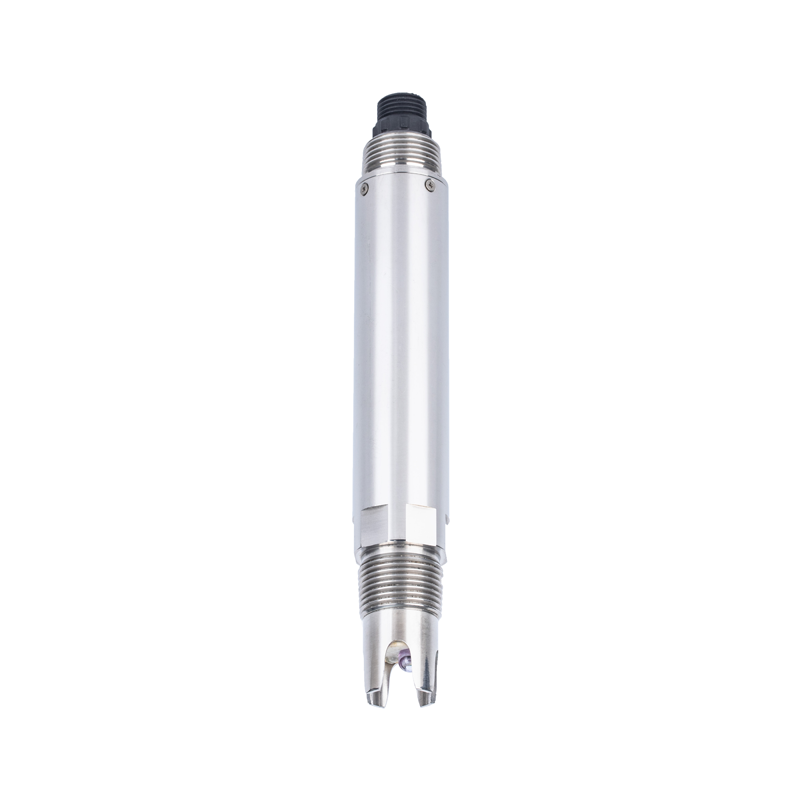
If both probes track a process-temperature change but remain consistent in the standard, investigate the process before applying an offset. If one probe moves erratically or fails its standard check, investigate that assembly. A comparison failure is a reason to examine conditions, not permission to force both displays to the same number.
Deposits on the platinum surface or reference junction can produce slow recovery or a persistent difference. Check for oil, biofilm, precipitate and damage. Use a cleaning procedure compatible with the electrode and deposit; a general instruction to scrub with an abrasive or apply a strong chemical is unsuitable.
Compare before and after cleaning under similar water conditions. If cleaning restores the standard check but the process difference remains, consider sample location, pH and water exchange. If the standard check still fails, the reference or measuring assembly may need further service. Detailed ORP maintenance decisions belong to that service assessment rather than an automatic recalibration schedule.
A multiparameter station can place related observations on one timeline, as illustrated below. Confirm its fitted channels individually. The accuracy, reference system and supply of a multiparameter ORP option need not be identical to the standalone NBL-WQ-ORP.
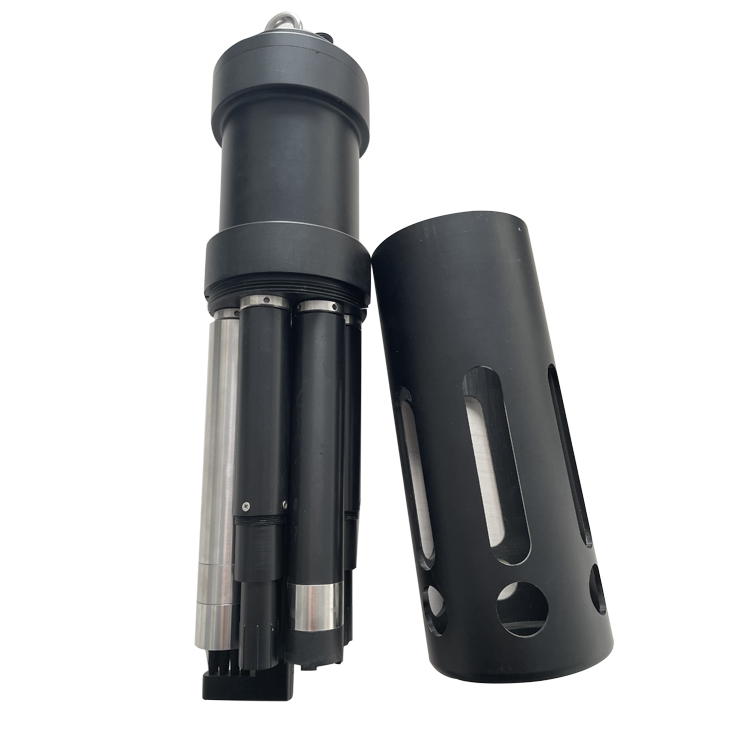
Store the acquired mV value, acquisition time and communication validity separately from any calculated channel. If a project requires conversion to another reference scale, identify the reference type, electrolyte and temperature-dependent correction used. Do not overwrite the raw observation or use a fixed offset taken from an unrelated electrode.
Test negative readings as well as positive readings during data integration. Incorrect signed-number handling can turn a reducing condition into a large positive value. Confirm the actual register format, unit scaling and byte order from the supplied protocol; do not assume every mV instrument uses the same integer representation.
For a temperature-related operating transition, compare ORP with process records such as feed changes, mixing and chemical addition. A single universal mV alarm cannot establish chlorine concentration or reaction completion across different waters. Use a direct analytical measurement where the operating decision requires a chemical concentration.
The constant-voltage chlorine probe shown below is a different measurement technology. It may form a separate channel where chlorine monitoring is required; the presence of an ORP channel does not remove that requirement.
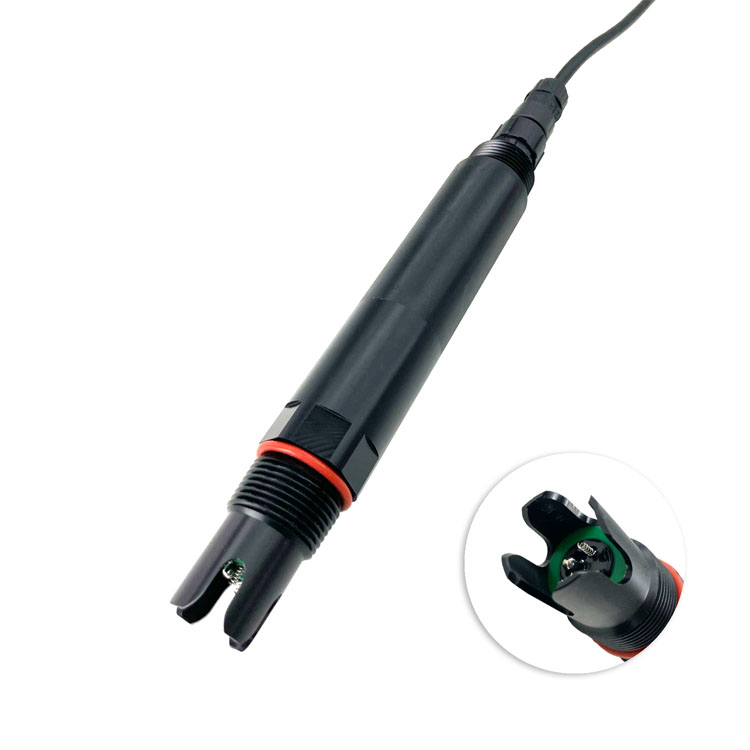
No. A universal temperature coefficient is not appropriate for chemically different process waters. Record temperature and preserve the raw potential; apply only a defined, justified calculation for the intended reporting purpose.
Check reference scale, temperature, sampling time, aeration during handling and electrode condition. Differences between a tank and a cooled grab sample do not prove that either instrument has a calibration error.
No. The standalone NBL-WQ-ORP accuracy is +/-20 mV. Define comparison tolerances using both instruments' specifications and the reference-check conditions, not the displayed increment.
Not where a specific chlorine quantity must be measured. ORP responds to the sample's electrochemical condition and is influenced by more than chlorine alone.
Provide the current model and reference system, water chemistry, temperature changes, normal mV range, mounting position, cable route and PLC data format. Include standard-check results before concluding that the sensor needs replacement.
Useful ORP comparisons preserve the sample condition and the reporting reference. For a NiuBoL ORP installation, keep temperature and pH context alongside the raw mV trend, distinguish electrode checks from process interpretation and investigate unexplained differences before changing calibration or control settings.
Prev:Conductivity and Water Hardness: What an EC Meter Can Establish
Next:TOC Analyzer Selection: Carbon Recovery, Sample Handling and Online Cycles
Related recommendations
Sensors & Weather Stations Catalog
 Agriculture Sensors and Weather Stations Catalog-NiuBoL.pdf
Weather Stations Catalog-NiuBoL.pdf
Agriculture Sensors Catalog-NiuBoL.pdf
Water Quality Sensor Catalog-NiuBoL.pdf
Related products
 Combined air temperature and relative humidity sensor
 TDR Soil Moisture & Temperature Sensor for irrigation| RS485 |4-20mA| NBL-S-THR
 Soil pH sensor RS485 soil Testing instrument soil ph meter for agriculture |NBL-S-PH
 Wind Speed sensor Output Modbus/RS485/Analog/0-5V/4-20mA
 Tipping bucket rain gauge for weather monitoring auto rainfall sensor RS485/Outdoor/stainless steel
 Pyranometer Solar Radiation Sensor 4-20mA/RS485

Screenshot, WhatsApp to identify the QR code
WhatsApp number:+8615367865107
(Click on WhatsApp to copy and add friends)

