





— Blogs —
—Products—
 Consumer hotline +8618073152920
WhatsApp:+8615367865107
Address:Room 102, District D, Houhu Industrial Park, Yuelu District, Changsha City, Hunan Province, China
Product knowledge
Time:2026-06-03 14:12:11 Popularity:429
Quick Answer: Conductivity and water hardness are related only through the ions present; one cannot be converted universally into the other. An EC meter measures electrical conductivity, while hardness concerns specific multivalent ions, commonly calcium and magnesium. Conductivity can indicate an ionic change, but a softener breakthrough or hardness acceptance decision needs a suitable hardness measurement.
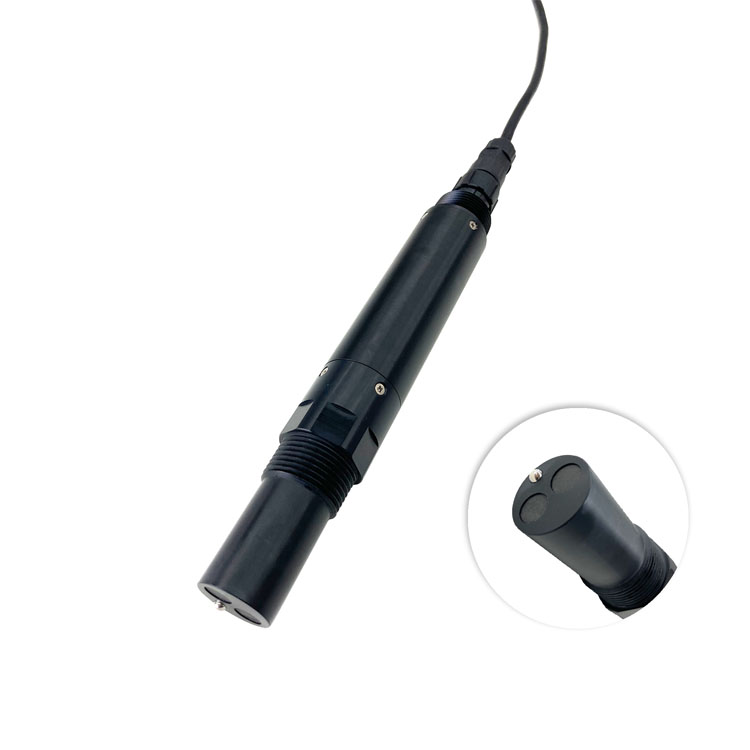
A conductivity meter applies an electrical measurement across a sensing cell and reports how readily the water conducts. The result depends on dissolved ions, their mobility, temperature and the measuring cell. It does not separately count calcium, sodium, chloride or every other ion.
Two waters can have similar EC while containing different ion mixtures. This is why conductivity is useful for tracking a defined water stream but insufficient for identifying its chemistry. A change in EC tells the operator to investigate a change in ionic content or measurement conditions, not which constituent crossed a limit.
For the electrical relationship between conductance, cell constant and temperature, see conductivity measurement principles. The question here is what a project may legitimately infer from the resulting EC value.
| Quantity | What it describes | Decision limitation |
|---|---|---|
| Electrical conductivity | Electrical behavior of dissolved ions; commonly uS/cm or mS/cm | Does not identify individual ions |
| EC-derived TDS | A calculated dissolved-solids estimate using a selected conversion | Not independent gravimetric or chemical analysis |
| Water hardness | Content of hardness-producing ions, commonly reported as mg/L as CaCO3 | Cannot be assigned from EC using one universal factor |
| Alkalinity | Acid-neutralizing capacity in the specified test | Not interchangeable with hardness, pH or conductivity |
Keep these names distinct in the quotation and PLC tags. A dashboard labeled "hardness" but populated from an EC multiplier can encourage an operator to make a decision the instrument has not established. Changing the display unit does not change the measurement method.
A sodium-cycle ion-exchange softener exchanges hardness ions for sodium, as described in the EPA explanation of cation-exchange softening. It does not remove all dissolved ions in the way a desalination process aims to do. Conductivity therefore need not fall in proportion to the reduction in hardness, and a conductivity threshold alone is not a general test of softener exhaustion.
If downstream equipment requires a hardness limit, specify the hardness test and sampling point. EC may still provide useful context for feed-water changes or other disturbances, but should not be the sole release criterion unless a technically justified, validated relationship exists for the exact duty.
For a reverse-osmosis system, feed and permeate conductivity can support ionic rejection monitoring under defined conditions. That is a different decision from proving the absence of a particular contaminant or confirming all treated-water requirements. State the required result before selecting the instrument.
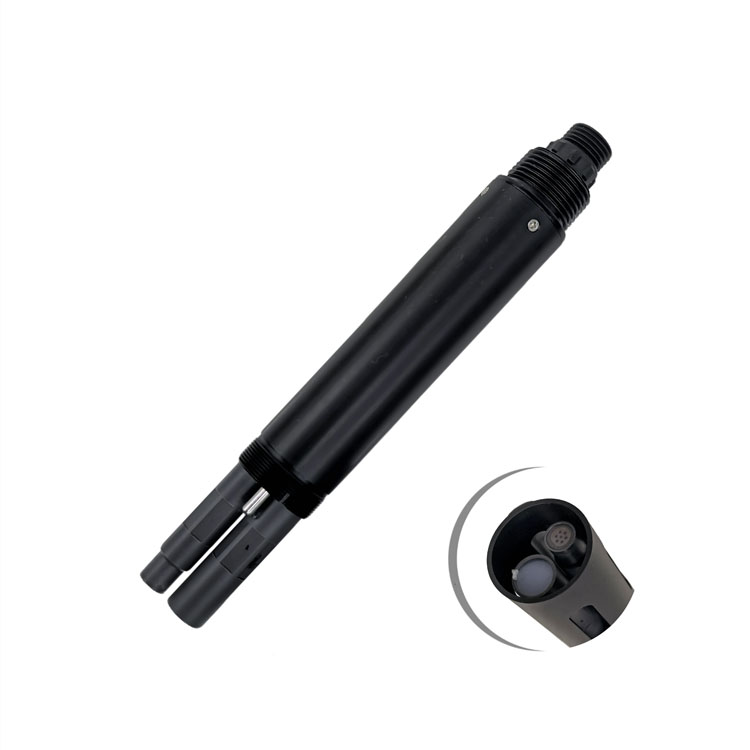
A calculated TDS value usually applies a coefficient to conductivity expressed in the correct unit and temperature basis. It is most useful when the water composition remains sufficiently consistent for the project and the relationship has been checked against an appropriate reference.
For an illustrative calculation only, 1000 uS/cm multiplied by a chosen coefficient of 0.64 produces an estimated 640 mg/L. That does not prove the water contains 640 mg/L of a particular salt, nor that the same factor suits a different water source. The calculation is not a separate measurement.
Record the factor used and how it was established. Reassess it after a source-water change, a different process chemical or a material change in ionic composition. Do not treat agreement at one sample as proof across every operating state.
Keep conductivity and temperature in the saved records even when TDS is displayed. Otherwise, a later factor change can make historical trends look like a real water change. Identify any recalculated history separately from the original acquired values.
| NBL-WQ-EC configuration | Range | Resolution |
|---|---|---|
| EC-0.01 | 0-20.00 uS/cm | 0.01 uS/cm |
| EC-0.1 | 0-200.0 uS/cm | 0.1 uS/cm |
| EC-1.0 | 0-5000 uS/cm | 1 uS/cm |
| EC-SI | 0-200.0 mS/cm | 0.1 mS/cm |
The NiuBoL NBL-WQ-EC specifies +/-1% FS conductivity accuracy. Full scale matters: on a 5000 uS/cm range, 1% FS is 50 uS/cm. That specification should not be described as 1% of each displayed reading or confused with the 1 uS/cm increment.
| Installation characteristic | NBL-WQ-EC |
|---|---|
| Supply / consumption | 12-24 V DC; 0.2 W at 12 V |
| Output / compensation | RS485 Modbus RTU; Pt1000 temperature compensation |
| Water conditions | 0-50 degrees C; below 0.6 MPa |
| Materials | ABS, SUS316L or PVC according to configuration |
| Protection / mounting / cable | IP68; immersion with 3/4 NPT; standard 5 m cable. Confirm jacket compatibility. |
At the PLC, RTU or data logger, identify which register is measured EC and which is calculated TDS. Verify decimal scaling and the distinction between uS/cm and mS/cm; 1 mS/cm equals 1000 uS/cm. A numerical match without the correct unit is not a valid integration check.
A gateway can forward these values to another system, but cannot make the EC channel selectively measure hardness or identify a dissolved chemical. If hardness is the project requirement, include that analytical method as a separate item. Confirm whether a reported TDS channel is supported by the ordered range rather than assuming it for every EC version.
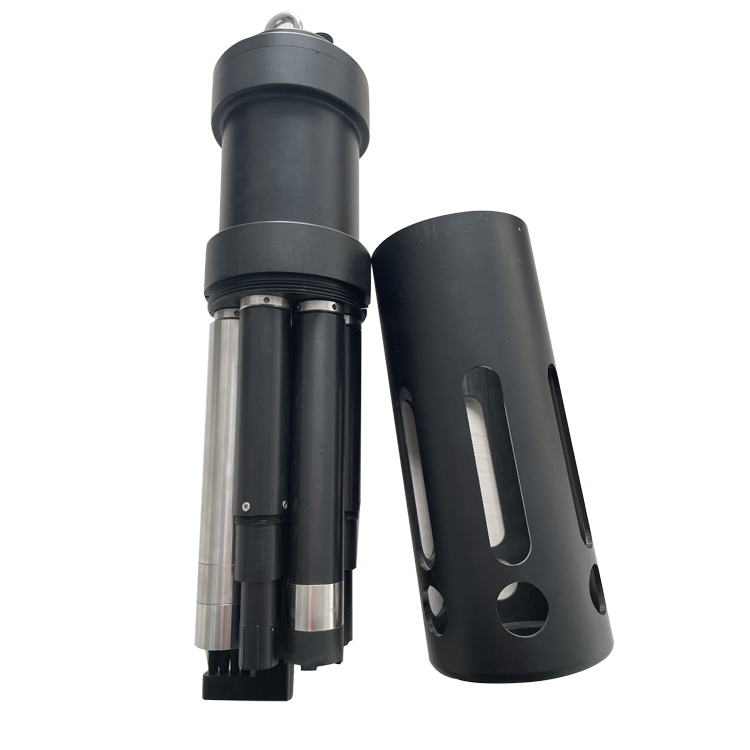
The multiparameter assembly below illustrates a separate instrument arrangement. Its fitted channels must be identified individually. Several water-quality values in one housing do not automatically include a dedicated hardness measurement.
Not universally. Conductivity responds to all contributing ions, whereas hardness concerns particular ions. Use an appropriate hardness measurement for an acceptance limit.
No. A sodium-cycle softener exchanges ions rather than removing all dissolved salts. Conductivity alone is not a general indicator of hardness breakthrough.
No. When it is calculated from EC, both values share the same underlying measurement. A conversion factor does not provide independent confirmation of dissolved-solids mass.
A full-scale percentage gives an absolute error tied to the selected range. A range that is unnecessarily wide can be unsuitable for a low decision threshold even when the display shows small increments.
Clarify whether the required result is hardness, EC or an estimated TDS value. State the units, limit, water source and acceptance method before choosing hardware. Do not substitute an EC probe without resolving that distinction.
Conductivity and water hardness should remain separate project requirements. Use EC to observe ionic changes, validate any TDS conversion for the water concerned, and retain a dedicated hardness method where hardness drives the decision. NiuBoL EC selection should follow the actual conductivity band and allowable error, not an assumed conversion to another parameter.
Prev:pH Electrode Maintenance Intervals: Cleaning and Drift Checks
Next:ORP Sensor Temperature Effects: Compare Readings Without False Corrections
Related recommendations
Sensors & Weather Stations Catalog
 Agriculture Sensors and Weather Stations Catalog-NiuBoL.pdf
Weather Stations Catalog-NiuBoL.pdf
Agriculture Sensors Catalog-NiuBoL.pdf
Water Quality Sensor Catalog-NiuBoL.pdf
Related products
 Combined air temperature and relative humidity sensor
 TDR Soil Moisture & Temperature Sensor for irrigation| RS485 |4-20mA| NBL-S-THR
 Soil pH sensor RS485 soil Testing instrument soil ph meter for agriculture |NBL-S-PH
 Wind Speed sensor Output Modbus/RS485/Analog/0-5V/4-20mA
 Tipping bucket rain gauge for weather monitoring auto rainfall sensor RS485/Outdoor/stainless steel
 Pyranometer Solar Radiation Sensor 4-20mA/RS485


Screenshot, WhatsApp to identify the QR code
WhatsApp number:+8615367865107
(Click on WhatsApp to copy and add friends)

