





— Blogs —
—Products—
 Consumer hotline +8618073152920
 WhatsApp:+8615367865107
Address:Room 102, District D, Houhu Industrial Park, Yuelu District, Changsha City, Hunan Province, China
Product knowledge
Time:2026-06-03 14:12:02 Popularity:431
Quick Answer: Set pH electrode maintenance intervals from measured condition, not one universal weekly or monthly rule. Record a verification before cleaning, repeat it after cleaning, and adjust calibration only when a stable electrode requires it. The pattern separates fouling from remaining drift and helps schedule service before an error compromises the industrial water monitoring decision.
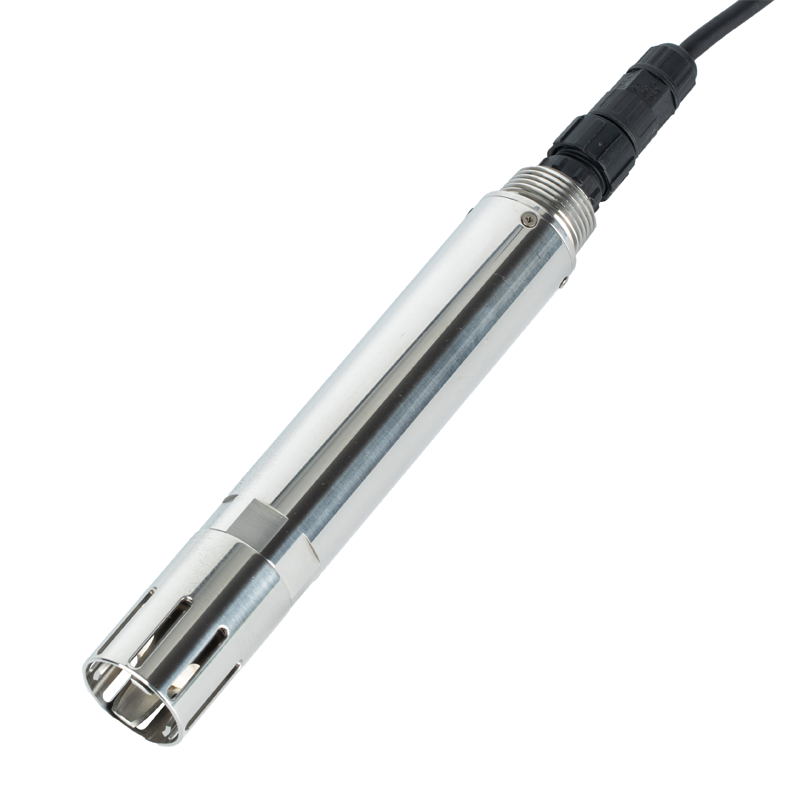
Cleaning removes deposits; calibration changes the relationship between the electrode signal and reported pH; verification checks the result without necessarily adjusting it. Combining all three into an undocumented "calibrated" visit destroys useful information. The next technician cannot tell whether the improvement came from cleaning, a new correction or a changed process sample.
A dosing point, an outlet trend and a remote environmental point also have different consequences when data becomes unreliable. Establish the permitted interruption, required verification and responsible operator for each point. A spare can reduce downtime, but only if it is compatible, correctly stored and ready to pass its own check.
For a full removal and care workflow, see industrial pH electrode service and integration. Maintenance interval planning addresses a different question: how the evidence from successive visits should change the next service date.
| Record | Why it affects the next interval |
|---|---|
| Instrument identity and location | Prevents assigning another probe's history or calibration to this point |
| Elapsed operating time and process changes | Connects deposits or drift with actual exposure rather than calendar age alone |
| Buffer identity, temperature and reference value | Distinguishes electrode error from unsuitable or contaminated verification liquid |
| Reading before cleaning | Shows the condition that existed during the preceding service interval |
| Reading after cleaning, before adjustment | Helps estimate the contribution of removable contamination |
| Any calibration and independent follow-up check | Separates restored response from a changed calibration |
| Process and receiving-system checks after return | Confirms that the usable installed measurement has resumed |
Use clean buffer portions and a supported buffer family. Nominal pH 6.86 and 7.00 are not interchangeable calibration settings, and the buffer's value depends on temperature. Record the applicable value at the actual check temperature. If buffer powders are used, prepare them to the volume specified for that particular product rather than assuming every sachet makes the same volume.
Keep the electrode and buffer temperature stable enough for a meaningful comparison. Automatic temperature compensation addresses the electrode response; it does not make a process sample chemically identical before and after cooling or gas exchange. The USGS pH measurement reference provides background on field measurement and calibration practice, not a universal maintenance interval for industrial liquids.
Suppose a verified buffer has a reference value of 6.86 at the check temperature. Before cleaning, the sensor reads 6.70; after an approved cleaning and equilibration, it reads 6.85 without changing calibration. The errors are -0.16 and -0.01 pH respectively. The 0.15 pH change supports investigation of removable contamination, provided the buffer, temperature and test setup remained valid.
That does not prove that every process reading during the previous interval was wrong by 0.16 pH. Process error can depend on flow, deposits, junction behavior and sample chemistry. Preserve the original record, flag the affected period for review and apply the site's data-quality procedure rather than silently shifting all historical values.
If cleaning changes little and the response remains slow or unstable in fresh buffers, investigate hydration, electrode condition and the reference system. If buffer checks are satisfactory but process agreement remains poor, examine sampling, gas exchange, pressure, wetting and electrical conditions. More frequent calibration cannot fix a fundamentally unsuitable installation.
An initial service plan should be conservative enough to reveal the site's behavior before the measurement becomes critical. Use repeat checks under representative production conditions, including cleaning discharges, seasonal changes or long idle periods where relevant. A service interval established in clean commissioning water does not characterize months of process exposure.
| Illustrative check history | Error before cleaning | Interpretation |
|---|---|---|
| Day 1 | +0.02 pH | Starting verification result |
| Day 7 | +0.04 pH | Small change under the observed conditions |
| Day 14 | +0.07 pH | Reduced margin to an illustrative +/-0.10 pH project band |
| Day 21 | +0.16 pH | Outside that illustrative band; investigate the preceding interval |
This is not a recommended 21-day schedule and is not NiuBoL field-performance data. It shows why a visit only after the last row is too late for that assumed task. The next interval should be shorter than the observed deterioration, with allowance for reference uncertainty and changing conditions. Confirm the revised interval over more than one cycle.
A calibration verification band is a project decision, not automatically the same as a probe's catalogue accuracy. Include the reference buffer, temperature measurement, test setup and required process tolerance in the acceptance method. Where a permit specifies a method or schedule, meet that requirement as well; a locally convenient interval does not replace it.
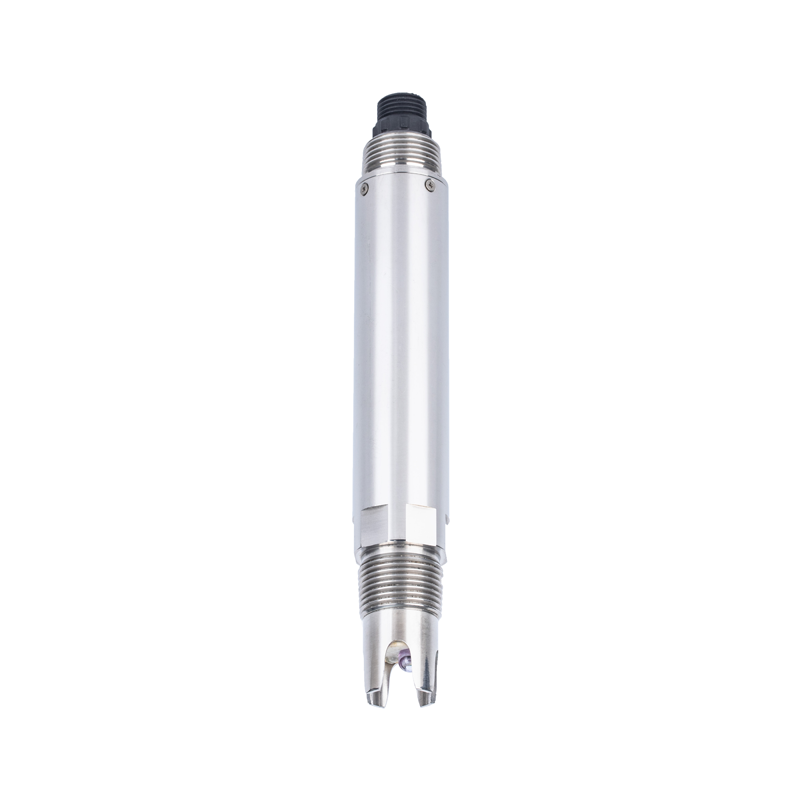
The following specification applies to the NBL-WQ-PH-4S NTC-compensated configuration. A stainless housing or similar thread does not make another version electrically interchangeable. Keep the installed version and wiring with the service record.
| Parameter | PH-4S configuration | Service implication |
|---|---|---|
| Range and resolution | 0-14.00 pH; 0.01 pH | Resolution is not a verification tolerance by itself. |
| Accuracy | +/-0.1 pH; temperature +/-0.3 degrees C | Define comparison conditions and reference uncertainty. |
| Temperature and pressure | 0-65 degrees C; pressure below 0.2 MPa | Include cleaning conditions and excursions when assessing suitability. |
| Supply and consumption | 12-24 VDC; 0.2 W at 12 V | Confirm supply at the installed probe when diagnosing a fault. |
| Output | RS485 Modbus RTU; 4-20 mA optional | Specify the required replacement configuration and scaling. |
| Temperature element | NTC compensation | Do not substitute a Pt1000 assembly without compatibility confirmation. |
| Materials and installation | POM and 316L stainless steel; 3/4 NPT; IP68 | Pressure isolation, chemical compatibility and safe retrieval remain necessary. |
| Cable and calibration | 5 m, five-core shielded arrangement; two-point calibration | Confirm jacket material, connector and actual wire functions. |
For this PH-4S arrangement, Blue is RS485 A and Green is RS485 B; the Yellow current-output wire applies when that option is fitted. Do not copy the White B-wire assignment from another pH version solely because its enclosure looks similar. Confirm wiring before energizing the replacement.
KCl electrode storage for this configuration uses 3.5 mol/L potassium chloride in an appropriate protective sleeve or container. Keep the glass sensing end protected and wet in the specified arrangement. A brief rinse with deionized water is not the same as leaving the probe in it for long-term storage. Do not let an unlabelled container become the common storage bath for several contaminated instruments.
Inspect the stored spare before the planned visit. Confirm mechanical fit, cable termination, firmware or register compatibility where relevant, and a stable check in suitable buffers. A dry or degraded spare can lengthen the outage instead of reducing it. Storage and activation procedures for another electrode chemistry should not be transferred to this pH assembly.
Agreement between two probes is useful but not conclusive when both were adjusted with the same suspect buffer. Check the reference liquid independently when their shared history could create the same bias.
Cleaning chemicals must suit the deposit, electrode and process residues. Isolate and decontaminate using the approved site procedure before chemical treatment. In particular, do not apply acid cleaner to equipment retaining cyanide- or sulfide-containing residues. Do not scrape the glass or dismantle a sealed reference system as a way to extend a service interval.
Keep the control system in its approved maintenance state while the probe is in a buffer or removed from the process. A believable buffer reading must not drive dosing as though it were a live tank observation. For pressurized installations, removal and refitting require the designed isolation and depressurization arrangement.
After installation, verify representative wetting and a progressing timestamp at the PLC, RTU or data logger. Compare local and received pH and temperature, and check that maintenance flags and any held outputs are cleared through the authorized procedure. A replaced probe with a default address can conflict with another RS485 instrument even after a successful buffer check.
Send NiuBoL the version, operating conditions, before/after cleaning results, buffer details and symptoms when requesting replacement advice. This distinguishes consumable electrode service from a whole digital-probe or cabinet-interface problem and gives a useful basis for planning spares.
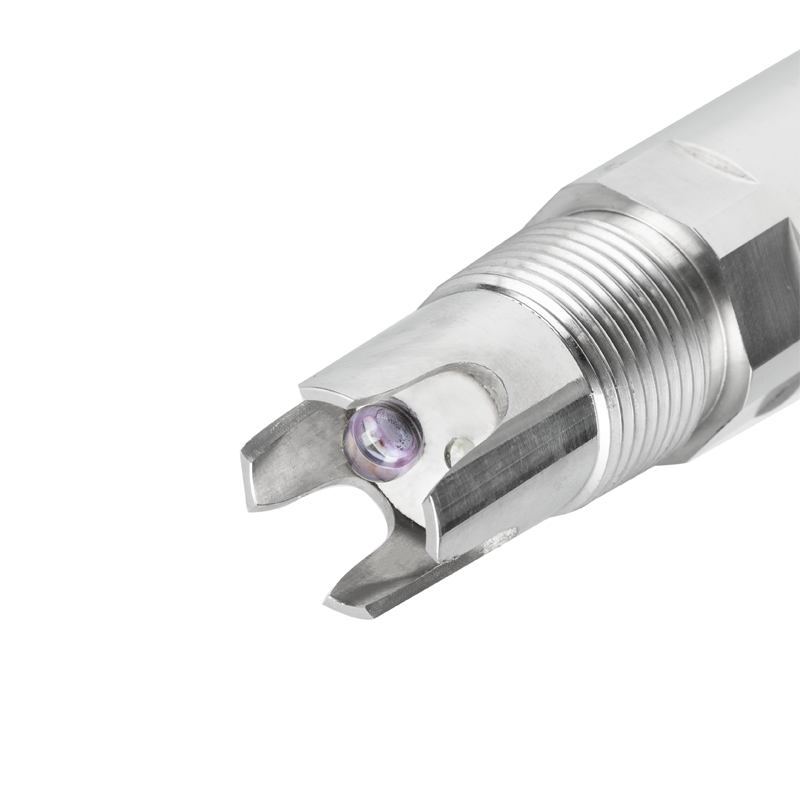
Use site verification and deposit history to establish the interval. Shorten it when the measurement deteriorates before the planned visit; reassess after process or seasonal changes. A universal monthly rule is not evidence of suitability.
No. Check after cleaning and equilibration first. Adjust calibration when the stable electrode requires it, then verify the result. Otherwise an unnecessary adjustment can conceal the effect of cleaning.
No. It describes the electrode under that test condition. Review the preceding record using the observed fault, process history and applicable quality procedure; do not automatically apply one constant correction to the whole period.
Not as long-term storage for the PH-4S configuration described here. Use its specified 3.5 mol/L KCl arrangement. Rinsing and storage have different purposes.
Not by itself. The verification method must consider reference uncertainty, temperature, operating conditions and the task's required tolerance. A catalogue number alone is not a complete acceptance procedure.
Replace a damaged electrode or one that cannot meet the required stable verification after appropriate cleaning and conditioning. Investigate the reference liquids, wiring and installation first so a replacement is not used to hide another fault.
Identify the exact version, output, temperature element, materials, fitting, connector and cable length. Clarify whether the required item is an electrode component or a complete transmitting probe.
pH electrode maintenance intervals should follow observable deterioration and the consequences of unreliable data. Separate cleaning, calibration and verification records, keep the correct spare ready, and confirm the installed signal after service. NiuBoL version-specific specifications provide the starting point for that maintenance plan.
Prev:Sludge Concentration Meter Installation: MLSS Location and Mounting
Next:Conductivity and Water Hardness: What an EC Meter Can Establish
Related recommendations
Sensors & Weather Stations Catalog
 Agriculture Sensors and Weather Stations Catalog-NiuBoL.pdf
Weather Stations Catalog-NiuBoL.pdf
Agriculture Sensors Catalog-NiuBoL.pdf
Water Quality Sensor Catalog-NiuBoL.pdf
Related products
 Combined air temperature and relative humidity sensor
 TDR Soil Moisture & Temperature Sensor for irrigation| RS485 |4-20mA| NBL-S-THR
 Soil pH sensor RS485 soil Testing instrument soil ph meter for agriculture |NBL-S-PH
 Wind Speed sensor Output Modbus/RS485/Analog/0-5V/4-20mA
 Tipping bucket rain gauge for weather monitoring auto rainfall sensor RS485/Outdoor/stainless steel
 Pyranometer Solar Radiation Sensor 4-20mA/RS485

Screenshot, WhatsApp to identify the QR code
WhatsApp number:+8615367865107
(Click on WhatsApp to copy and add friends)

