





— Blogs —
—Products—
 Consumer hotline +8618073152920
 WhatsApp:+8615367865107
Address:Room 102, District D, Houhu Industrial Park, Yuelu District, Changsha City, Hunan Province, China
Product knowledge
Time:2026-05-06 21:18:42 Popularity:399
This article deeply analyzes the core concepts of conductivity, measurement principles and its key role in industrial water quality monitoring. By discussing the influence of temperature, ion concentration and cell constant (K value) on measurement accuracy, combined with the technical advantages of NiuBoL intelligent conductivity sensors, it provides precise electrolyte concentration monitoring solutions for water treatment engineering, agricultural irrigation and industrial production.
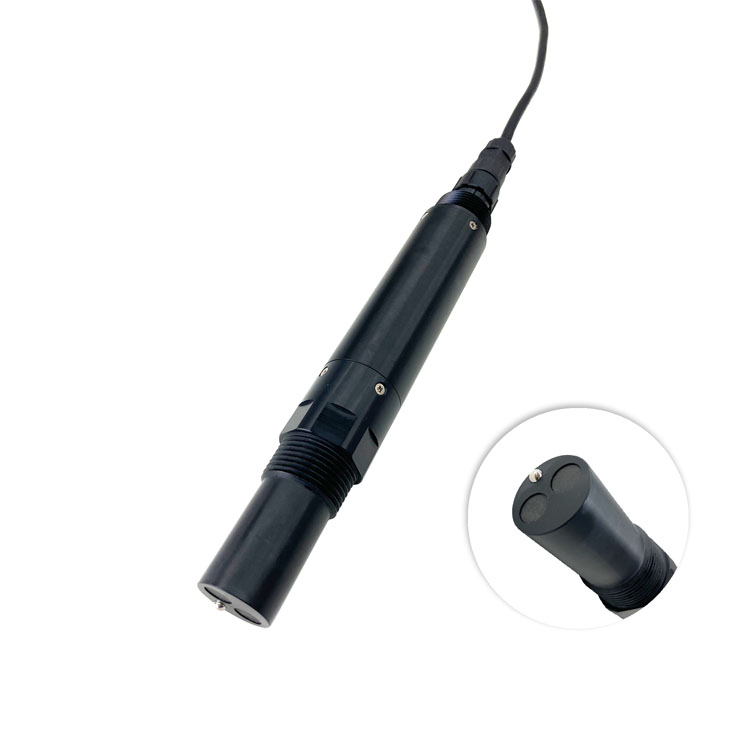
In the fields of physics and electrochemistry, Electrical Conductivity is a core physical quantity that measures the ability of a substance to conduct current. Especially in ecology, water treatment and modern industrial production, conductivity has become a key indicator for characterizing ion concentration, water purity and electrolyte content in solutions. Understanding the deep principles of conductivity and applying high-precision monitoring equipment is the foundation for achieving smart water affairs and precise industrial control.
As a globally leading water quality sensor brand, NiuBoL is committed to developing high-performance conductivity monitoring terminals. This article will systematically analyze the technical connotation of conductivity and its practical application in real scenarios from a professional engineering perspective.
Conductivity is a quantitative expression of an object's ability to conduct current. Under the action of an electric field, the relationship between the conduction current density J in the medium and the electric field strength E determines the value of this quantity.
Isotropic Medium: For most liquid solutions, conductivity behaves as a scalar, meaning the conduction ability is consistent in all directions.
Anisotropic Medium: In certain specific crystals or non-uniform solids, conductivity behaves as a tensor, which needs to be expressed mathematically through a 3×3 matrix.
Unit System: The international standard unit is Siemens per meter (S/m). In water quality monitoring, commonly used units include millisiemens per centimeter (mS/cm) or microsiemens per centimeter (μS/cm).
The measurement of solution conductivity is essentially the reciprocal application of resistance measurement. Its core tool is the conductivity cell, usually composed of a pair of parallel metal electrodes (such as platinum black electrodes) with a fixed distance (L).
The relationship between conductivity and measured conductance G is determined by the cell constant K. Under an ideal uniform electric field, if A=1cm² and L=1cm, then K=1cm⁻¹. However, in actual engineering, non-uniform electric fields (stray fields) often exist between electrodes, so the K value must be precisely calibrated using standard potassium chloride (KCl) solution.
To avoid electrolysis of the solution (polarization effect) caused by direct current, conductivity meters usually use sinusoidal AC voltage with a frequency of 1kHz to 3kHz as the excitation signal applied to the electrodes.
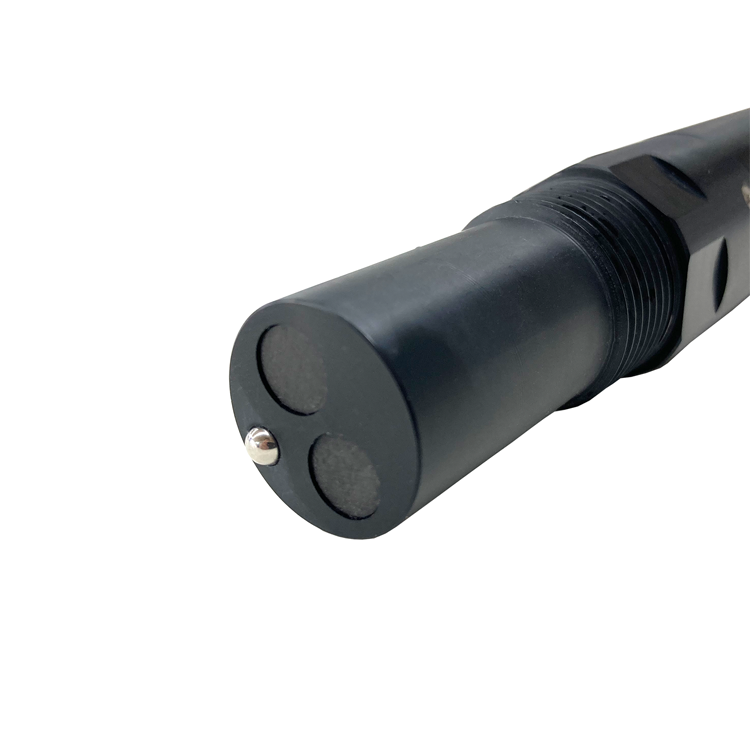
Temperature is the most active variable affecting conductivity.
Liquid Electrolytes: As temperature increases, solution viscosity decreases, ion movement speeds up, and conductivity increases accordingly.
Metal Conductors: In contrast to liquids, metal conductivity decreases with increasing temperature.
Compensation Mechanism: To enable comparison under different environments, a temperature compensator is usually introduced to convert the measured value to a reference temperature (usually 25°C).
The conductivity of aqueous solutions depends directly on the concentration of dissolved solute salts.
High Purity Water: Extremely low ion content, extremely low conductivity (extremely high resistivity).
Industrial Wastewater / Seawater: Contains a large amount of inorganic salts and chemical impurities, showing high conductivity.
During long-term use, contamination or corrosion on the electrode surface will cause changes in the effective area A, which in turn causes K value drift. This requires monitoring instruments to have good stability and regular calibration functions.
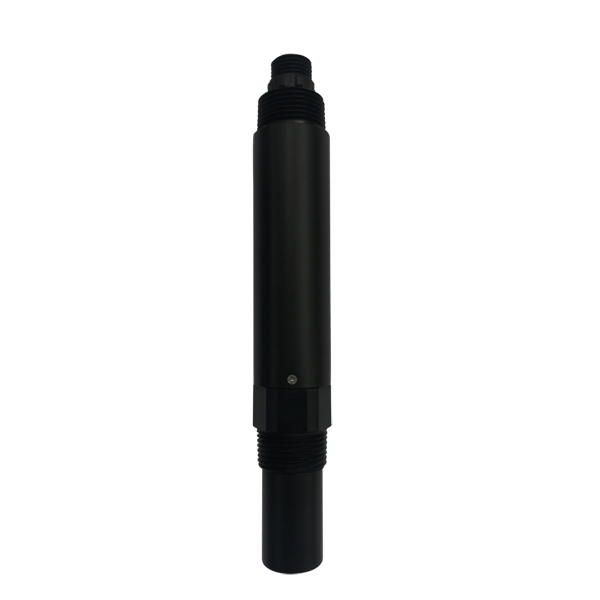
| Parameter Name | Technical Index | Application Fields |
|---|---|---|
| Cell Constant (K) | Optional K=0.01, 0.1, 1.0, 10.0 | Covers pure water to high salinity water |
| Measurement Range | 0 - 200,000 μS/cm (customizable) | Full industry coverage |
| Measurement Accuracy | ±1% F.S. | Precise process control |
| Communication & Output | 4-20mA / RS485 (Modbus-RTU) | |
| Temperature Compensation | Automatic PT1000 Compensation (0-60℃) | Variable temperature environment monitoring |
| Shell Material | 316L Stainless Steel / PTFE / ABS | Corrosion resistant, high pressure resistant |
| Power Supply Voltage | 12V - 24V DC | Industrial standard power supply |
Boiler Feed Water Monitoring: In the power and thermal energy industries, monitoring the conductivity of condensate and feed water is a key indicator to prevent boiler scaling and corrosion.
Agricultural Water-Fertilizer Integration: In smart agriculture, conductivity (EC value) is used to monitor nutrient solution concentration in real time to ensure crops receive precise nutrient supply.
Reverse Osmosis (RO) Systems: By comparing conductivity before and after the membrane, evaluate desalination rate and membrane element health status.
Environmental Monitoring: Real-time perception of salinity changes in rivers, lakes and groundwater, early warning of saltwater intrusion or man-made pollution.
Q1. Why must conductivity measurement use alternating current instead of direct current?
Direct current will cause ions in the solution to move directionally toward the electrodes and undergo electrochemical reactions (electrolysis), producing gas or precipitates on the electrode surface, forming polarization potential that seriously interferes with the measurement of true resistance. Alternating current offsets this effect by rapidly switching polarity.
Q2. What is the conductivity cell constant (K), and why is it different for each sensor?
The conductivity cell constant is a property of the electrode geometry. Although it can be calculated theoretically, due to the non-uniformity of the electric field distribution (stray field), each physical sensor must be calibrated with standard KCl solution after manufacturing to determine its actual K value to ensure measurement accuracy.
Q3. The purer the water quality, the higher or lower the conductivity?
The purer the water quality, the fewer ion components it contains, the weaker the conductivity, so the lower the conductivity. The conductivity of ultrapure water usually approaches the theoretical limit of 0.055μS/cm.
Q4. What is the principle of Automatic Temperature Compensation (ATC)?
Since solution conductivity fluctuates with temperature (usually about 2% change per degree), the ATC function uses a built-in temperature sensor to measure water temperature in real time and automatically converts the measured value to the value under 25°C standard state according to the preset temperature coefficient.
Q5. What communication protocols does NiuBoL sensor support?
We mainly support industrial-grade RS485 (Modbus-RTU) protocol. This protocol has strong anti-interference ability, supports multi-sensor networking, and can transmit signals to PLC or acquisition gateways via long cables.
Q6. How to choose the appropriate electrode constant K?
K=0.01: Suitable for ultrapure water and semiconductor cleaning water.
K=0.1: Suitable for pure water and boiler feed water.
K=1.0: Suitable for tap water, industrial wastewater and conventional environmental water.
K=10.0: Suitable for seawater and high-concentration chemical solutions.
Q7. What is the relationship between conductivity and TDS (Total Dissolved Solids)?
The two are positively correlated. TDS is the total amount of salts dissolved in water and can usually be estimated by multiplying conductivity by a conversion factor (usually between 0.5 and 0.7), but the most accurate method is still direct measurement.
Q8. How does the sensor maintain durability in strong acid and alkali environments?
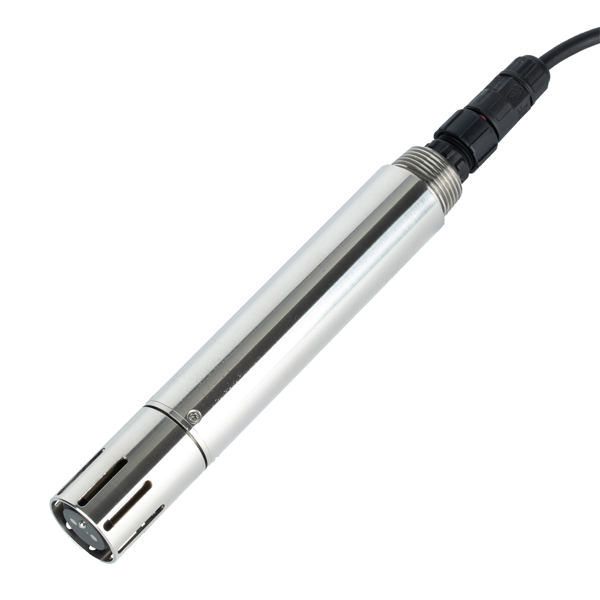
For highly corrosive environments, NiuBoL provides conductivity sensors using PTFE material and inductive (electromagnetic induction) designs to avoid corrosion problems caused by direct contact between electrodes and media.
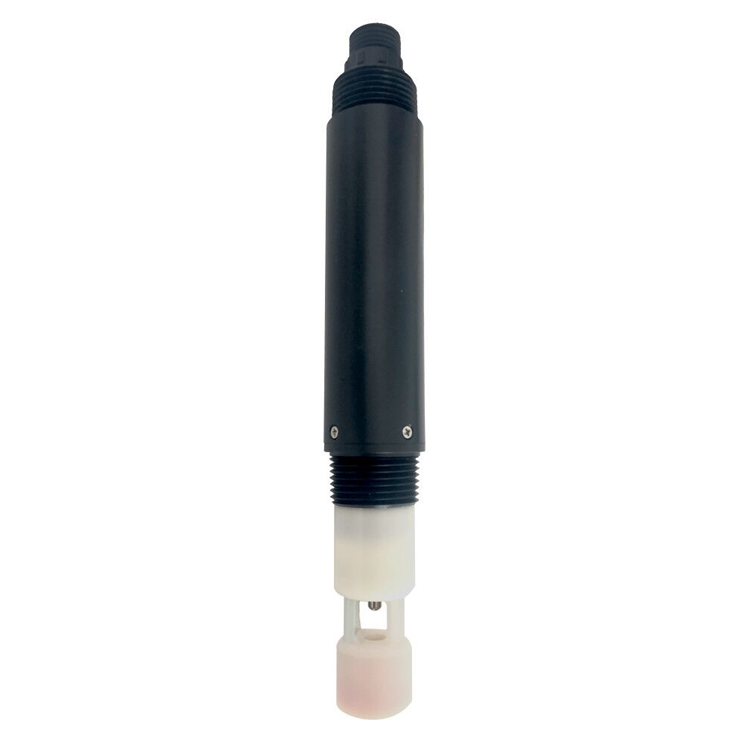
As a core dimension for measuring water quality and electrolyte characteristics, the measurement accuracy of conductivity is directly related to the safety of industrial production and the compliance of environmental governance. From complex tensor physical definitions to conductivity cell design in actual engineering, every technical detail determines the reliability of the data.
By integrating NiuBoL high-precision conductivity sensors with intelligent monitoring platforms, enterprises can not only achieve real-time dynamic perception of water quality but also seamlessly integrate environmental parameters into digital management systems relying on standardized protocols such as RS485 (Modbus-RTU). In the future, with the deepening of IoT technology, high-stability conductivity monitoring will continue to contribute key strength to the sustainable utilization of global water resources.
 NBL-WQ-EC water quality conductivity sensor.pdf
NBL-WQ-EC-4A Online water Conductivity Sensor.pdf
Related recommendations
Sensors & Weather Stations Catalog
Agriculture Sensors and Weather Stations Catalog-NiuBoL.pdf
Weather Stations Catalog-NiuBoL.pdf
Agriculture Sensors Catalog-NiuBoL.pdf
Water Quality Sensor Catalog-NiuBoL.pdf
Related products
 Combined air temperature and relative humidity sensor
 TDR Soil Moisture & Temperature Sensor for irrigation| RS485 |4-20mA| NBL-S-THR
 Soil pH sensor RS485 soil Testing instrument soil ph meter for agriculture |NBL-S-PH
 Wind Speed sensor Output Modbus/RS485/Analog/0-5V/4-20mA
 Tipping bucket rain gauge for weather monitoring auto rainfall sensor RS485/Outdoor/stainless steel
 Pyranometer Solar Radiation Sensor 4-20mA/RS485

Screenshot, WhatsApp to identify the QR code
WhatsApp number:+8615367865107
(Click on WhatsApp to copy and add friends)

