





— Blogs —
—Products—
 Consumer hotline +8618073152920
WhatsApp:+8615367865107
Address:Room 102, District D, Houhu Industrial Park, Yuelu District, Changsha City, Hunan Province, China
Product knowledge
Time:2026-06-06 09:36:30 Popularity:408
Quick Answer: ORP water analyzer installation should allow the electrode to be removed, kept in the correct storage condition and returned to the same representative water point. For the NiuBoL NBL-WQ-ORP, check mounting orientation, process isolation and reference-electrode care before commissioning. After maintenance, verify the electrode and the acquired mV value before restoring automatic control.
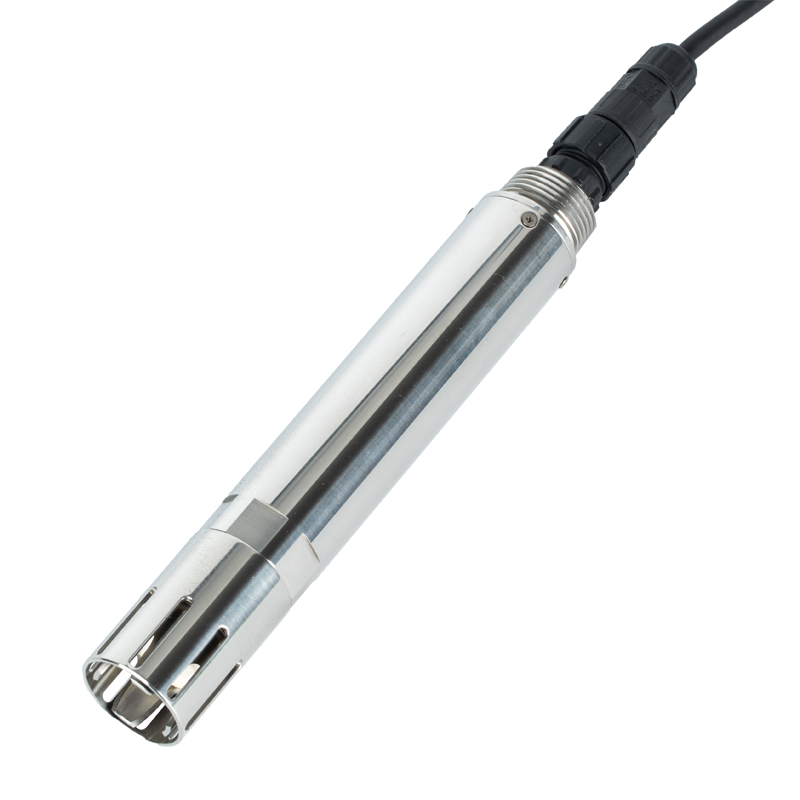
A probe that can be installed but cannot be safely removed is a recurring maintenance problem. Check access from the normal working platform, clearance for the complete probe and room to place a verification vessel. Allow operators to inspect the sensing end without leaning over an unprotected tank or carrying a wet electrode into an unsuitable electrical area.
For an immersed installation, use a rigid support and strain relief appropriate to the process. Mark the mounting position so the sensing region returns to the same depth and orientation after servicing. Keep it below the minimum operating water level but clear of settled material and direct chemical injection. Do not use the cable to suspend or retrieve the instrument.
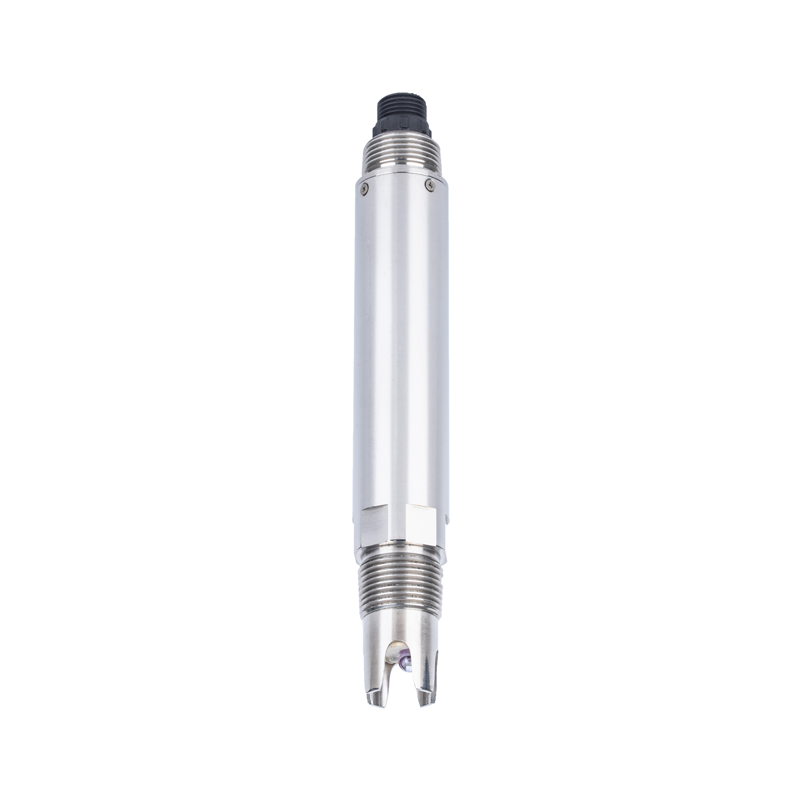
For a pipe installation, confirm the complete fitting, seal, isolation and depressurization arrangement. A 3/4 NPT thread on a sensor does not create a retractable assembly. Do not loosen a probe from a live pressurized fitting merely because the sensor's operating pressure includes the normal line pressure.
Do not mount the NBL-WQ-ORP horizontally or upside down. Maintain at least 15 degrees of inclination from horizontal, position the measuring end downward and support the assembly so routine handling cannot leave it inverted. Confirm the drawing for the ordered assembly before fabricating a custom bracket.
Reference-electrode behavior depends on proper internal contact and sample contact. A mounting change can therefore affect recovery even when the platinum surface looks clean. If a reading changes after service, check orientation and immersion before assuming that the process has changed or adding an offset.
Similar-looking water-quality probe housings can contain different measuring elements. Identify the model and its service procedure rather than assigning the same storage liquid, cleaning agent or calibration sequence to every probe in the cabinet.
| Installation item | NBL-WQ-ORP requirement |
|---|---|
| Measurement | Platinum electrode method; -1500 to +1500 mV |
| Resolution / accuracy | 1 mV / +/-20 mV |
| Response / calibration | T90 below 30 s; one-point calibration |
| Water conditions | 0-50 degrees C; pressure at or below 0.2 MPa |
| Housing / protection | ABS/PC alloy; IP68 |
| Mounting interface | 3/4 NPT; immersion or suitable pipe installation |
| Output | RS485 Modbus RTU |
| Supply / consumption | 12-24 V DC; 0.2 W at 12 V |
| Cable | Standard 5 m; other lengths customizable. Confirm jacket suitability and the installed route. |
These limits describe the standalone NiuBoL ORP sensor, not every ORP channel available in a multiparameter assembly. Verify the reference system, wiring and protocol for the actual device. IP68 also does not establish the protection of a field joint or control enclosure.
Before removal, record the raw potential, water temperature, process state and any existing comparison result. Put affected control functions into the authorized maintenance state. Then isolate the relevant electrical and process connections using the site's safe-work procedure. Do not disconnect wiring while energized or withdraw a probe before the process connection is safe.
Inspect the sensing end, reference junction, seals and cable for deposits or damage. Record what was found before cleaning. Otherwise a later improvement cannot be distinguished from an undocumented change in sample location or instrument condition. Use a deposit-specific cleaning procedure compatible with the ordered electrode; abrasive cleaning and improvised chemical mixtures can create a new fault.
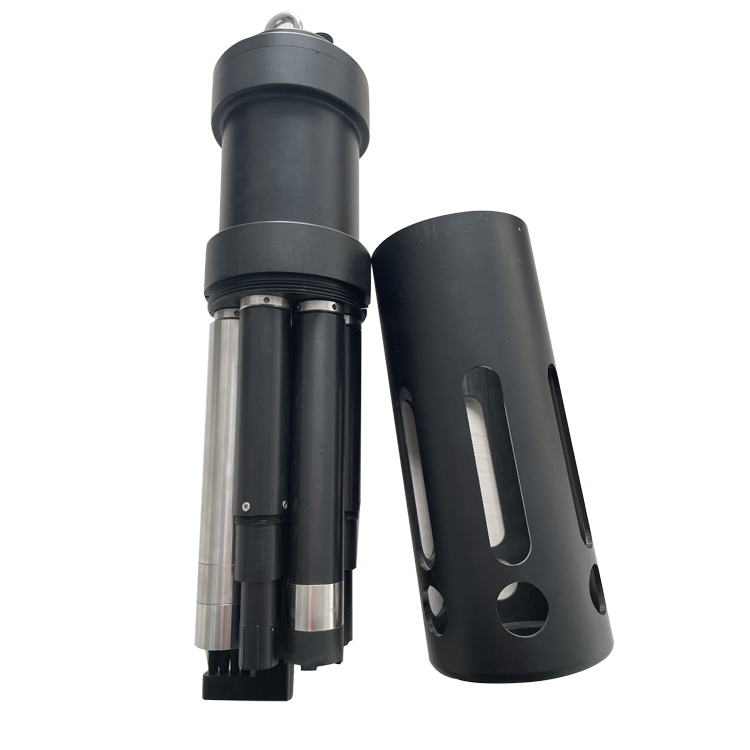
For long-term storage, keep this standalone ORP electrode moist in a protective sleeve containing 3 mol/L KCl. Use the specified storage procedure for that assembly; do not substitute a dry cap or assume deionized water is an equivalent storage medium. A multiparameter station, illustrated below, may contain elements requiring different storage treatment.
Electrode check: use a suitable ORP verification standard and its applicable temperature/reference value. Allow the reading to stabilize. If the result is outside the agreed tolerance, investigate standard condition, contamination and the electrode before changing calibration. The 1 mV display increment is not an appropriate acceptance tolerance for a +/-20 mV instrument.
Installed-water check: restore the marked position, representative water contact and sample exchange. Check for trapped air, an altered bypass or a mounting location moved into a dosing plume. Do not force agreement with an open sample that has cooled or aerated while the process probe remains in the tank.
Data check: compare the acquired PLC or RTU value with the checked instrument output. Confirm mV units, signed-data interpretation and the configured address. Verify that the controller clears its maintenance state only after a valid fresh reading is available. A successful Modbus reply alone does not complete the restart.
Reference-scale and temperature comparisons are covered in the separate ORP temperature-effects article. Keep that interpretation separate from mounting and withdrawal decisions.
For a replacement or installation enquiry, provide the model, process chemistry, water temperature and pressure, mounting photograph, withdrawal clearance and cable route. Identify whether the quotation must include a bracket, compatible fitting, isolation hardware, verification materials or a controller. Those items affect the installed cost more meaningfully than comparing bare-probe prices alone.
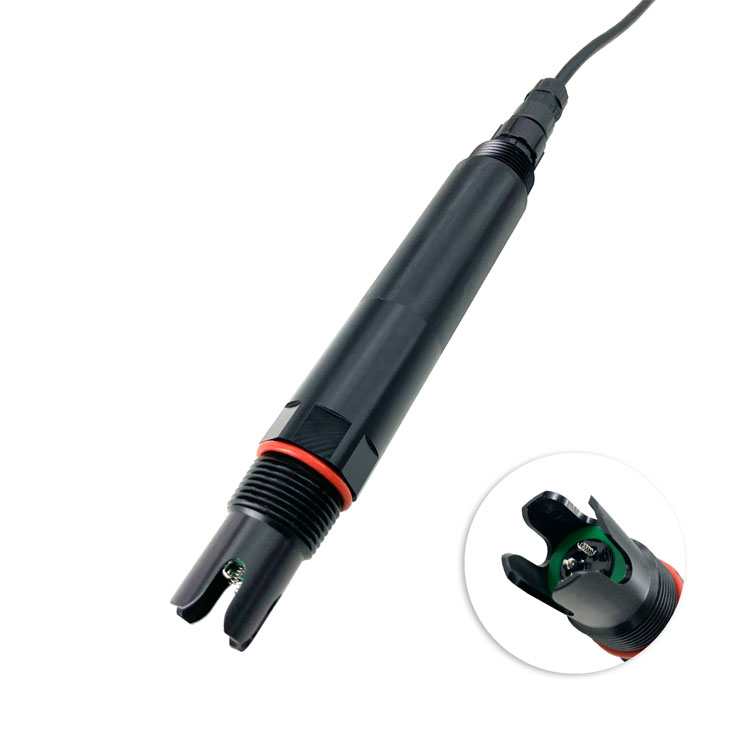
The chlorine probe below is a separate instrument. If it shares a monitoring station with ORP, give it its own sampling and restart checks; the ORP storage and verification procedure is not a chlorine-sensor service instruction.
Not for this standalone model. Its guidance calls for at least 15 degrees from horizontal and excludes upside-down installation. Confirm the ordered assembly's drawing and support the measuring end in the intended downward orientation.
Only an appropriately engineered withdrawal arrangement can permit that operation. A sensor thread and pressure rating alone are insufficient. Isolate and depressurize an ordinary fitting before removal under the site's procedure.
No. It checks part of the measuring assembly. Also verify the installed sample, mounting position and fresh PLC reading before authorizing automatic control.
No. Cleaning can reveal the actual measurement again. Check the standard, sample condition and reference basis first; change calibration only when justified by the specified procedure.
Keep the full model, reference details, fitting drawing, wiring definition, register map and accepted comparison results. A photograph of the housing alone cannot establish interchangeability.
An ORP installation is maintainable when the electrode can be removed safely and returned to a known measuring condition. Plan access, orientation and isolation at design stage, then verify electrode response, sample contact and data acquisition separately after each service intervention.
Prev:NTU Monitoring in Water Treatment: Read Trends Across Process Stages
Next:Pond DO and Turbidity Monitoring: Investigate Cloudy Water Without Guessing
Related recommendations
Sensors & Weather Stations Catalog
 Agriculture Sensors and Weather Stations Catalog-NiuBoL.pdf
Weather Stations Catalog-NiuBoL.pdf
Agriculture Sensors Catalog-NiuBoL.pdf
Water Quality Sensor Catalog-NiuBoL.pdf
Related products
 Combined air temperature and relative humidity sensor
 TDR Soil Moisture & Temperature Sensor for irrigation| RS485 |4-20mA| NBL-S-THR
 Soil pH sensor RS485 soil Testing instrument soil ph meter for agriculture |NBL-S-PH
 Wind Speed sensor Output Modbus/RS485/Analog/0-5V/4-20mA
 Tipping bucket rain gauge for weather monitoring auto rainfall sensor RS485/Outdoor/stainless steel
 Pyranometer Solar Radiation Sensor 4-20mA/RS485


Screenshot, WhatsApp to identify the QR code
WhatsApp number:+8615367865107
(Click on WhatsApp to copy and add friends)

