





— Blogs —
—Products—
 Consumer hotline +8618073152920
 WhatsApp:+8615367865107
Address:Room 102, District D, Houhu Industrial Park, Yuelu District, Changsha City, Hunan Province, China
Product knowledge
Time:2026-06-20 15:45:28 Popularity:236
A portable soil temperature moisture tester is designed for field measurement, sampling verification, patrol inspection, and agricultural research tasks where fixed monitoring stations are not enough. It allows technicians to collect soil temperature, moisture, pH, salinity, and conductivity data at multiple points, then store and export records for analysis. For contractors and agricultural service teams, the tester is a practical tool for site investigation, commissioning, and routine field checks.
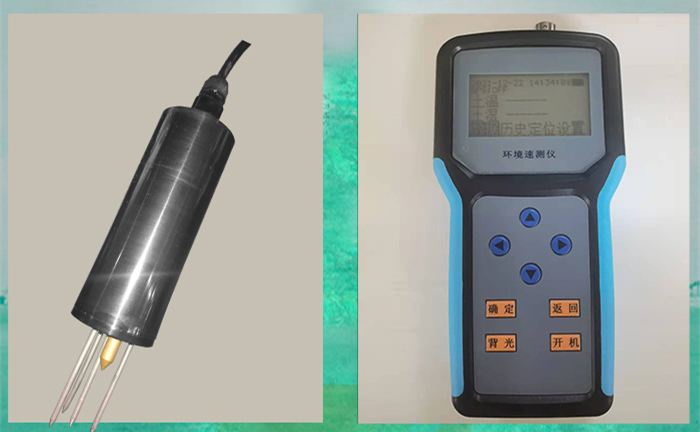
The first advantage is portability. A handheld design allows technicians to move between plots, greenhouses, orchards, storage areas, and research points without installing fixed equipment. The second advantage is reliable operation. The tester can display real-time values in the field and support repeated measurement during inspection.
The third advantage is long record tracking. Data can remain stored after unexpected power loss, which is important when field teams collect many points in one day. The fourth advantage is software support, including data download, Excel storage, and curve generation. The fifth advantage is low power consumption, and the sixth is a large display that shows values, groups, and low-voltage warnings clearly.
A portable tester can measure soil temperature, soil moisture, pH, salinity, and conductivity depending on the selected probes. One host can work with multiple sensor types, which reduces equipment quantity for field teams and makes site surveys more efficient.
This capability is useful during project design. Before fixed sensors are installed, a technician can measure several candidate points and compare soil conditions. During commissioning, the tester can provide a field reference for checking whether installed sensors are located correctly.
| Parameter | Measurement Range | Resolution / Accuracy |
|---|---|---|
| Soil temperature | -50 to 80 C | 0.1 C / +/-0.5 C |
| Soil moisture | 0 to 100%RH | 0.1%RH / +/-3%RH |
| Soil salinity | 0 to 8000mg/L | 1mg/L / +/-50mg/L |
| Soil conductivity | 0 to 10mS/cm | 0.01mS/cm / +/-5% |
| Soil pH | 0 to 14PH | 0.01PH / +/-0.02PH |
| Storage | 20,000 records | Suitable for multi-point field sampling |
| Communication | USB | Data export to computer for backup and analysis |
| Power | 4000mAh lithium battery | Supports mobile field operation |
| Host size | 100 x 200 x 28mm | Portable handheld structure |
| Working environment | -20 to 80 C; 5%RH to 95%RH | Suitable for common field measurement conditions |
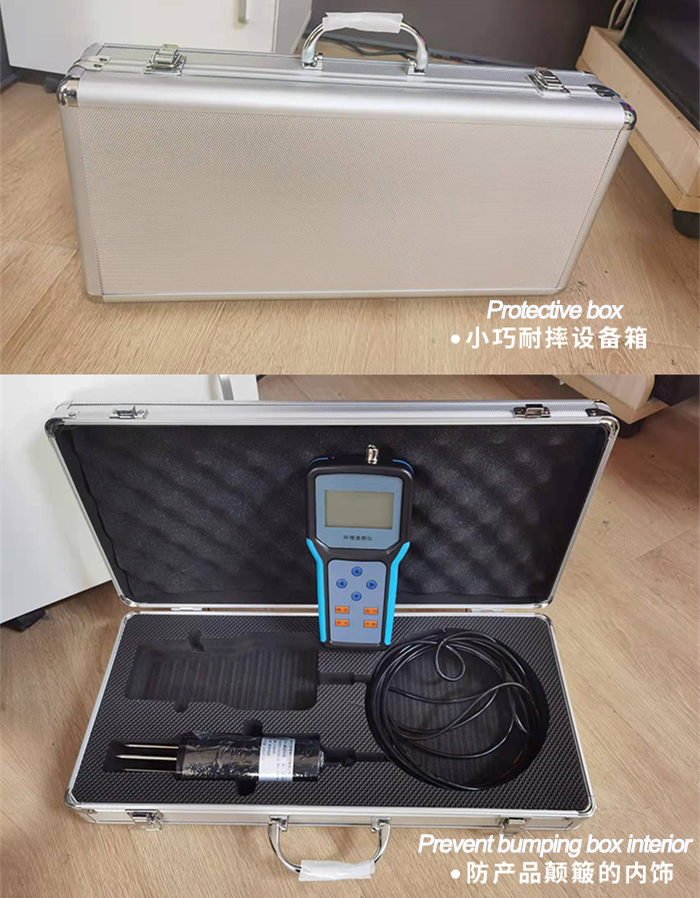
Fixed soil monitoring stations are excellent for continuous observation, but portable testers are better for mobile inspection. A service team can use the tester to investigate new fields, compare irrigation zones, verify greenhouse beds, check abnormal areas, or evaluate soil conditions before installing permanent probes.
In many projects, the best result comes from using both. Fixed stations provide long-term trend data, while portable instruments provide flexible point checks. This combination helps the owner understand both continuous changes and spatial differences across the site.
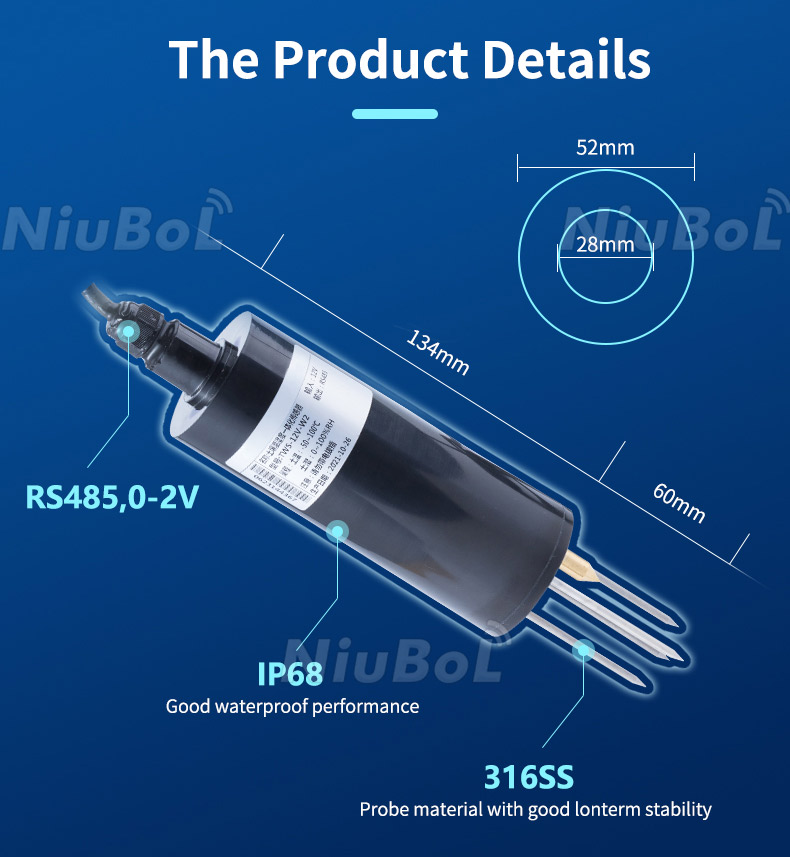
The tester can store up to 20,000 records and support manual or automatic recording. After measurement, data can be downloaded through USB and saved in Excel format for analysis, reporting, or long-term archive. GPS positioning can also help identify measurement points when the workflow requires location records.
For field teams, the recommended workflow is to define sampling points in advance, record crop type and soil condition, measure at consistent depth, and export data with clear file names. This prevents confusion when multiple technicians collect data across a large site.
The host can identify sensor types automatically, reducing manual setup errors. Interchangeable probes allow one instrument to support different soil or agricultural parameters. If a project later requires additional measurement capability, the team may only need to add compatible sensors rather than purchase a new host.
This is useful for contractors who serve different project types. A single portable platform can support farm surveys, forestry checks, hydrology-related sampling, storage environment inspection, and scientific research tasks when suitable probes are selected.
Procurement teams should check measurement range, accuracy, resolution, storage capacity, battery capacity, communication method, probe durability, display readability, and software export format. The selected tester should match the measurement task and expected field environment.
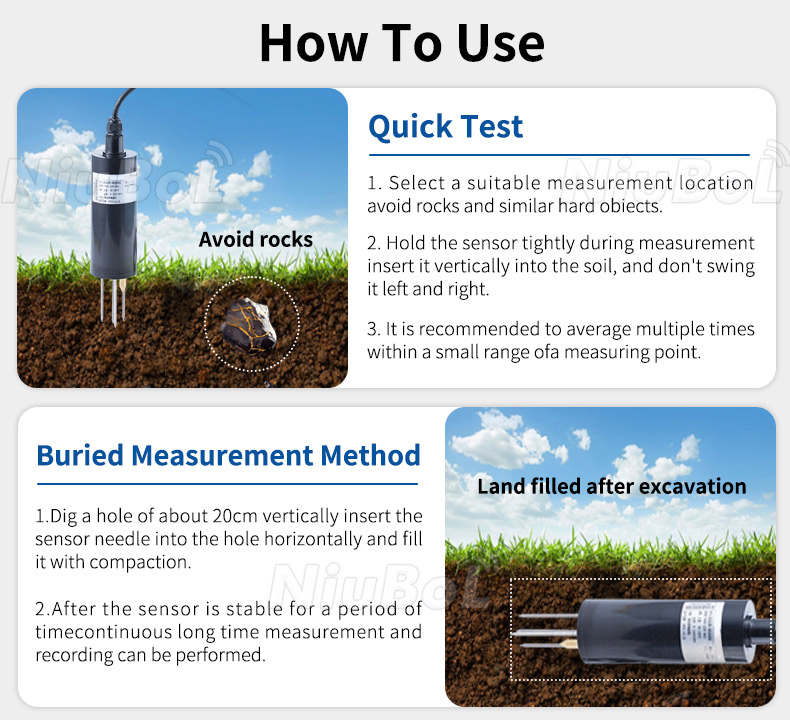
During use, the probe should be inserted correctly, kept stable during reading, and cleaned according to the sensor type. Soil condition, compaction, stones, and uneven contact can affect readings, so technicians should follow a consistent method when collecting comparable data.
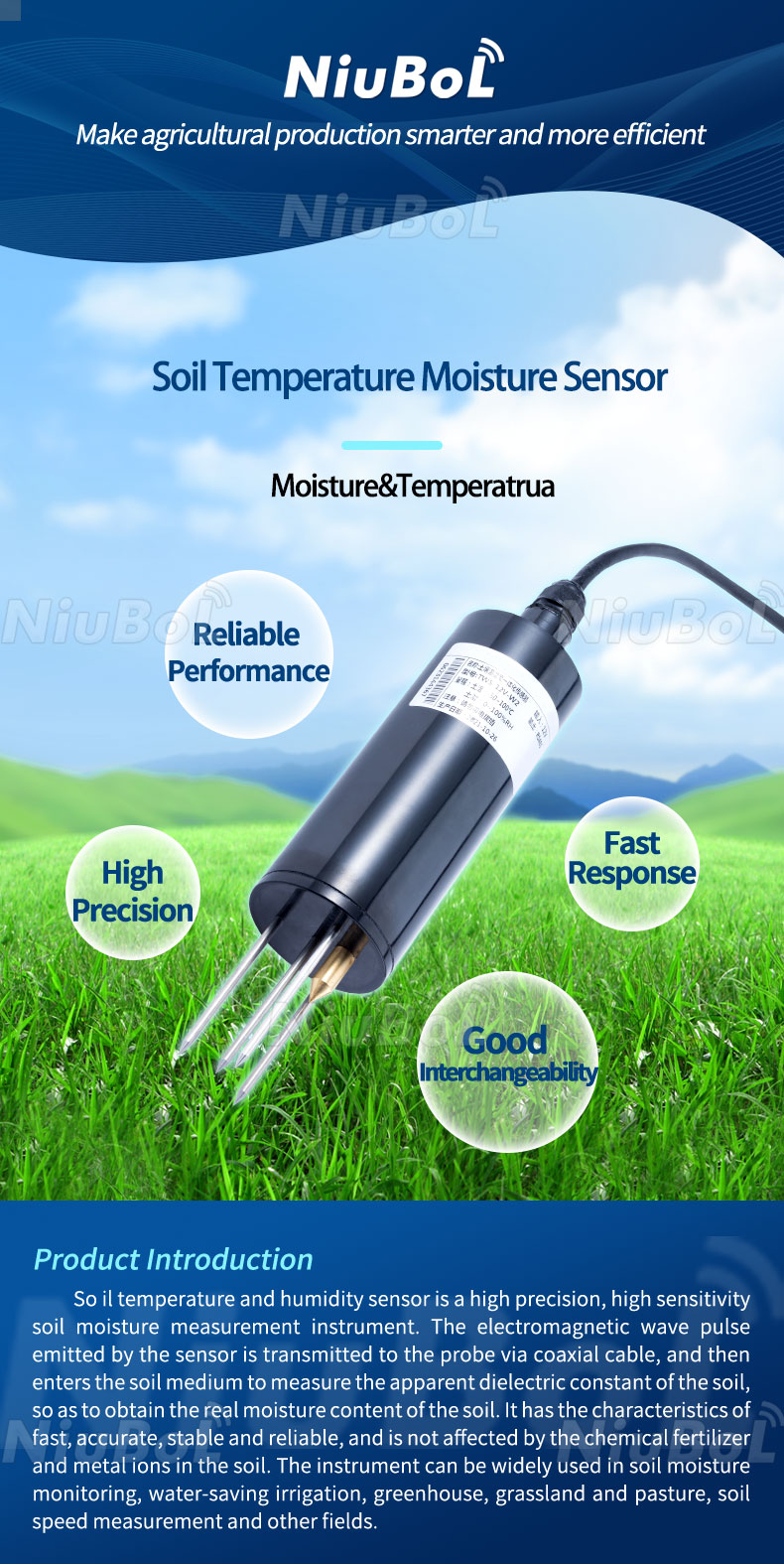
A portable tester can also support training and handover. After a fixed monitoring project is completed, the owner can use the tester to check additional points, compare field conditions, and understand how soil water or salinity changes across the farm.
For integrators, including a portable tester in the solution can reduce service pressure because the owner has a practical tool for field verification. It also makes the project more complete when the customer needs both continuous monitoring and flexible inspection.
A reliable field procedure starts with a sampling plan. Technicians should define locations, measurement depth, crop condition, recent irrigation status, and soil notes before taking readings. If the same plot is measured repeatedly, the team should use a consistent route and depth so the records can be compared over time.
The probe should be inserted firmly with full soil contact and kept stable until the reading settles. If the soil is extremely dry, stony, loose, or compacted, the condition should be noted because it may influence the reading and the interpretation of results.
During early survey, the tester helps identify field variation and choose locations for fixed sensors. During installation, it can verify whether selected points are reasonable. During operation, it supports patrol inspection when platform data appears abnormal or when the owner wants to compare additional points.
This makes the tester a service tool as well as a measurement device. Contractors can use it to reduce guesswork, explain soil differences to customers, and support written reports with field records rather than subjective observation only.
After measurements are exported, file names should include date, project, plot, technician, and parameter type. If GPS is used, coordinates should be kept with the record. Clear data management prevents confusion when several teams collect soil measurements across different fields.
For recurring projects, the same Excel structure should be used every time. Consistent columns make it easier to compare soil moisture, temperature, salinity, conductivity, and pH across seasons, management zones, and crop stages.
Portable readings are especially useful when a manager suspects that two areas are behaving differently. The team can compare a normal zone with a problem zone and record the difference in moisture, temperature, salinity, conductivity, or pH. This gives a stronger basis for later action.
For example, a low-moisture reading in one block may indicate uneven irrigation, soil compaction, or a distribution problem. A salinity difference may guide further laboratory testing or drainage review. The tester helps narrow the investigation before larger changes are made.
A complete service package should include the host, required probes, USB cable, software, battery charger, portable case, and user guidance. If the team serves several project types, it should confirm which probes are interchangeable and which measurement ranges are needed.
Buying only the host without a clear probe plan can limit usefulness. The selected sensor set should match the environments the service team expects to visit, such as open fields, orchards, greenhouses, storage areas, or research plots.
Repeated field measurements need quality control. Technicians should avoid changing insertion depth between points, should clean probes where necessary, and should record unusual soil conditions. These steps help prevent misleading comparisons.
When several technicians work together, a short measurement standard should be used. Consistent operation is what makes portable data useful for reports, acceptance checks, and customer communication.
Portable readings should be rechecked when the result conflicts with field conditions, when the probe was inserted into loose soil, or when stones and roots affect contact. A second reading nearby can confirm whether the value represents the area or only a poor measurement point.
This habit improves confidence in reports and prevents a single abnormal value from driving the wrong field decision, particularly when readings will be used for acceptance records or customer reports.
It is used for mobile soil measurement, field inspection, project investigation, sensor location planning, and agricultural research. It is especially useful when technicians need to collect data at many points without installing fixed monitoring equipment.
Depending on the selected probes, it can measure soil temperature, soil moisture, soil salinity, soil conductivity, soil pH, and related agricultural environmental parameters. One host can work with multiple sensor types, which helps field teams handle different tasks.
A fixed station provides continuous data from selected points, while a portable tester provides flexible measurements across many points. The fixed station is better for long-term trend monitoring, and the portable tester is better for site survey, patrol inspection, and verification.
Field teams may collect many records during one inspection. Internal storage prevents data loss and allows records to be exported later for reporting and analysis. Storage is also important when power interruption or long travel time makes immediate computer connection impractical.
Yes. It can be used to compare candidate locations, soil depths, moisture differences, salinity patterns, and field variability before fixed sensors are installed. This helps contractors choose representative sensor positions and reduce later adjustments.
A good workflow includes predefined sampling points, consistent insertion depth, stable probe contact, location notes, crop or soil labels, and regular data export. Consistency is necessary if the data will be used for comparison or acceptance records.
Procurement should check measurement range, accuracy, resolution, storage capacity, battery capacity, USB export, software compatibility, probe type, working environment, and accessories such as carrying case and cable. The tester should match both the field task and the reporting requirement.
NiuBoL provides soil measurement instruments and sensors suitable for agricultural, forestry, hydrology, storage, and research applications. The portable tester supports multi-parameter measurement, data storage, USB export, and practical field use for service teams and project contractors.

A portable soil temperature moisture tester is most valuable when it becomes part of a field measurement workflow. It supports site investigation, sensor placement, patrol inspection, and project verification, while multi-parameter probes and data export improve reporting efficiency. For projects that require both continuous monitoring and flexible sampling, NiuBoL portable soil measurement equipment provides a practical field tool.
Prev:Soil Moisture Monitoring Station Performance for Irrigation and Drought Management Projects
Next:Dust Monitoring Equipment Three Methods for Construction Site Environmental Supervision
Related recommendations
Sensors & Weather Stations Catalog
 Agriculture Sensors and Weather Stations Catalog-NiuBoL.pdf
Weather Stations Catalog-NiuBoL.pdf
Agriculture Sensors Catalog-NiuBoL.pdf
Water Quality Sensor Catalog-NiuBoL.pdf
Related products
 Combined air temperature and relative humidity sensor
 TDR Soil Moisture & Temperature Sensor for irrigation| RS485 |4-20mA| NBL-S-THR Soil pH sensor RS485 soil Testing instrument soil ph meter for agriculture |NBL-S-PH
 Wind Speed sensor Output Modbus/RS485/Analog/0-5V/4-20mA
 Tipping bucket rain gauge for weather monitoring auto rainfall sensor RS485/Outdoor/stainless steel
 Pyranometer Solar Radiation Sensor 4-20mA/RS485

Screenshot, WhatsApp to identify the QR code
WhatsApp number:+8615367865107
(Click on WhatsApp to copy and add friends)

