





— Blogs —
—Products—
 Consumer hotline +8618073152920
WhatsApp:+8615367865107
Address:Room 102, District D, Houhu Industrial Park, Yuelu District, Changsha City, Hunan Province, China
Product knowledge
Time:2026-09-07 10:00:00 Popularity:206
A portable water quality meter is useful for location surveys, spot measurements and independent checks of an installed monitoring point. Select the probe and reader as a working field kit: required parameters, valid calibration, battery endurance, sample access and exportable records all matter. An online RS485 probe does not become a complete portable meter without a compatible power supply, reader and practical field arrangement.
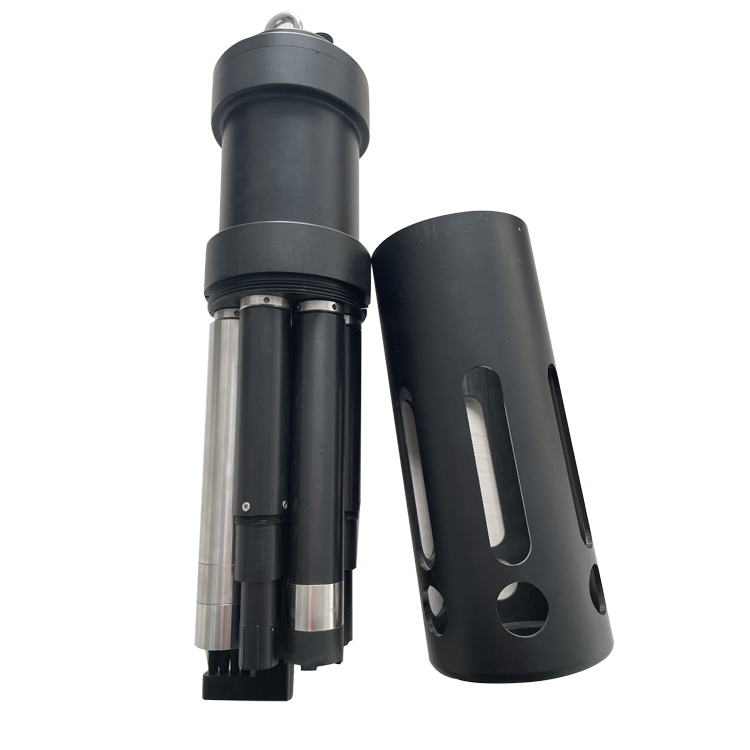
A technician checking one treatment outlet needs a different kit from a team surveying several pond depths or visiting many remote sites. Define what must be measured, how the team reaches the water and what evidence must be brought back. A long channel list is not useful if the instrument cannot be handled, calibrated or identified reliably during the visit.
For a location survey, the meter helps reveal differences between positions or depths. For a routine route, it needs repeatable point identifiers and an efficient checking procedure. For commissioning, it must provide a suitable comparison with the installed measurement. Each task should be assessed separately before one kit is expected to perform them all.
The USGS guidance on multiparameter field instruments includes maintenance, calibration, troubleshooting and reporting. Those activities are part of producing usable field results, not accessories that can be omitted once a probe has been purchased.
A portable result is independent only to the extent that its method and checks justify that description. Two devices using similar optical principles can share a matrix bias. Two pH instruments can both be wrong if calibrated with the same contaminated buffer.
| Task | Required capability | Common comparison mistake |
|---|---|---|
| DO check at an online point | Suitable oxygen method, compensation and stable immersion | Comparing water from a splashed bucket with an immersed probe |
| pH verification | Valid buffers, electrode condition and recorded temperature | Recalibrating both meters until they agree without checking standards |
| Turbidity comparison | Compatible optical convention and controlled sample handling | Assuming all NTU readings are method-equivalent |
| Depth survey | Safe access, suitable cable and recorded depth | Treating a surface measurement as representative of the full water column |
| Laboratory correlation work | Matched samples and the correct analytical method | Calling a second field estimate a laboratory reference |
Confirm that the quoted package includes the display or reader, compatible probes, power arrangement, cables, storage provisions and export method. Check whether connectors tolerate the intended wet handling and whether the instrument can be operated while wearing the required protective equipment.
Test battery endurance with the fitted channels and actual use pattern. Screen operation, logging and any communications can change consumption. Do not infer a complete kit's operating time from the power rating of one probe. Include the charging method and a practical reserve for a long route.
Review probe storage by sensing element. A pH electrode and a fluorescence DO cap do not necessarily use the same storage method. A multi-probe carrying case should keep fragile ends protected without forcing every sensor into one unsuitable storage condition.
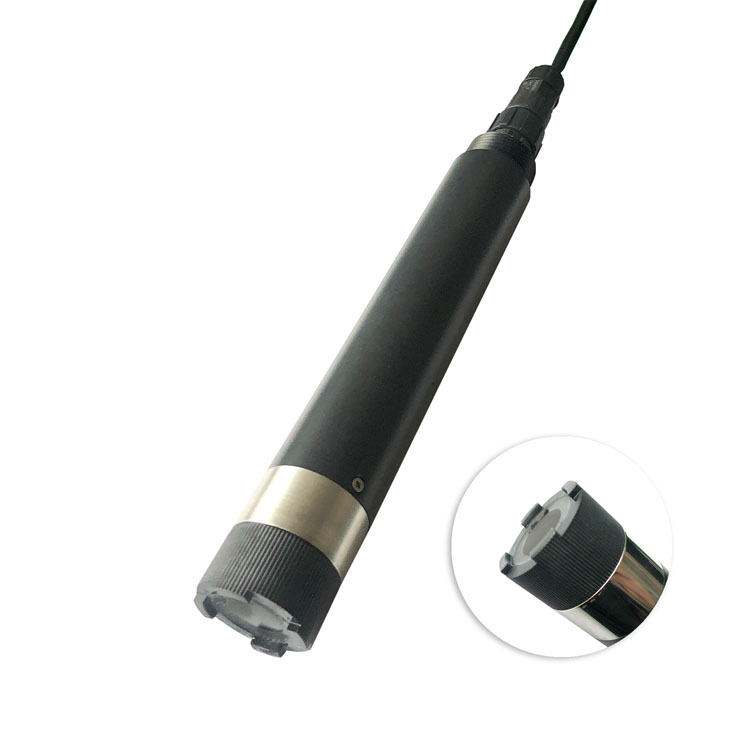
For a flow-cell installation, a portable probe lowered into a nearby tank may not be comparing the same water. Consider sample transport delay and where a matched reference can be taken. If the measurement cannot be reproduced without changing the sample, record that limitation instead of declaring one result correct.
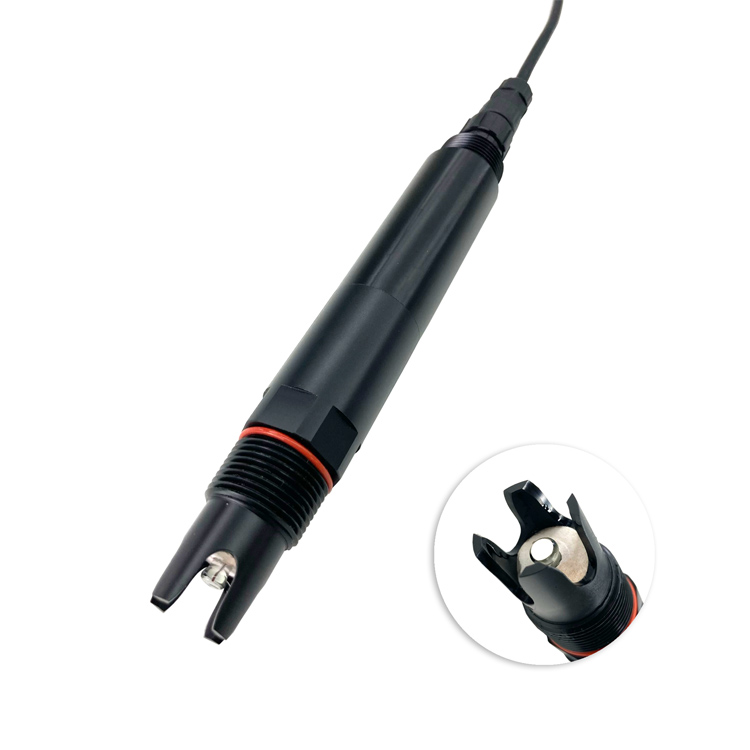
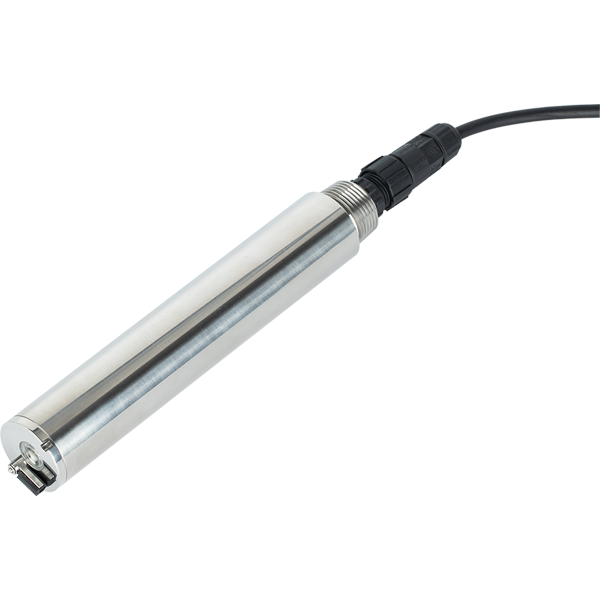
NiuBoL offers individual online probes and multi-parameter assemblies. The NBL-WQ-DO and NBL-WQ-PH illustrate different sensing and handling requirements. Their specifications describe the probes, not an unspecified handheld reader or a complete battery-powered kit.
| Item | NBL-WQ-DO | NBL-WQ-PH |
|---|---|---|
| Principle | Fluorescence dissolved oxygen | pH electrode measurement |
| Range | 0-20 mg/L | 0-14 pH |
| Resolution | 0.01 mg/L | 0.01 pH |
| Accuracy | +/-2% F.S.; temperature +/-0.3 deg C | +/-0.1 pH; temperature +/-0.3 deg C |
| Operating conditions | 0-45 deg C; below 0.2 MPa | 0-65 deg C; below 0.2 MPa |
| Supply and consumption | 12-24 VDC; below 0.3 W at 12 V | 12-24 VDC; 0.2 W at 12 V |
| Interface | RS485, Modbus RTU | RS485, Modbus RTU |
| Materials and protection | POM and 316L stainless steel; IP68 | POM; IP68 |
| Standard cable | 5 m; custom lengths available | 5 m; custom lengths available |
The DO accuracy is expressed against full scale. On a 20 mg/L span, +/-2% F.S. corresponds to +/-0.4 mg/L; it is not +/-2% of every reading. Use that distinction when deciding whether a proposed comparison can resolve the difference that matters to the site.

Protect the DO sensing cap against scraping and deposits. Although fluorescence measurement does not consume oxygen, a damaged or fouled cap still needs attention. Check the selected compensation settings before comparing fresh and saline waters.
For the NBL-WQ-PH electrode, use the appropriate 3.5 mol/L KCl storage arrangement. Do not leave it dry or store it for long periods in deionised water. Rinsing for measurement and long-term storage are different operations. Keep buffer solutions clean and identify their value and temperature basis.
Plan cleaning between sites according to the water and site requirements. Separate dirty accessories from clean standards and storage items. Record any exposure that could contaminate the next point or damage the sensing element, rather than continuing the route with an unverified probe.
The exported file should identify point, time, parameter, unit and the result's status. For a depth survey, record the actual depth for each observation. For a maintenance check, distinguish the as-found reading from the result after cleaning or calibration.
If an RS485 Modbus RTU reader is used, verify it against the exact probe's register map. A reader that powers the sensor but misinterprets decimal scaling is not a successful integration. Confirm whether values, timestamps and configuration can be exported without manual transcription.
Record a failed or unstable channel explicitly. Reusing the previous valid result in a new site's row creates misleading evidence. A clear missing value with a reason is preferable to a plausible number that was not measured.
Not for events outside the visit. A portable kit provides observations when and where it is used. Continuous warning needs suitable installed equipment, power, recording and an operating response.
It must provide suitable power and implement the exact communication settings and register interpretation. RS485 compatibility alone does not guarantee correct values, units, logging or channel support.
Keep both as-found results, verify the portable instrument and check that the water, timing, units and methods are comparable. Inspect the online point before calibration is changed. Do not choose a preferred number without investigating the difference.
No. The reader, connectors, battery enclosure and cable joints have their own ratings and conditions. Review the assembled kit for the actual wet handling and transport duty.
Tell NiuBoL which parameters and comparison tasks are required, the expected water conditions, access depth, number of sites per route and required records. Specify whether a complete portable arrangement or probes for an existing compatible reader are needed.
Demonstrate the required measurements, verification checks, practical battery operation and export of correctly identified records. Include a representative site visit; a powered display on the bench does not test the whole field workflow.
A portable water quality meter earns its place through a repeatable checking or survey task. Match the method, maintain each sensing element correctly and retain enough context to interpret comparisons. When NiuBoL probes are proposed, confirm the complete reader, power and recording arrangement instead of treating an online sensor as a ready-to-use handheld instrument.
Prev:Portable Weather Station for Agriculture: Field Use and Selection Guide
Next:Portable Soil Temperature and Moisture Meter: Survey Method for Field Teams
Related recommendations
Sensors & Weather Stations Catalog
 Agriculture Sensors and Weather Stations Catalog-NiuBoL.pdf
Weather Stations Catalog-NiuBoL.pdf
Agriculture Sensors Catalog-NiuBoL.pdf
Water Quality Sensor Catalog-NiuBoL.pdf
Related products
 Combined air temperature and relative humidity sensor
 TDR Soil Moisture & Temperature Sensor for irrigation| RS485 |4-20mA| NBL-S-THR
 Soil pH sensor RS485 soil Testing instrument soil ph meter for agriculture |NBL-S-PH
 Wind Speed sensor Output Modbus/RS485/Analog/0-5V/4-20mA
 Tipping bucket rain gauge for weather monitoring auto rainfall sensor RS485/Outdoor/stainless steel
 Pyranometer Solar Radiation Sensor 4-20mA/RS485


Screenshot, WhatsApp to identify the QR code
WhatsApp number:+8615367865107
(Click on WhatsApp to copy and add friends)

