





— Blogs —
—Products—
 Consumer hotline +8618073152920
 WhatsApp:+8615367865107
Address:Room 102, District D, Houhu Industrial Park, Yuelu District, Changsha City, Hunan Province, China
Product knowledge
Time:2026-09-08 17:00:00 Popularity:230
Quick Answer: A radar flow meter estimates open-channel discharge from surface velocity, water level and a channel model. Non-contact velocity still requires reliable level and channel geometry before discharge can be calculated. A radar level sensor alone measures distance or level; it does not directly measure flow velocity or establish discharge without an additional hydraulic relationship.
Water level is the elevation of the surface relative to a reference. Surface velocity describes the movement of water near that surface. Discharge is the volume passing a section per unit time, usually expressed in m3/s. These quantities are related, but none is automatically interchangeable with another.
A Doppler radar detects motion from the frequency shift of microwave echoes returned from the moving surface. The instrument's orientation determines how that motion relates to the flow direction. A separate ranging channel measures the distance to the water surface. With the mounting reference established, that distance can be converted to level or depth.
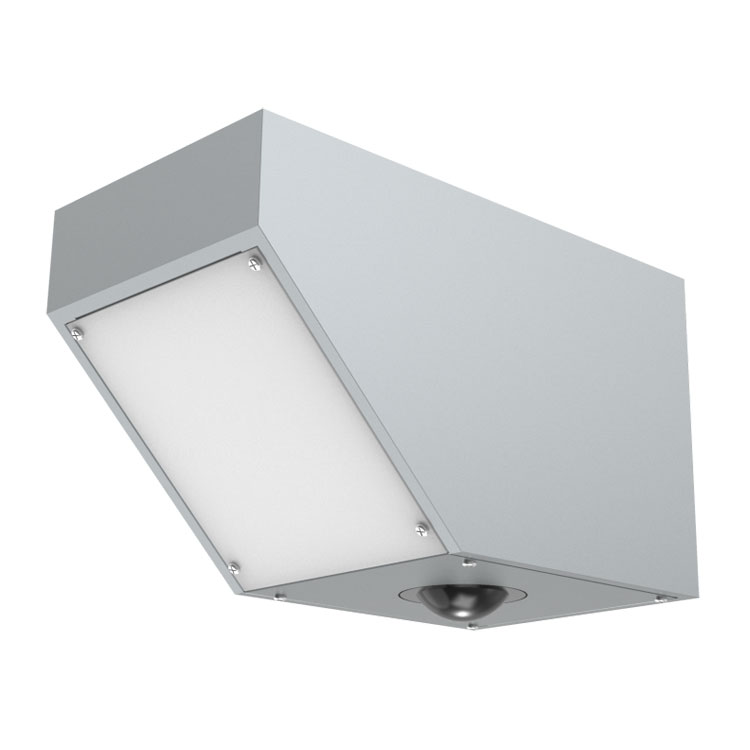
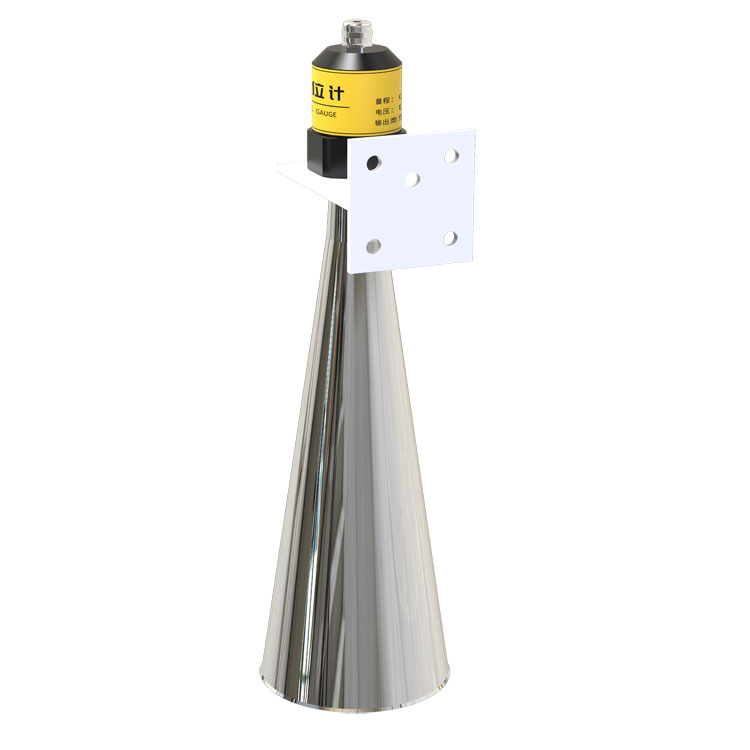
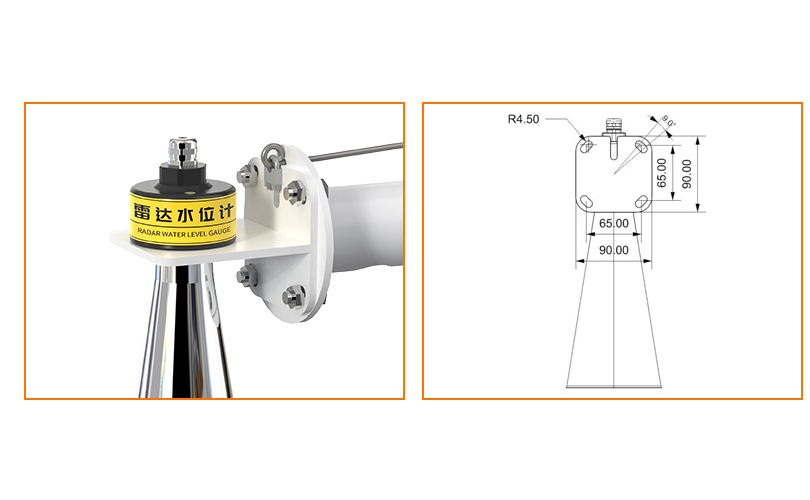
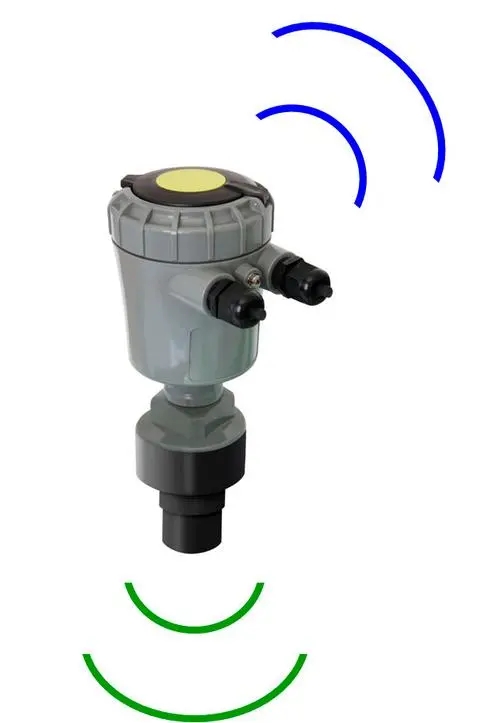
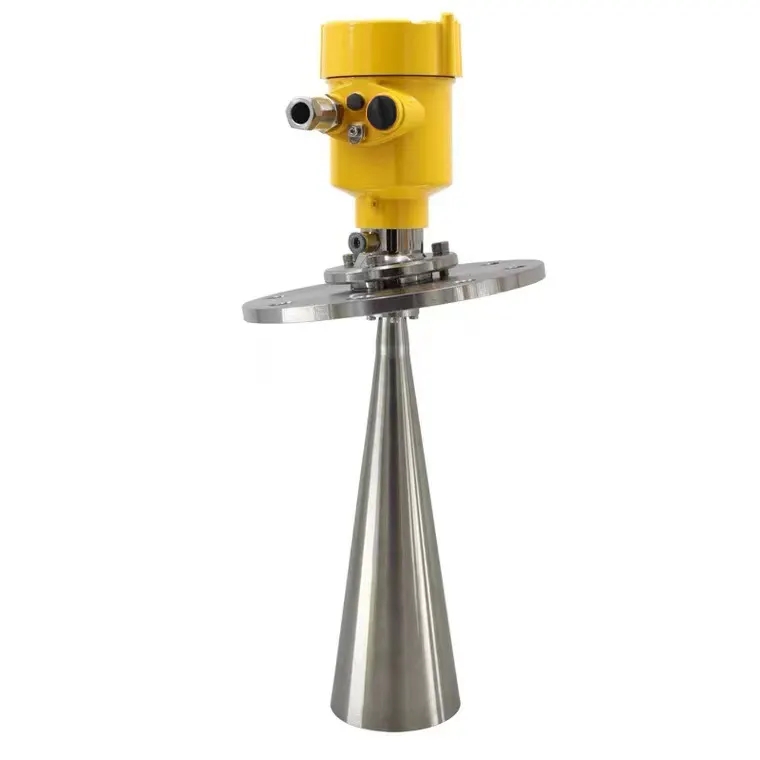
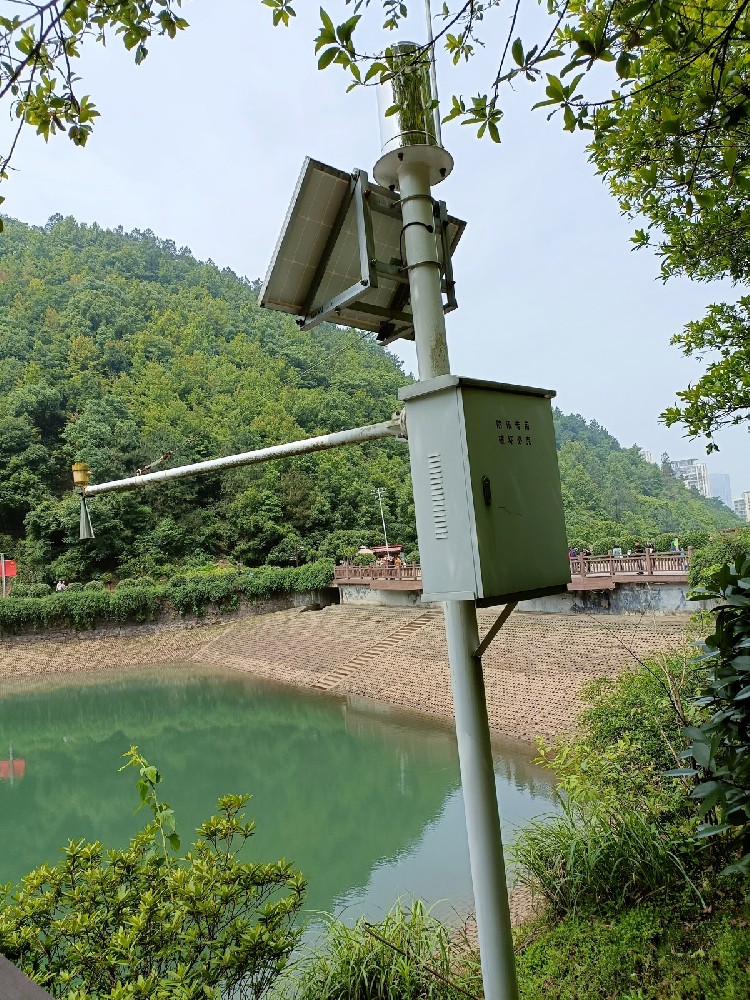
The radar level instruments pictured here illustrate the level-measurement part of a hydrological station. They should not be mistaken for integrated velocity-and-level meters. An integrated NiuBoL non-contact radar flowmeter combines both measurements and a flow calculation. Choose between these arrangements according to whether the project needs level only or a defensible discharge estimate.
The basic relationship is Q = A x Vmean, where Q is discharge in m3/s, A is wetted cross-sectional area in m2 and Vmean is cross-sectional mean velocity in m/s. A surface radar does not directly measure the velocity at every depth and position across that area. Its reading must be related to mean velocity by a site-appropriate model.
For a simplified calibrated relationship, Vmean = k x Vs, where Vs is the representative surface velocity and k is the conversion coefficient. Then Q = A x k x Vs. Do not apply the same conversion twice if the instrument already reports corrected mean velocity. Identify whether each output is surface velocity, modeled mean velocity or calculated discharge.
As an example, consider a rectangular channel 2.0 m wide and 0.60 m deep. Its wetted area is 1.20 m2. If surface velocity is 0.80 m/s and a site study establishes k = 0.85 for that condition, estimated discharge is 1.20 x 0.85 x 0.80 = 0.816 m3/s. The coefficient is an example, not a universal setting for NiuBoL instruments or all channels.
For an unchanged bed, a 0.05 m depth error in this example changes calculated area by 0.10 m2, or about 8.3%, before considering velocity error. Millimeter-level ranging specifications therefore do not guarantee whole-station discharge accuracy. A wrong mounting datum or outdated bed survey can dominate the result.
Start with a straight, stable reach where the observed surface motion represents the section. Avoid placing the beam over a recirculation zone, immediately beside a gate jet or behind a bridge pier. The convenient mounting point is not necessarily the useful measuring point.
Regular lined irrigation channels are easier to model than changing natural channels. For an irregular river section, confirm that the selected meter or external logger can use the required geometry and velocity relationship. A device configured only for rectangular or trapezoidal sections should not be treated as an arbitrary river-survey processor.
| Setting | Measurement difficulty | Suitable approach |
|---|---|---|
| Lined irrigation canal | Gate changes and low-water conditions can alter the velocity distribution. | Survey the section and compare discharge at several operating conditions before using totals for allocation. |
| Natural river | Floods, sediment and vegetation can change area and the surface-to-mean relationship. | Use a surveyed section and repeat checks after material channel changes. |
| Urban drainage channel | Debris, rapid surges and backwater can produce difficult surface returns. | Evaluate both rising and falling conditions and retain separate level and velocity records. |
| Reservoir or still-water monitoring | Surface motion may not represent net discharge. | Use level monitoring where level is the objective; do not infer flow from wind-driven surface motion alone. |
Non-contact mounting keeps the sensor out of abrasive or contaminated water, but sediment still affects the calculation. Deposition changes the flow area, while floating material or moving vegetation can interfere with the observed surface. Inspect these conditions instead of treating an above-water instrument as maintenance-free.
The following values apply to the NiuBoL integrated 24 GHz velocity and 76-81 GHz ranging configuration. They do not describe every level-only instrument shown on this page. Confirm the supplied configuration and its supported channel shapes before designing the station around these limits.
| Parameter | Integrated radar configuration | Limit to consider |
|---|---|---|
| Velocity range | 0.1-20 m/s; resolution 0.01 m/s | Do not assume reliable velocity measurement below the lower limit. |
| Velocity accuracy | +/-2% | Obtain the applicable test conditions and error basis; this is not a discharge accuracy claim. |
| Ranging channel | 0.1-65 m; accuracy +/-1 mm; resolution 1 mm | The 65 m maximum applies to level measurement, not the complete velocity installation. |
| Operating height | 0-20 m | Choose actual clearance from flood level, footprint and echo quality; the range is not permission to mount at zero clearance. |
| Radar frequencies | 24 GHz velocity; 76-81 GHz ranging | The two channels measure different quantities and have different footprints. |
| Supply and power | 10-30 V DC; maximum 1.3 W | Add logger, modem and power-system losses when sizing a solar station. |
| Interface | RS485 Modbus RTU | Test channel mapping, units and invalid-data behavior with the actual host. |
| Operating environment | -40 to 80 degrees C; 0-95% RH, non-condensing | Check the installation enclosure, connectors and exposure separately. |
The protection grade and cable sheath must be identified for the ordered assembly; do not infer them from a generic outdoor-use description. Keep the connector accessible for inspection without placing it where water collects. A nominally low-power radar can still leave a solar station underpowered if modem demand and seasonal battery autonomy are ignored.
The integrated configuration has a narrow 6 x 6 degree level beam and a wider 30 x 80 degree velocity beam. The area observed grows as mounting height increases. Check both footprints at low and high water, including moving branches, banks and structures. Looking only at the narrow level beam can miss an obstruction affecting velocity.
Keep the housing and bracket stable, align the velocity channel with the intended flow direction, and follow the instrument's mounting geometry. Do not apply a generic inclination angle from a different radar design. A displaced bracket changes both the observed patch and the relationship between beam direction and water movement.
Establish a durable level reference tied to the surveyed section. Measure the sensor-reference elevation rather than estimating it from the mast height. After bracket adjustment, compare the level output with an independent stage reference before accepting new discharge calculations.
Use separate PLC or RTU tags for level, velocity, instantaneous discharge and accumulated volume. Record whether velocity has already been corrected and whether flow is calculated inside the sensor or in the host. Otherwise, a host may apply a second coefficient or calculate a different area while displaying the same channel name.
For RS485 Modbus RTU commissioning, compare decoded values with the device configuration interface at known conditions. Verify register addresses, scaling, word order and the unit of each channel. Do not write channel dimensions or reset volume counters while testing read-only acquisition. Restrict configuration changes after commissioning.
A level value may remain available when the velocity return is invalid. Preserve that distinction. Mark calculated discharge invalid when a required input is missing rather than substituting zero velocity or retaining the last good flow indefinitely. Keep these flags with remote data so an operator can distinguish a dry channel from an instrument fault.
Compare the radar-derived discharge with an appropriate independent measurement at representative low, medium and high flows where access and safety permit. Record the simultaneous stage, surface velocity, channel condition and coefficient. One comparison at one gate position does not establish the relationship across the entire operating range.
USGS stream-gaging guidance describes discharge measurement using cross-sectional area and velocity. That distinction matters during radar acceptance: checking only the level channel leaves the velocity conversion and area calculation untested.
For changing flow, accumulated volume is the time integral of discharge. With discrete measurements, use an agreed interval-integration method and flag gaps. Multiplying one instantaneous reading by a full day is valid only if that reading represents a constant flow for the whole period. Also test counter resets and communication outages before using totals for reporting.
For a project assessment, send NiuBoL the channel drawing, expected minimum and maximum water levels, velocity conditions, proposed mounting photographs and host interface. Identify backwater, reverse flow or sediment changes if they occur. These details establish whether a level-only station, an integrated radar flowmeter or another measurement arrangement is appropriate.
It can support a stage-discharge relationship where that relationship has been established and remains valid. It does not directly measure velocity. Backwater or channel changes can invalidate a simple level-to-flow conversion, so evaluate the hydraulic conditions before choosing a level-only arrangement.
No. Discharge also depends on level, wetted area and the conversion from observed surface velocity to mean velocity. Installation and channel-model errors can exceed the instrument's velocity error. Set a discharge acceptance requirement and verify it with independent measurements.
Yes. Sediment deposition or erosion changes the cross-section used in the calculation. Non-contact sensing avoids physical burial of a submerged probe, but it does not update the bed geometry automatically. Re-survey when changes are large enough to affect the required result.
The integrated configuration described here specifies a 0.1 m/s lower velocity limit. Level measurement may remain useful below that limit, but a valid level reading does not establish a valid flow estimate. Assess another method when low-flow accuracy is essential.
Possibly, provided the mounting is stable, both beams see representative water and the height and flood clearance suit the instrument. Avoid pier-induced eddies, vibration and obstructed footprints. Assess the actual section before selecting the bracket position.
Check after flooding, bed work, vegetation growth, a moved bracket or a persistent change in comparison results. Retain previous geometry and coefficient records so historical totals can be interpreted. Do not overwrite the configuration without recording when the change took effect.
A radar flow meter reduces the need for submerged sensing, but reliable discharge still depends on a representative surface observation, correct level datum and suitable channel model. Select the section first, test the calculation against independent flow measurements, and keep level and velocity quality visible in the receiving system.
Prev:Air Temperature and Humidity Monitoring Station: Measurement and Use
Next:Radar Velocity and Flow Station: System Design and Field Use
Related recommendations
Sensors & Weather Stations Catalog
 Agriculture Sensors and Weather Stations Catalog-NiuBoL.pdf
Weather Stations Catalog-NiuBoL.pdf
Agriculture Sensors Catalog-NiuBoL.pdf
Water Quality Sensor Catalog-NiuBoL.pdf
Related products
 Combined air temperature and relative humidity sensor
 TDR Soil Moisture & Temperature Sensor for irrigation| RS485 |4-20mA| NBL-S-THR
 Soil pH sensor RS485 soil Testing instrument soil ph meter for agriculture |NBL-S-PH
 Wind Speed sensor Output Modbus/RS485/Analog/0-5V/4-20mA
 Tipping bucket rain gauge for weather monitoring auto rainfall sensor RS485/Outdoor/stainless steel
 Pyranometer Solar Radiation Sensor 4-20mA/RS485

Screenshot, WhatsApp to identify the QR code
WhatsApp number:+8615367865107
(Click on WhatsApp to copy and add friends)

