





— Blogs —
—Products—
 Consumer hotline +8618073152920
 WhatsApp:+8615367865107
Address:Room 102, District D, Houhu Industrial Park, Yuelu District, Changsha City, Hunan Province, China
Product knowledge
Time:2026-09-02 08:00:00 Popularity:157
For small rural treatment sites, the value of rural wastewater online monitoring depends on recognizing that distributed facilities have limited staff, unstable power, variable flow and long travel distances for maintenance.
Procurement should enable the team to use a compact parameter set, remote health checks and a realistic service route. That requires a clear measuring point, integration boundary and acceptance method, while recognizing that more parameters do not help when probes cannot be cleaned or abnormal alarms receive no response.
Automatic field monitoring and remote data upload can reduce routine travel when alarm responsibility is defined.
PH, turbidity, ammonia nitrogen and selected nutrient indicators can show different parts of treatment performance.
Rural projects need clear responsibility for power, telemetry, consumables, calibration and seasonal shutdown.
Together, these conditions define the engineering question for small rural treatment sites: whether the proposed measurement and system scope can use a compact parameter set, remote health checks and a realistic service route.
| Project item | What the specification should state |
|---|---|
| Operating problem | Distributed facilities have limited staff, unstable power, variable flow and long travel distances for maintenance. |
| Required decision | Use a compact parameter set, remote health checks and a realistic service route. |
| Method boundary | More parameters do not help when probes cannot be cleaned or abnormal alarms receive no response. |
| Minimum evidence — application: Rural Wastewater Online Monitoring System | Matched readings, installation record, units, timestamps and a documented acceptance method for the operational monitoring point. |
Field challenge: Automatic field monitoring and remote data upload can reduce routine travel when alarm responsibility is defined. At this stage, the engineering risk is that distributed facilities have limited staff, unstable power, variable flow and long travel distances for maintenance.
Selection of Rural Wastewater Online Monitoring System should begin with the measurement duty, site condition and receiving-system interface. System integration: The responsible engineers should measure the water before local treatment or storage changes it and record the operating cycle that explains normal variation.
User value: The owner receives a baseline that separates incoming and local causes. This creates a documented basis for the decision to use a compact parameter set, remote health checks and a realistic service route.
Field challenge: pH, turbidity, ammonia nitrogen and selected nutrient indicators can show different parts of treatment performance. Within the Rural Wastewater Online Monitoring System supply scope, at this stage, the engineering risk is that site conditions can alter the operational monitoring point before the operator sees it.
System integration: The responsible engineers should put the sensor where its result can still help the operator to use a compact parameter set, remote health checks and a realistic service route, with access for cleaning and a reference sample.
User value: The owner receives data connected to a practical operating action. This reduces exposure to the stated problem: distributed facilities have limited staff, unstable power, variable flow and long travel distances for maintenance.
Field challenge: Rural projects need clear responsibility for power, telemetry, consumables, calibration and seasonal shutdown. At this stage, the engineering risk is that more parameters do not help when probes cannot be cleaned or abnormal alarms receive no response.

The required class of Rural Wastewater Online Monitoring System depends on whether the project needs continuous data, remote alarms or documented handover records. System integration: The responsible engineers should test the alarm during the seasonal, loading or weather condition most likely to create the stated project risk.
In the Rural Wastewater Online Monitoring System acceptance plan, user value: The owner receives an alarm plan tested against credible site conditions. The conclusion remains subject to this stated constraint: more parameters do not help when probes cannot be cleaned or abnormal alarms receive no response.
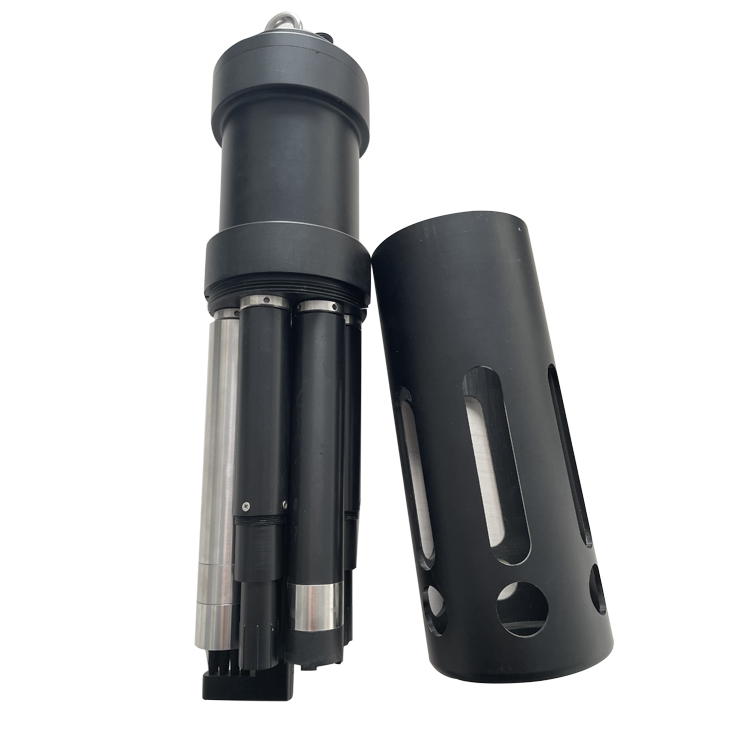
For rural wastewater online monitoring, the table uses the current NBL-WQ-MPS-5A self-cleaning sensor manual as a verified reference. It defines a realistic engineering option for small rural treatment sites; it does not remove the project constraint described above. For the Rural Wastewater Online Monitoring System measuring point, the ordered model, range and accessories should be confirmed against the quotation and project water data.
| Parameter | Verified reference |
|---|---|
| Reference model | NBL-WQ-MPS-5A |
| Capacity — application: Rural Wastewater Online Monitoring System | Up to 8 parameters including temperature |
| Optional parameters — application: Rural Wastewater Online Monitoring System | DO, COD, pH, ORP, conductivity/salinity, ammonia nitrogen and turbidity |
| DO | 0-20 mg/L; +/-2%; 0.01 mg/L |
| pH | 0-14 pH; +/-0.1 pH; 0.01 pH |
| ORP | -1500 to +1500 mV; +/-6 mV; 1 mV |
| Output | RS485, Modbus RTU |
| Cleaning — Rural Wastewater Online Monitoring System: Practical Design for Small Treatment Sites | Configurable automatic cleaning |
| Power | 12 VDC +/-5%; 5 W at 12 V |
| Cable | 5 m standard; customizable |
For work in small rural treatment sites, nominal accuracy is only one part of suitability.
For small rural treatment sites, separate field measurement from data handling. The multi-parameter assembly measures the water, the controller formats the result, and the upper system stores alarms and trends. The interface boundaries belong in the scope schedule.
RS485 Modbus RTU can place the operational monitoring point on a shared digital bus. Commission unique addresses, baud rate, parity, register map and decimal scaling, then document shield grounding, surge protection and every waterproof joint. Apply this requirement when the team needs to use a compact parameter set, remote health checks and a realistic service route.
A data platform should not smooth away a rapid change from the multi-parameter assembly until the team has decided whether it is noise, fouling or a real process upset. The acceptance record must also state this project constraint: more parameters do not help when probes cannot be cleaned or abnormal alarms receive no response.
A catalogue range is not a duty specification. For small rural treatment sites, document the matrix, representative point, normal and peak values, and what the operator will do when the result changes.
Do not approve the proposed scope until the team addresses this constraint: more parameters do not help when probes cannot be cleaned or abnormal alarms receive no response. The missing evidence may require laboratory work, a second parameter, a different location or a clearer response procedure.
Compare offers for the multi-parameter assembly at the an equivalent scope of supply. Separate the probe from holder, flow cell, controller, gateway, cabinet, calibration items, commissioning and spares so a lower figure is not simply a smaller scope. Apply this requirement when the team needs to use a compact parameter set, remote health checks and a realistic service route.
A quotation request with enough technical detail includes the small rural treatment sites matrix, expected range, process connection, hydraulic condition, cable route, available power, control interface and the action supported by the result. Attach a drawing where possible.
Price cannot be evaluated until the offer identifies included accessories, documentation and support. Require separate lines for field hardware, panel interface, calibration items, spares and commissioning for the small rural treatment sites project.
The main commercial risk is not simply an inaccurate reading. If distributed facilities have limited staff, unstable power, variable flow and long travel distances for maintenance, the owner may approve a design or operating response that cannot use a compact parameter set, remote health checks and a realistic service route.
For rural wastewater online monitoring, a repeat order is reliable only when range, material, output, cable and accessories match the original duty.

A1: The data should help the site to use a compact parameter set, remote health checks and a realistic service route. When integrating Rural Wastewater Online Monitoring System, each alarm needs an owner, a response time and a follow-up check; otherwise the parameter adds maintenance without a defined project benefit.
A2: Place them before and after the treatment or storage step that can change the water, then add a downstream risk point. Hydraulic representativeness matters more than cabinet convenience.
A3: Within the Rural Wastewater Online Monitoring System supply scope, temperature, pressure, salinity, solids, biofouling, sunlight, access, power stability and cleaning opportunity can change the sensing method, body material, enclosure and maintenance plan.
A4: For Rural Wastewater Online Monitoring System, confirm polarity, address, baud rate, parity, register, unit and decimal scaling from the field device to the PLC, RTU or data logger. Then test stale-data handling, communication loss and restart recovery. The acceptance record must also state this project constraint: more parameters do not help when probes cannot be cleaned or abnormal alarms receive no response.
A5: For Rural Wastewater Online Monitoring System, use the same location and time after stabilization. In the Rural Wastewater Online Monitoring System acceptance plan, record sample handling, temperature, units, method and uncertainty; one unmatched grab sample is not enough to approve or reject an online point. The related field evidence is: Automatic field monitoring and remote data upload can reduce routine travel when alarm responsibility is defined.
A6: For the Rural Wastewater Online Monitoring System measuring point, the cited product family includes Up to 8 parameters including temperature. When integrating Rural Wastewater Online Monitoring System, this is a manual-based reference, not automatic model approval; routine values, credible peaks and the water matrix still control final selection. At this small rural treatment sites point, the relevant site condition is that distributed facilities have limited staff, unstable power, variable flow and long travel distances for maintenance.
A7: Separate the sensor, holder or flow cell, cable options, controller, gateway, cabinet, calibration items, consumables, spares, documentation, commissioning and freight. Within the Rural Wastewater Online Monitoring System supply scope, this prevents a smaller supply scope from appearing cheaper than a complete point. The acceptance record must also state this project constraint: more parameters do not help when probes cannot be cleaned or abnormal alarms receive no response.
A8: Send water data, photographs or drawings, required output, cable distance, quantity, destination and schedule. Include the current problem: distributed facilities have limited staff, unstable power, variable flow and long travel distances for maintenance. In the Rural Wastewater Online Monitoring System acceptance plan, that detail lets engineering review suitability before price is issued.
A purchase decision for rural wastewater online monitoring is defensible when range, location, method and handover evidence all support one action: use a compact parameter set, remote health checks and a realistic service route. The stated limit remains that more parameters do not help when probes cannot be cleaned or abnormal alarms receive no response.
An effective quotation request includes the process condition, expected values, installation, communications, accessories, quantity and schedule. Ask NiuBoL to identify assumptions and price each part of the complete measuring point. The acceptance record must also state this project constraint: more parameters do not help when probes cannot be cleaned or abnormal alarms receive no response.
Prev:Portable vs Online Water Quality Meter: Selection by Project Duty
Next:Rural Drinking Water Ammonia Monitoring: Risk Points and Project Design
Related recommendations
Sensors & Weather Stations Catalog
 Agriculture Sensors and Weather Stations Catalog-NiuBoL.pdf
Weather Stations Catalog-NiuBoL.pdf
Agriculture Sensors Catalog-NiuBoL.pdf
Water Quality Sensor Catalog-NiuBoL.pdf
Related products
 Combined air temperature and relative humidity sensor
 TDR Soil Moisture & Temperature Sensor for irrigation| RS485 |4-20mA| NBL-S-THR
 Soil pH sensor RS485 soil Testing instrument soil ph meter for agriculture |NBL-S-PH
 Wind Speed sensor Output Modbus/RS485/Analog/0-5V/4-20mA
 Tipping bucket rain gauge for weather monitoring auto rainfall sensor RS485/Outdoor/stainless steel
 Pyranometer Solar Radiation Sensor 4-20mA/RS485

Screenshot, WhatsApp to identify the QR code
WhatsApp number:+8615367865107
(Click on WhatsApp to copy and add friends)

