





— Blogs —
—Products—
 Consumer hotline +8618073152920
 WhatsApp:+8615367865107
Address:Room 102, District D, Houhu Industrial Park, Yuelu District, Changsha City, Hunan Province, China
Product knowledge
Time:2026-09-02 14:00:00 Popularity:184
The procurement case for secondary supply water monitoring starts with this problem: water can change in tanks and building pipework after municipal delivery.
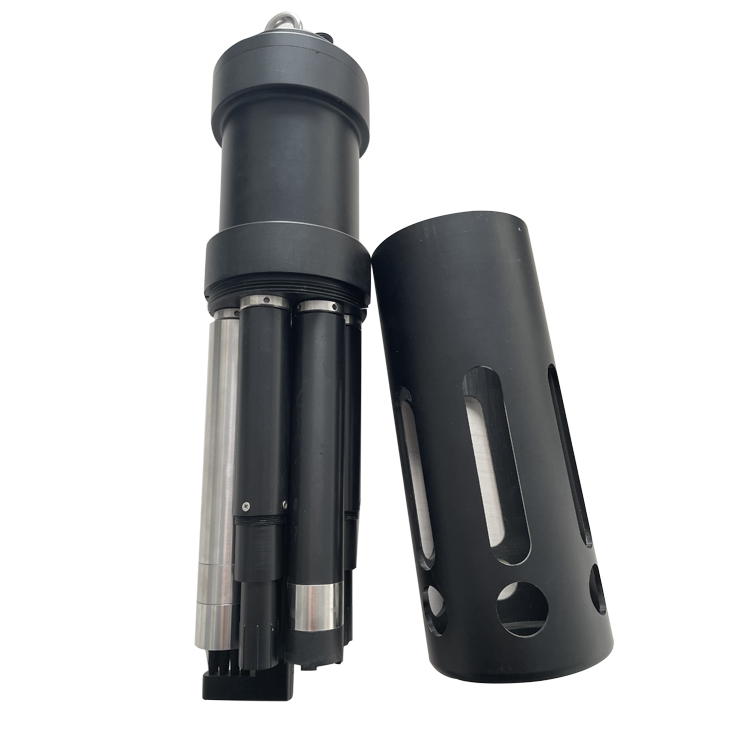
A workable scope links sensor, installation and data handling to the decision to combine residual chlorine, turbidity, pH, conductivity and temperature at points linked to maintenance action. One project constraint must remain visible: online parameters support early warning but microbiological safety still needs the required sampling program.
The tank outlet is a practical point for detecting disinfectant loss and sediment-related turbidity.
A bypass flow cell needs stable flow, drainage and access for cleaning.
Alarm thresholds should account for normal refill cycles so the platform does not create repeated false alarms.
Together, these conditions define the engineering question for secondary water supply: whether the proposed measurement and system scope can combine residual chlorine, turbidity, pH, conductivity and temperature at points linked to maintenance action.
Treat the multi-parameter assembly as the first component in a measuring chain, not as a complete monitoring system. Within the Secondary Supply Water Monitoring supply scope, local indication, scaling, alarm logic, storage and operator response may belong to different packages; their ownership must be explicit. This requirement helps the team combine residual chlorine, turbidity, pH, conductivity and temperature at points linked to maintenance action.
Where several probes share RS485, prepare an address and polling schedule before wiring. Read back the engineering unit and decimal place for the integrated measurement; do not assume that successful communication proves correct scaling.
Selection of Secondary Supply Water Monitoring should begin with the measurement duty, site condition and receiving-system interface. In the Secondary Supply Water Monitoring acceptance plan, when 4-20 mA is selected on an available model, document PLC scaling and loop power separately from the Modbus map used elsewhere in the station.
| Project item | What the specification should state |
|---|---|
| Operating problem | Water can change in tanks and building pipework after municipal delivery. |
| Required decision | Combine residual chlorine, turbidity, pH, conductivity and temperature at points linked to maintenance action. |
| Method boundary | Online parameters support early warning but microbiological safety still needs the required sampling program. |
| Minimum evidence for secondary supply water monitoring | Matched readings, installation record, units, timestamps and a documented acceptance method for the integrated measurement. |
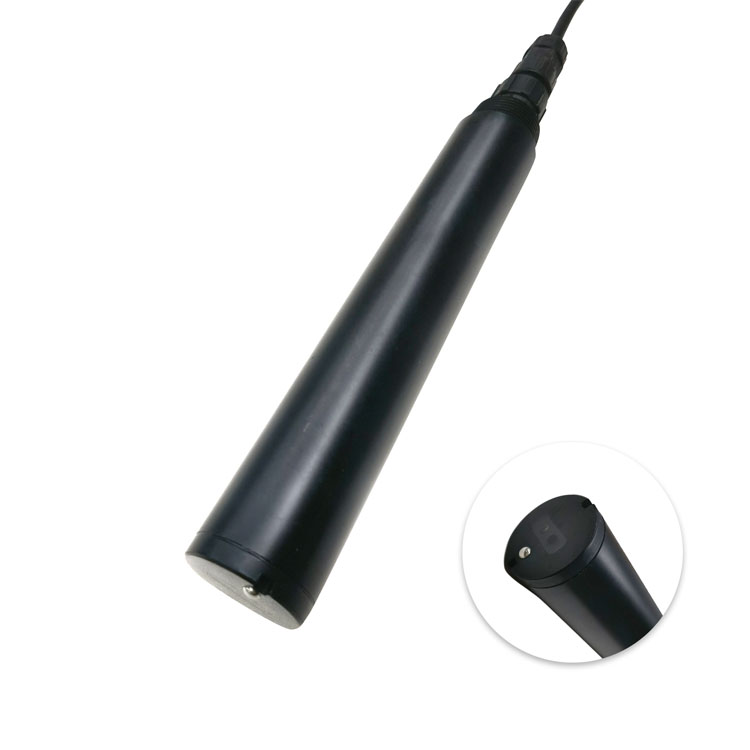
For secondary supply water monitoring, the table uses the current NBL-WQ-MPS-5A self-cleaning sensor manual as a verified reference. It defines a realistic engineering option for secondary water supply; it does not remove the project constraint described above. Confirm the secondary supply water monitoring configuration, range and accessories against both the quotation and project water data.
| Parameter | Verified reference |
|---|---|
| Reference model | NBL-WQ-MPS-5A |
| Capacity for secondary supply water monitoring | Up to 8 parameters including temperature |
| Optional parameters for secondary supply water monitoring | DO, COD, pH, ORP, conductivity/salinity, ammonia nitrogen and turbidity |
| DO | 0-20 mg/L; +/-2%; 0.01 mg/L |
| pH | 0-14 pH; +/-0.1 pH; 0.01 pH |
| ORP | -1500 to +1500 mV; +/-6 mV; 1 mV |
| Output | RS485, Modbus RTU |
| Cleaning — secondary supply water monitoring | Configurable automatic cleaning |
| Power | 12 VDC +/-5%; 5 W at 12 V |
| Cable | 5 m standard; customizable |
For work in secondary water supply, nominal accuracy is only one part of suitability.

For the multi-parameter assembly, support the sensor body without cable strain, allow brush clearance and make the complete assembly retrievable. The secondary supply water monitoring site drawing should show elevation, insertion depth, flow direction, cable route, retrieval method and maintenance clearance. At this secondary water supply point, remember that water can change in tanks and building pipework after municipal delivery.
Before wet commissioning, inspect cable support, gland sealing, shield termination and DC polarity. Noise or water ingress in a junction can imitate sensor instability even when the sensing element is sound. This requirement helps the team combine residual chlorine, turbidity, pH, conductivity and temperature at points linked to maintenance action.
Where practicable, commission secondary supply water monitoring under both normal and upset operating conditions. Record water condition, reference result, displayed value, Modbus value and alarm response so later disputes about the integrated measurement can be traced to evidence. The acceptance record must also state this project constraint: online parameters support early warning but microbiological safety still needs the required sampling program.
Field challenge: The tank outlet is a practical point for detecting disinfectant loss and sediment-related turbidity. At this stage, the engineering risk is that water can change in tanks and building pipework after municipal delivery.
User value: The owner receives clear ownership at the water interface. This creates a documented basis for the decision to combine residual chlorine, turbidity, pH, conductivity and temperature at points linked to maintenance action.
Field challenge: A bypass flow cell needs stable flow, drainage and access for cleaning. At this stage, the engineering risk is that site conditions can alter the integrated measurement before the operator sees it.
User value: The owner receives traceable data conversion and fault handling. This reduces exposure to the stated problem: water can change in tanks and building pipework after municipal delivery.
Field challenge: Alarm thresholds should account for normal refill cycles so the platform does not create repeated false alarms. At this stage, the engineering risk is that online parameters support early warning but microbiological safety still needs the required sampling program.
User value: The owner receives alarms that operators can trust and act on. The conclusion remains subject to this stated constraint: online parameters support early warning but microbiological safety still needs the required sampling program.
Commission the complete point, not just the probe. Verify hydraulic exposure, response, engineering units, register scaling, alarms and maintenance access before the secondary water supply owner accepts it.
The final dossier needs model and serial details, drawings, photos, register mapping, reference results and alarm tests. Assign the person or team that will clean and verify the point after handover. The acceptance record must also state this project constraint: online parameters support early warning but microbiological safety still needs the required sampling program.
For the Secondary Supply Water Monitoring measuring point, define the complete duty for the multi-parameter assembly: matrix and range, location, mechanical arrangement, electrical interface, communication, quantity and acceptance purpose. The secondary supply water monitoring offer should identify every missing site input as an explicit assumption. For context, The tank outlet is a practical point for detecting disinfectant loss and sediment-related turbidity.
The main commercial risk is not simply an inaccurate reading. If water can change in tanks and building pipework after municipal delivery, the owner may approve a design or operating response that cannot combine residual chlorine, turbidity, pH, conductivity and temperature at points linked to maintenance action.
For secondary supply water monitoring, a repeat order is reliable only when range, material, output, cable and accessories match the original duty.

A1: The multi-parameter assembly produces the field value; a controller, PLC, RTU or logger handles scaling and state; the platform stores trends and routes alarms. The supply contract must assign each layer. At this secondary water supply point, remember that water can change in tanks and building pipework after municipal delivery.
A2: Store a timestamp and quality state with each value. Communication loss, maintenance, over-range and a valid water alarm must remain distinguishable; replacing every fault with zero creates unsafe logic. This requirement helps the team combine residual chlorine, turbidity, pH, conductivity and temperature at points linked to maintenance action.
A3: Interrupt sensor power and communications, then confirm restart, buffering, timestamp recovery, alarm behavior and the control fallback. Save the tested configuration with the as-built register map.
A4: For Secondary Supply Water Monitoring, confirm polarity, address, baud rate, parity, register, unit and decimal scaling from the field device to the PLC, RTU or data logger. When integrating Secondary Supply Water Monitoring, then test stale-data handling, communication loss and restart recovery. For context, Alarm thresholds should account for normal refill cycles so the platform does not create repeated false alarms.
A5: For Secondary Supply Water Monitoring, use the same location and time after stabilization. Record sample handling, temperature, units, method and uncertainty; one unmatched grab sample is not enough to approve or reject an online point. At this secondary water supply point, remember that water can change in tanks and building pipework after municipal delivery.
A6: Within the Secondary Supply Water Monitoring supply scope, the cited product family includes Up to 8 parameters including temperature. This is a manual-based reference, not automatic model approval; routine values, credible peaks and the water matrix still control final selection. This requirement helps the team combine residual chlorine, turbidity, pH, conductivity and temperature at points linked to maintenance action.
A7: In the Secondary Supply Water Monitoring acceptance plan, separate the sensor, holder or flow cell, cable options, controller, gateway, cabinet, calibration items, consumables, spares, documentation, commissioning and freight. For the Secondary Supply Water Monitoring measuring point, this prevents a smaller supply scope from appearing cheaper than a complete point. For context, The tank outlet is a practical point for detecting disinfectant loss and sediment-related turbidity.
A8: When integrating Secondary Supply Water Monitoring, send water data, photographs or drawings, required output, cable distance, quantity, destination and schedule. Include the current problem: water can change in tanks and building pipework after municipal delivery. That detail lets engineering review suitability before price is issued.
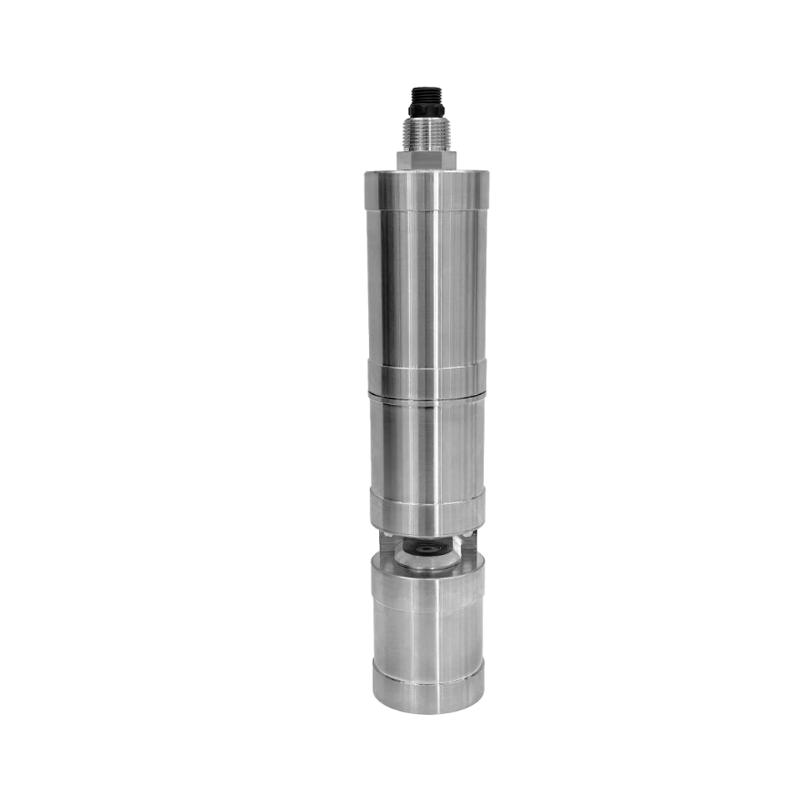
A final specification addressing secondary supply water monitoring should connect site conditions to an operator decision and an acceptance test. Its purpose is to combine residual chlorine, turbidity, pH, conductivity and temperature at points linked to maintenance action; its limit is that online parameters support early warning but microbiological safety still needs the required sampling program.
For a NiuBoL quotation covering the multi-parameter assembly, provide site data for secondary water supply, together with range, installation, output, quantity and delivery requirements. Within the Secondary Supply Water Monitoring supply scope, an itemized response lets buyers compare sensor, mounting, controller, gateway, calibration items and spares on the same scope.
Prev:COD Ammonia TN TP Monitoring: How to Read the Four Indicators Together
Next:When Does an Online Multi-Parameter Water Monitor Make Engineering Sense?
Related recommendations
Sensors & Weather Stations Catalog
 Agriculture Sensors and Weather Stations Catalog-NiuBoL.pdf
Weather Stations Catalog-NiuBoL.pdf
Agriculture Sensors Catalog-NiuBoL.pdf
Water Quality Sensor Catalog-NiuBoL.pdf
Related products
 Combined air temperature and relative humidity sensor
 TDR Soil Moisture & Temperature Sensor for irrigation| RS485 |4-20mA| NBL-S-THR
 Soil pH sensor RS485 soil Testing instrument soil ph meter for agriculture |NBL-S-PH
 Wind Speed sensor Output Modbus/RS485/Analog/0-5V/4-20mA
 Tipping bucket rain gauge for weather monitoring auto rainfall sensor RS485/Outdoor/stainless steel
 Pyranometer Solar Radiation Sensor 4-20mA/RS485

Screenshot, WhatsApp to identify the QR code
WhatsApp number:+8615367865107
(Click on WhatsApp to copy and add friends)

