





— Blogs —
—Products—
 Consumer hotline +8618073152920
 WhatsApp:+8615367865107
Address:Room 102, District D, Houhu Industrial Park, Yuelu District, Changsha City, Hunan Province, China
Product knowledge
Time:2026-09-07 16:27:30 Popularity:344
The soil NPK rapid sensor is suitable for rapid comparison and trend monitoring in the field, but it is not the same measurement method as laboratory chemical analysis. To use N, P, K data correctly, first determine how these values are generated, which factors affect them, and which agricultural decisions they can support.
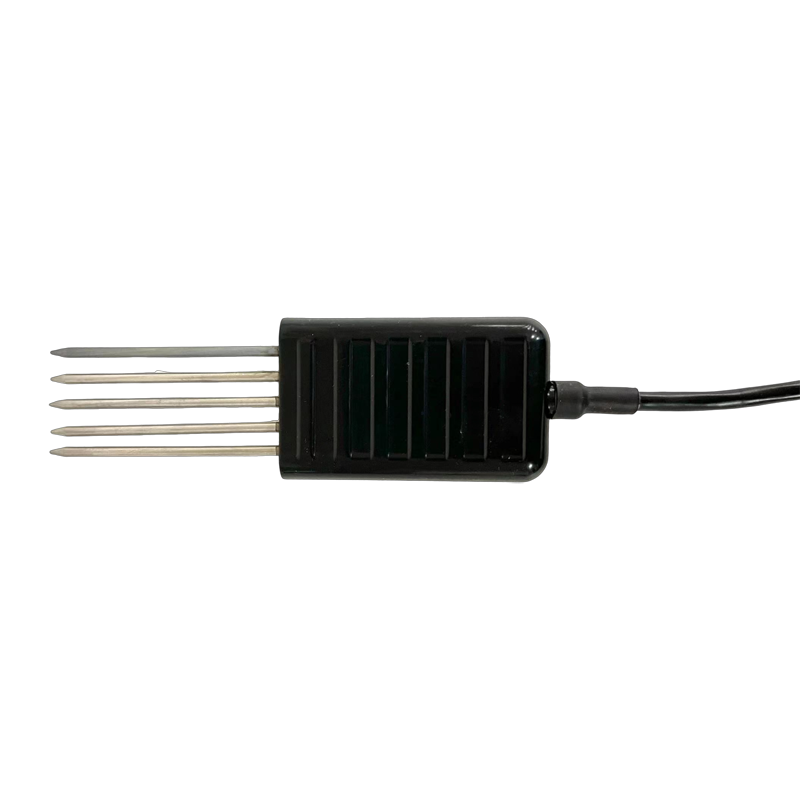
The soil NPK sensor is used to quickly obtain reference data for nitrogen (N), phosphorus (P), and potassium (K) and is often combined with soil moisture, temperature, EC, salt, and pH to form a multi-parameter probe. It has the advantage of being able to read in situ, continuously, or quickly, without waiting for lab results after each sample.
This type of soil NPK sensor first measures the conductivity characteristics of the soil, and then combines the preset empirical coefficients to estimate the nitrogen, phosphorus, and potassium levels under common soil conditions. It does not directly analyze the N, P, and K concentrations through three independent chemical reactions.
Soil texture, moisture, salinity, temperature, and fertilizer types all alter ion transport and conductivity properties, so the same conversion relationship may deviate in different soils and environments. Based on this principle, NPK readings are more suitable for relative comparison and trend observation under the same plot, similar soil conditions, and similar measurement methods.
Important note: NiuBoL Soil NPK sensors use soil conductivity characteristics and empirical coefficients to estimate nitrogen, phosphorus, and potassium levels. Due to differences in soil texture, moisture, salinity, temperature, and field environment, the readings are empirical and theoretical reference values, which are more suitable for trend monitoring and relative comparison, and cannot replace laboratory soil chemical analysis.
When the soil is too dry, the ion mobility decreases, and the electrical contact between the probe and the medium becomes poor; after irrigation, the volume of the soil solution and the ion mobility conditions change. Therefore, the reference value of NPK may change significantly before and after irrigation, which does not mean that the real nutrients in the soil have increased or decreased by the same amount in a short period of time.
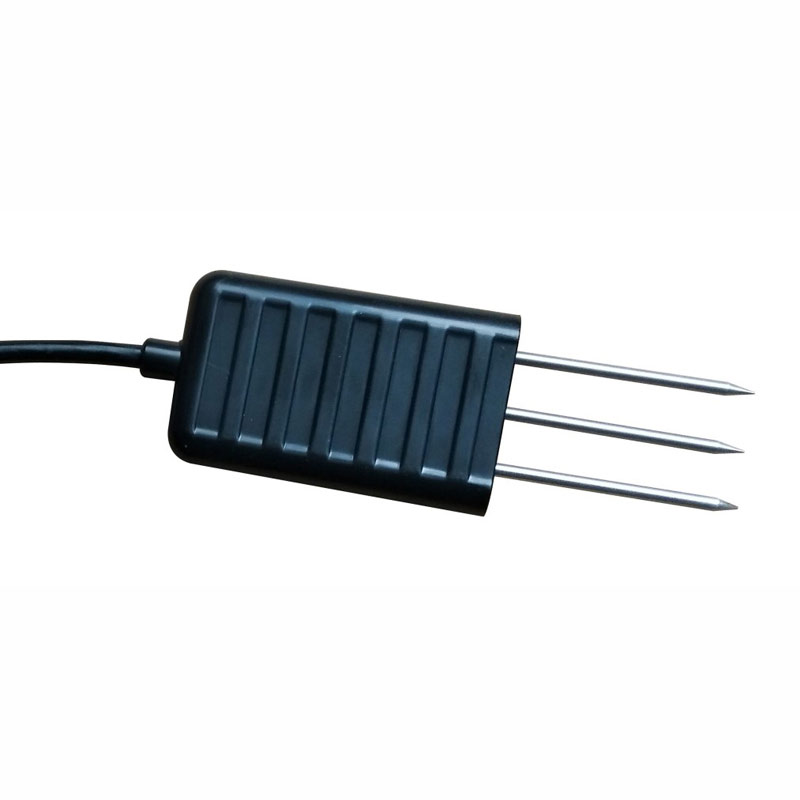
When comparing long-term trends, the soil moisture state, measuring depth and distribution point conditions should be kept as close as possible, and EC, moisture and pH should be checked simultaneously. This makes more sense than comparing a NPK number in isolation.
It is not appropriate to directly use the standard solution of nitrogen, phosphorus and potassium as the chemical-accuracy verification method for this kind of soil NPK sensor. The standard solution is suitable for instruments with clear ion selection or chemical analysis principles, while the EC-converted NPK sensor measures empirical reference values related to comprehensive conductivity characteristics.
When it is necessary to obtain a traceable nutrient concentration, formulate a precise fertilization formula, or carry out quantitative analysis of scientific research, corresponding laboratory soil analysis methods should be used. Field sensors are more suitable as high-frequency trend data sources.
A1: No. The unit and display resolution describe the data expression and cannot change the measurement principle of the sensor. When real nutrient quantification is required, laboratory analysis shall prevail.
A2: Whether the fertilizer is dissolved, soil moisture, diffusion range, probe position, and fertilizer type all affect the conductive response. A limited short-term response does not by itself prove that fertilizer failed to enter the soil.
A3: The conversion relationship of the soil NPK probe is designed for the soil medium and is not suitable for use as a nutrient solution N, P, K chemical analyzer. Liquid nutrient analysis should select a special method that matches the target ion and range.
A4: For Soil NPK Sensor Guide, the data can be used as a reference input for the control system, but it is not advisable to use only a single NPK value to determine the amount of fertilizer to be applied. A safer strategy would be to combine EC, moisture, pH, crop stages and agronomic rules.
A5: For Soil NPK Sensor Guide, set inspection, cleaning or verification intervals from the actual environment and operating duty. Project requirement for soil monitoring system: Assign an owner and keep spare cables, probes or modules where downtime is costly.
A6: Keep model and serial identification, wiring, configuration, register or signal definitions, installation photos, initial readings, alarm tests and the maintenance baseline for Soil NPK Sensor Guide Principle.
A7: Acceptance check for soil monitoring system: Reserve addresses, power capacity, communication bandwidth and cabinet terminals. A point list with location, parameter, unit and maintenance responsibility prevents conflicts when more Soil NPK Sensor Guide Principle points are added.
A8: Provide quantity, destination, application, site conditions, required output, cable length, mounting, accessories, data destination, acceptance scope and delivery schedule for Soil NPK Sensor Guide Principle.
The crop type, growth stage, target yield, soil texture, irrigation method and fertilization system vary greatly, and the same NPK reference value does not have the same significance for different crops and plots. A more reliable approach is to establish a local baseline: regular calibration with laboratory soil samples and accumulation of sensor trend data over one or more growing seasons to progressively form a management interval suitable for the farm.
For fixed online monitoring, an RS485 multi-parameter soil sensor can be selected; when on-site rapid inspection is required, the USB/Type-C or handheld version can be selected. The value of multi-parameter products lies in the simultaneous observation of the changing relationship between moisture, EC, pH and NPK.
Refer to NBL-S-TMC-7 7-in-1 Soil Sensor, NBL-S-TMC-8 8-in-1 Soil Sensor, NiuBoL USB/Type-C 8-in-1 Soil Sensor.
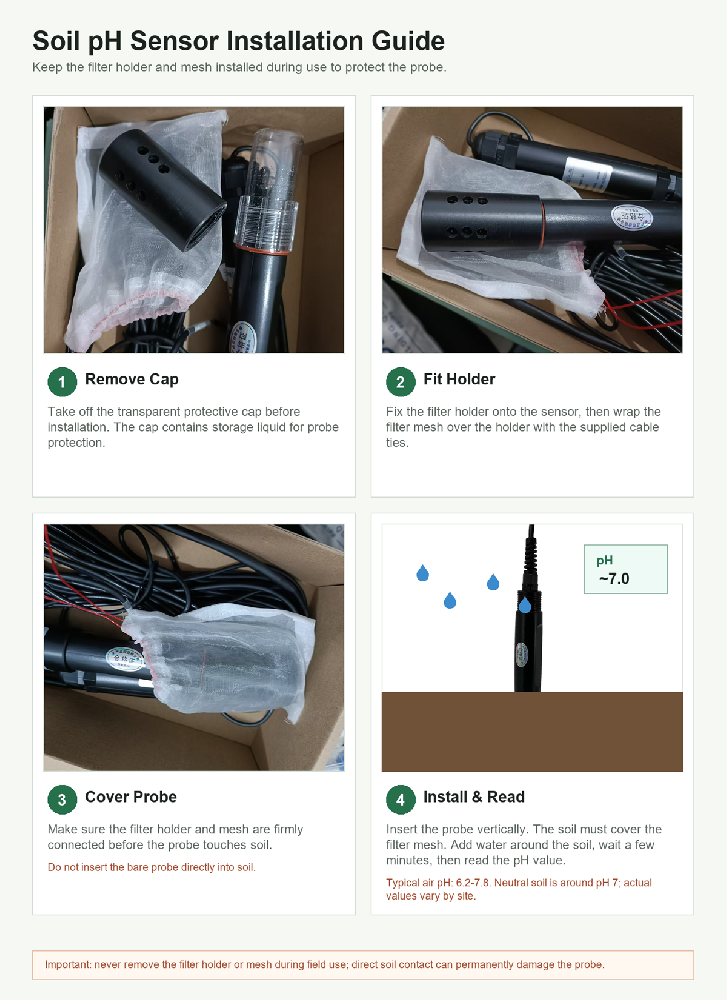
For Soil NPK Sensor Guide: Principle, EC Conversion, Accuracy and Fertilizer, the project specification should connect site conditions, interface settings, commissioning checks and maintenance records. Measurement-point record for soil monitoring system: Confirm those boundaries before model approval, then retain the measured acceptance evidence for later troubleshooting and system expansion.
Prev:Soil EC and Salinity: Units, Field Readings and Laboratory Tests
Next:Soil pH Sensor Guide: Principle, Measurement Conditions, Installation and Maintenance
Related recommendations
Sensors & Weather Stations Catalog
 Agriculture Sensors and Weather Stations Catalog-NiuBoL.pdf
Weather Stations Catalog-NiuBoL.pdf
Agriculture Sensors Catalog-NiuBoL.pdf
Water Quality Sensor Catalog-NiuBoL.pdf
Related products
 Combined air temperature and relative humidity sensor
 TDR Soil Moisture & Temperature Sensor for irrigation| RS485 |4-20mA| NBL-S-THR
 Soil pH sensor RS485 soil Testing instrument soil ph meter for agriculture |NBL-S-PH
 Wind Speed sensor Output Modbus/RS485/Analog/0-5V/4-20mA
 Tipping bucket rain gauge for weather monitoring auto rainfall sensor RS485/Outdoor/stainless steel
 Pyranometer Solar Radiation Sensor 4-20mA/RS485

Screenshot, WhatsApp to identify the QR code
WhatsApp number:+8615367865107
(Click on WhatsApp to copy and add friends)

