





— Blogs —
—Products—
 Consumer hotline +8618073152920
WhatsApp:+8615367865107
Address:Room 102, District D, Houhu Industrial Park, Yuelu District, Changsha City, Hunan Province, China
Product knowledge
Time:2026-08-08 13:53:52 Popularity:270
Quick Answer: A water quality meter record should preserve the value received, its time, unit and measurement identity separately from later review or correction. Cleaning, calibration and missing-data flags explain how a value can be used. A smooth dashboard curve is not evidence that the underlying water-quality record is complete or valid.
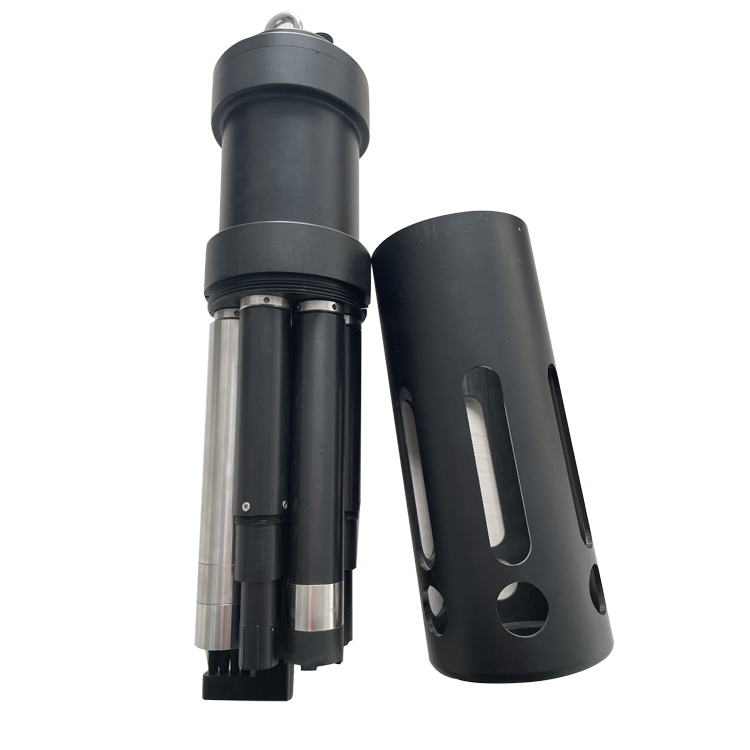
In an online project, raw data can mean the values read from the instrument by the PLC, RTU or data logger. It does not necessarily mean the internal optical intensity, electrode voltage or unprocessed electronics signal. Confirm what the selected product exposes before promising that every internal measurement can be exported.
The NiuBoL MPS-5A multiparameter assembly can provide selected channels through RS485 Modbus RTU. Retain the actual fitted channel list and configuration. Several parameters in one head do not imply one universal quality state or identical calibration requirements.
| Record component | What to preserve | What not to substitute |
|---|---|---|
| Received observation | Instrument value, unit, channel, acquisition time and available device status | A later edited chart value without the original observation |
| Acquisition result | Successful reply, timeout, decoding issue or other detected fault | Numeric zero for a missing response |
| Service context | Cleaning, reference check, calibration, removal and return-to-water times | An assumption that every unusual point is a process event |
| Reviewed result | Accepted, excluded or corrected value with reason and review history | An undocumented offset applied to all previous data |
Some of these fields are logger or platform functions rather than probe outputs. Specify and test them in the acquisition system. A supplier's Modbus register map alone does not establish that the customer's dashboard preserves service history or supports reversible review.
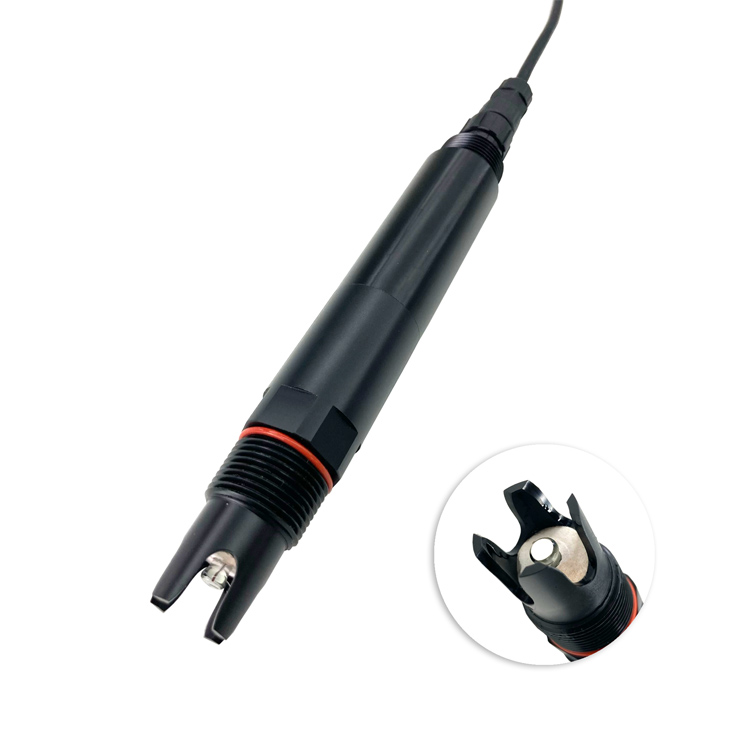
For a pH channel, record the process observation and the applicable reference check before cleaning or calibration where practical. Then record what changes after cleaning and after any justified calibration. Combining all service work into one unexplained reset makes fouling, drift and process change harder to distinguish.
Do not change historical pH values simply to make them meet the current buffer check. A correction requires an established reason, applicable interval and review method. The USGS continuous-monitor guidance treats fouling, calibration drift and record review as distinct tasks. Its procedures support disciplined review, not a universal correction formula for every project.
| MPS-5A item | Specification | Recording consequence |
|---|---|---|
| Configured channels | Up to eight selected parameters including temperature | Record what is fitted rather than the full options list |
| pH module | pH 0-14; +/-0.1 pH accuracy; 0.01 resolution | A stored decimal increment does not establish a smaller uncertainty |
| DO module | 0-20 mg/L; +/-0.4 mg/L accuracy; 0.01 mg/L resolution | Keep its error basis separate from standalone DO models |
| Power and communication | 12 VDC +/-5%; 5 W at 12 V; RS485 Modbus RTU | Do not apply a different probe's supply or register map |
| Cable and cleaning | Standard 5 m cable; automatic cleaning arrangement | Specify jacket and connections, and record cleaning activity where available |
The standalone pH, DO, turbidity and EC probes illustrated in this article are separate products. Their specifications must not overwrite the identity of a module inside a shared head. Record serial numbers and configuration changes so a replacement does not silently alter the meaning of an existing channel.
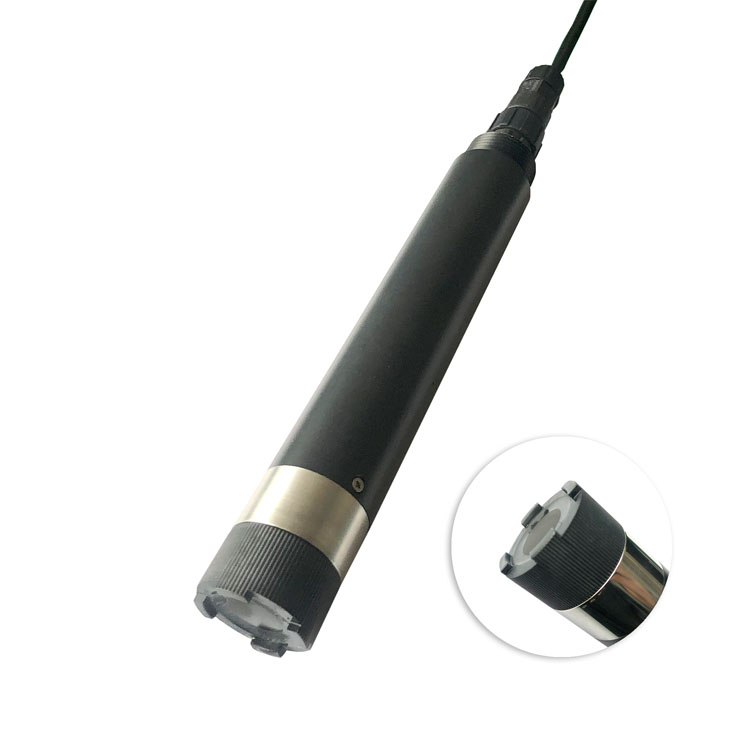
A DO cap can need attention while a pH channel remains usable, or a shared power interruption can invalidate the entire head. The logger should distinguish channel-specific review from a common acquisition failure when the hardware and protocol provide enough information. Do not invent status registers that the device does not supply.
Similarly, holding the last DO value on a screen is a display behavior, not a new observation. Preserve its original acquisition time and apply the project's age limit. A communications timeout must not be converted into 0 mg/L or a valid zero turbidity reading.
Keep the original series and a separate reviewed series, with the reason, interval, method and responsible reviewer. If there is not enough evidence to estimate the error, flag or exclude the affected period under the project's procedure instead of creating a plausible-looking curve.
For turbidity, distinguish a cleaning-related shift from a genuine runoff or process event. For EC, preserve the unit, temperature-compensation basis and any TDS conversion setting. Changing a coefficient or unit label should not silently rewrite historical water conditions.
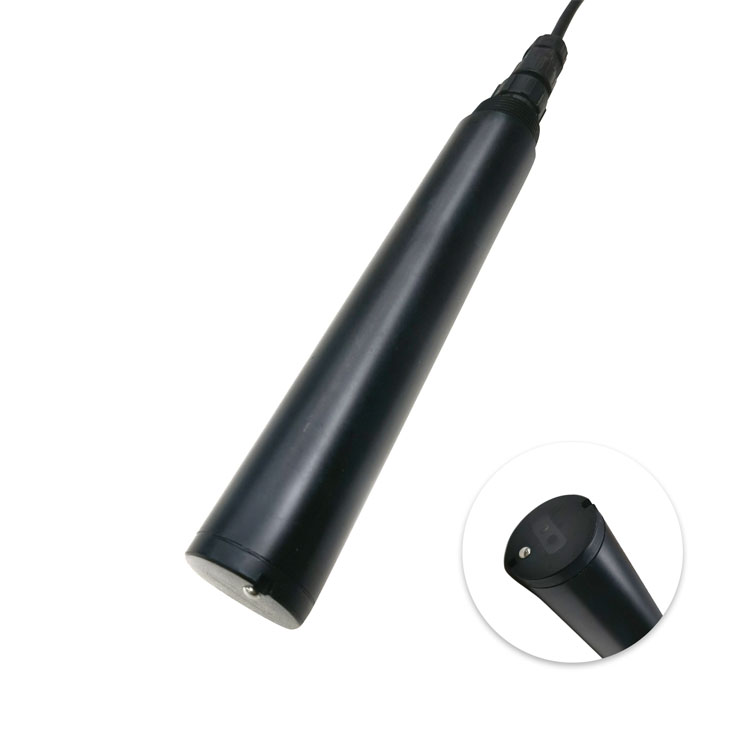
This is a system acceptance exercise, not a claim that every sensor contains a historian. Confirm which functions belong to the probe, data logger, gateway and platform before NiuBoL quotes the relevant equipment scope.
No. It may already include compensation, calibration and internal processing. Define raw for the project as the received observation unless the instrument explicitly provides additional internal signals.
No. Zero can be a valid measurement for some parameters. Store missing or invalid acquisition separately so calculations and alarms do not treat an unavailable instrument as clean water or no oxygen.
Not automatically. The applicable interval and correction require evidence about the error and its development. Keep the original observations and the service checks rather than applying an unexplained retrospective offset.
No. It provides a local communications method. Storage, customer access and export depend on the selected logger or platform and must be included and demonstrated separately.
Provide parameters, range, receiving equipment, acquisition and export intervals, retention needs, service flags and review requirements. Identify whether the purchase is probe-only or includes the logger and platform so the data responsibilities are clear.
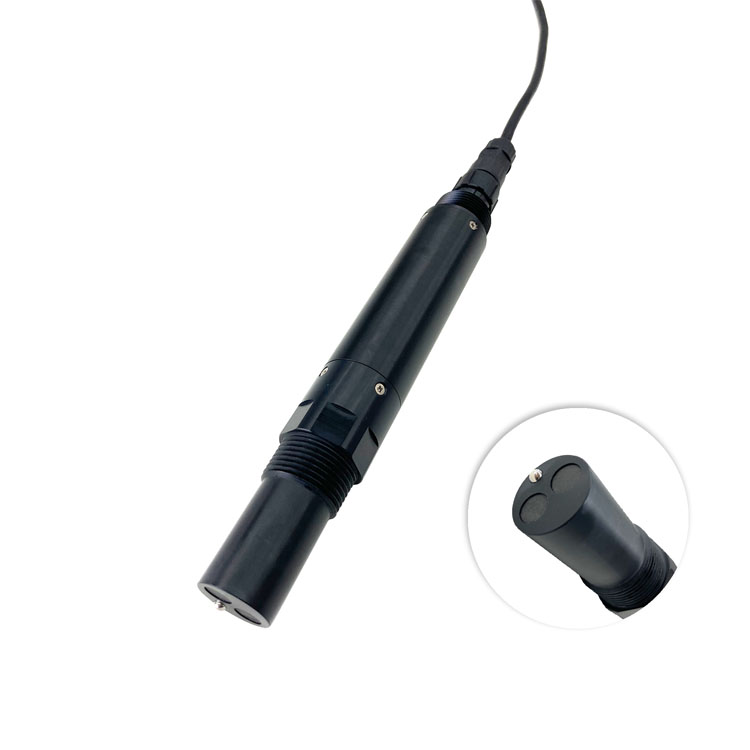
A water quality meter becomes a useful project record when measurements, faults and later review remain distinguishable. Preserve what was received and why any result changed. Match the NiuBoL sensor configuration to an acquisition system that can demonstrate the required history and export workflow.
Prev:Portable Weather Station: Keep Measurements Comparable After Relocation
Next:Anemometer Data for Wind Roses: Direction, Calm and Missing Records
Related recommendations
Sensors & Weather Stations Catalog
 Agriculture Sensors and Weather Stations Catalog-NiuBoL.pdf
Weather Stations Catalog-NiuBoL.pdf
Agriculture Sensors Catalog-NiuBoL.pdf
Water Quality Sensor Catalog-NiuBoL.pdf
Related products
 Combined air temperature and relative humidity sensor
 TDR Soil Moisture & Temperature Sensor for irrigation| RS485 |4-20mA| NBL-S-THR
 Soil pH sensor RS485 soil Testing instrument soil ph meter for agriculture |NBL-S-PH
 Wind Speed sensor Output Modbus/RS485/Analog/0-5V/4-20mA
 Tipping bucket rain gauge for weather monitoring auto rainfall sensor RS485/Outdoor/stainless steel
 Pyranometer Solar Radiation Sensor 4-20mA/RS485


Screenshot, WhatsApp to identify the QR code
WhatsApp number:+8615367865107
(Click on WhatsApp to copy and add friends)

