





— Blogs —
—Products—
 Consumer hotline +8618073152920
WhatsApp:+8615367865107
Address:Room 102, District D, Houhu Industrial Park, Yuelu District, Changsha City, Hunan Province, China
Product knowledge
Time:2026-09-14 16:00:00 Popularity:200
Quick Answer: Evaluate a water quality testing equipment manufacturer by testing the proposed measurement system, not by comparing catalog descriptions alone. For a multi-parameter order, the useful evidence is a defined module configuration, parameter-specific accuracy, a working data interface and a practical replacement procedure. A sample should demonstrate those points before the same configuration is ordered for multiple sites.

A water-quality catalog may list BOD, COD, suspended solids, pH, dissolved oxygen and other parameters in the same section. Their names do not establish a common measurement method or a common acceptance procedure. An optical organic-load estimate, an electrochemical reading and a gravimetric laboratory result cannot all be evaluated by asking whether the screen shows a number.
For example, an online optical BOD sensor can provide a method-specific trend. Its relationship with laboratory BOD5 depends on the water being measured. A product demonstration in one standard liquid does not establish that relationship for every wastewater stream. Ask what the output represents, which calibration basis is used and what comparison is needed in the proposed application.
This is a useful first test of the supplier's response. A technically specific answer distinguishes the instrument's capability from the intended field interpretation. An answer that claims universal agreement without describing the method or water matrix leaves a purchasing risk unresolved. The same discipline applies when evaluating NiuBoL products: identify the exact model and measurement duty before discussing a larger order.
A sample program should cover the conditions most likely to make the equipment unsuitable. For suspended solids, that includes the expected particle type and concentration, not only clear water. For an ion-selective channel, the relevant water chemistry and interfering ions matter. For a flow-sensitive instrument, testing in a static beaker may not reproduce the intended installation.
Separate three questions: does the instrument respond correctly to a suitable reference; does it provide useful results in the site's water; and does the complete acquisition system preserve those results? A failure in the third test should not be hidden by recalibrating the sensor. A failure in the second may require a different method rather than another adjustment.

| Evaluation stage | Evidence to collect | Decision it supports |
|---|---|---|
| Model and configuration review | Exact module list, ranges, interfaces and revision identifiers | Whether the offered unit is the intended equipment |
| Controlled measurement check | Reference value, conditions, observed result and adjustment history | Whether the instrument meets the agreed parameter-specific check |
| Representative-water trial | Paired observations across relevant operating conditions | Whether the measurement remains useful in the proposed application |
| Host-system test | Decoded values, units, timestamps and invalid-data behavior | Whether the PLC or logger preserves the measurement correctly |
| Service demonstration | Removal, replacement, reconfiguration and return-to-service steps | Whether the owner or distributor can support the installed equipment |
Set acceptance conditions before the trial. This prevents a later discussion in which each side selects a different reference method or excludes inconvenient readings. Where the application requires a field correlation, distinguish data used to establish the relationship from data used to check it. Reusing the same observations for both can make a fit appear more convincing than its performance on new samples.
The NiuBoL NBL-WQ-MPS-5A is a configurable self-cleaning assembly supporting up to eight parameters including temperature. A purchase description should list the fitted modules and ranges, not just eight-in-one or multi-parameter. The maximum available channel count does not mean that every listed option is installed, independently measured or suitable for the same water.
Some reported quantities may also be derived from another measurement. Ask which values are directly measured and which depend on a conversion. For conductivity and salinity, for example, the calculation basis matters to interpretation. Counting both outputs as separate proof of water chemistry can overstate the information obtained from the assembly.
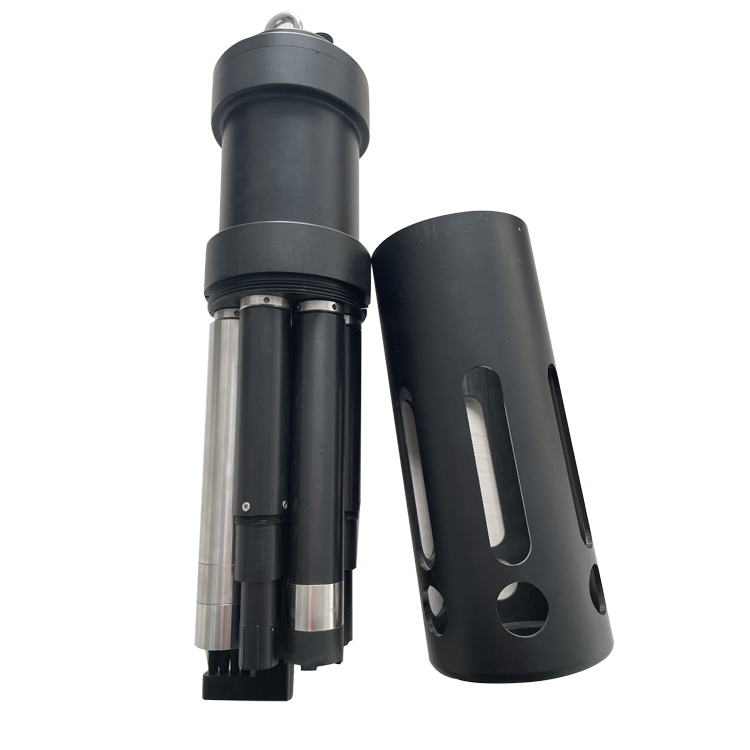
| MPS-5A example item | Specification or option | What to verify on the offered unit |
|---|---|---|
| pH module | 0-14 pH; +/-0.1 pH; 0.01 pH resolution | The installed electrode, reference checks and host scaling |
| ORP module | -1500 to +1500 mV; +/-6 mV | Reference basis and correct signed-value interpretation |
| Conductivity options | 0-5000 uS/cm or 0-200 mS/cm; +/-1.5% FS | The actual range and temperature-compensation configuration |
| Temperature channel | 0-50 C measurement range; +/-0.3 C | Measurement comparison, without treating this range as an assembly-wide environmental rating |
| Supply | 12 V DC +/-5% | Voltage at the assembly with the supplied cable and power arrangement |
| Power | 5 W at 12 V | Operating behavior during measurement and cleaning; complete-system loads separately |
| Interface | RS485 Modbus RTU | Register map, configured channels and the intended master device |
| Cable and cleaning | 5 m standard shielded cable; adjustable automatic brush cleaning | Connection construction, cable-jacket suitability and actual cleaner operation |
Consider how range selection affects the purchase. For a conductivity accuracy stated as +/-1.5% FS, a 5000 uS/cm full scale corresponds to +/-75 uS/cm. A 200 mS/cm full scale corresponds to +/-3 mS/cm. These are different error magnitudes even though the percentage is identical. This calculation does not establish performance outside the instrument's specified test conditions, but it explains why the widest range is not always the useful choice.
Do not replace an unclear accuracy statement with your own assumption. A percentage without a reading or full-scale basis needs clarification, as does a specification containing two alternative error terms without a comparison rule. Record the agreed interpretation before deciding that two quotations offer equivalent accuracy.
A meaningful RS485 demonstration uses the proposed unit and the host arrangement intended for the project. Read every fitted channel, confirm its unit and decimal scale, and compare it with the independent readout or reference used during the test. Demonstrating communication with one channel does not verify every module's mapping.
Test a disconnected or absent module as an integration condition. The MPS-5A can return zero for an unavailable module in some circumstances. The host therefore needs the configured channel list and tested validity behavior; it must not interpret every numerical zero as a valid low concentration. Document how missing data appear in exported records as well as on the local screen.
Include at least one controlled restart and a communication interruption. Check whether device addresses, calibration settings and the host's channel identities remain as intended. Restrict access to configuration and calibration writes during normal operation. An accidental reset can affect the meaning of subsequent data even though polling resumes successfully.
For a pH channel, use appropriate reference checks and inspect the result before and after any adjustment. Keep the original deviation in the evaluation record. Reporting only the final adjusted value conceals whether a large correction was needed and makes later drift harder to assess.
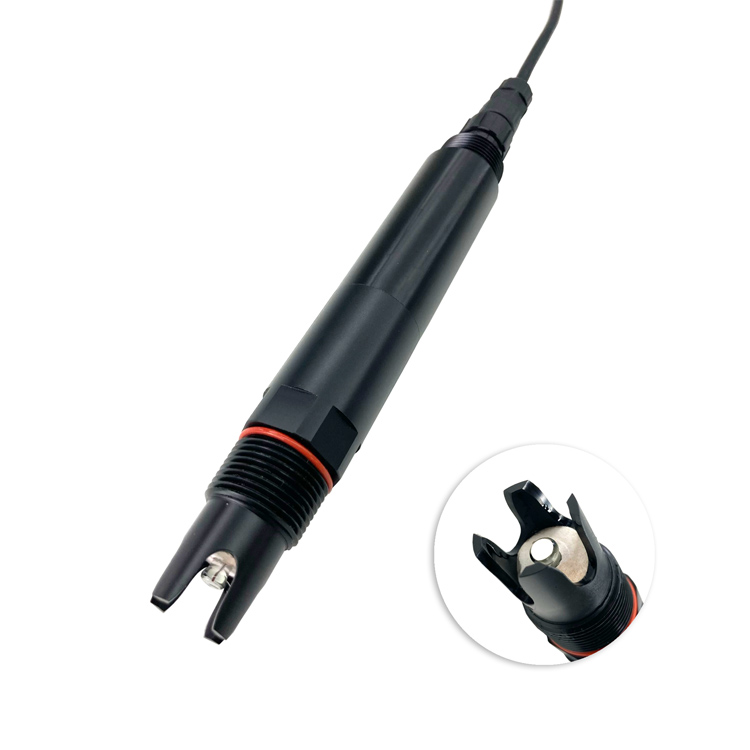
Modular construction can make replacement easier, but the operational details matter. Ask whether replacing a module requires an address change, a revised register configuration, a calibration transfer or a new field verification. Establish which work can be performed by the site technician and which requires supplier service. A quick-release connector does not by itself establish a plug-and-operate replacement procedure.
Consider the consequence of removing the assembly. If all channels stop during one electrode replacement, the maintenance plan may need an alternative observation or a spare assembly. If separate probes are used instead, individual servicing may leave the other channels available. Neither arrangement is universally preferable; the decision depends on access, downtime tolerance and the measurements that must remain in service.
Warranty and maintenance are separate questions. Electrodes, optical caps, brushes, seals and the main electronics may have different service needs and commercial coverage. Ask for the applicable terms for each supplied item and a current spare-parts quotation. Do not turn a warranty period into an expected lifetime or assume that a longer electronics warranty covers every consumable.
Once the technical trial is satisfactory, compare prices for the same module list, cable arrangement, host equipment and service scope. A sample price, a volume-order price and a complete installed-station price describe different transactions. Request current pricing against the actual quantities and destination rather than relying on an unsupported fixed price for water-quality equipment.
For distributors, clarify who handles first-line diagnosis and what evidence is needed for a service case. A useful package identifies the device, firmware, wiring, recent readings and reference-check results. This makes it easier to distinguish an instrument fault from a sample-condition or integration problem without repeatedly returning working equipment.
Before repeat orders, preserve the approved configuration identifier and ask how material changes will be communicated. A different sensing module, connector pinout, range or firmware can affect installed compatibility even when the commercial family name remains the same. Evaluate relevant substitutions rather than accepting them solely because the exterior looks unchanged.
A dissolved oxygen channel illustrates the importance of parameter-specific service. Its sensing element, verification procedure and compensation settings are not the same as those of a pH electrode. The equipment supplier should be able to explain the actual maintenance items for the quoted DO version, rather than offering one generic cleaning and calibration schedule for the whole station.
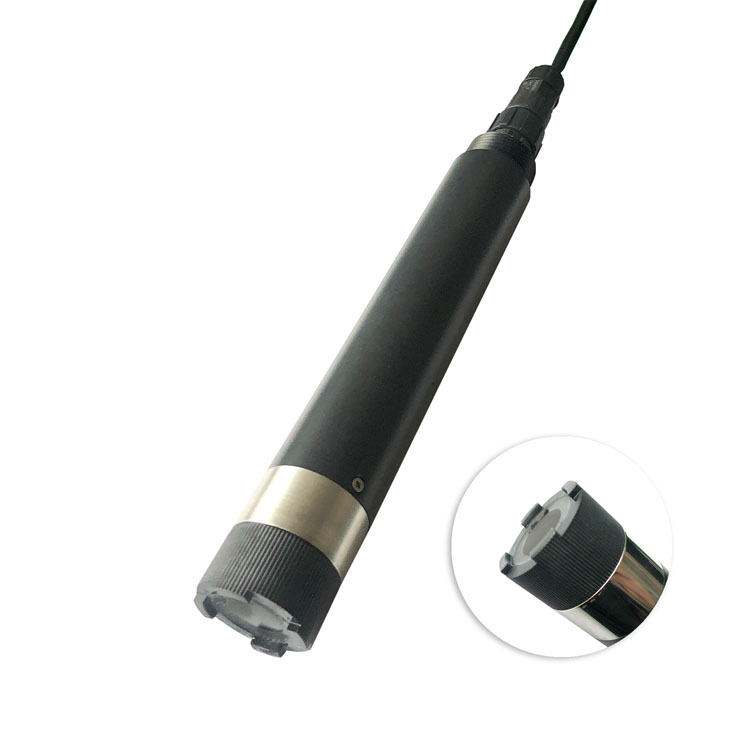
Ask exactly what the proposed output measures and how it will be verified in your water. That answer reveals whether the offered method matches the task. Range, interface and price comparisons become meaningful only after the measurement itself has been defined.
It can support approval of a defined configuration, but it does not prove every later unit or every installation condition. Establish delivery inspection and repeat-order controls, and use a field trial where matrix effects or maintenance burden are significant to the project.
No. The host still needs the correct addresses, data types, scaling, units and fault handling for the supplied configuration. Demonstrate those functions using the intended PLC or logger before treating the interface as accepted.
There is no universal answer. Compare the complete installed and serviced arrangement, including mounting, cabling, acquisition equipment and downtime during maintenance. A combined assembly can simplify one location, while separate probes may be preferable for different locations or independent service access.
Request the documents required by the project and check their exact scope, model coverage and issuing body. A general company certificate does not demonstrate parameter accuracy, drinking-water method acceptance or material suitability for every installation. Evaluate each claim against its relevant evidence.
Provide the intended water, measurement task, channel ranges, controller and acceptance method, together with the quantities and installation arrangement. State whether the request is for evaluation units or a deployment order. This allows the proposed configuration and supporting documentation to be matched to a specific purchase.
A water quality testing equipment manufacturer should be evaluated through a measurement trial, a complete interface test and a workable service plan for the offered configuration. NiuBoL multi-parameter and individual sensor options can be compared on that basis. Approving the actual channels and their operating limits gives buyers a stronger foundation for repeat orders than a broad claim about an entire product family.
Prev:COD Ammonia Nitrogen Sensor Manufacturer: How to Evaluate Product Fit
Next:Water Quality Meter Working Principle and Application in Industrial Projects
Related recommendations
Sensors & Weather Stations Catalog
 Agriculture Sensors and Weather Stations Catalog-NiuBoL.pdf
Weather Stations Catalog-NiuBoL.pdf
Agriculture Sensors Catalog-NiuBoL.pdf
Water Quality Sensor Catalog-NiuBoL.pdf
Related products
 Combined air temperature and relative humidity sensor
 TDR Soil Moisture & Temperature Sensor for irrigation| RS485 |4-20mA| NBL-S-THR
 Soil pH sensor RS485 soil Testing instrument soil ph meter for agriculture |NBL-S-PH
 Wind Speed sensor Output Modbus/RS485/Analog/0-5V/4-20mA
 Tipping bucket rain gauge for weather monitoring auto rainfall sensor RS485/Outdoor/stainless steel
 Pyranometer Solar Radiation Sensor 4-20mA/RS485


Screenshot, WhatsApp to identify the QR code
WhatsApp number:+8615367865107
(Click on WhatsApp to copy and add friends)

