





— Blogs —
—Products—
 Consumer hotline +8618073152920
WhatsApp:+8615367865107
Address:Room 102, District D, Houhu Industrial Park, Yuelu District, Changsha City, Hunan Province, China
Product knowledge
Time:2026-09-14 17:00:00 Popularity:211
Quick Answer: The working principle of a water quality meter determines what the instrument actually measures and which disturbances can change its reading. pH electrodes respond to hydrogen-ion activity, conductivity cells respond to ionic conduction, and optical probes detect changes in light. A numerical output is useful only when that physical response represents the parameter and water conditions the project needs to monitor.

An online meter does not directly recognize whether water is suitable for a process. Its sensing element produces an electrical or optical response; electronics apply calibration and compensation; the instrument then reports a value with a unit. Understanding these stages helps an engineer separate a real process change from a sensor limitation, a calibration problem or an incorrectly configured data channel.
Consider a suspended solids probe installed after a clarifier. More scattered light may indicate more particles, but the relationship between light scattering and mass concentration also depends on particle size and composition. A change in solids type can alter the reported concentration even when the laboratory dry mass changes little. The appropriate response is to examine the sample relationship, not immediately adjust a control setpoint.
| Measurement | Physical response | Important interpretation limit |
|---|---|---|
| pH | Potential difference between a pH-sensitive electrode and a reference electrode | Reference condition, temperature and electrode condition affect the result |
| Conductivity | Electrical conduction through ions in water | It does not identify which ions are present |
| Optical dissolved oxygen | Oxygen-dependent quenching of a luminescent sensing layer | Cap condition and compensation settings matter; oxygen concentration is not an overall water-quality score |
| Turbidity | Light scattered by suspended material | Optical geometry and particle properties affect comparisons between instruments |
| Optical suspended solids | Scattered-light response related to solids concentration through calibration | A site-specific relationship may be needed when solids composition changes |
| UV-based COD estimate | Ultraviolet absorption associated with absorbing compounds | An optical estimate is not automatically equivalent to a laboratory oxidation method |
The NiuBoL NBL-WQ-MPS-5A combines selected sensor modules in one submerged assembly, with support for up to eight parameters including temperature. Its shared body, cleaner and RS485 connection simplify installation at one location. They do not make all channels respond to the same substances or require the same calibration procedure.
This distinction is useful in aquaculture and surface-water monitoring. A turbidity increase may accompany runoff while conductivity falls because of dilution. Those trends are not necessarily contradictory. Interpreting them requires knowing what each module detects and whether the monitoring point represents the water of interest. Adding channels helps describe a situation; it does not turn several indirect indicators into a complete chemical analysis.
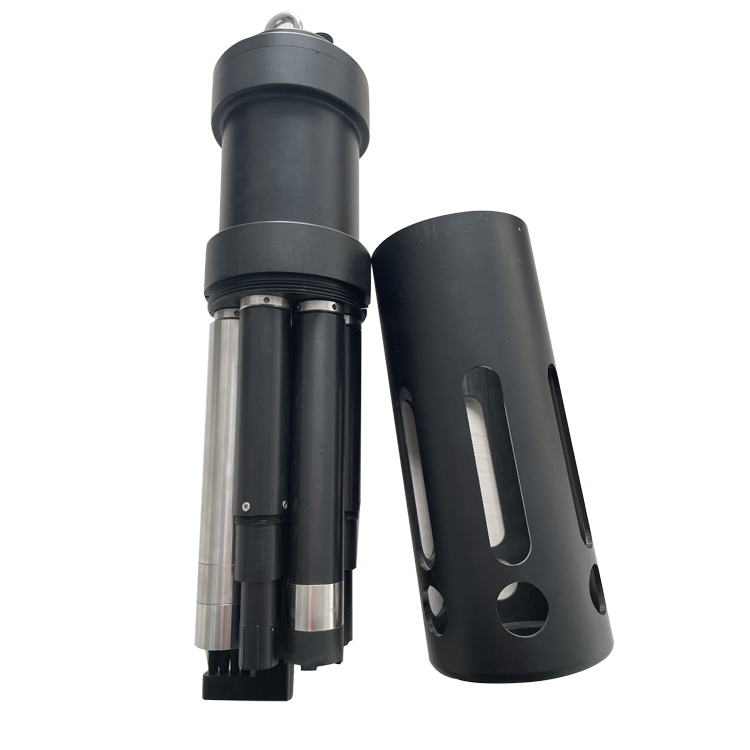
A glass pH electrode develops a potential related to hydrogen-ion activity. The meter compares it with a reference potential and converts the difference into pH. Since pH is logarithmic, it should not be treated as a concentration in mg/L. A one-unit pH change represents a tenfold change in hydrogen-ion activity, not a one-unit change in chemical dose.
The NBL-WQ-PH online pH sensor is a practical example of a digital electrode assembly. Its specified resolution is finer than its accuracy. A PLC displaying two decimal places therefore does not establish that every change in the last displayed digit is a meaningful process change.
| NBL-WQ-PH specification | Value | Engineering meaning |
|---|---|---|
| Measurement range | 0-14 pH | Select calibration buffers relevant to the operating region |
| Accuracy / resolution | +/-0.1 pH / 0.01 pH | Display increment is not measurement uncertainty |
| Operating temperature / pressure | 0-65 C / below 0.2 MPa | Check both process conditions before installation |
| Temperature compensation | Automatic, NTC | Compensates electrode response; does not remove the sample's own temperature-dependent chemistry |
| Power / consumption | 12-24 V DC / 0.2 W at 12 V | Allow separately for the controller and communications equipment |
| Output | RS485, Modbus RTU | Requires correct register interpretation at the host |
| Wetted body / protection | POM / IP68 | Chemical compatibility and pressure remain separate checks |
| Mounting / cable | 3/4 NPT; standard 5 m cable | Specify extension and cable-jacket suitability for the actual exposure |
For a questionable pH result, inspect and clean the electrode appropriately, then check it in suitable fresh buffers at a recorded temperature. Compare the stable reading with the buffer value at that temperature before changing calibration. A heavily coated or damaged electrode cannot be made dependable merely by forcing its output to match one sample.
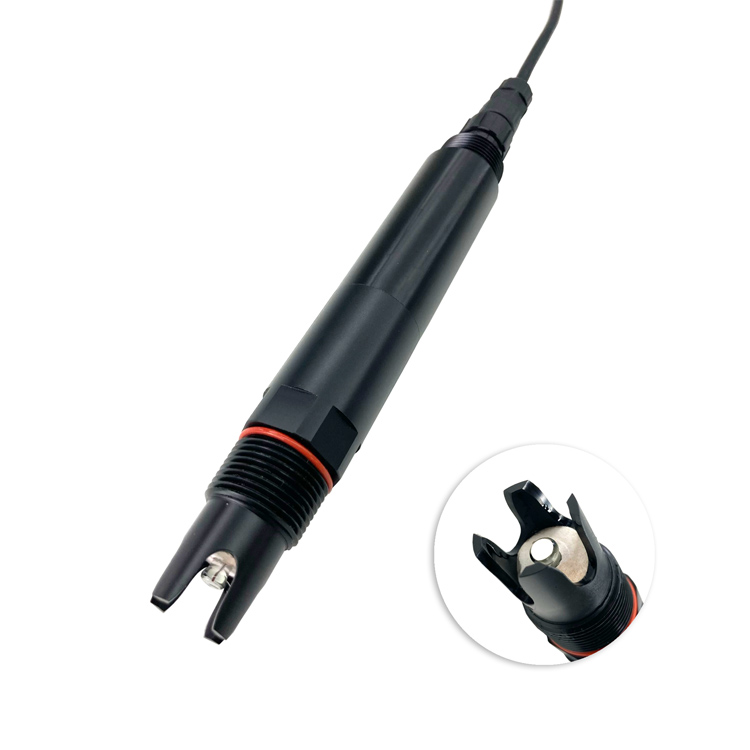
The NBL-WQ-DO fluorescence dissolved oxygen sensor excites a sensing layer with light. Oxygen changes the luminescence response, and the electronics use that response and compensation settings to calculate dissolved oxygen. This method does not consume oxygen at the sensing surface and does not require electrolyte replenishment as part of the measurement principle.
Nevertheless, the probe must contact representative water. A cap buried in sediment, coated with biological growth or exposed to trapped bubbles may not represent the surrounding liquid. In an aeration basin, mounting directly in a bubble plume can make interpretation difficult. Move the measuring point away from concentrated bubbles while retaining contact with well-mixed process water; do not move it into an unrepresentative stagnant corner simply to obtain a smoother trend.
Temperature and salinity also matter when comparing oxygen concentration. A value in mg/L and a value in percent saturation are different outputs, not alternative labels for the same number. Confirm which one the controller uses before setting alarms. A sensor's temperature channel may be automatic while salinity compensation still depends on an appropriate configured value.
Conductivity is useful for detecting changes in ionic content, such as dilution or salt ingress. It cannot distinguish harmless salts from a particular hazardous ion. Temperature compensation can make trends easier to compare, but the chosen reference temperature and compensation approach must remain consistent. Mixing compensated and uncompensated records can create a false process trend.
Turbidity is an optical property, whereas suspended solids concentration is a mass-per-volume result. There is no universal conversion from NTU to mg/L. If a plant needs an optical solids estimate, collect paired optical readings and representative laboratory solids measurements across the intended operating conditions. Recheck the relationship after a substantial change in feedstock, treatment chemistry or particle characteristics.
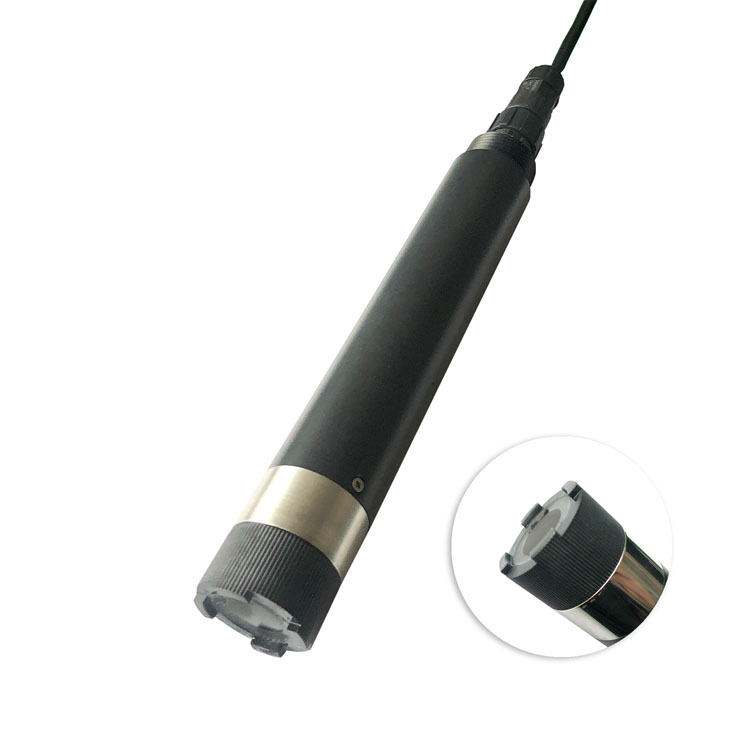
UV-based COD monitoring presents a similar distinction. The instrument measures absorption and reports an equivalent COD value through its calibration. A water containing different proportions of UV-absorbing organic compounds can give a different relationship to laboratory COD. An optical channel can still be valuable for detecting a process excursion, provided the relationship has been evaluated for that water and its limits are understood.
Use the pattern of the error to narrow the investigation. A constant multiplier between the instrument and the PLC suggests scaling or unit conversion. A change after cleaning points toward fouling. An excursion after a process change may indicate a new sample composition. These observations do not prove a cause, but they tell the engineer which comparison to make next.
For RS485 Modbus RTU, a successful response proves that bytes were received; it does not prove correct measurement interpretation. Register address, data type, decimal factor and unit must agree. An instrument reporting temperature alongside pH also needs separate host tags. Do not assume that neighbouring registers share a scale factor or that an unavailable channel is a valid zero.
When discussing a NiuBoL configuration, describe the substance or process change you need to detect, the expected water composition and the comparison method available on site. Those details help distinguish a suitable direct measurement from a useful but limited surrogate. They are more informative than requesting a general-purpose meter with every possible channel.
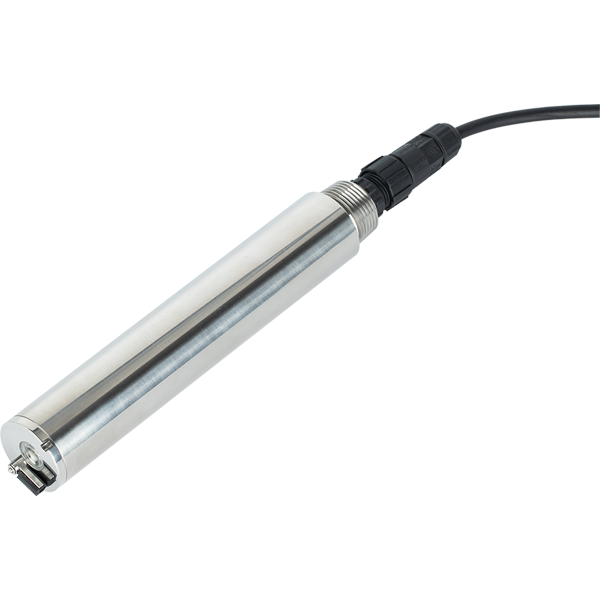
No. Optical methods use different responses, wavelengths and calibrations. A turbidity probe cannot become a pH electrode through a software setting, and a UV absorption channel cannot identify all dissolved contaminants. Select the required measurement first, then the sensing method.
They may use different methods, compensation settings, ranges or sampling arrangements. First compare the same parameter in the same unit under matched conditions. For particle measurements, also examine optical geometry and particle composition before treating the difference as a calibration fault.
No. Compensation addresses a defined influence on the sensing response or converts a result to a reference condition. It does not eliminate real temperature-driven changes in water chemistry. Record temperature with the primary measurement when comparing process conditions.
The interface alone does not determine accuracy. A digital connection avoids some analog scaling errors and can carry several values, but sensing quality, calibration and installation remain decisive. Compare the complete measurement specifications rather than RS485 and 4-20 mA labels alone.
Not before checking location, sample condition, compensation and data decoding. A stable value may come from stagnant water, a frozen host tag or a fouled sensing surface. Recalibration is appropriate only after identifying a genuine calibration error with a suitable reference.
It is appropriate when the chosen channels need to observe the same water and share a practical service location. Separate probes may be preferable when one channel requires a different depth, flow arrangement or maintenance schedule. Channel count should follow the measurement task.
The useful question is not simply how a water quality meter works, but whether its physical response supports the intended decision. Match the principle to the water, distinguish direct measurements from calibrated estimates, and verify the reading before using it for control. NiuBoL sensor selection can then focus on the channels and installation conditions that the project actually needs.
Prev:Water Quality Testing Equipment Manufacturer: Sample System Evaluation
Next:Types of Water Quality Meters: Field, Bench and Online Instruments
Related recommendations
Sensors & Weather Stations Catalog
 Agriculture Sensors and Weather Stations Catalog-NiuBoL.pdf
Weather Stations Catalog-NiuBoL.pdf
Agriculture Sensors Catalog-NiuBoL.pdf
Water Quality Sensor Catalog-NiuBoL.pdf
Related products
 Combined air temperature and relative humidity sensor
 TDR Soil Moisture & Temperature Sensor for irrigation| RS485 |4-20mA| NBL-S-THR
 Soil pH sensor RS485 soil Testing instrument soil ph meter for agriculture |NBL-S-PH
 Wind Speed sensor Output Modbus/RS485/Analog/0-5V/4-20mA
 Tipping bucket rain gauge for weather monitoring auto rainfall sensor RS485/Outdoor/stainless steel
 Pyranometer Solar Radiation Sensor 4-20mA/RS485


Screenshot, WhatsApp to identify the QR code
WhatsApp number:+8615367865107
(Click on WhatsApp to copy and add friends)

