





— Blogs —
—Products—
 Consumer hotline +8618073152920
WhatsApp:+8615367865107
Address:Room 102, District D, Houhu Industrial Park, Yuelu District, Changsha City, Hunan Province, China
Product knowledge
Time:2026-08-31 09:01:00 Popularity:251
A wireless weather station price is meaningful only when the quotation defines the sensors, logger, wireless connection, power supply, mounting work and destination for the data. Compare the cost of an installed, usable station, not just the sensor head. Separate one-time equipment and commissioning charges from recurring connectivity and platform charges.
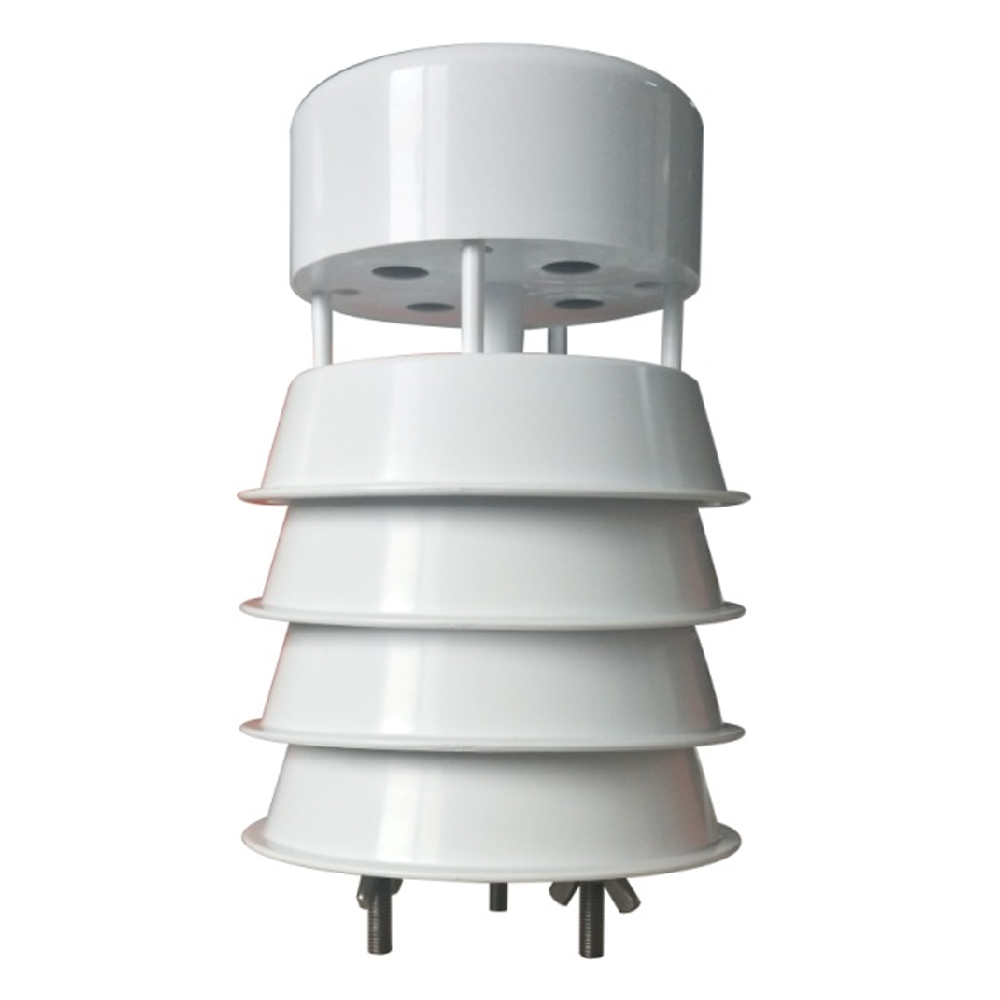
One offer may contain an integrated sensor with an RS485 cable. Another may include that sensor, a cellular data logger, a solar power system and a mounting enclosure. Both can appear under a weather-station heading, but only the second describes part of a remote reporting system. Neither necessarily includes the mast foundation, installation labor or access to a customer-owned server.
Weather station price changes with sensor count, mast height, power system, enclosure, communication, installation hardware and calibration documents. Comparing only a console or sensing head misses work required at the site. Equally, paying for more measured parameters has little value when those parameters are not used by the project.
Start with the operating question. A campus weather display may need accessible observations and a public dashboard. A remote farm may need rainfall history during communications outages. A solar project may need a specified irradiance measurement and consistent timestamps. These are different quotations even when each package includes wind speed, wind direction, temperature, humidity and pressure.
The NBL-W-51MUWS five-parameter sensor measures wind speed and direction, atmospheric temperature, relative humidity and pressure. Its RS485 connection is a sensor interface, not a cellular radio. A wireless deployment requires an appropriate receiving logger or gateway and the selected network connection.
An integrated housing can reduce the number of brackets and sensor cables. A modular arrangement can place individual instruments where they need to be measured and let the site replace one component separately. Neither is automatically cheaper after installation. The difference depends on mounting requirements, cable routes, service access and which channels must meet a particular measurement specification.
| Configuration choice | What it adds to the quote | Decision to make first |
|---|---|---|
| Basic wind, temperature, humidity and pressure | Sensing head, cable and compatible acquisition | Whether a shared mounting position represents the intended observations |
| Rainfall | A specified rainfall sensor, mounting and data processing | Rainfall method, accumulation interval and required field checks |
| Solar radiation | A suitable radiation channel and mounting arrangement | Irradiance in W/m2 rather than illuminance in lux when energy measurement is required |
| Particulate matter or noise | Additional sensing channels, power demand and service tasks | Whether environmental observations beyond weather are actually needed |
| Soil or distributed field points | Separate probes, extra wiring and acquisition capacity | Number and location of the field measurements, not just free ports on a logger |
A six-channel or seven-channel description is not sufficient to resolve these choices. Request the named parameters and method for each offered version. The six-in-one ultrasonic sensor range is a configuration option to review against that list, rather than evidence that all possible sixth channels are supplied together.
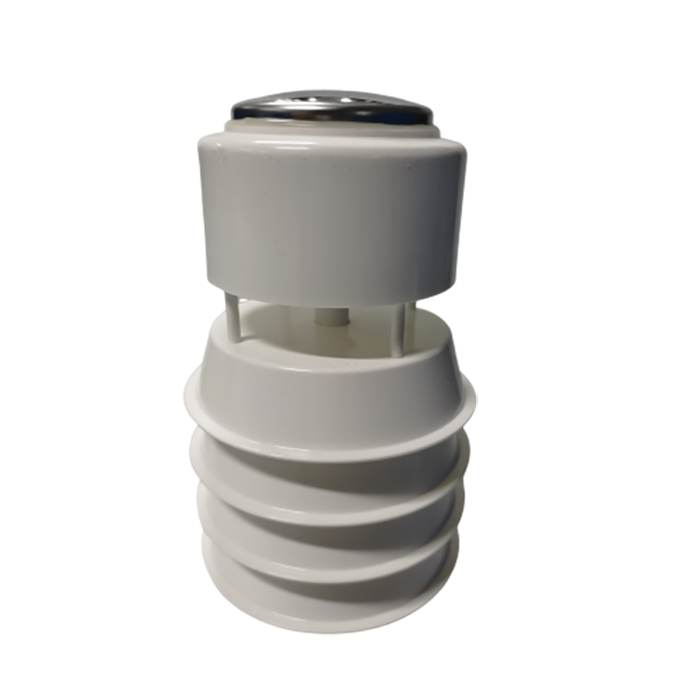
On the mast, RS485 Modbus RTU can carry measurements from the sensors to a logger. Beyond the logger, cellular, WiFi or another specified link carries data to the receiving system. The quote should name both layers. A cellular label alone does not confirm that the gateway supports the customer's server protocol, credentials or payload format.
For cellular service, identify the destination country and intended operator before selecting the modem version and antenna. Include the SIM arrangement and responsibility for activation. For WiFi, test access at the mounting location, not only near an office router. A usable network signal also does not prove that the customer's firewall allows the intended connection.
Decide what happens when the link fails. Local storage, timestamp preservation and automatic retransmission are separate capabilities that need to be specified and demonstrated. A live dashboard after reconnection does not prove that missed records have been recovered. If continuity matters, include an outage-and-recovery test in the commissioned package.
For example, a project may require one-minute records but accept five-minute uploads. That reduces the frequency of transmission without necessarily reducing the sampling record, provided the logger actually supports the requested behavior. Confirm whether reported wind values are instantaneous readings, interval averages or maxima. Different aggregation settings can make two stations disagree without either having a communication fault.
| Cost item | Ask the supplier to identify | Common omission |
|---|---|---|
| Sensors and acquisition | Exact models, channel list, logger, cables and configured outputs | Assuming a sensor head includes a logger or display |
| Wireless connection | Modem version, antenna, SIM responsibility and server connection work | Data service or platform subscription omitted from the equipment total |
| Power | Supply, protection, battery, charge controller and solar panel where applicable | Battery capacity selected without the full station load |
| Mounting and site work | Mast, brackets, foundation design, anchoring, grounding and installation | Civil work and lifting equipment excluded without being identified |
| Acceptance and service | Configuration, field tests, training, calibration documents and service visits | A factory power-on check treated as complete site commissioning |
For each item, mark included, separately priced or customer-supplied. Do not count an excluded item as free. Freight, import costs and local installation should be compared on the same delivery basis, while recurring fees should be shown over the same chosen operating period. Where a cost is not yet known, leave it visibly unresolved instead of hiding it inside a contingency percentage.
Use the same acceptance requirements for the seven-in-one weather sensor and other candidate configurations. A quote with extra channels should explain how those channels will be logged and used; otherwise the added hardware can increase cost without improving the project's actual decision.
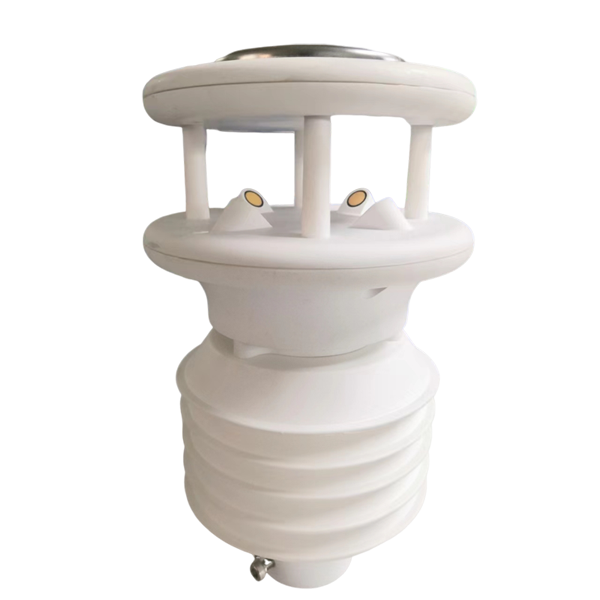
A sensor's consumption is only one part of a solar-powered station. Add the logger, modem, connected probes, charge-controller losses and any other continuously energized equipment. Transmit peaks and startup demand affect supply stability even when average daily energy is modest. Panel sizing also depends on the site's seasonal solar resource and shading.
As an arithmetic example, a hypothetical station drawing 4 W continuously uses 96 Wh per day. Three days without charging would require 288 Wh delivered to the load, before conversion losses, battery operating limits, cold-weather capacity effects or aging allowance. This is not a recommended battery size. It shows why a battery's ampere-hour label without its voltage and usable capacity is insufficient.
Channel choices change that calculation. The NBL-W-81GUWS configuration combines five weather measurements with PM2.5, PM10 and noise; those additional environmental channels should be purchased for a stated need. Its sensor supply and protection details are useful when checking compatibility, but they are not a power budget for the entire wireless station.
| NBL-W-81GUWS item | Sensor specification | Quotation implication |
|---|---|---|
| Supply voltage | 9-24 VDC | Check compatibility with the actual regulated supply. |
| Power consumption | Approximately 1 W with particulate sensing | Add logger and communication loads separately. |
| Sensor interface | RS485 Modbus RTU | Provide a compatible acquisition channel. |
| Ingress protection | IP65 | Select enclosure and cable-entry protection for the other components separately. |
A taller mast can change wind exposure, foundation requirements and access arrangements. It does not automatically improve every channel in an integrated housing. Obstacles, roofs and warm surfaces can affect the observations, so the mounting proposal should show nearby structures and the intended measurement height. Ask for the required civil and structural review instead of selecting a mast solely by its catalog height.
Rainfall and radiation also require suitable exposure. A location selected for convenient communications may be shaded or obstructed. If those measurements drive project decisions, evaluate separate mounting or a modular station. The additional bracket and cable cost may be justified, whereas adding a more elaborate gateway will not correct an unsuitable measuring location.
Agree on safe maintenance access before installation. A component that can only be reached with rented lifting equipment has a different service cost from one that is accessible under the site's normal maintenance procedure. Include antenna inspection, connector access and battery replacement in this review, not just the sensor's initial mounting.
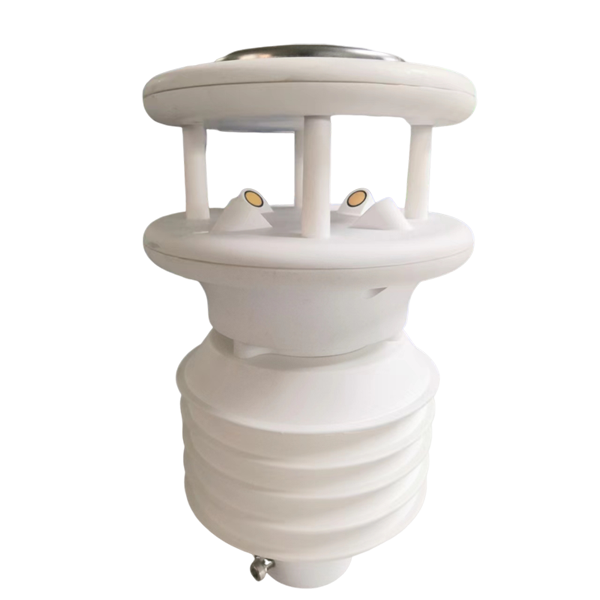
There is no single defensible price for an unspecified station. Request an itemized NiuBoL quotation using the parameter list, mounting site, power arrangement and data destination. Compare equipment, installation and recurring charges separately rather than relying on a price for a sensing head alone.
No. RS485 is a wired sensor connection. Wireless reporting requires a radio or network gateway and a compatible receiving service. Confirm which components are included and who configures the route from sensor registers to the final display or server.
Only when the additional measurements meet the project's needs. For the NBL-W-10GUWS, check the selected solar-radiation or illuminance option; those measurements are not interchangeable. Do not assume every channel can be fitted or supplied simultaneously merely from the channel count.
Potentially, if the selected logger and server have compatible protocols, data fields, authentication and network access. Include connection testing in the offer. A functioning vendor dashboard does not establish compatibility with an existing private system.
It can be engineered, but the full load and site conditions must be known. Confirm supply voltages, peak current, autonomy target and low-temperature behavior before purchasing a panel and battery. Retrofitting power after mounting can require a larger enclosure or different brackets.
Verify sensor identity, orientation, engineering units, timestamps and delivery to the intended receiver. Test the agreed communication outage behavior and inspect power and mounting work. Accept a complete station against the purchased functions, not simply because values appear on a screen.
Provide the application, named measurements, site location, proposed mast and foundation, available power, communications coverage and receiving platform. Attach site photographs where possible. State which installation work and ongoing services the customer will supply so they are not priced twice or omitted.
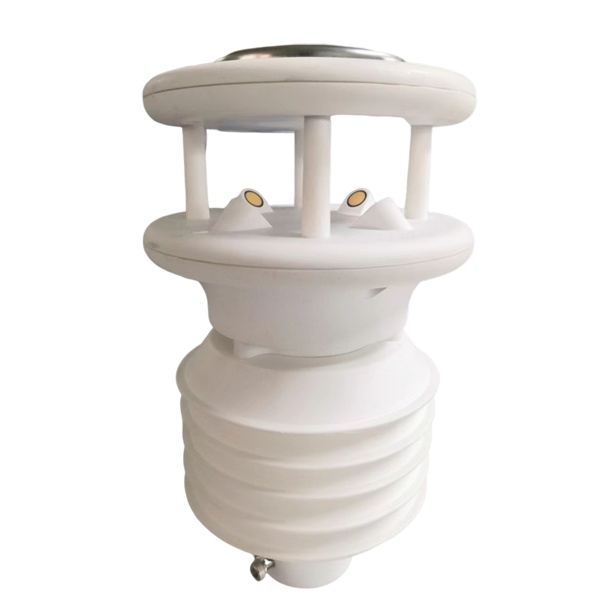
Compare wireless weather station price on equal installed scope. Choose the measurements first, identify the sensor bus and wireless link separately, and price the power and site work needed to keep those measurements usable. NiuBoL can prepare a configuration-based quotation once the measurement list, mounting arrangement and required data delivery are defined.
Prev:ORP Sensor for Alarms and Dosing: Validate the Control Signal
Next:Multiparameter Water Quality Meter Price: Compare Service Costs
Related recommendations
Sensors & Weather Stations Catalog
 Agriculture Sensors and Weather Stations Catalog-NiuBoL.pdf
Weather Stations Catalog-NiuBoL.pdf
Agriculture Sensors Catalog-NiuBoL.pdf
Water Quality Sensor Catalog-NiuBoL.pdf
Related products
 Combined air temperature and relative humidity sensor
 TDR Soil Moisture & Temperature Sensor for irrigation| RS485 |4-20mA| NBL-S-THR
 Soil pH sensor RS485 soil Testing instrument soil ph meter for agriculture |NBL-S-PH
 Wind Speed sensor Output Modbus/RS485/Analog/0-5V/4-20mA
 0.2mm Tipping Bucket Rain Gauge for Weather & Hydrology | NiuBoL
 Pyranometer Solar Radiation Sensor 4-20mA/RS485


Screenshot, WhatsApp to identify the QR code
WhatsApp number:+8615367865107
(Click on WhatsApp to copy and add friends)

