





— Blogs —
—Products—
 Consumer hotline +8618073152920
WhatsApp:+8615367865107
Address:Room 102, District D, Houhu Industrial Park, Yuelu District, Changsha City, Hunan Province, China
Product knowledge
Time:2026-09-21 08:00:00 Popularity:200
NH4-N sensor calibration should correct a demonstrated instrument error, not conceal a sampling difference or an incorrect pH input. Record the installed reading first, inspect and clean the electrode, verify it in suitable standards, and recalibrate only when the check remains outside the accepted tolerance. For the NiuBoL NBL-WQ-NHN-407C compensated configuration, calibrate pH before the final ammonium calibration. A temperature-compensated NBL-WQ-NHN does not automatically have the same pH or potassium functions.
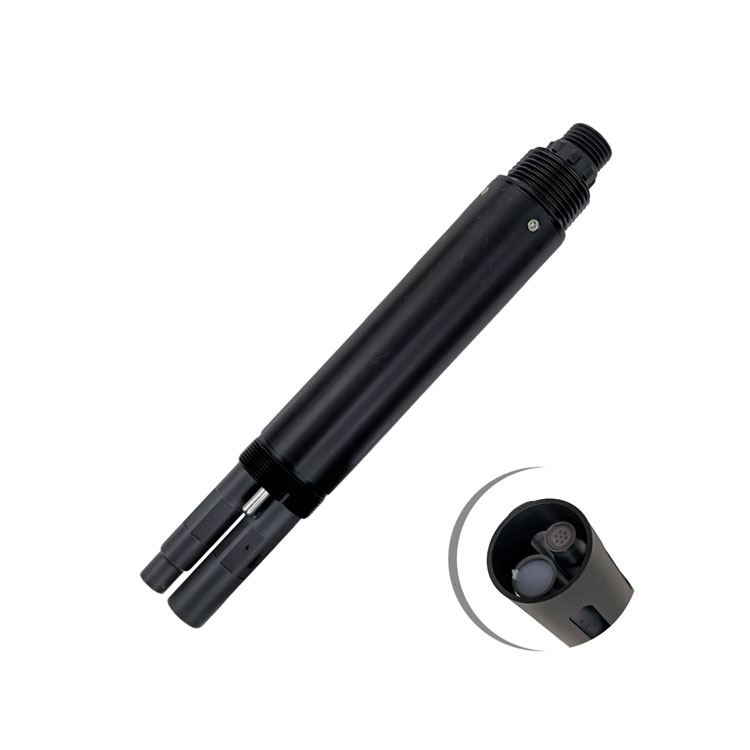
Save the ammonium value, temperature, available pH and potassium channels, timestamp and plant operating condition before removing the probe. Take a comparison sample from the same water at that time when the investigation requires it. Cleaning first can remove the evidence needed to distinguish deposition from a real change in the process.
If the local instrument is plausible but the PLC trend is ten times higher, investigate decoding and decimal scaling before touching calibration. If the online and laboratory results use different NH4+, NH4-N or total-ammonia bases, resolve that difference first. Calibration is not a substitute for correct units or a representative sample.
| Observed behavior | Check before adjustment | Service decision |
|---|---|---|
| Slow response with visible deposits | Membrane condition, sample movement and response after gentle cleaning | Clean and recheck before changing coefficients. |
| Good standards, poor agreement in process water | Potassium, salinity, pH, sampling time and analytical basis | Investigate matrix or comparison problems. |
| Stable bias in suitable standards | Standard freshness, concentration basis, temperature and carryover | Calibrate if the remaining error exceeds the agreed tolerance. |
| Unstable response in several fresh standards | Activation, membrane damage, reference condition and electrical connection | Do not force a fit; assess the electrode or connection. |
| Change following service only in the host | Configuration, scaling and retained controller values | Correct the data path rather than recalibrating a sound sensor. |
Tell the operator when the probe will leave the water. Mark subsequent records as maintenance data, and apply the site's approved control fallback before a calibration solution reaches the sensing element. A held last value must carry a held-value status and age. It must not appear as a fresh process measurement to an aeration controller.
Look for deposits, damage, a blocked reference junction and moisture at accessible connectors. Support the probe by its holder rather than pulling the cable. Rinse loose deposits from the sensing area with clean water or the specified rinse water. Avoid rubbing the PVC sensing membrane, abrasive cleaning, silicone grease contact or improvised solvents on the wetted electrode.
Activation and storage requirements depend on the exact electrode assembly. Do not apply a glass pH electrode's storage routine to an ammonium membrane. For NBL-WQ-NHN, prolonged storage in deionized water is unsuitable; rinsing and storage are different operations. Obtain the matching activation solution and procedure when ordering replacement electrodes, particularly after extended dry storage.
Use fresh working portions with known concentration, preparation or expiry information and the correct NH4+ or nitrogen-mass basis. Keep each portion separate and discard it after use; returning it to the stock bottle contaminates future checks. Rinse between solutions and minimize carryover without mechanically wiping the sensitive surface.
The NBL-WQ-NHN two-point arrangement uses range-appropriate standards, such as the specified 1 and 10 mg/L or 10 and 100 mg/L sets. Select the pair for the ordered configuration and its calibration routine. The command name "zero" can refer to the lower calibration point, which is not necessarily zero concentration. Deionized rinse water is not automatically the correct lower calibration standard.
Place the sensing elements correctly in the first standard and allow a stable response. For this NHN series, allow the specified five-minute check period and continue waiting if the value is still drifting. Repeat with the second standard. Record the unadjusted readings: a check within tolerance does not need recalibration simply because the probe has been removed for cleaning.
If adjustment is necessary, use the exact instrument's calibration routine. Range-dependent concentration scaling and write registers must match the delivered firmware. Do not copy a calibration command from a different NHN model. Recheck both points afterwards, and use an independent intermediate check solution where available. Passing only the two points used to fit the response is weaker evidence than passing a separate check.
Refit the probe at its original representative depth and orientation. The NBL-WQ-NHN installation requires a downward-facing electrode arrangement, not a horizontal or upside-down installation; respect the mounting angle required for the assembly. Allow the process reading to stabilize, compare with a suitably matched sample if needed, then restore the channel to automatic service.
Record the first valid post-service time. A residual film of standard solution or an incompletely refilled sample vessel can produce a short-lived excursion after reinstallation. Mark that recovery period rather than removing points retrospectively to make the trend appear smooth.
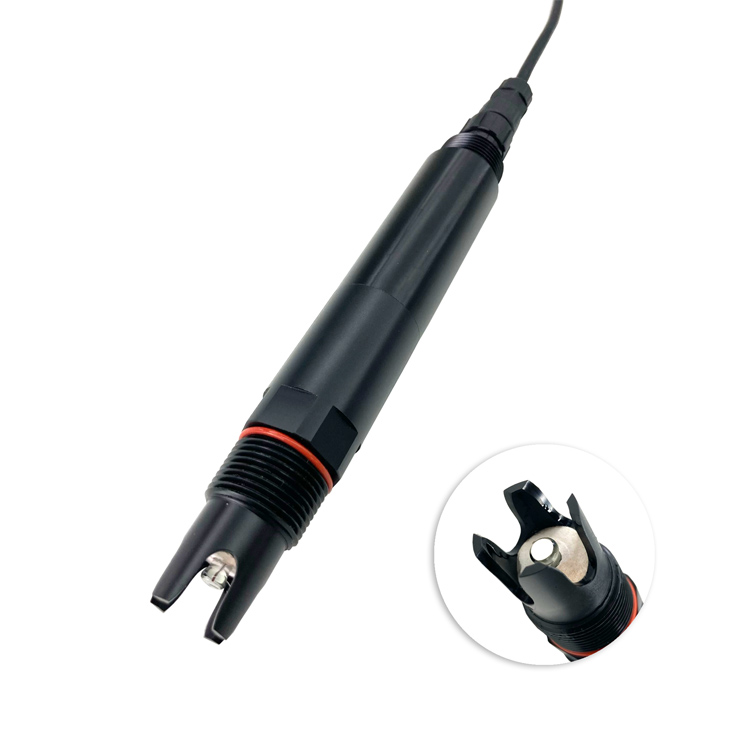
Conductivity can help reveal a changed ionic background during a matrix investigation. The conductivity probe below does not measure ammonium and must not be calibrated with ammonium standards.
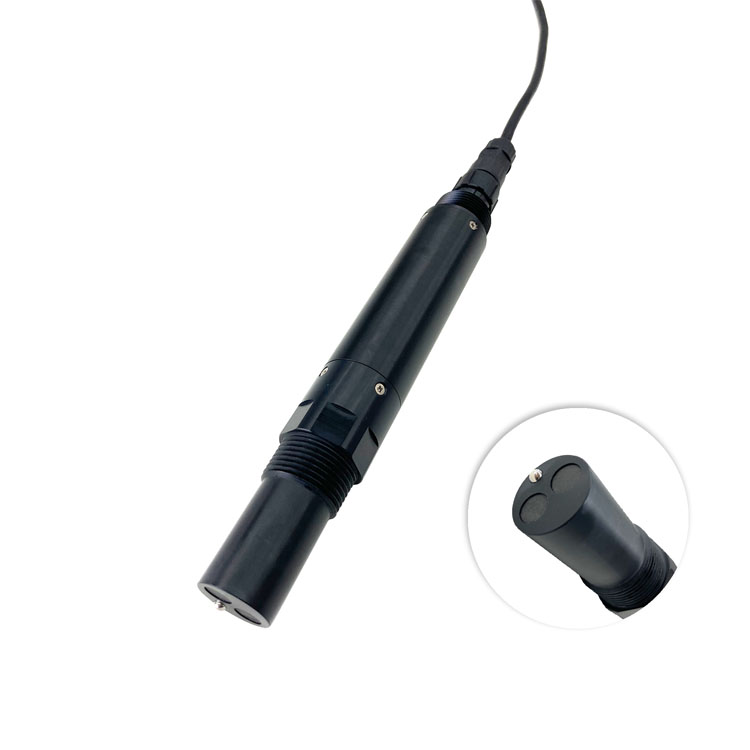
The NBL-WQ-NHN-407C combines ammonium, pH and potassium sensing with temperature measurement. Calibrate pH first and complete the ammonium calibration last, so the final adjustment uses the corrected compensation input. Verify the potassium channel according to the ordered assembly's procedure. Compensation cannot repair a damaged ammonium membrane or remove every interference in industrial water.
A separate NBL-WQ-PH probe can provide process context to a data logger. That connection alone does not feed pH correction into a basic NHN sensor. If the receiving controller calculates a corrected output, specify the calculation, synchronize the inputs and flag the result when an input is missing.
| Service-related specification | NBL-WQ-NHN | NBL-WQ-NHN-407C |
|---|---|---|
| Compensation arrangement | Pt1000 temperature compensation | Temperature, pH and potassium compensation |
| Measurement ranges | 0-10, 0-100 or 0-1000 mg/L configurations | NH4+ channel 0-100 mg/L; confirm the delivered reporting basis |
| Operating conditions | 0-40 degrees C; below 0.1 MPa; pH 4-10 | 0-45 degrees C; below 0.1 MPa; operating pH 4-9 |
| Supply and sensor power | 12-24 VDC; 0.2 W at 12 V | 12-24 VDC; 0.5 W at 12 V |
| Communication | RS485 Modbus RTU | RS485 Modbus RTU; use its own register map |
| Protection and mounting | IP68; 3/4 NPT immersion mounting | IP68; 3/4 NPT immersion mounting |
| Acceptance tolerance | Specify percentage basis and absolute-error allowance for the ordered range | Specify ammonium and compensation-channel tolerances separately |
The 407C's pH measurement span and its compensation span do not extend its operating pH envelope. Likewise, IP68 does not make every connector or field splice suitable for continuous submersion. Include the cable jacket, sealing arrangement and chemical exposure in the installation specification rather than treating the enclosure rating as a complete materials specification.
During commissioning, inspect more frequently than the expected long-term service interval. Compare the as-found reading with the cleaned reading and the subsequent standard check. Repeated improvement after cleaning points toward fouling; repeated failure in clean standards points toward electrode condition, standards or calibration. These observations support different maintenance actions.
Keep a compact record: date, electrode identity, process condition, visible deposits, as-found value, cleaned value, reference results, adjustments and return-to-service time. Record the standard, observed value and operator alongside the before-and-after readings. Use this evidence to decide whether to shorten the cleaning interval or replace an electrode.
For a service quotation, identify the installed NHN version and ask NiuBoL for compatible electrodes, activation materials, standards and seals. The NBL-WQ-NHN-4S is a distinct assembly; do not assume its mechanical parts or calibration map interchange with the basic NHN or 407C. Plan replacement around the actual consumable configuration and the consequences of losing the channel.
No. Check the cleaned electrode against the accepted reference first. Recalibration is justified when a stable error remains outside tolerance, or when the applicable electrode-replacement procedure requires it. Unnecessary adjustments can hide fouling history and introduce standard-preparation errors.
Not unless the instrument's calibration procedure specifies it. The NHN lower-point command can use a nonzero standard selected for its range. Confirm concentration, reporting basis and command scaling before writing. Rinse water and calibration standards are not interchangeable.
Check matrix effects, interfering ions, pH and sample timing. Also verify that the reference method and instrument report the same nitrogen quantity. Repeatedly forcing calibration to one wastewater grab sample can worsen performance when the matrix changes again.
Each electrode needs its own verification and calibration. A good reading from a nearby pH probe does not prove the 407C's integrated pH electrode is correct. Compare colocated measurements, then service the channel that actually supplies the compensation input.
Consider replacement when proper activation, cleaning and fresh standards cannot produce stable, acceptable calibration and verification results. Check connections and the reference system first. A fixed calendar life without regard to water chemistry and service history is not a reliable replacement criterion.
Compare the sensor reading with the host value, unit and timestamp; confirm any decimal scaling and compensation-channel mapping. Then verify that maintenance status clears only after a valid process value returns. A successful poll alone does not establish that the controller is using the right measurement.
Send the model and electrode identity, recent trend, water conditions, standard concentrations and expiry information, pre- and post-cleaning readings, and the actual controller values. State whether the problem occurs in standards, process water or only the host display. This separates electrode, matrix and integration faults before parts are ordered.
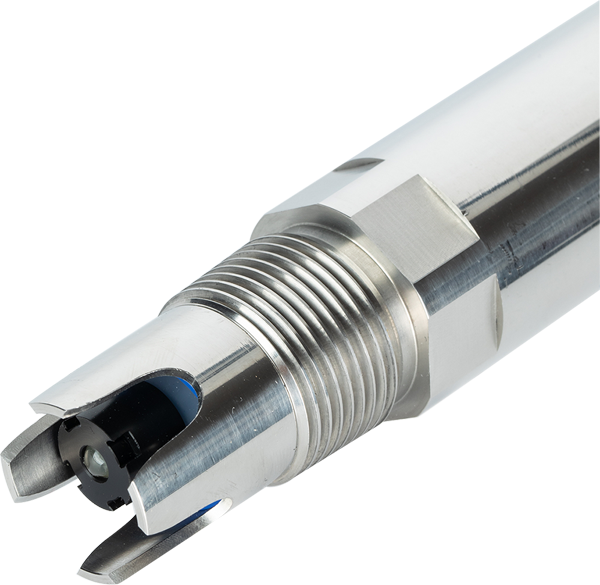
A useful NH4-N maintenance routine preserves the original fault evidence, separates cleaning from calibration, and checks the result in standards and process water. Keep pH and potassium compensation specific to the installed configuration. For replacement parts or a revised service plan, provide NiuBoL with the model and the measured before-and-after behavior rather than only reporting that the reading is wrong.
Prev:Ammonia vs Ammonium in Water Monitoring: Procurement Notes for NH4-N Sensors
Next:Low Residual Chlorine Sensor Selection for Drinking-Water Decisions
Related recommendations
Sensors & Weather Stations Catalog
 Agriculture Sensors and Weather Stations Catalog-NiuBoL.pdf
Weather Stations Catalog-NiuBoL.pdf
Agriculture Sensors Catalog-NiuBoL.pdf
Water Quality Sensor Catalog-NiuBoL.pdf
Related products
 Combined air temperature and relative humidity sensor
 TDR Soil Moisture & Temperature Sensor for irrigation| RS485 |4-20mA| NBL-S-THR
 Soil pH sensor RS485 soil Testing instrument soil ph meter for agriculture |NBL-S-PH
 Wind Speed sensor Output Modbus/RS485/Analog/0-5V/4-20mA
 Tipping bucket rain gauge for weather monitoring auto rainfall sensor RS485/Outdoor/stainless steel
 Pyranometer Solar Radiation Sensor 4-20mA/RS485


Screenshot, WhatsApp to identify the QR code
WhatsApp number:+8615367865107
(Click on WhatsApp to copy and add friends)

