





— Blogs —
—Products—
 Consumer hotline +8618073152920
WhatsApp:+8615367865107
Address:Room 102, District D, Houhu Industrial Park, Yuelu District, Changsha City, Hunan Province, China
Product knowledge
Time:2026-09-22 13:00:00 Popularity:184
Choosing online vs portable vs laboratory equipment starts with the required decision time, measuring location and analytical method. Buy online measurement for repeated observations at a fixed point, portable equipment for attended checks across locations, and laboratory capability for the required sample analysis. Many projects need a combination. Comparing purchase prices alone can conceal missing event coverage or a method that cannot answer the intended question.
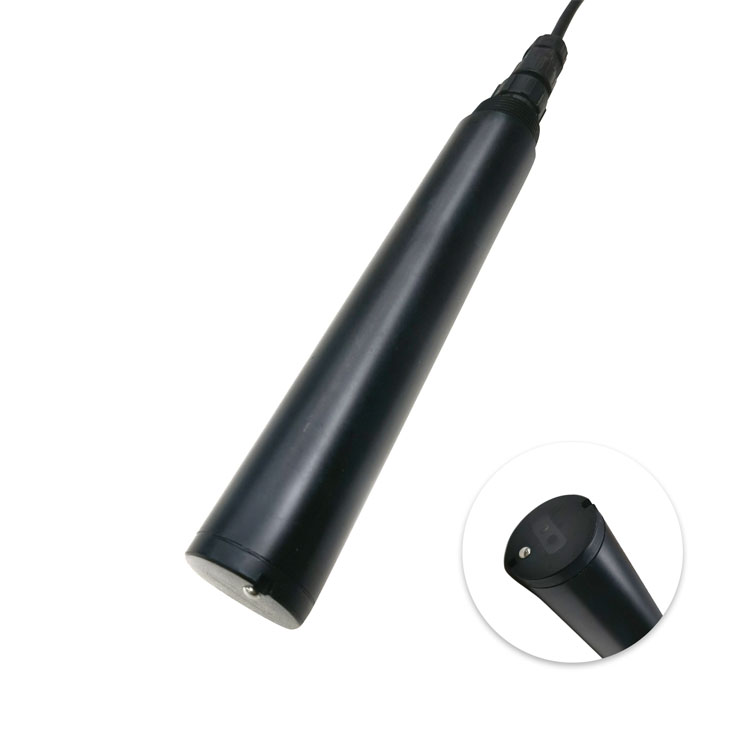
Start the comparison with an operating task rather than three instrument catalogues. An operator adjusting aeration needs a timely dissolved-oxygen result. A maintenance technician tracing a conductivity change needs measurements at several locations. A laboratory receiving a discharge sample may need a specified preparation and analytical procedure. These tasks can concern the same plant without requiring the same instrument.
For each parameter, write down the decision deadline, measuring location, expected concentration band and method requirement. State who acts on the result. This makes omissions visible: a portable meter does not provide an unattended overnight alarm, while an online optical trend does not automatically satisfy a requirement for a particular laboratory method.
| Project task | Primary purchase | Other work required |
|---|---|---|
| Detect a short disturbance at a fixed process point | Online sensor, acquisition and alarm arrangement with suitable response time | Verification, event investigation and sampling where needed |
| Survey several tanks or river locations during a visit | Portable instrument with the required electrodes and field accessories | Repeatable sampling positions, stabilization and operator records |
| Determine a result by a specified analytical method | Laboratory instrument or contracted analysis capable of that method | Sampling, preservation, transport and reporting appropriate to that analysis |
| Maintain a control loop while an installed probe is serviced | Qualified replacement or redundant measurement where interruption is unacceptable | An approved temporary operating procedure; occasional handheld readings are not automatic redundancy |
These categories describe deployment, not a universal accuracy ranking. A well-maintained portable instrument can be more useful than a poorly exposed online probe, and a laboratory result can be unrepresentative if the sample changes before analysis. Compare the complete measurement procedure, including how water reaches the sensing element.
Attended sampling has gaps. If a short event occurs between visits, a compliant-looking spot reading afterward does not show that the event never happened. An online installation can reduce those gaps, but its measurement interval, response time and alarm logic must suit the disturbance. Repeatedly transmitting the same held value does not improve temporal coverage.
Consider a hypothetical facility with 12 measuring locations checked twice per shift over two shifts. That is 48 attended measurement occasions each day. At five minutes per occasion, the measurement work alone occupies four hours, before travel, access, rinsing, calibration checks and records. This is a workload illustration, not an assumed instrument stabilization time or a financial saving claim.
Now separate those 12 locations by consequence. A frequently changing control point may justify a fixed online channel; a stable diagnostic point might remain on the portable route. Laboratory analysis can be reserved for duties that require its method or sample treatment. This allocation is usually more defensible than fitting every location with the same arrangement or expecting one roaming meter to cover every operating decision.
Identical units do not prove identical methods. UV-based COD estimates depend on the optical response and the water-specific relationship used to express COD. A laboratory digestion result follows a different analytical process. Likewise, turbidity in NTU is not a direct TSS concentration, and an optical estimate labelled BOD is not automatically the result of an incubation test.
The useful question is whether the candidate measurement performs its assigned task in the actual water. For a trend alarm, evaluate repeatability and the ability to identify relevant changes. For a quantitative comparison, specify paired samples, the applicable range and the allowable disagreement. Where a reporting or acceptance procedure requires a particular method, check that requirement explicitly before purchasing; a communications interface cannot establish analytical equivalence.
Portable comparison work needs controls too. Compare pH or conductivity under compatible temperature conditions and compensation settings. For dissolved oxygen, avoid unnecessary aeration or a long delay before the check. For turbidity, consider settling, bubbles and optical-method differences. Do not recalibrate an online instrument to a single portable result until the discrepancy has been investigated.
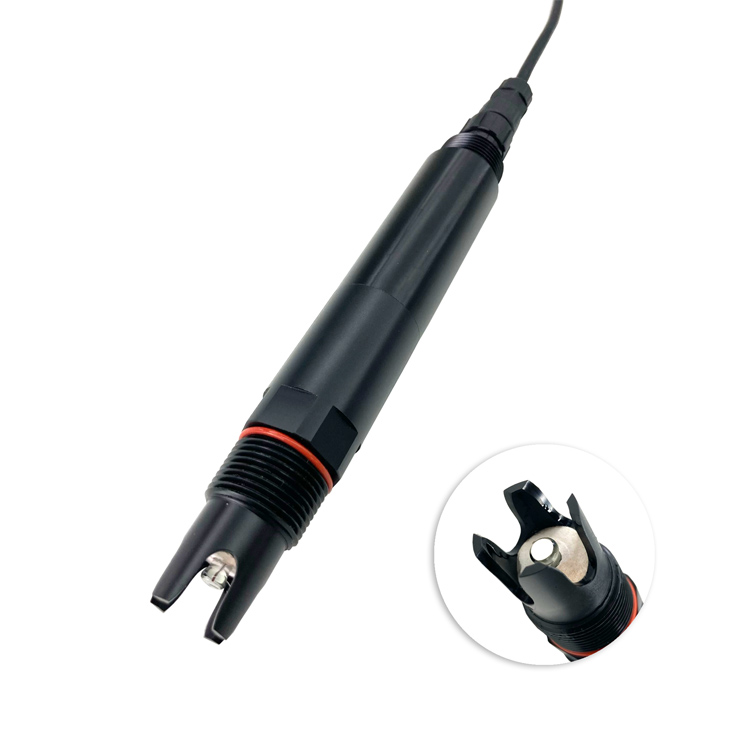
A fixed online channel can be assembled from a separate sensor or a multi-parameter probe. The NBL-WQ-PH provides a dedicated pH measurement for a compatible host. The NBL-WQ-MPS-5B groups selected channels in an immersed assembly. Neither is a complete portable meter or laboratory analyzer merely because a reading can be displayed on a computer.
| Selection item | NBL-WQ-PH standalone channel | NBL-WQ-MPS-5B assembly |
|---|---|---|
| Measurement scope | pH 0-14; resolution 0.01; accuracy +/-0.1 pH | Selected DO, pH, ORP, conductivity/salinity and turbidity channels; up to six parameters including temperature |
| Supply and consumption | 12-24 VDC; 0.2 W at 12 V | 12 VDC; 2 W at 12 V |
| Output | RS485 Modbus RTU | RS485 Modbus RTU, with channel-specific register mapping |
| Operating conditions | 0-65 degrees C; pressure below 0.2 MPa; IP68 | 0-50 degrees C; pressure at or below 0.2 MPa; IP68 |
| Installation and materials | Immersion or a suitable 3/4 NPT mounting; POM wetted body | Immersion assembly; POM and 316L housing; protected sensor modules |
| Connection and servicing | Standard 5 m cable; electrode condition and calibration checked individually | Standard 5 m shielded twisted-pair cable; automatic brush plus parameter-specific service |
The multi-parameter option can reduce separate mounting and cable runs, but shared power or retrieval can interrupt several channels together. A dedicated pH channel may be easier to service independently. Choose the arrangement around the location and the consequences of a missing value, not the maximum parameter count.
Include the receiving PLC, RTU or data logger in an online quotation. Specify the ordered register map, units, scaling and update behavior. An RS485 connection requires a compatible master; it cannot be wired directly into an analog-only input. For portable and laboratory work, the data requirement may instead be a sample identifier, timestamp and exportable result. Do not buy unused platform features simply to make all three offers look alike.
Ask each offer to cover the tasks assigned to it. For online equipment, separate the probe, holder or flow cell, controller, wiring, integration and commissioning. For portable equipment, include electrodes, suitable field containers, protective storage, checks and operator time. For laboratory work, include the necessary sample preparation, consumables, quality controls and sample transport, or the equivalent contracted service.
Use the same evaluation period and expected number of observations. A price per laboratory sample is not directly comparable with an online probe price. Nor should an online probe's full purchase price be divided by every logged row and described as a saving: rows recorded while fouled, dry or outside the qualified method range may not support any decision.
There is no reliable universal price for these three categories. For a useful NiuBoL quotation, identify the fixed points that need online data, their required channels and the host equipment already available. Keep portable verification and laboratory duties visible in the project budget even when they are purchased separately.
Accept the trial against the intended duty. A result that is useful for detecting change may still be unsuitable for a narrow quantitative acceptance band. Retain that distinction in the purchase specification so an operational trend is not later treated as a different type of measurement.

Yes for an attended checking task if the visit frequency and operating procedure cover the risk. It cannot provide an unattended alarm between visits. Plant size alone is not the deciding factor; a small plant with a fast-changing critical process may still need fixed monitoring.
Only when the reference method, sample handling and timing are appropriate to the comparison. A transported sample can change, and some optical outputs represent a different measurement basis. Agree the comparison procedure before using disagreement as evidence that either instrument is faulty.
Matching principles can simplify some routine comparisons, but it can also leave shared interferences undetected. Select the checking method for the failure you need to detect. Method compatibility, range and sample treatment matter more than whether the instruments look similar.
No. The channels measure different properties and need suitable references and procedures. Automatic cleaning may reduce deposits, but it does not calibrate pH, conductivity or dissolved oxygen. Specify the service materials and access needed for the fitted modules.
Check whether both cover the same measurement locations, analytical duty, response requirement and operating period. Then identify omitted accessories, host integration, consumables and routine labor. A cheaper offer may be appropriate for a narrower duty, but the excluded work must remain visible.
Yes. Begin with the points where continuous data changes an operating decision, while retaining portable and laboratory checks elsewhere. Reserve host capacity where justified, but verify module availability, power and mapping before later additions; unused space does not guarantee plug-in compatibility.
A useful water quality analyzer comparison allocates the work before comparing prices. Fixed online channels provide repeated observations, portable tools support attended investigation, and laboratory methods address their specified analytical duties. NiuBoL online sensors should be selected as part of that division of work, with a trial that demonstrates the required result rather than simply producing a display.
Prev:Water Quality Sensor Acceptance Test: What to Recheck After Replacement
Next:TSS Sensor Drift After a Process Change: Fouling or a New Particle Mix?
Related recommendations
Sensors & Weather Stations Catalog
 Agriculture Sensors and Weather Stations Catalog-NiuBoL.pdf
Weather Stations Catalog-NiuBoL.pdf
Agriculture Sensors Catalog-NiuBoL.pdf
Water Quality Sensor Catalog-NiuBoL.pdf
Related products
 Combined air temperature and relative humidity sensor
 TDR Soil Moisture & Temperature Sensor for irrigation| RS485 |4-20mA| NBL-S-THR
 Soil pH sensor RS485 soil Testing instrument soil ph meter for agriculture |NBL-S-PH
 Wind Speed sensor Output Modbus/RS485/Analog/0-5V/4-20mA
 Tipping bucket rain gauge for weather monitoring auto rainfall sensor RS485/Outdoor/stainless steel
 Pyranometer Solar Radiation Sensor 4-20mA/RS485


Screenshot, WhatsApp to identify the QR code
WhatsApp number:+8615367865107
(Click on WhatsApp to copy and add friends)

