





— Blogs —
—Products—
 Consumer hotline +8618073152920
WhatsApp:+8615367865107
Address:Room 102, District D, Houhu Industrial Park, Yuelu District, Changsha City, Hunan Province, China
Product knowledge
Time:2026-09-23 09:00:00 Popularity:201
A water quality sensor replacement cycle should combine condition checks, consumable-specific service requirements and the interruption the site can tolerate. Aging signs should trigger inspection and comparison before replacement. Check whether cleaning or calibration restores the response, how quickly drift returns and whether the fault is in the sensing element, cable or electronics. Plan spare probes around those findings and the verified replenishment time; one calendar interval cannot describe every water-quality instrument.
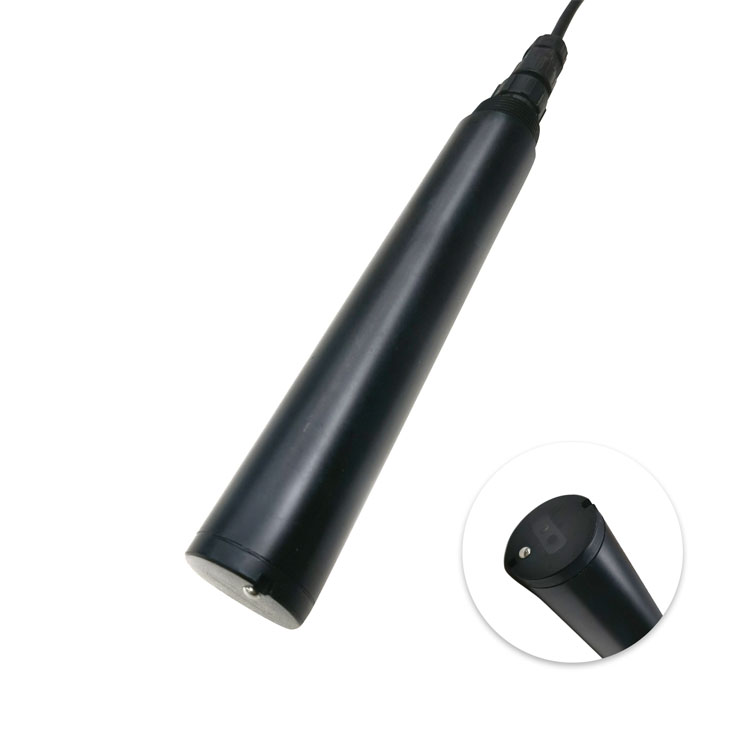
A gradual change in the reading can be caused by deposits, changing water chemistry, a damaged sensing surface or an aging electrode. A sudden loss of several channels may instead indicate a shared supply or communication problem. Replacing the probe before separating these possibilities can leave the original fault in place and consume the spare unnecessarily.
Record the as-found condition before cleaning or adjusting anything. Include the raw reading, temperature, installation position, visible deposits and the result from an appropriate independent check. Then inspect and service the instrument using a method compatible with that sensing element. Compare the recovered response with its own earlier checks and the project's required tolerance.
| Observed behavior | Check before ordering a replacement | When replacement becomes justified |
|---|---|---|
| Reading returns to normal after cleaning | Fouling rate, cleaning access and exposure | Only if damage remains or service frequency becomes operationally unacceptable |
| Slow or unstable response in suitable fresh standards | Temperature, standard condition, conditioning and reference-junction condition where applicable | Failure persists after the correct service and calibration procedure |
| Repeated calibration failure | Correct standards, calibration sequence, units and software settings | The sensing element cannot meet its acceptance criteria after those causes are excluded |
| Intermittent or missing digital readings | Voltage at the probe, connectors, cable integrity, address conflicts and host polling | A sensor fault is isolated by a controlled comparison with known-good equipment |
| Cracked body, damaged optical face or water ingress | Safe isolation and assessment of the damaged assembly | Repair or replacement is needed before further use; recalibration cannot repair physical damage |
Do not use the latest process reading as the calibration target merely to make two displays agree. If the sample or comparison instrument is unsuitable, the adjustment can conceal a useful warning and distort the subsequent trend. Preserve the original result and the reason for any correction.
A pH electrode can develop a blocked reference junction, deposits or a response that no longer remains stable after service. The NiuBoL NBL-WQ-PH measures 0-14 pH with 0.01 resolution and +/-0.1 pH accuracy. Its extra display decimal does not establish a tighter allowable error. Use suitable buffers and their temperature-dependent values when deciding whether the electrode meets the required performance.
Keep the electrode in its specified storage solution when idle; do not treat a dry shelf or long-term immersion in deionized water as equivalent storage. For a spare, check the protective cap and storage condition before installation. If correct cleaning, conditioning and calibration cannot restore an acceptable measurement, arrange replacement. Do not convert a general claim about reference-electrolyte life into a guaranteed service interval for every process.
The NBL-WQ-DO fluorescence dissolved-oxygen sensor has a replaceable fluorescent cap. Its recommended cap replacement interval is once a year; that is a model-specific maintenance recommendation, not a universal whole-sensor lifetime or a guarantee that a damaged cap will last until the anniversary. Inspect its condition and check the response when service history or readings suggest a problem.
A scratched or damaged cap may require replacement while the electronics remain usable. Conversely, a new cap will not fix a broken cable or failed communication circuit. Follow the matching cap installation and verification procedure, keep sensitive surfaces protected, and use the required post-service calibration checks before restoring the control signal.
For turbidity and other optical channels, inspect the window, guard and any cleaning mechanism before assuming the optical electronics have reached end of life. Scratches and persistent deposits can have different remedies. Do not open a sealed sensing body as a routine cleaning step or polish an optical surface with an abrasive.
An MPS-5B multi-parameter assembly contains distinct sensor modules and a shared structure. One bad channel does not by itself justify discarding every channel. Ask whether the affected module, cable or cleaning component can be serviced or replaced for that assembly version. A complete spare assembly is most useful where retrieval and workshop service would otherwise leave several important measurements unavailable.
| Replacement compatibility check | NBL-WQ-PH | NBL-WQ-MPS-5B |
|---|---|---|
| Electrical supply | 12-24 VDC; 0.2 W at 12 V | 12 VDC; 2 W at 12 V |
| Digital interface | RS485 Modbus RTU; verify address and value scaling | RS485 Modbus RTU; verify fitted channels and each register assignment |
| Operating limits | 0-65 degrees C; pressure below 0.2 MPa; IP68 | 0-50 degrees C; pressure at or below 0.2 MPa; IP68 |
| Physical fit | Immersion or suitable 3/4 NPT mounting; standard 5 m cable | Assembly support, guard clearance and standard 5 m shielded twisted-pair cable |
| Return-to-service check | Suitable buffer verification and process response | Parameter-specific verification plus shared communication and cleaning operation |
These specifications describe different assemblies, not interchangeable replacements. Match the original order code, connectors and environmental conditions. A 24 V supply acceptable for a standalone pH probe must not be assumed suitable for the MPS-5B assembly.
A useful history separates checks before cleaning, after cleaning and after any calibration. Otherwise, repeated adjustments can hide a shortening period of acceptable operation. Record consumable changes separately from whole-probe changes so the instrument's serial history remains meaningful.
Suppose a site's own acceptance procedure allows a deviation of 0.10 pH at a defined verification point. In an illustrative record, an electrode initially differs by 0.04 pH after service but later repeatedly returns to 0.12 pH before the next planned visit. That pattern warrants investigation and possibly earlier replacement or a shorter service interval. The numbers are an example of a local decision rule, not a new NiuBoL accuracy specification or a universal replacement threshold.
Shortening the interval is not always the economical answer. If deposits recur immediately because the mounting traps solids, fixing the exposure may be more useful than repeatedly replacing electrodes. If a worn sensing element fails even in suitable standards, a mounting change will not restore it. Keep the decision tied to the evidence from that particular failure mode.
For each critical point, compare the longest tolerable interruption with the time required to diagnose, obtain parts, replace the component and verify the result. Include access and technician availability. If restoration would take longer than the process can tolerate, decide whether a stocked module, a complete ready-to-fit probe or a second independent measurement is needed.
For example, if a hypothetical project permits only four hours without its monitoring channel but replenishment plus commissioning would require several days, ordering a replacement only after failure does not meet that requirement. A warehouse spare can reduce the delay, but only if it is compatible, properly stored and can be installed within the allowed time. The actual delivery commitment must come from the current order, not from a generic article.
A shared spare can support several installations only when their part versions, ranges, connectors and calibration requirements are compatible and access times permit sharing. Do not combine unlike electrodes under a broad inventory label such as "water sensor." Rotate stock with limited storage life, inspect packaging and storage liquid where relevant, and test long-stored spares before relying on them for an urgent outage.
Keep the measurement location's historical tag, but mark the instrument change in the record. Do not silently join unverified readings to the earlier trend. For an inquiry to NiuBoL, send the exact model and serial details, failure symptoms, supply and host information, the checks already completed and the permitted outage. This helps distinguish a consumable order from a replacement probe or a repair assessment.

There is no single defensible lifetime across pH electrodes, optical caps, conductivity cells and integrated electronics. Use the model's service requirements and actual performance history. Warranty duration, shelf life and useful operating life describe different things and should not be substituted for one another.
Not by itself. Check whether calibration was actually necessary, whether the standards were suitable and whether cleaning restored the response. Replacement is better supported by persistent failure or rapidly recurring unacceptable drift after correct service than by the number of adjustments alone.
Only where the outage consequence and restoration time justify it. A stocked consumable may cover a likely cap failure, whereas a remote multi-channel installation may justify a complete assembly. Shared spares need confirmed compatibility and a practical route to the affected site.
The host address may be reused after removing the old device and checking the new configuration. Do not copy calibration coefficients indiscriminately: they can belong to the old sensing element or a different firmware layout. Verify the replacement using its own appropriate reference checks.
Not as a general storage practice for the NBL-WQ-PH. Maintain its specified protective storage condition and solution. A dry or poorly stored spare may need conditioning or may no longer be usable; check it before scheduling a critical changeover.
Compare the available repair route, module price, retrieval work and lost monitoring time. Replacing one qualified module may preserve usable hardware. A complete exchange assembly can be preferable where the interruption dominates the cost. Ask for both scopes when the fault has been isolated but the service route is not yet chosen.
Verify measurement performance, host interpretation and actual return to operation. Check the new device identity, range, units, timestamps, alarms and relevant reference results. A successful Modbus response proves communication, not that the replacement measurement is fit for the process.
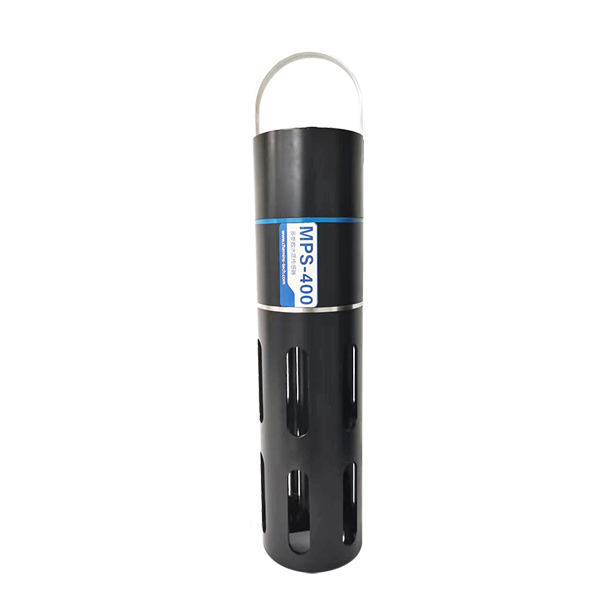
Set the water quality sensor replacement cycle around recoverable performance, component-specific maintenance and acceptable interruption. Keep cleaning faults, consumable wear and instrument failure separate. A spare-probe plan is useful only when the replacement remains serviceable in storage and can be installed, verified and returned to operation within the site's required time.
Prev:TSS Sensor Drift After a Process Change: Fouling or a New Particle Mix?
Next:Aquaculture Water Quality Monitoring System: Power Loss and Aerator Feedback
Related recommendations
Sensors & Weather Stations Catalog
 Agriculture Sensors and Weather Stations Catalog-NiuBoL.pdf
Weather Stations Catalog-NiuBoL.pdf
Agriculture Sensors Catalog-NiuBoL.pdf
Water Quality Sensor Catalog-NiuBoL.pdf
Related products
 Combined air temperature and relative humidity sensor
 TDR Soil Moisture & Temperature Sensor for irrigation| RS485 |4-20mA| NBL-S-THR
 Soil pH sensor RS485 soil Testing instrument soil ph meter for agriculture |NBL-S-PH
 Wind Speed sensor Output Modbus/RS485/Analog/0-5V/4-20mA
 Tipping bucket rain gauge for weather monitoring auto rainfall sensor RS485/Outdoor/stainless steel
 Pyranometer Solar Radiation Sensor 4-20mA/RS485


Screenshot, WhatsApp to identify the QR code
WhatsApp number:+8615367865107
(Click on WhatsApp to copy and add friends)

