





— Blogs —
—Products—
 Consumer hotline +8618073152920
 WhatsApp:+8615367865107
Address:Room 102, District D, Houhu Industrial Park, Yuelu District, Changsha City, Hunan Province, China
Product knowledge
Time:2026-02-01 10:41:14 Popularity:535
In smart water conservancy, irrigation district informatization, and urban inland river monitoring projects, system integrators often face a challenging engineering problem: the flow measurement cross-section is not a standard rectangular, U-shaped, or trapezoidal shape, but an irregular cross-section formed due to years of scouring, sedimentation, or natural terrain.
For traditional weir-slot flow measurement methods, non-standard cross-sections mean measurement failure; for Doppler ultrasonic flowmeters based on the velocity-area method, how to accurately convert the relationship between water level (H) and flow area (S) becomes the core key to determining flow rate (Q) accuracy (Q = V × S). Leveraging in-depth fluid dynamics research, NiuBoL provides a full-chain solution of “hardware monitoring + cross-section modeling software” for the industry.
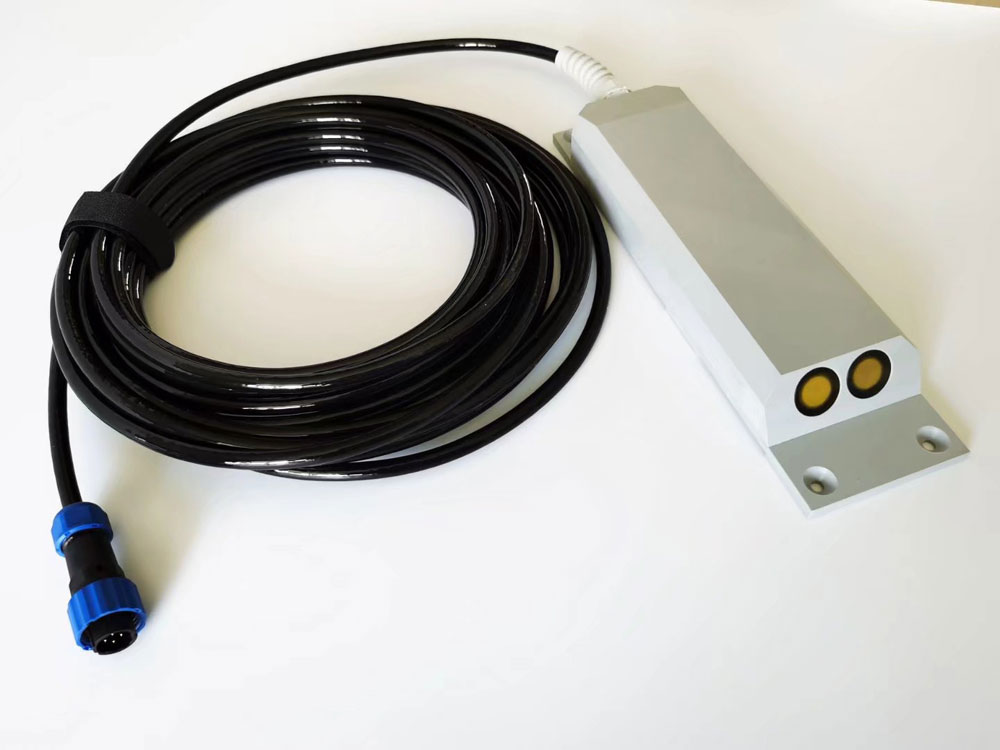
The flow measurement logic of the Doppler ultrasonic flowmeter follows the basic physical formula:
Q = V × S
Where:
V (flow velocity): Utilizes the Doppler Effect principle, measuring the motion velocity of suspended particles or bubbles in the fluid through an ultrasonic flow velocity sensor.
S (flow area): Obtained in real time through the built-in pressure water level gauge, mapped to the cross-sectional area under the current water level.
Q (instantaneous flow rate): Calculated by the controller in real time through multiplication and output.
In standard cross-sections (such as standard rectangular channels), the area calculation formula is relatively simple (S = width × H). However, in irregular natural river channels or old channels, the relationship between area S and water level H is complex and nonlinear, making traditional mathematical models difficult to cover.
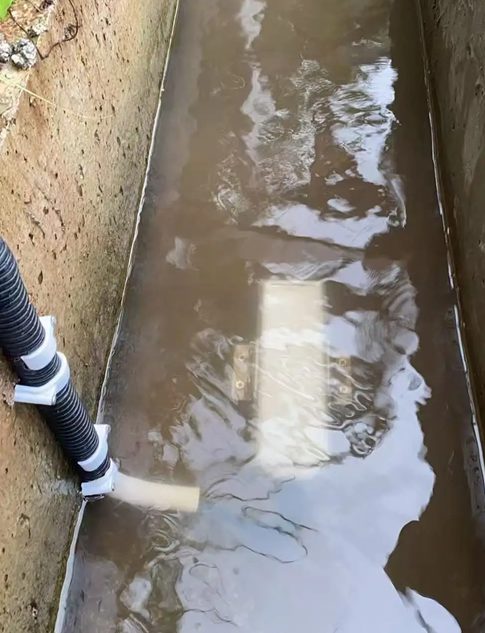
For non-standard conditions, NiuBoL has developed specialized irregular cross-section water level-to-flow area conversion software, simplifying complex geometric calculations into digitized “fool-proof” operations.
1. Physical Surveying and Coordinate Input
Integrators perform one-time surveying of the cross-section at the project site. By measuring the horizontal coordinates (distance from the bank) and vertical coordinates (depth/elevation) at various points on the cross-section, the geometric contour of the cross-section is obtained.
2. Software Modeling and Curve Generation
Input the surveyed coordinate data into the NiuBoL conversion software, which automatically generates the cross-section shape curve. Using integration algorithms, the software automatically calculates the precise flow area corresponding to each water level span (e.g., every 1cm) from the channel bottom to the highest water level.
3. Data Import and Online Monitoring
The software supports one-click export of the water level-to-area correspondence table in Excel format. Users only need to import this table into the Doppler ultrasonic flowmeter controller via NiuBoL’s supporting host computer software. From then on, the controller can achieve real-time area conversion and flow monitoring for the irregular cross-section.
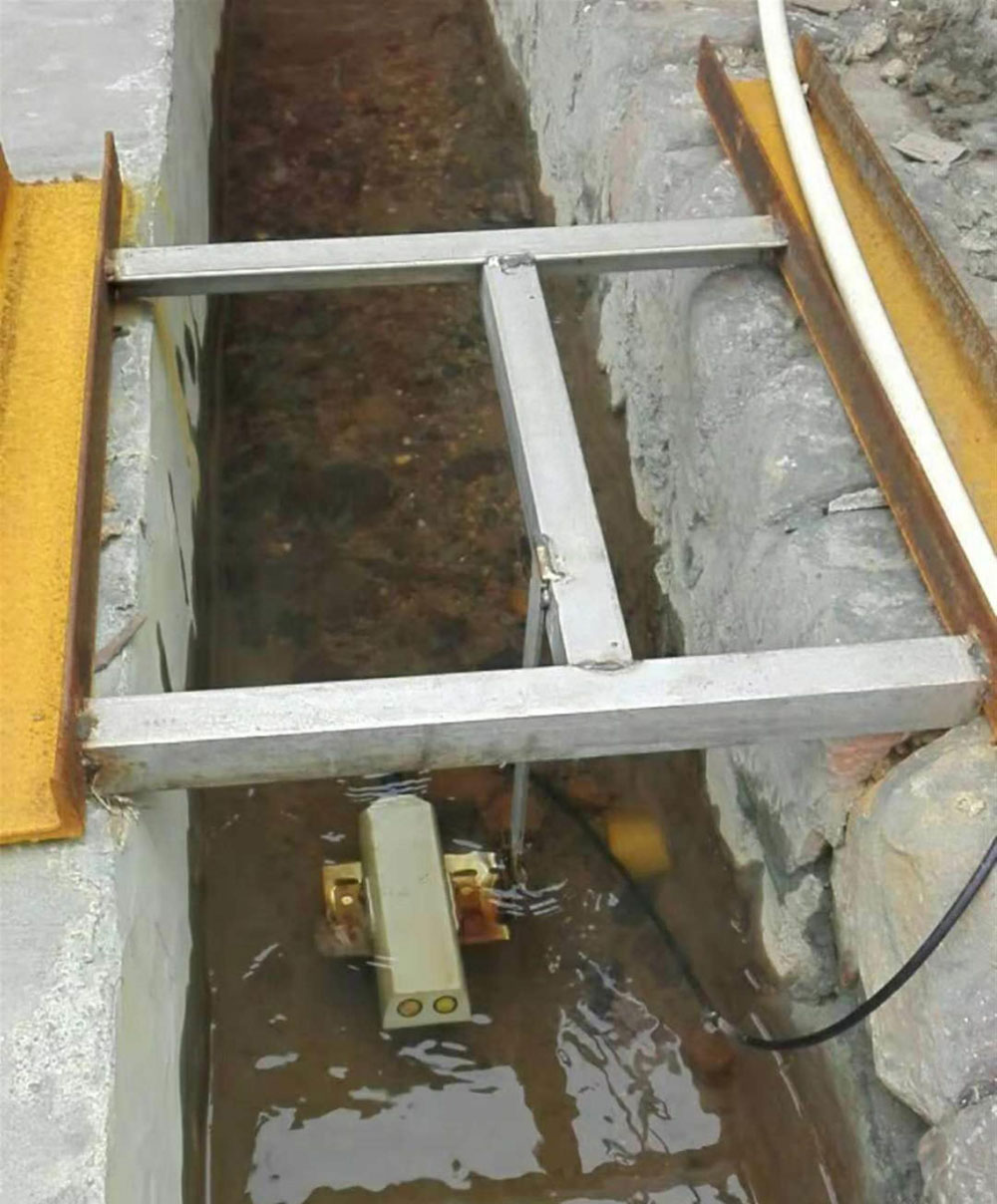
This solution demonstrates extremely high engineering value in multiple B2B industrial fields:
Smart Irrigation District Renovation: Many irrigation channels have deformed cross-sections due to age or irregular bottom profiles from sediment deposition. Using NiuBoL’s software modeling, high-precision flow measurement can be achieved without reconstructing standard weirs/slots, significantly reducing civil engineering costs.
Urban Inland Rivers and Black-Odorous Water Body Monitoring: Natural river cross-sections vary greatly, with water levels fluctuating significantly due to rainfall. Doppler technology combined with irregular cross-section software can adapt to backflow, low flow velocity, and complex cross-section conditions.
Hydropower Stations and Reservoir Inflow Monitoring: For large cross-sections and asymmetric diversion channels or spillways, it provides precise flow data to support water resource dispatching.

As system integrators implementing irregular cross-section flow measurement projects, pay attention to the following technical details:
Surveying Accuracy: The quality of the area table generated by the software directly depends on the precision of on-site surveying. It is recommended to conduct detailed cross-section measurements during the dry season.
Sensor Installation Position: The Doppler flow velocity sensor should be installed in a relatively stable flow area without backflow or severe turbulence, with a straight-through section of 5-10 times the water head width in front of the sensor.
Dynamic Correction for Sedimentation: If the river channel has seasonal sediment deposition, it is recommended to periodically resurvey the cross-section and update the area correspondence table in the controller to correct area errors caused by sedimentation.
Communication Protocol: The controller is standard configured with RS485 interface, supporting Modbus RTU protocol. Integrators can directly access multiple registers such as flow rate, velocity, water level, and flow area to RTU or control centers.
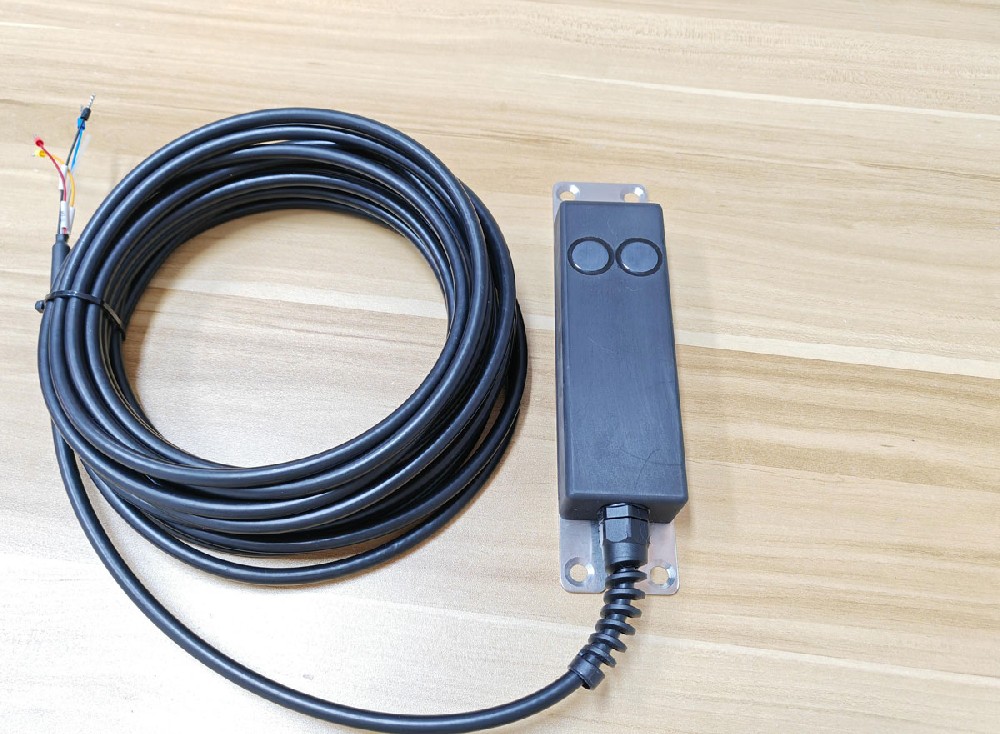
Q1. Does the NiuBoL Doppler flowmeter have requirements for water quality?
The Doppler principle relies on suspended particles or tiny bubbles in the water for signal reflection. Therefore, it is very suitable for natural rivers, irrigation channels, and domestic sewage with certain turbidity, but it cannot measure in extremely pure deionized water.
Q2. What if the cross-section collapses or experiences major sedimentation during operation?
Users only need to resurvey the coordinates of the new cross-section, regenerate the Excel table through the software, and import it into the controller to complete the correction—no hardware replacement required, offering extremely high flexibility.
Q3. What is the maximum number of coordinate points supported by the software?
The software supports high-density coordinate input, sufficient to depict extremely complex riverbed contours, ensuring area calculation errors are controlled within 1%.
Q4. Can the equipment measure during low water levels (extremely dry periods)?
As long as the water level submerges the flow velocity sensor (typically requiring water level >3-5cm above the sensor), the Doppler technology can operate normally.
Q5. Does the controller have lightning protection and anti-interference capabilities?
The NiuBoL controller adopts industrial-grade lightning protection design, with surge protection on power and communication interfaces, suitable for complex electromagnetic environments near field pumping stations and water conservancy gates.
Q6. Can data from multiple cross-sections be aggregated to one host computer?
Yes. Through RS485 bus or integrated 4G/5G communication modules, flow measurement data from multiple cross-sections can be uniformly aggregated to the monitoring platform provided by NiuBoL or self-built by integrators.
Q7. Is the Doppler velocity measurement point velocity or average velocity?
The equipment measures the layer flow velocity within the ultrasonic beam coverage area. Through the built-in flow velocity distribution model algorithm, the controller automatically converts it to the average velocity of the cross-section to ensure accurate flow Q.
Q8. Is the software operation complex? Does it require a professional mathematical background?
The software interface is fully graphical. As long as coordinates are input, it automatically generates tables. We call it “fool-proof” operation, greatly reducing the technical threshold for engineering personnel.
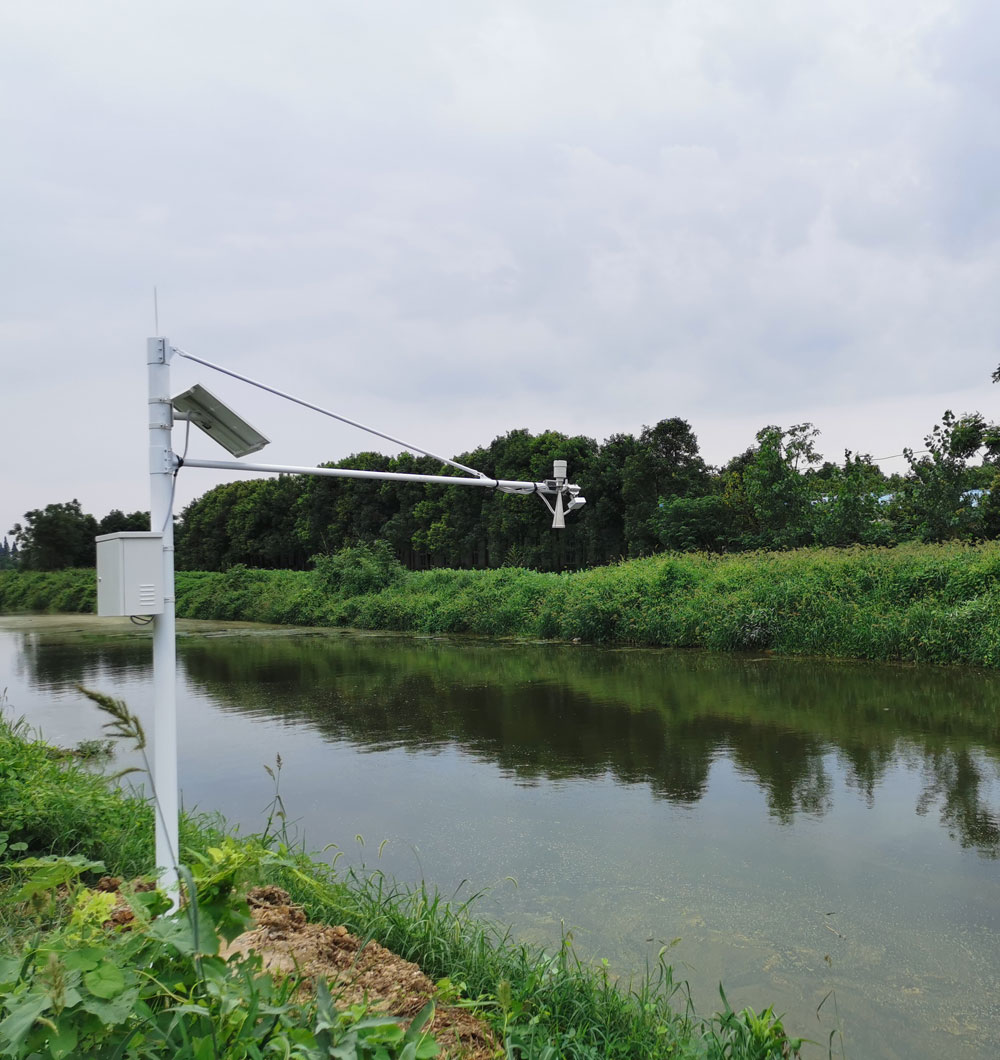
Flow measurement in irregular cross-sections has always been a technical difficulty in water conservancy engineering, and NiuBoL successfully transforms this challenge into a standard industrial process through the collaborative model of “hardware sensing + software modeling.” For integrators, this not only means taking on more complex condition projects but also significantly shortening on-site debugging and construction cycles while ensuring measurement accuracy.
In the future blueprint of smart water conservancy, the data transparency of every non-standard cross-section is key to improving water resource management efficiency. NiuBoL will continue to provide highly reliable and easy-to-integrate fluid monitoring foundations for global partners.
Are you looking for a solution for flow monitoring in natural river channels or non-standard channel outlets? NiuBoL provides trial versions of the irregular cross-section conversion software and detailed communication protocol documents for partners. Contact our technical consultant now to obtain your customized flow measurement integration solution manual!
Prev:Irrigation District Water-Saving Supporting Renovation Flow Monitoring System Solution
Next:Digitalization of Industrial Water Treatment: UV Method Online COD Sensor Integration Solution
Related recommendations
Sensors & Weather Stations Catalog
 Agriculture Sensors and Weather Stations Catalog-NiuBoL.pdf
Weather Stations Catalog-NiuBoL.pdf
Agriculture Sensors Catalog-NiuBoL.pdf
Water Quality Sensor Catalog-NiuBoL.pdf
Related products
 Combined air temperature and relative humidity sensor
 TDR Soil Moisture & Temperature Sensor for irrigation| RS485 |4-20mA| NBL-S-THR
 Soil pH sensor RS485 soil Testing instrument soil ph meter for agriculture |NBL-S-PH
 Wind Speed sensor Output Modbus/RS485/Analog/0-5V/4-20mA
 Tipping bucket rain gauge for weather monitoring auto rainfall sensor RS485/Outdoor/stainless steel
 Pyranometer Solar Radiation Sensor 4-20mA/RS485

Screenshot, WhatsApp to identify the QR code
WhatsApp number:+8615367865107
(Click on WhatsApp to copy and add friends)

