





— Blogs —
—Products—
 Consumer hotline +8618073152920
 WhatsApp:+8615367865107
Address:Room 102, District D, Houhu Industrial Park, Yuelu District, Changsha City, Hunan Province, China
Product knowledge
Time:2025-12-24 21:35:14 Popularity:847
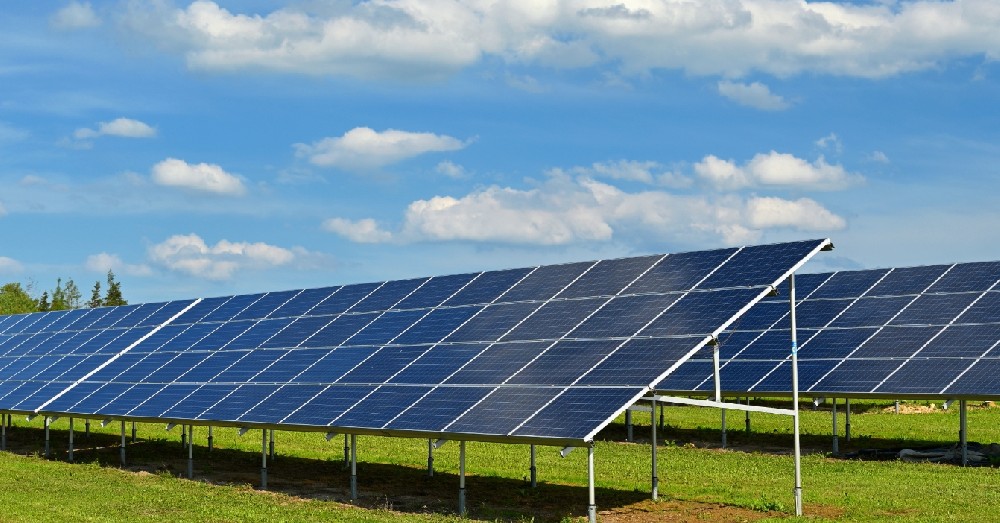
In the context of global energy structure transitioning to clean and low-carbon, solar energy development and utilization has reached unprecedented heights. However, solar radiation, influenced by Earth's rotation, revolution, and atmospheric environment, exhibits significant spatiotemporal variability. To accurately assess photovoltaic power generation potential, optimize meteorological predictions, and promote green building development, high-precision solar radiation monitoring has become crucial.
The “three-in-one fully automatic tracking solar radiometer” launched by NiuBoL, with its excellent all-weather uninterrupted tracking technology, achieves precise measurement of direct solar radiation, total radiation, and scattered radiation, providing a solid data foundation for sustainable development of green energy.
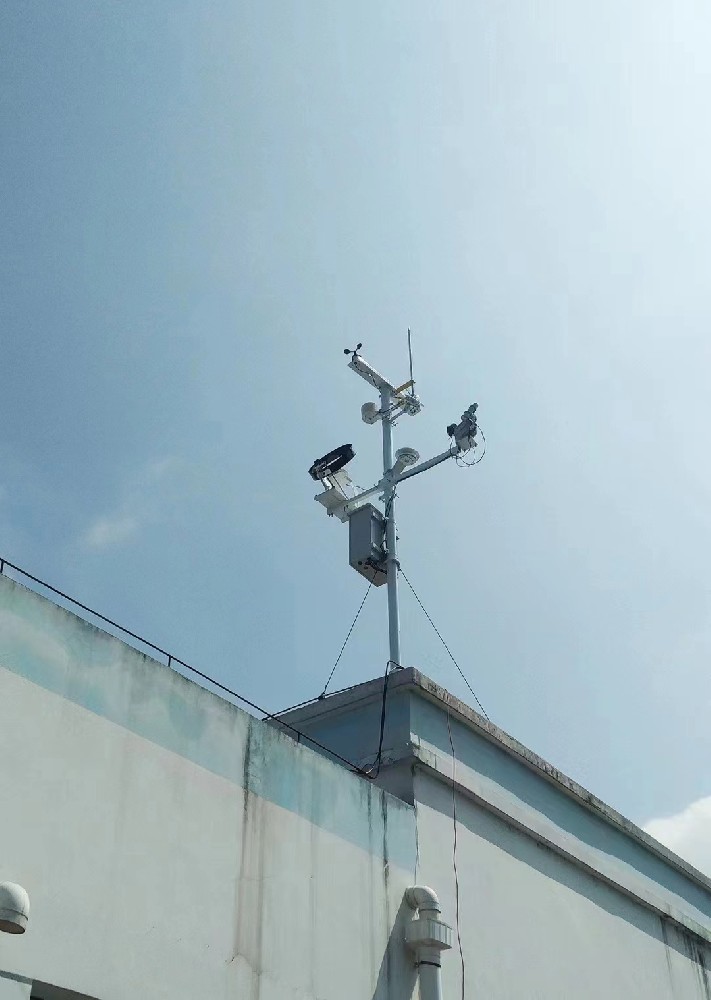
The three-in-one fully automatic tracking solar radiometer is a high-end environmental monitoring device integrating precision mechanical transmission, electronic sensors, and complex algorithms. It not only monitors radiation in the broad spectral range of 0.28μm to 3μm but also accurately records actual sunshine hours according to the scientific definition of sunshine duration (total time when direct irradiance ≥ 120 W/m²).
The core value of this system lies in its “three-in-one” function: through one tracking device, simultaneously driving direct radiometer, total radiometer, and scattered radiometer with shading device, building a complete integrated solar radiation monitoring station.
NiuBoL three-in-one system maintains tracking error below 0.1° mainly due to its unique dual-mode collaborative working logic:
Trajectory Prediction: Time and Latitude-Longitude Tracking
The device has a built-in GPS module that automatically acquires precise latitude-longitude information and Beijing time at the installation point. The controller uses complex solar position algorithms to real-time calculate current solar declination, altitude, and azimuth angles. Even in extreme cloudy weather, the system can drive stepping motors for predictive tracking based on trajectory logic.
Precise Correction: Four-Quadrant Light Tracking
Due to physical factors such as slight foundation settlement, mechanical gear clearance, or terrain slope, pure time tracking may produce cumulative deviation. At this time, high-precision four-quadrant sensor intervenes, real-time fine-tuning tracking device's pitch and horizontal angles by capturing actual light source center point, ensuring direct radiometer's light tube axis always points directly at solar disk center.
Thermocouple Induction Principle
Direct radiation sensor interior adopts wound electroplated multi-junction thermocouple. Sensing surface coated with high-absorption black coating; when sunlight vertically irradiates, hot junction on sensing surface and cold junction inside body produce temperature difference. In linear range, thermoelectric potential generated by this temperature difference is proportional to irradiance, converting light signal into precise electrical signal.
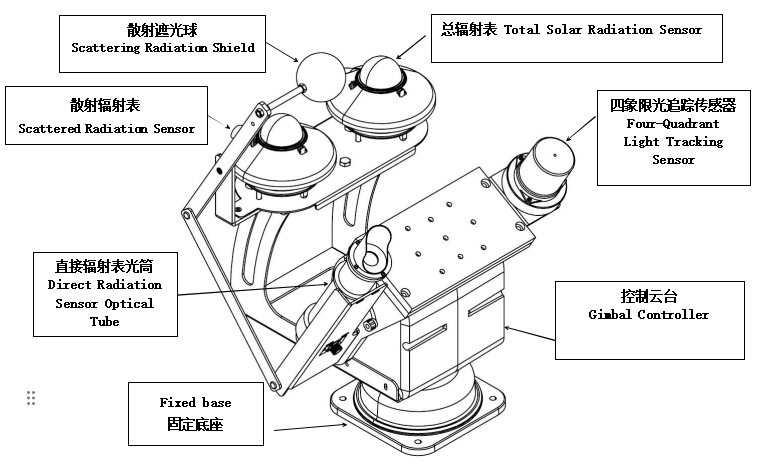
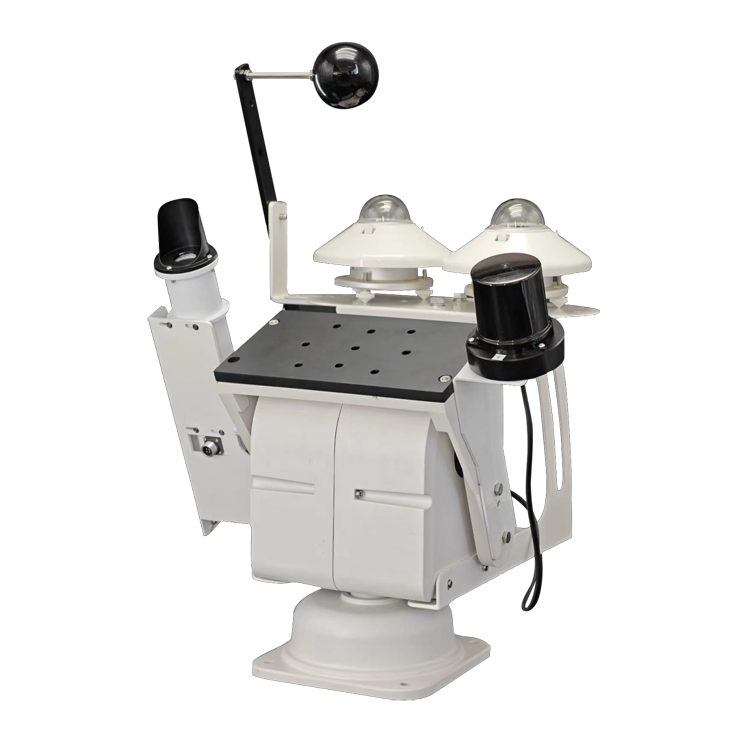
NiuBoL fully automatic solar tracking radiometer consists of multiple highly collaborative sub-modules:
Fully Automatic Tracking Platform: Includes sturdy base, precision gearbox, and high-performance stepping motors, supporting full-range rotation of horizontal 0~360° and pitch 0~120°.
Direct Radiation Sensor: Equipped with precision light tube, interior consisting of multi-level diaphragms, desiccant, and thermocouple components, specifically capturing direct solar radiation.
Shading Device (Scattered Measurement): Synchronously rotates with platform, continuously shading scattered meter through shading ball, ensuring sensed data excludes direct radiation influence.
Microcomputer Controller and GPS Module: System's brain, responsible for latitude-longitude positioning, time synchronization, algorithm calculation, and motor driving.
Multi-Parameter Power System: Supports DC 12V or AC 220V power supply, adapting to laboratories, meteorological stations, and remote power plants.
All-Weather Uninterrupted Tracking: Time tracking combined with light tracking ensures real-time precision from sunrise to sunset.
Extremely High Tracking Precision: Error less than 0.1°, far superior to traditional single-mode tracking equipment, guaranteeing high-precision scientific research data.
Convenient Installation and Debugging: GPS automatic positioning eliminates tedious manual latitude-longitude input, significantly lowering on-site operation and maintenance threshold.
Data Completeness: Simultaneously outputs direct, total, and scattered three core data, and can link record sunshine duration.
Industrial-Grade Protection: Sensor glass cover adopts high-quality optical quartz with high transmittance and easy cleaning; body has strong weather resistance, adapting to -30℃ to +60℃ extreme temperatures.
Solar Power Stations: Used for site selection evaluation, real-time efficiency monitoring, and power generation prediction in photovoltaic/photothermal stations.
Meteorology and Climate Research: Monitors long-term solar radiation changes, providing support for global warming and atmospheric environment research.
Ecology and Agricultural Science: Studies impact of photosynthetically active radiation on crop growth and forest ecosystems.
Building Materials and Green Buildings: Tests material aging resistance and building energy consumption simulation.
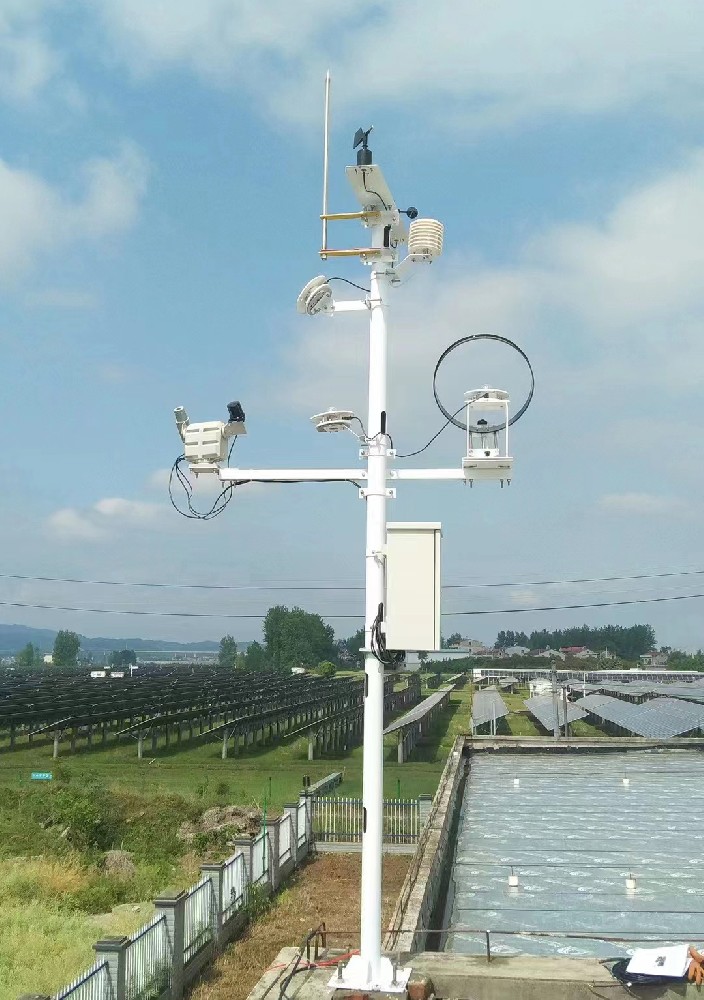
Three-in-one system transmits data to collector through serial or analog interfaces.
Tracking Device Parameters
Pitch Angle Range: 0~120°
Horizontal Angle Range: 0~360°
Tracking Precision: <0.1°
Radiometer Core Parameters (Direct/Total/Scattered)
Sensitivity: 7~14μV/Wm²
Response Time: Direct Radiation ≤ 15s; Total/Scattered Radiation ≤ 30s
Measurement Range: 0~2000W/m²
Spectral Range: 280~3000nm
Stability: ±2%
Nonlinear Error: ±2%
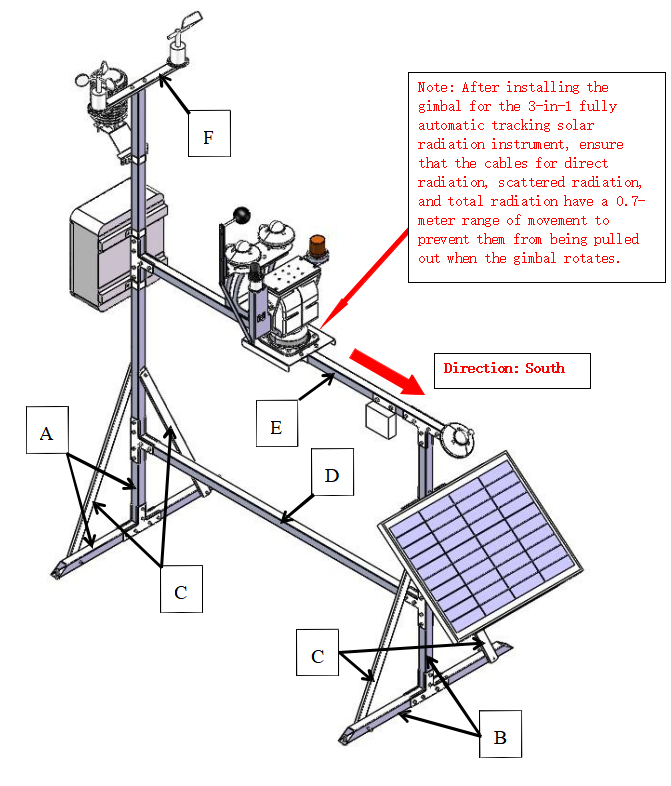
To ensure long-period high-precision operation of equipment, recommend following maintenance processes:
Lens Cleaning (Monthly): Use degreased cotton balls or professional cleaning cloth to regularly clean dust, scale, or bird droppings on direct meter light tube and total radiation sensor quartz glass cover to prevent data low due to transmittance decline.
Tracking Verification (Monthly): Observe if light spot on sensor sensing surface centered, check motor operation for abnormal noise, ensure protective cover and base fastened.
Desiccant Replacement: Regularly check direct meter internal desiccant color; if moisture saturation occurs, timely replace to prevent internal condensation.
Q1: Why need “time + light” two tracking modes?
A: Time tracking relies on latitude-longitude calculation, still guiding equipment roughly toward sun in cloudy or rainy weather with weak light signals; when sun passes through clouds, four-quadrant sensor quickly locks real light point for millimeter-level secondary fine adjustment, ensuring precision protection.
Q2: How to calculate “sunshine duration” based on this equipment?
A: Scientific definition of sunshine duration is when direct radiation intensity exceeds 120W/m². NiuBoL tracker real-time monitors direct radiation intensity; when value reaches threshold, system automatically accumulates timing, finally outputting actual sunshine hours in minutes.
Q3: Does equipment installation have terrain requirements?
A: Fully automatic tracker should be installed in open, unobstructed high places (such as meteorological tower top or flat roof), ensuring no obstacles in sunrise to sunset view. GPS module automatically corrects spatial coordinates, but base level adjustment is key in initial installation.
Q4: Can equipment work in extreme cold?
A: Yes. NiuBoL radiometer has excellent temperature characteristics, maintaining extremely high stability at -30℃; gearbox lubricant specially treated, no solidification affecting rotation in low temperatures.
Q5: How does scattered radiometer avoid direct radiation interference?
A: Shading device (shading ball) programmed to always move with tracking platform between sun and scattered sensing surface, forming precise shadow zone perfectly isolating direct incoming light.
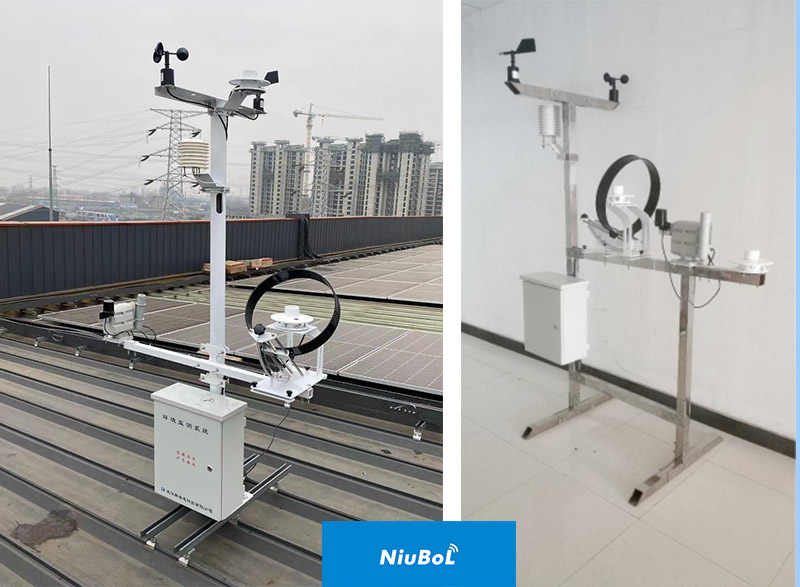
NiuBoL fully automatic solar tracking radiometer is a masterpiece in precision measurement field, perfectly combining complex solar geometry algorithms with sensitive thermoelectric induction technology. Through 0.1° ultimate tracking and 280-3000nm full-spectrum monitoring, we not only capture sunlight but also interpret nature's energy language.
Measurement Units: W/m² (Irradiance), min (Sunshine Duration)
Physical Units: μm (Micron), μV (Microvolt)
Tracking Range: 360° Horizontal, 120° Pitch
Communication and Power Supply: DC 12V / AC 220V Compatible
Do you need customized radiation monitoring station design for your photovoltaic power station or scientific research project? Contact NiuBoL to assist your sunshine career!
 NBL-W-HPRS-Solar-Radiation-Sensor-Instruction-Manual-V3.0.pdf
NBL-W-SRS-Solar-radiation-sensor-instruction-manual-V4.0.pdf
Prev:Deep Applications and Technical Analysis of Illuminance Sensors
Next:NiuBoL Radar Water Level Gauge: In-Depth Analysis and Installation Guide
Related recommendations
Sensors & Weather Stations Catalog
Agriculture Sensors and Weather Stations Catalog-NiuBoL.pdf
Weather Stations Catalog-NiuBoL.pdf
Agriculture Sensors Catalog-NiuBoL.pdf
Water Quality Sensor Catalog-NiuBoL.pdf
Related products
 Combined air temperature and relative humidity sensor
 TDR Soil Moisture & Temperature Sensor for irrigation| RS485 |4-20mA| NBL-S-THR
 Soil pH sensor RS485 soil Testing instrument soil ph meter for agriculture |NBL-S-PH
 Wind Speed sensor Output Modbus/RS485/Analog/0-5V/4-20mA
 Tipping bucket rain gauge for weather monitoring auto rainfall sensor RS485/Outdoor/stainless steel
 Pyranometer Solar Radiation Sensor 4-20mA/RS485

Screenshot, WhatsApp to identify the QR code
WhatsApp number:+8615367865107
(Click on WhatsApp to copy and add friends)

