





— Blogs —
—Products—
 Consumer hotline +8618073152920
 WhatsApp:+8615367865107
Address:Room 102, District D, Houhu Industrial Park, Yuelu District, Changsha City, Hunan Province, China
Product knowledge
Time:2025-12-24 21:28:46 Popularity:696
Light is the source of life and a crucial physical variable in modern industrial and agricultural production. With the widespread adoption of the Internet of Things (IoT) and intelligent technologies, accurately measuring and utilizing light energy has become key to energy saving, consumption reduction, and yield improvement. As core components for perceiving light intensity, illuminance sensors (transmitters) are widely applied in various fields of agriculture, industry, and urban management.
As a leading brand in environmental monitoring, NiuBoL is committed to providing high-sensitivity and high-stability light perception solutions. This article will comprehensively and deeply analyze the definition, principle, application scenarios, and technical advantages of illuminance sensors in different fields.
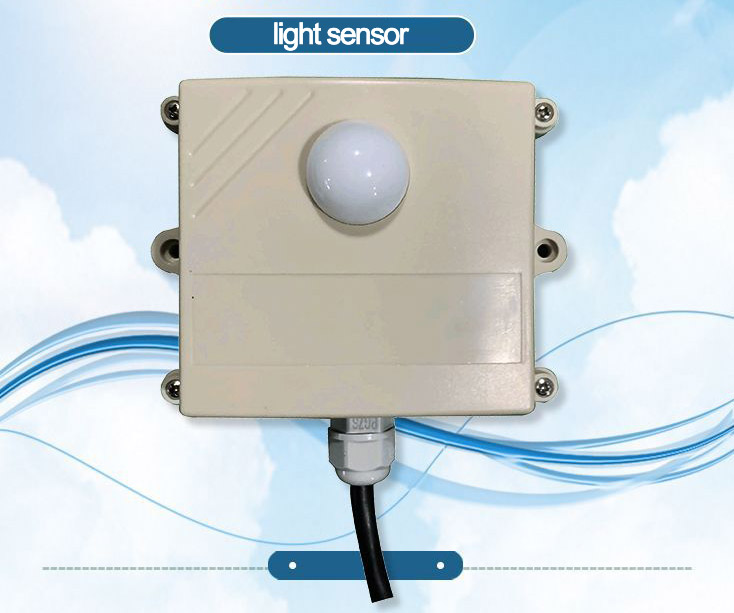
What is an Illuminance Sensor?
An illuminance sensor is a device capable of converting ambient light intensity into measurable electrical signals (such as current, voltage, or digital signals). Its core measurement unit is lux (Lux), representing luminous flux received per square meter.
Core Working Principle of Illuminance Sensors
NiuBoL illuminance transmitters adopt the photoelectric effect principle. The core component is a silicon blue photovoltaic detector with extremely high sensitivity to the visible light spectrum. When ambient light irradiates the photosensitive surface of the photovoltaic detector, photon energy excites electron flow within the semiconductor, generating an electrical signal linearly proportional to light intensity. Through internal precise filtering and amplification circuits, the sensor outputs stable 4-20mA, 0-5V, or RS485 digital signals for backend control system recognition.
NiuBoL sensors fully consider outdoor harsh environment applications from initial design, with the following structural features:
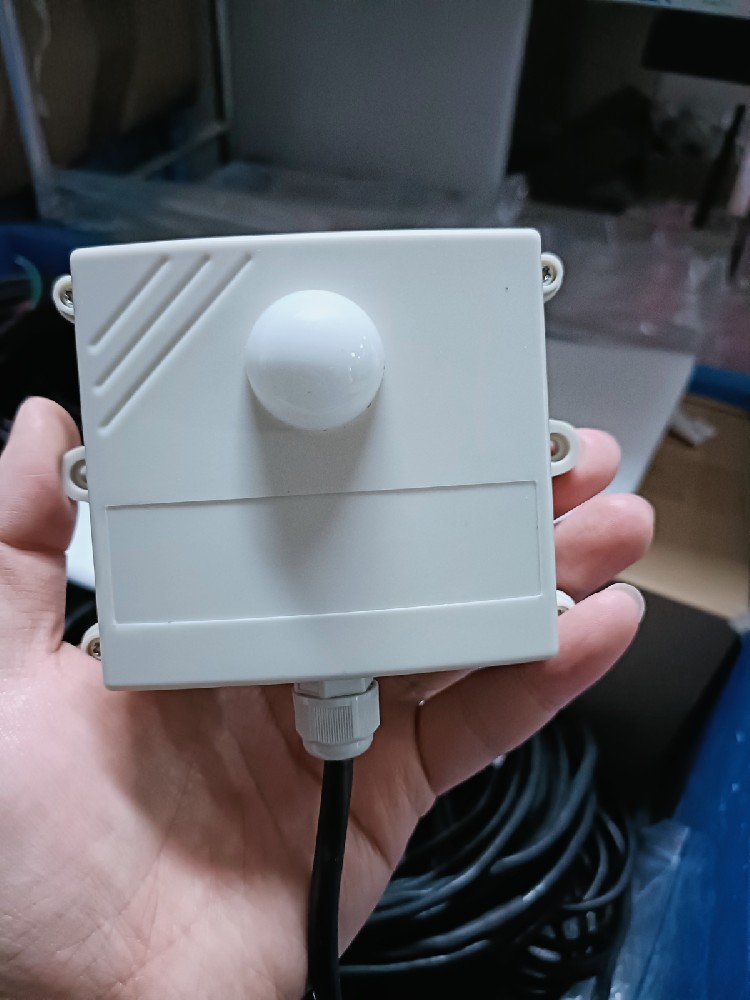
High-Sensitivity Detection Head: The light-transmitting cover at the top uses special material with high transmittance and UV resistance, ensuring light in the 380nm to 730nm wavelength range accurately reaches the silicon blue photovoltaic detector.
IP65 Protection Housing: Adopts high-density ABS engineering plastic with excellent waterproof and dustproof performance. Wall-mounted installation design allows fixing on greenhouse frames, urban light poles, or building exterior walls.
Display and Non-Display Options: Users can choose models with LCD display screens based on on-site real-time viewing needs for intuitive Lux value reading.
Modular Transmitter Circuit: Internal transmitter has excellent linearity and anti-interference capability, maintaining signal accuracy even in long-distance transmission.
Agricultural Meteorology Field: Digital “Code” for Yield
Light is an indispensable condition for photosynthesis. In agricultural production, subtle changes in light intensity affect crop growth cycles.
Greenhouse Control: When illuminance sensor detects natural light exceeding limits, causing plant stomata closure and reduced photosynthetic intensity, system automatically links shading nets.
Supplementary Lighting Strategy: In winter or cloudy weather, when light intensity insufficient at 10,000 Lux, sensor feedback data triggers supplementary light activation, ensuring yield not limited by light.
Smart Building Field: Balance Point of Energy Saving and Comfort
In modern smart office spaces, illuminance sensors are the “eyes” of building automation.
Automatic Dimming: Sensor perceives indoor and outdoor light conditions, automatically adjusting LED group brightness based on ambient light intensity. In areas near windows, reduces lighting power when light sufficient, significantly improving energy efficiency.
Smart Shading: Cooperates with automatic shading systems to optimize indoor temperature, reducing summer air conditioning energy consumption.
Urban Lighting Field: Key to Sustainable Development
Urban lighting management is an important link in reducing carbon emissions.
Smart Street Lights: Illuminance sensors replace traditional timers, automatically switching lights based on sunrise, sunset, or sudden cloudy and rainy weather, reducing invalid power consumption.
Light Pollution Control: Adjusts building exterior lighting brightness through monitoring data, ensuring urban nighttime safety while effectively reducing light pollution to surrounding residential areas.
Ultra-Wide Measurement Range: Covers 0-200,000 Lux, meeting various environmental needs from midnight moonlight to midsummer strong light.
Good Linearity: Silicon blue photovoltaic detector ensures excellent linear consistency of output signals under different light intensities.
Simple Installation and Maintenance: Wall-mounted installation convenient and fast, instrument weight only 170g, strong load capacity.
Harsh Environment Adaptability: Wide operating temperature span (-10℃ to 70℃), suitable for various extreme climates.
Measurement Method Selection
NiuBoL provides multiple signal output forms to adapt to different acquisition equipment:
Current Output (4-20mA): Suitable for long-distance transmission (up to kilometers), strongest anti-interference capability.
Voltage Output (0-5V): Suitable for short-distance connection with PLC or microcontrollers.
RS485 Digital Output: Based on standard Modbus protocol, convenient for multi-sensor networking monitoring, supporting long-distance, high-integration system applications.
Installation Recommendations
Location Selection: Should be installed in representative open areas, avoiding building or plant shading projections.
Angle Fixing: Sensor should remain horizontal installation, light-receiving surface upward.
Wiring Protection: Use standard 2.5-meter instrument cable, protected through pole body or wiring pipe to prevent animal biting or long-term sun exposure causing cable aging.
| Parameter Item | Technical Specification |
|---|---|
| Wavelength Range | 380 nm - 730 nm |
| Accuracy | ±7% |
| Power Supply Method | DC 12V or DC 24V Optional |
| Load Resistance | Current Type RL≤300Ω; Voltage Type RL≥1K |
| Operating Environment | Temperature -10℃~70℃; Humidity 0~80%RH |
| Product Weight | 170g |
| Protection Level | IP65 |
Understanding common illuminance reference values helps better set sensor thresholds:
Sunny Summer Day Strong Light: About 100,000 Lux (fluctuation range 30,000~300,000 Lux)
Cloudy Day: About 10,000 Lux
Sunrise/Sunset: 300~400 Lux
Indoor Fluorescent Light: 30~50 Lux
Bright Moonlit Night: 0.3~0.03 Lux
Dark Night: 0.003~0.007 Lux
Q1: What is the difference between illuminance sensor and photosynthetic quantum sensor (PAR)?
A: Illuminance sensor (Lux) mainly simulates human eye perception of brightness, widely used in lighting and general agriculture; while photosynthetic quantum sensor mainly measures photosynthetic photon flux in specific energy band (400-700nm) required for plant photosynthesis, more used in high-end plant physiology research.
Q2: How to clean the sensor's photosensitive surface?
A: If used in dusty environments, recommend regularly wiping light-transmitting cover with soft damp cloth. Never use organic solvents or hard objects to scratch to avoid damaging detector precision.
Q3: How far can NiuBoL's RS485 output transmit?
A: Under standard twisted shielded lines, RS485 signal can stably transmit over 1000 meters, very suitable for large greenhouses and urban lighting networks.
Q4: Can the sensor work normally in winter heavy snow weather?
A: Yes. NBL-W-LUX has IP65 protection level, resistant to cold and freezing. But if snow covers light-transmitting cover, monitoring values will be low; need timely snow clearing.
Q5: Why choose model with LCD display?
A: Models with display function convenient for on-site installation personnel initial debugging and instant viewing without connecting computer, improving operation and maintenance efficiency.
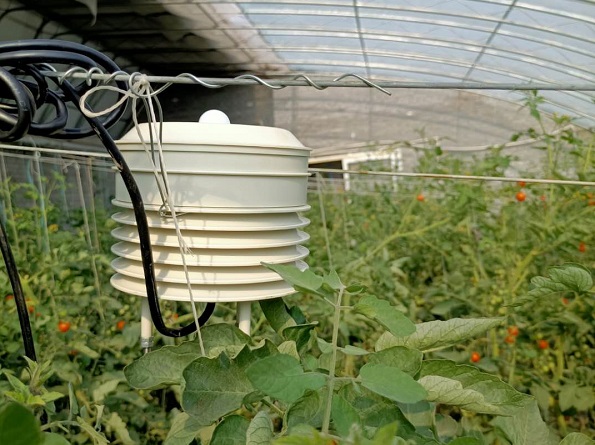
Illuminance sensors are not only tools for measuring values but also bridges connecting physical environments with smart governance. NiuBoL, with products like NBL-W-LUX series, provides solid data foundation for global agricultural yield increase, building energy saving, and civilized urban lighting.
By precisely controlling every lux change, we are creating a greener and smarter future.
Measurement Unit: Lux
Core Component: Silicon Blue Photovoltaic Detector
Communication Protocol: Modbus RTU (for RS485 models)
Spectral Range: 380nm - 730nm (Visible Light Band)
Are you preparing greenhouse automation projects or urban lighting upgrades? Contact NiuBoL; we can provide detailed site layout suggestions and system integration solutions.
Related recommendations
Sensors & Weather Stations Catalog
 Agriculture Sensors and Weather Stations Catalog-NiuBoL.pdf
Weather Stations Catalog-NiuBoL.pdf
Agriculture Sensors Catalog-NiuBoL.pdf
Water Quality Sensor Catalog-NiuBoL.pdf
Related products
 Combined air temperature and relative humidity sensor
 TDR Soil Moisture & Temperature Sensor for irrigation| RS485 |4-20mA| NBL-S-THR
 Soil pH sensor RS485 soil Testing instrument soil ph meter for agriculture |NBL-S-PH
 Wind Speed sensor Output Modbus/RS485/Analog/0-5V/4-20mA
 Tipping bucket rain gauge for weather monitoring auto rainfall sensor RS485/Outdoor/stainless steel
 Pyranometer Solar Radiation Sensor 4-20mA/RS485

Screenshot, WhatsApp to identify the QR code
WhatsApp number:+8615367865107
(Click on WhatsApp to copy and add friends)


