





— Blogs —
—Products—
 Consumer hotline +8618073152920
 WhatsApp:+8615367865107
Address:Room 102, District D, Houhu Industrial Park, Yuelu District, Changsha City, Hunan Province, China
Product knowledge
Time:2025-12-24 22:02:04 Popularity:1092
In water resource management, flood warning, and industrial liquid level control fields, accurate and real-time water level data is the core of decision-making. With the evolution of perception technology, traditional float-type or immersion-type water level gauges, due to susceptibility to floating debris interference and equipment corrosion limitations, gradually fail to meet modern refined management needs. The high-precision radar water level gauge launched by NiuBoL (NewBo Technology), with non-contact measurement, millimeter-level precision, and super strong anti-interference capability, is becoming the standard configuration for smart water conservancy projects.
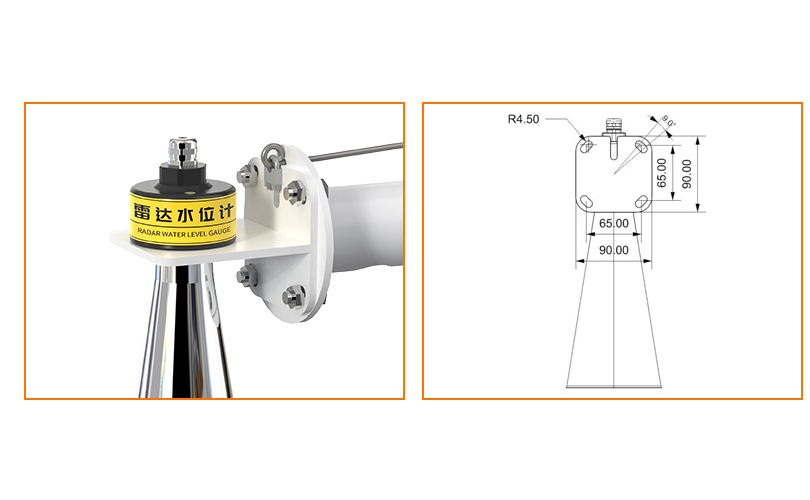
A radar water level gauge is an electronic device using electromagnetic waves to detect targets. It determines the physical distance between liquid surface and sensor by emitting high-frequency microwave pulses toward the liquid surface and receiving reflected signals.
Compared to traditional measurement methods, NiuBoL radar water level gauge has significant advantages of non-contact, no wear, unaffected by water quality (such as sediment, corrosive liquids). It can not only be applied to conventional rivers and lakes but also competent for extreme complex environmental monitoring tasks in large reservoirs, urban drainage, and chemical storage tanks.
NiuBoL radar water level gauge adopts industry-leading FMCW (Frequency Modulated Continuous Wave) technology, combined with microwave signal propagation and reflection characteristics; its measurement logic can be subdivided into the following steps:
Microwave Emission and Propagation
The antenna system inside the radar water level gauge emits extremely narrow millimeter wave pulses (77GHz-79GHz). These microwaves propagate directionally in air at light speed (about 300,000 km/s), with extremely strong penetration and energy concentration.
Interface Reflection and Signal Capture
After microwave signals reach water body or liquid surface, due to dielectric constant differences between air and liquid media, part of energy is reflected back. NiuBoL adopts integrated lens design, capable of more precisely capturing weak reflected echoes.
Time Interval and Distance Conversion
There is a tiny time interval between emitted pulse and received pulse; system can calculate precise distance from antenna to liquid surface.
Intelligent Water Level Calculation
Radar water level gauge subtracts measured space distance from preset sensor installation height to obtain real-time water level height. Based on self-developed CMOS millimeter wave RF chip, NiuBoL products achieve higher signal-to-noise ratio and smaller measurement blind zone.
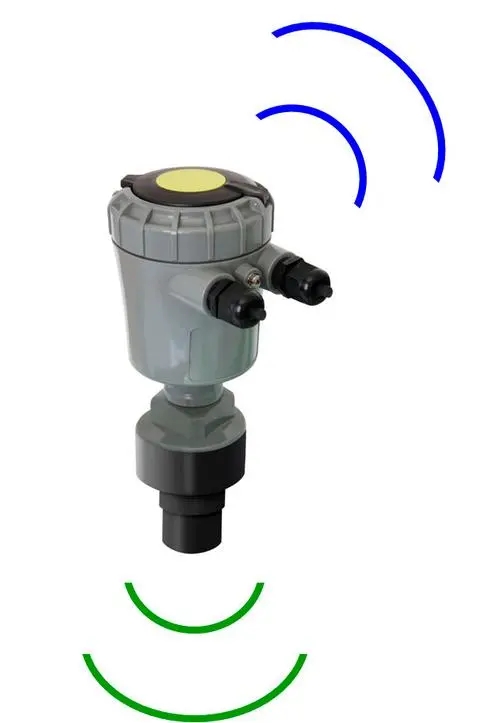
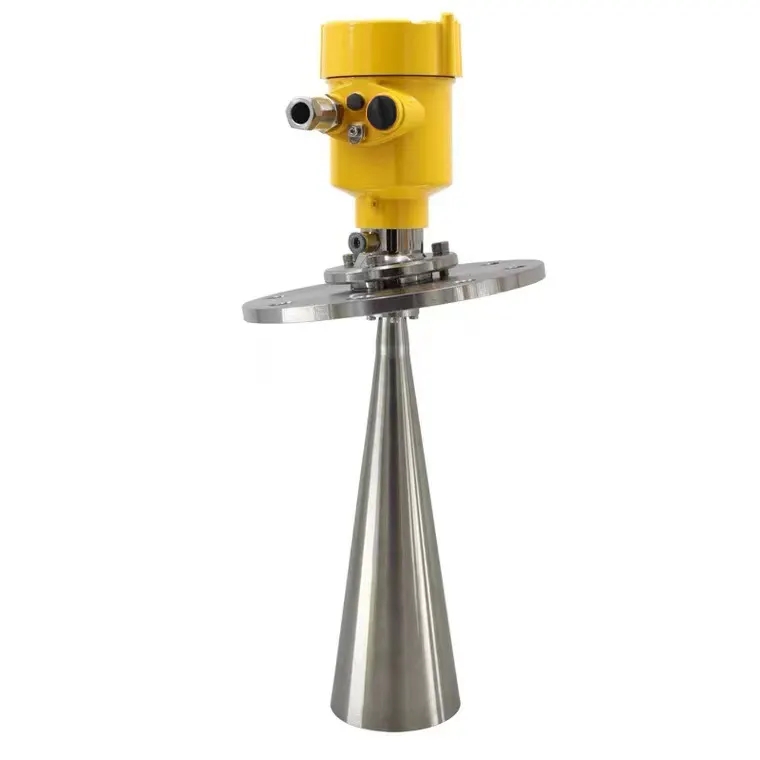
NiuBoL radar water level gauge pursues high integration and durability in structure; main components include:
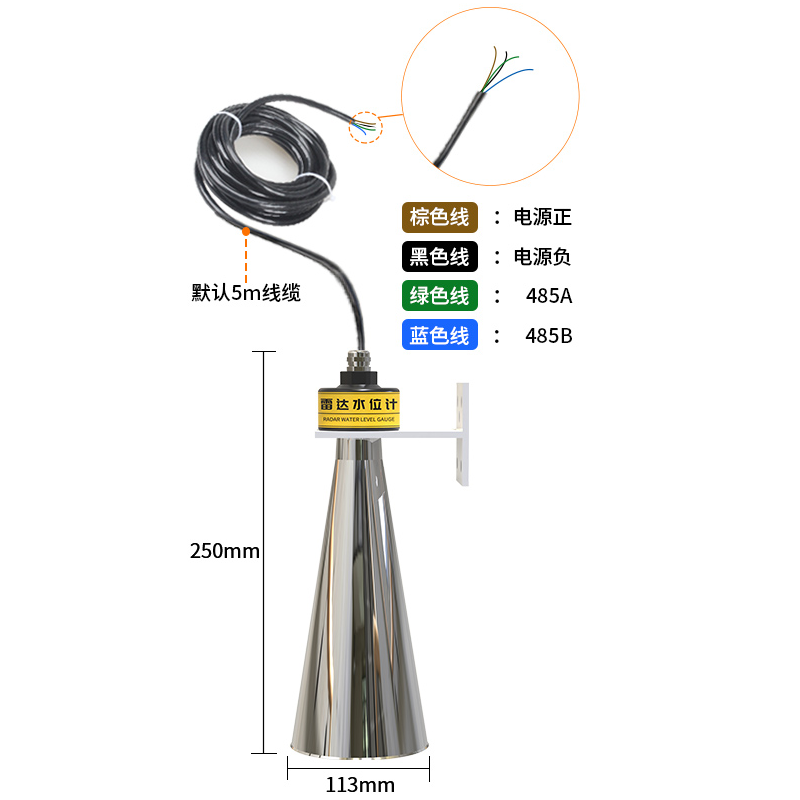
Antenna System: Adopts integrated lens design, antenna beam angle narrow to 8°, not only reducing beam diffusion area but also effectively avoiding false echoes from environmental interferences such as river bank slopes.
RF Chip Module: Based on self-developed CMOS RF chip architecture, more compact size, lower power consumption, core of equipment high-frequency, high-bandwidth operation.
Waterproof Protection Housing: Reaches IP67 protection level, anti-UV, corrosion-resistant, capable of stable operation in extreme outdoor environments from -40℃ to +80℃ long-term.
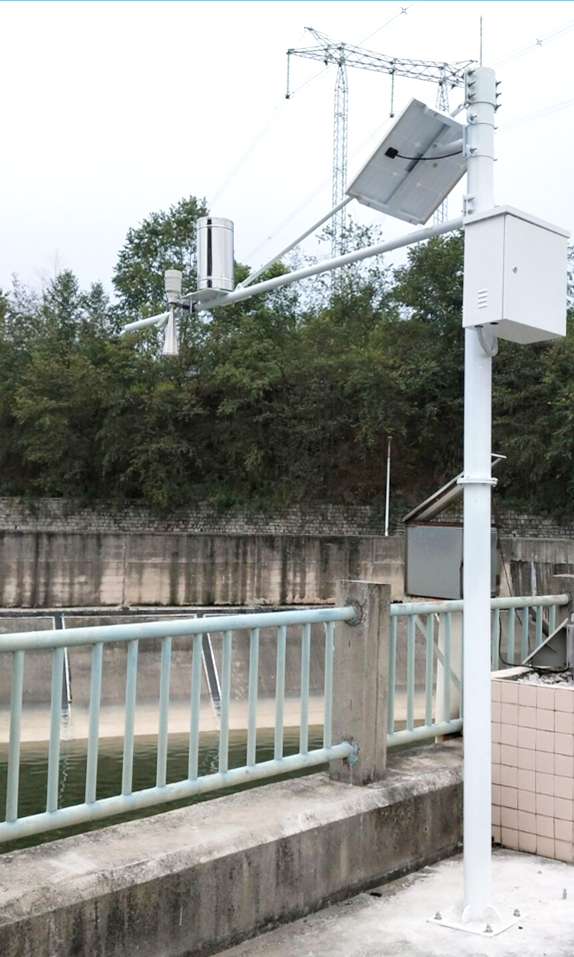
Installation Connection Components: Adopts convenient nut fixing method, seamlessly cooperating with water and rainfall monitoring poles, hosts, and various industrial brackets.
High Frequency, High Precision, High Bandwidth: Operating in 77GHz-79GHz band, owns higher measurement resolution than low-frequency radar. Measurement precision reaches ±1mm within 4m, resolution constant at 1mm.
Ultra-Long Range and Minimal Blind Zone: Maximum range up to 65 meters, covering all measurement needs from irrigation channels to large reservoirs, measurement blind zone controlled within 15cm.
Excellent Anti-Interference Performance: 8° extremely narrow beam angle makes energy more concentrated, precisely locking liquid surface even in narrow pump pits or complex river environments.
Low Power Consumption and Long Lifespan: Maximum power consumption only 0.6W, very suitable for solar-powered field hydrological stations.
Environmental Safety: Extremely low emission power, complies with national relevant radio management regulations, no harm to human body, environment, and aquatic organisms.
Water Conservancy Hydrological Monitoring: Rivers, lakes, reservoirs water level automatic monitoring and flood prevention warning.
Agricultural Smart Irrigation: Precise liquid level control of channels, irrigation main canals, and field storage ponds.
Smart Water Affairs: Urban flooding monitoring, rainwater wells, sewage treatment plants liquid level monitoring.
Industrial Process Control: Storage tank liquid level measurement in petroleum, chemical, power plants, and other industries.
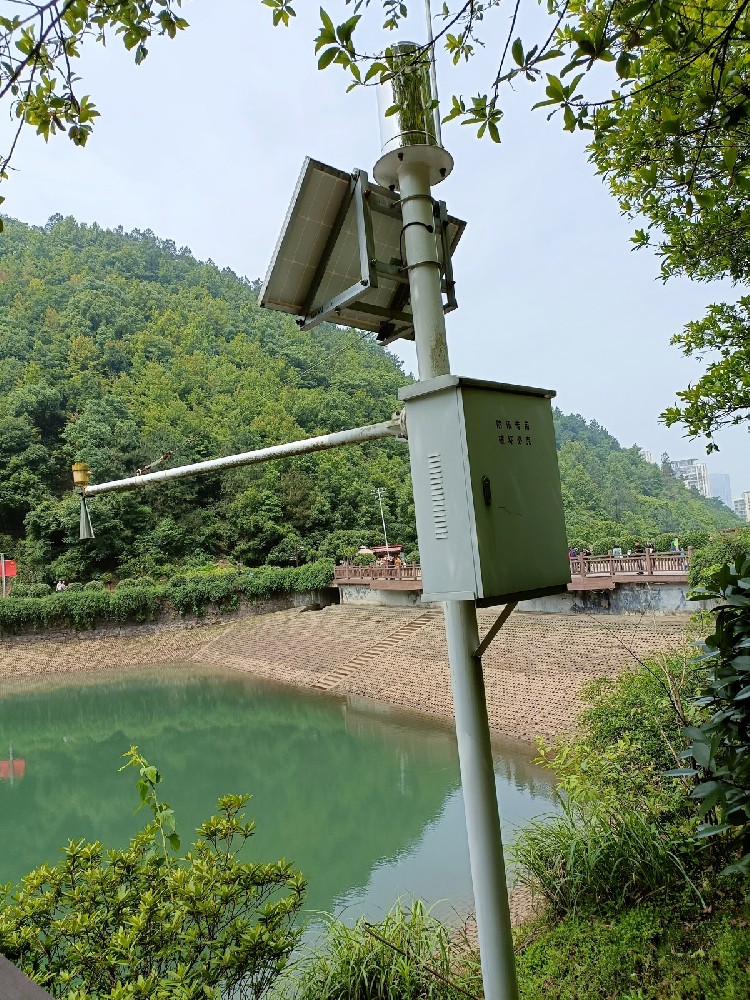
Reasonableness of installation scheme directly affects measurement precision. Below are NiuBoL recommended professional installation suggestions:
Verticality Assurance
Installation must ensure radar water level gauge vertical to water surface. If sensor tilts, received echo signal amplitude significantly weakens, causing unstable ranging or signal loss.
Avoid Interferences
Strictly no obstacles in radar beam range. Installation location should be away from river bank slopes, bridge piers, water plants, or water surface debris. If installed in indoor containers, need to avoid water inlets, stirrers, and ladders.
Installation Location Site Selection
Choose areas with relatively calm liquid surface as reflection surface. Should avoid liquid splashing, severe fluctuations, or sputtering zones to prevent water mist covering light-transmitting surface or generating false jumping signals.
Bracket Fixing and Height
Select appropriate cross-arm bracket according to site terrain. Recommend reserving at least 20cm safety distance between radar water level gauge and highest water level to prevent flooding submerging sensor.
NiuBoL radar water level gauge adopts RS485 communication standard, extremely strong adaptability:
Power Connection: Supports DC 10V-30V wide voltage input, recommends using standard 12V power supply.
Signal Connection: RS485 interface adopts Modbus communication protocol. Note A/B lines not reversed during wiring.
Multi-Machine Connection: When multiple devices mounted on bus, must set different ID addresses through software to prevent address conflicts.
Although radar water level gauge is maintenance-free product, regular checks can significantly extend equipment lifespan:
Lens Cleaning: Regularly check integrated lens surface. If signal weakens due to water fog condensation or dust coverage, gently wipe with clean soft cloth.
Appearance Check: Check pole and bracket stability to ensure equipment no displacement or tilt due to wind and sun exposure.
Power Supply Monitoring: Check battery voltage or mains supply stability, especially check solar panel charging efficiency before entering rainy season.
Emission Frequency: 77GHz~79GHz
Measurement Resolution: 1mm
Measurement Precision: ±1mm
Maximum Range: 65m
Measurement Blind Zone: ≤0.15m
Beam Angle: 8°
Protection Level: IP67
Communication Interface: RS485 (Modbus Protocol)
Operating Power Consumption: ≤0.6W
Q1: Equipment unable to connect to PLC or computer, data not updating—what to do?
A: First check if wiring correct (485 A/B reversed); second check serial port parameters (baud rate 9600, no parity, 1 stop bit) match; third confirm device ID address correct; last check power supply voltage within 10V-30V range.
Q2: Measurement results show large jumps, data unstable?
A: Check if interferences in beam range (such as crossbars, weeds, or water flow vortices). Ensure sensor vertical to water surface; tilted installation main cause of unstable signals. Additionally, can smooth fluctuations by setting filtering time through software.
Q3: Will radar waves be affected by thick fog or rainfall?
A: 77GHz millimeter waves have good penetration. Small and medium degree rainfall and thick fog have almost no impact on measurement precision. But in extreme heavy rain, signal strength may slightly weaken; NiuBoL's signal processing algorithm effectively filters false echoes, ensuring data authenticity.
Q4: Must add protective cover during installation?
A: Equipment itself has IP67 protection level with rainproof capability. But in extreme sun exposure or multi-hail areas, adding simple protective cover can better protect equipment housing, extending service life.
NiuBoL radar water level gauge is not only hardware upgrade but revolution in water level monitoring concept. Through 77GHz high-frequency millimeter wave technology, we push “non-contact measurement” to millimeter-level precision peak. Whether facing unpredictable river water conditions or complex industrial liquid level scenarios, NiuBoL can provide stable, reliable, intelligent data support.
FMCW: Frequency Modulated Continuous Wave, high-end radar detection technology measuring distance through frequency changes.
RS485: Commonly used industrial serial communication standard, supporting long-distance, multi-station communication.
77GHz-79GHz: Millimeter wave band with higher frequency and better spatial resolution.
IP67: International protection level certification, representing complete dustproof and short-term immersion in 1 meter water depth.
If you have further technical needs for smart water conservancy, intelligent irrigation, or liquid level monitoring, NiuBoL expert team is ready to provide customized solutions.
Related recommendations
Sensors & Weather Stations Catalog
 Agriculture Sensors and Weather Stations Catalog-NiuBoL.pdf
Weather Stations Catalog-NiuBoL.pdf
Agriculture Sensors Catalog-NiuBoL.pdf
Water Quality Sensor Catalog-NiuBoL.pdf
Related products
 Combined air temperature and relative humidity sensor
 TDR Soil Moisture & Temperature Sensor for irrigation| RS485 |4-20mA| NBL-S-THR
 Soil pH sensor RS485 soil Testing instrument soil ph meter for agriculture |NBL-S-PH
 Wind Speed sensor Output Modbus/RS485/Analog/0-5V/4-20mA
 Tipping bucket rain gauge for weather monitoring auto rainfall sensor RS485/Outdoor/stainless steel
 Pyranometer Solar Radiation Sensor 4-20mA/RS485

Screenshot, WhatsApp to identify the QR code
WhatsApp number:+8615367865107
(Click on WhatsApp to copy and add friends)

