





— Blogs —
—Products—
 Consumer hotline +8618073152920
WhatsApp:+8615367865107
Address:Room 102, District D, Houhu Industrial Park, Yuelu District, Changsha City, Hunan Province, China
Product knowledge
Time:2025-01-21 20:45:49 Popularity:2050
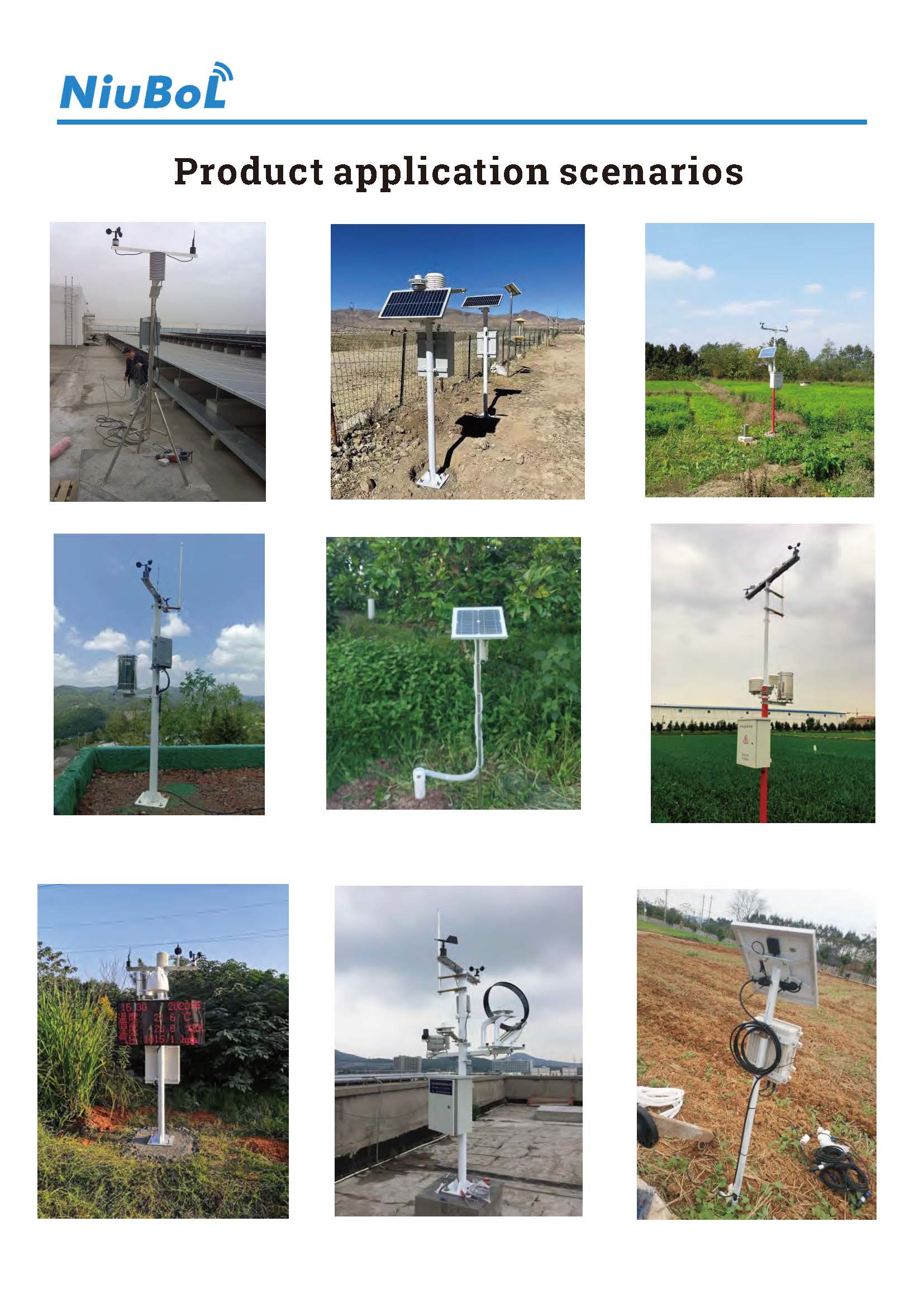
An agricultural weather station for harvest planning helps a farm compare recent rain, air humidity and wind with actual crop and field conditions. It does not measure grain moisture, crop maturity or ground bearing capacity. Use the station to prioritize inspections and document operating windows, then confirm readiness in the crop block before sending harvesting equipment.
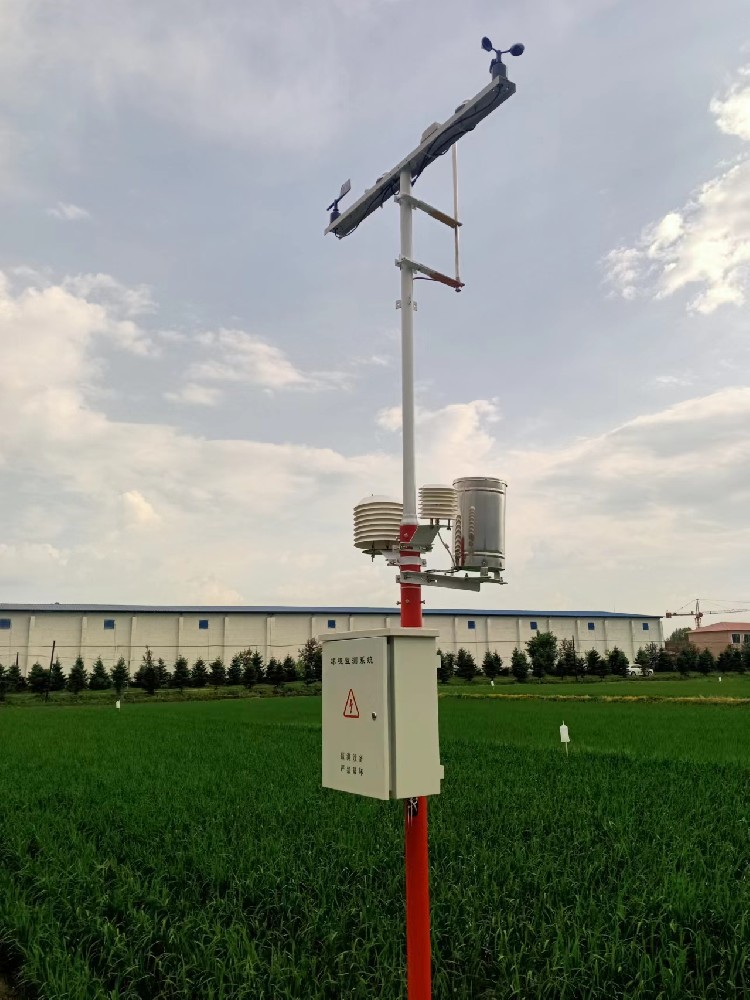
During harvest, the useful question is often narrower than whether the weather is favorable: which block should be inspected first, and what changed since the last inspection? A farm manager may need to arrange a contractor, drying capacity and vehicle access while rain interrupts work across several fields. A local observation record gives that discussion a time and place.
For example, a supervisor can compare the last recorded rainfall with the time of a crop inspection. If rainfall occurred after the inspection, the earlier clearance may need review. If humidity remains high while no rain is recorded, inspect the crop rather than treating the zero-rain value as proof of a dry harvest surface. These are prompts for a field decision, not automatic permission to operate.
The station belongs between the field instruments and the farm's planning records. Sensors provide observations; a logger stores or transmits them; a supervisor combines those records with crop samples, access checks and the harvest plan. Crop models or scheduling software are separate functions with their own input requirements.
| Observation | Useful harvest question | What still needs checking |
|---|---|---|
| Rainfall | Has rain occurred since the last crop or access inspection? | Wet crop surfaces, field variation and route condition |
| Air temperature and relative humidity | How have ambient conditions changed during the working window? | Crop or grain moisture measured by an appropriate method |
| Wind speed | What wind conditions accompanied the proposed operation? | Equipment operating limits and conditions at the working position |
| Optional soil measurements | Is the monitored soil zone wetter than its recent baseline? | Rut formation, drainage, access and machine-specific field assessment |
Air relative humidity and grain moisture are different quantities. Do not convert a humidity reading into an acceptance value for a grain delivery without a suitable crop-specific method. Likewise, a soil moisture probe measures its installation zone; it is not a load-bearing test for a combine or haulage route.
For contractors working across farms, identify the station and crop block on every shared record. A reading from an orchard edge should not be relabelled as the conditions inside a cereal canopy. Keep reference-weather measurements distinct from any extra crop-zone sensors.
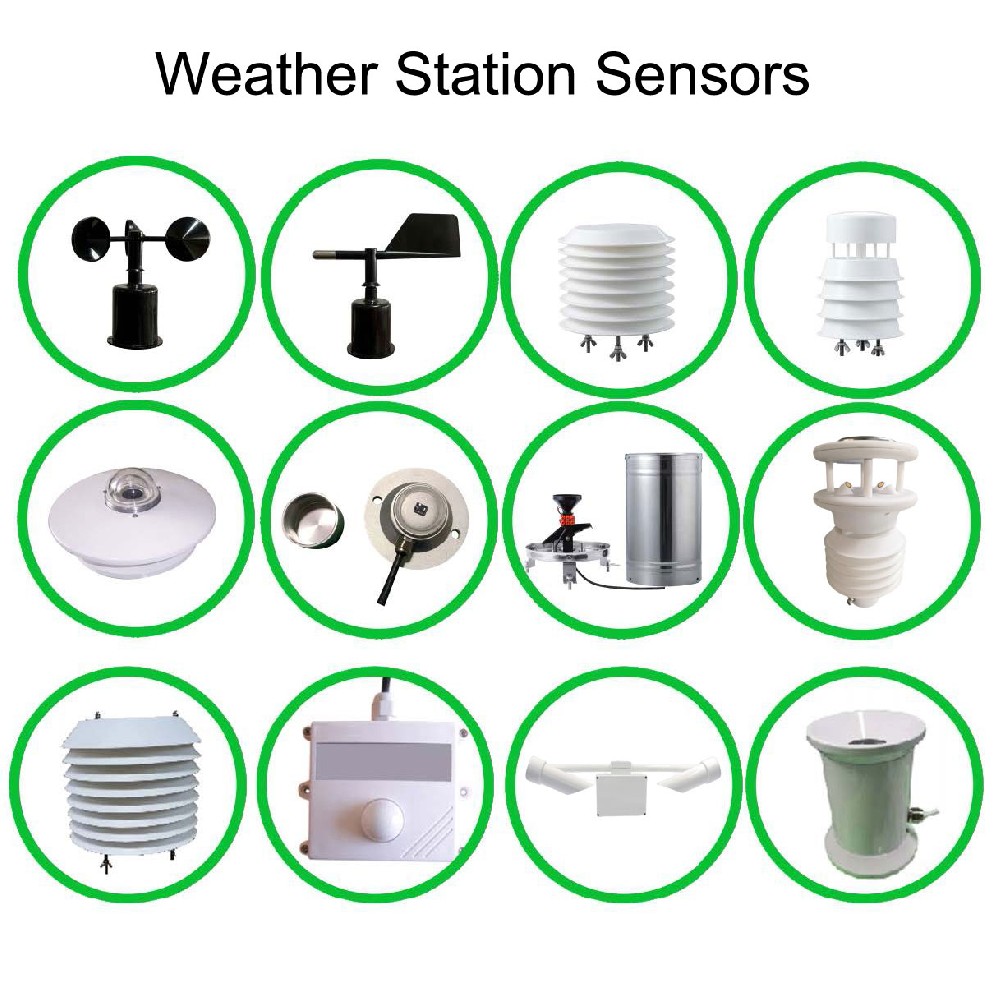
The NBL-W-LBTH supplies atmospheric temperature, relative humidity and pressure. The NBL-W-RS records collected liquid rainfall, while the NBL-W-SS measures wind speed. Select the output version before specifying logger inputs.
| Component | Technical parameter | Meaning for the project |
|---|---|---|
| NBL-W-LBTH | Temperature -40 to 80 C, accuracy +/-0.5 C; humidity 0-100% RH, accuracy +/-5% RH | Ambient observations, not a direct crop-moisture measurement |
| NBL-W-LBTH connection | DC 12-24 V; RS485 Modbus RTU or 4-20 mA output versions | Specify the ordered interface and matching acquisition channels |
| NBL-W-RS | 0.2 mm resolution; 0-4 mm/min intensity range; operation 0-50 C | Liquid-rain record within the applicable operating conditions |
| NBL-W-RS accuracy | +/-4% in an indoor static test at 2 mm/min | This test condition is not a complete outdoor uncertainty allowance |
| NBL-W-SS | 0-45 or 0-70 m/s version; 0.1 m/s resolution; IP65 | Choose the range and output required by the receiver |
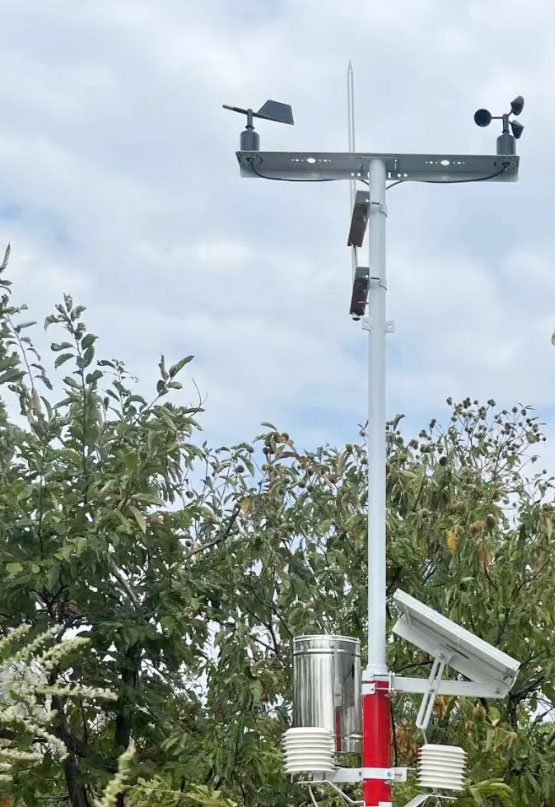
Record the crop block, inspection time, inspector and the applicable crop measurement alongside the station observations. When rain or a substantial change in conditions occurs, flag the earlier inspection for review. Use crop- and operation-specific review criteria; no single weather threshold establishes harvest readiness across all crops.
Retain the original station data and the decision separately. A postponed operation is not an invalid sensor reading, and a successful harvest does not prove every observation was accurate. Recording both allows the farm to assess whether using the station improved inspection scheduling in practice.
For a trial, use one harvest period to compare the observation history with inspection and operation records. Look for missing intervals, mismatched time zones and decisions made from stale data. Agree what would justify extending the installation before ordering more stations.
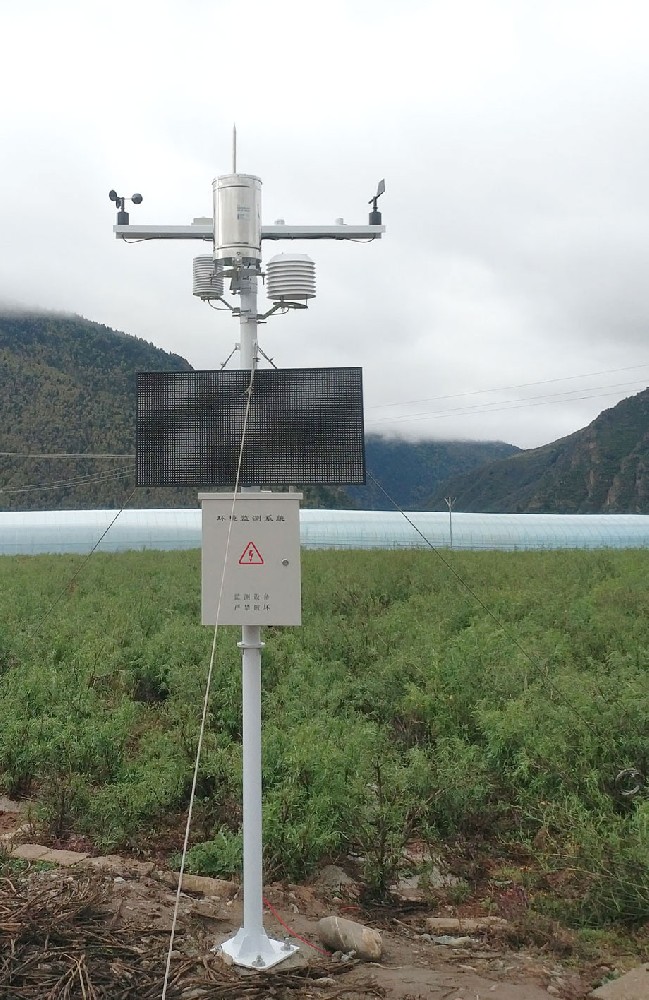
A compatible NiuBoL data logger can acquire field channels and connect them to a remote system. For RS485 Modbus RTU devices, confirm addresses, register definitions, units and serial settings. The rain gauge's reed-switch, voltage and RS485 options require different receiver arrangements; do not assume they share one driver.
Show the measurement time and data age where the supervisor reads the value. Define rainfall over a stated period rather than displaying an unexplained accumulated counter. Specify local recording and outage recovery if the contractor must review observations after a mobile-network interruption. These software behaviors need demonstration in the ordered configuration.
When requesting a quotation, provide crop type, harvest operation, proposed station location, available power and coverage, existing software and who will inspect the instruments. That information lets NiuBoL separate the observation hardware from optional communications and application work.
Not by itself. Weather observations describe the air and rainfall at the station. Use an appropriate crop or grain moisture measurement and the relevant acceptance requirements to determine readiness.
No. Earlier rain, drainage and soil conditions may still restrict access. Check the actual route and working area; station rainfall is one input to that assessment.
Not necessarily. Review differences in exposure, rainfall and terrain, then compare observations with field inspections. Additional local sensing may be more useful than repeating every channel in every block.
Demonstrate the fitted channels, measurement timestamps, defined rainfall totals and stale-data indication. If local storage or post-outage recovery is required, test it rather than accepting a live dashboard alone.
It can contribute weather observations if the location and measurement definitions remain suitable. Irrigation decisions may also require soil, crop and irrigation-system information; valve control is a separate integration scope.
An agricultural weather station for harvest planning is useful when its observations are tied to crop inspections and operating records. Choose the channels that answer a harvest question, keep crop readiness separate from ambient weather, and test how timely data reaches the person scheduling the work.
Prev:Photovoltaic Meteorological Stations: Smart Devices in the Green Energy Sector
Next:Application and Importance of Anemometers and Wind Vanes
Related recommendations
Sensors & Weather Stations Catalog
 Agriculture Sensors and Weather Stations Catalog-NiuBoL.pdf
Weather Stations Catalog-NiuBoL.pdf
Agriculture Sensors Catalog-NiuBoL.pdf
Water Quality Sensor Catalog-NiuBoL.pdf
Related products
 Combined air temperature and relative humidity sensor
 TDR Soil Moisture & Temperature Sensor for irrigation| RS485 |4-20mA| NBL-S-THR
 Soil pH sensor RS485 soil Testing instrument soil ph meter for agriculture |NBL-S-PH
 Wind Speed sensor Output Modbus/RS485/Analog/0-5V/4-20mA
 Tipping bucket rain gauge for weather monitoring auto rainfall sensor RS485/Outdoor/stainless steel
 Pyranometer Solar Radiation Sensor 4-20mA/RS485


Screenshot, WhatsApp to identify the QR code
WhatsApp number:+8615367865107
(Click on WhatsApp to copy and add friends)

