





— Blogs —
—Products—
 Consumer hotline +8618073152920
WhatsApp:+8615367865107
Address:Room 102, District D, Houhu Industrial Park, Yuelu District, Changsha City, Hunan Province, China
Product knowledge
Time:2025-11-06 16:16:19 Popularity:1429
An automatic weather station channel schedule connects each required observation to its sensor, electrical input, unit and recorded value. It turns a general list of wind, rain and temperature equipment into a configuration a contractor can wire and an engineer can interpret. Prepare it before ordering: counting sensors alone does not establish logger capacity or a complete measurement record.
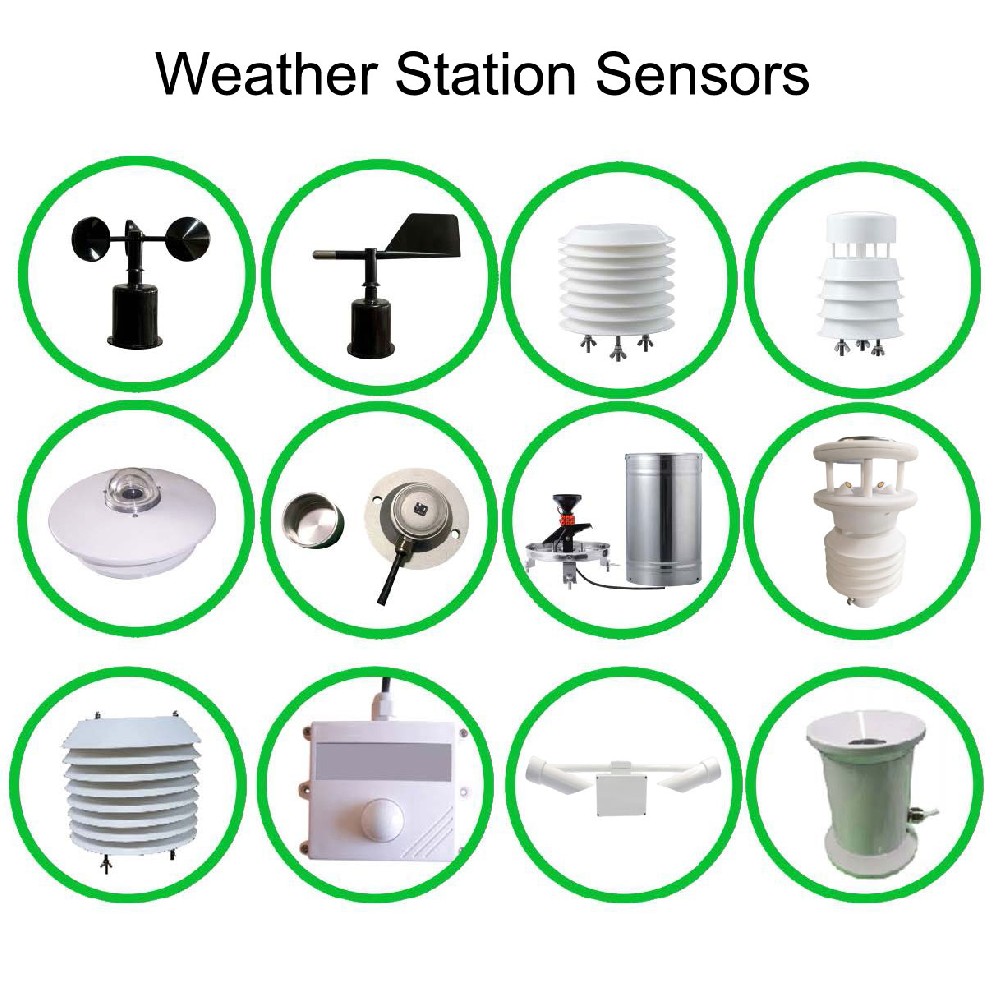
A station normally combines instruments, acquisition, an onward connection, power and supports. Start with what the user needs to observe. A farm might require atmospheric conditions and rainfall with separate soil measurements. A solar project may require irradiance and module temperature rather than a loosely specified light channel. These choices change the inputs before they change the mast package.
One housing may contain several measurements. Conversely, one observation may need both a raw input and a derived record, such as rain pulses converted to interval rainfall. Count physical inputs, serial devices and stored quantities separately. A logger advertised with several channels should be checked against the actual input types and configuration.
| Observation | Instrument or signal | Record definition to agree |
|---|---|---|
| Air temperature, RH and pressure | NBL-W-LBTH; RS485 Modbus RTU version | C, % RH and hPa; identified registers and scaling |
| Wind speed and direction | NBL-W-SS and NBL-W-DS; ordered output versions | m/s and degrees; direction convention and reporting period |
| Rainfall | NBL-W-RS; selected pulse or digital output | mm per tip where applicable; interval or cumulative total |
| Solar irradiance | NBL-W-HPRS; selected analog or optional serial output | W/m2; conversion and receiving plane |
| Optional soil measurements | Separately selected soil instrument | Quantity, unit, depth and location |
This is an example observation list, not a mandatory package or a fixed terminal allocation. A quote should name the selected output versions and any signal-conditioning equipment. The same sensor model with a different output may require a different input and cable termination.
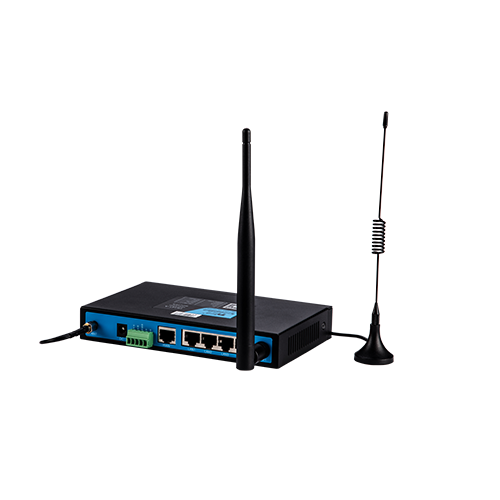
A network router transfers traffic; it does not necessarily count a gauge contact or measure a small analog voltage. The equipment illustration should therefore be read as a communication-device example, not a terminal diagram for every station. Match each listed signal to a supported acquisition function.
The NBL-PH-1 is a selectable data logger with local FLASH recording and a saving interval of 1-240 minutes. Its 4G configuration provides an onward link. Confirm the required analog/counter allocation and serial functions rather than infer that all inputs, interfaces or platform protocols are supplied simultaneously.
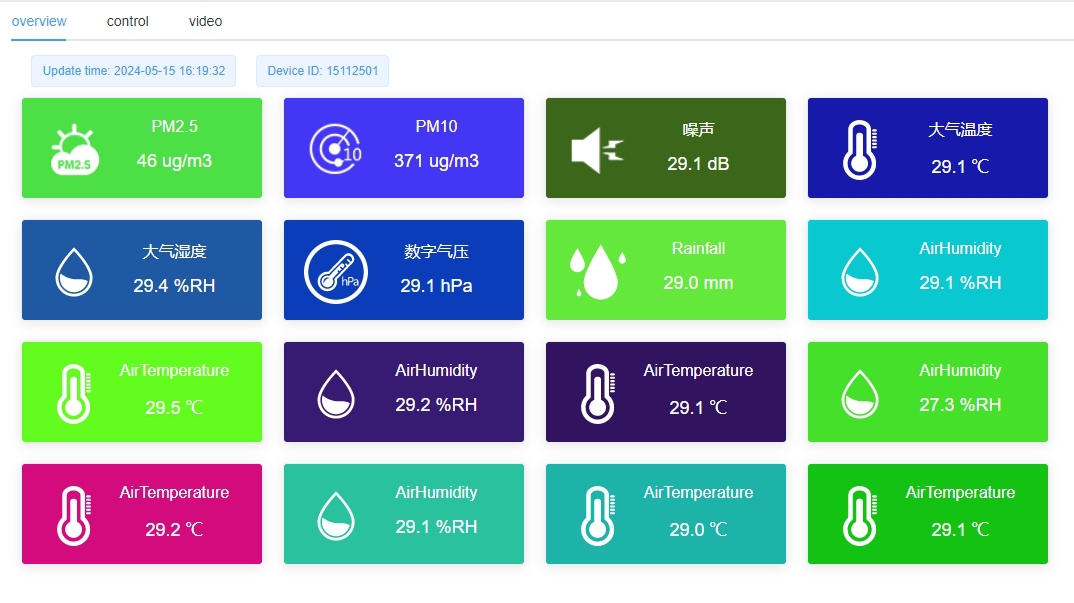
For the NBL-W-LBTH, the atmospheric channels are temperature, relative humidity and pressure at the sensor location. A sea-level pressure display is a separate reduction, not another pressure sensor. Similarly, a weather station does not measure crop evapotranspiration merely because it records the weather inputs used by a calculation.
| NBL-W-LBTH parameter | Range and accuracy | Connection |
|---|---|---|
| Air temperature | -40 to 80 C; +/-0.5 C | DC 12-24 V; RS485 Modbus RTU or selected 4-20 mA version |
| Relative humidity | 0-100% RH; +/-5% RH | |
| Atmospheric pressure | 10-1200 hPa; +/-1.5 hPa |
In the schedule, identify any calculated result, its required inputs and where the calculation occurs. Do not label an unavailable calculation as a normal sensor channel. This prevents a display request from silently becoming an unsupported controller function.
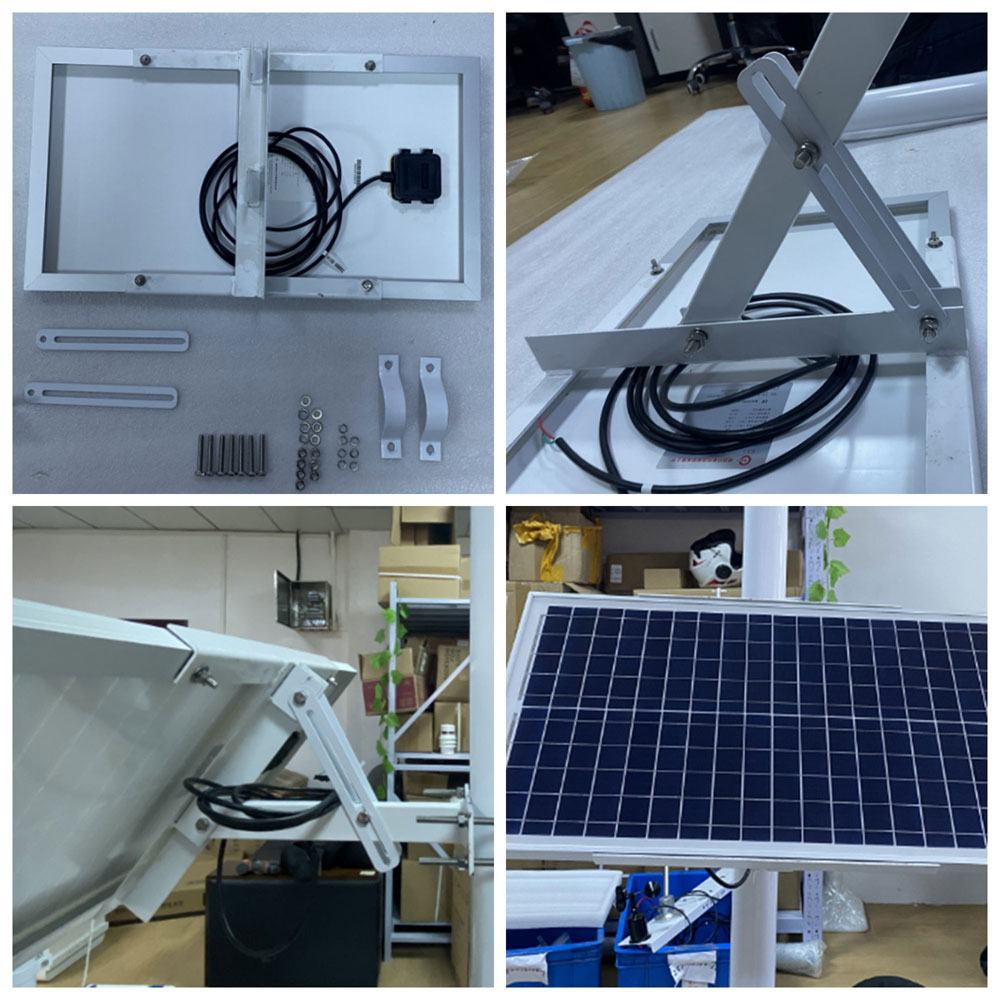
A solar supply needs the loads of sensors, acquisition, communication and any selected heating or accessories. Channel count alone cannot size the panel or battery. Obtain operating and peak requirements for the actual equipment, then evaluate available solar energy and the required reserve at the destination.
A panel included in a photograph does not establish five or seven days of autonomy. Nor should its support face one compass direction in every country. Specify the site-dependent orientation, shading constraints and mounting arrangement, and keep the power system distinct from the solar radiation measurement channel.
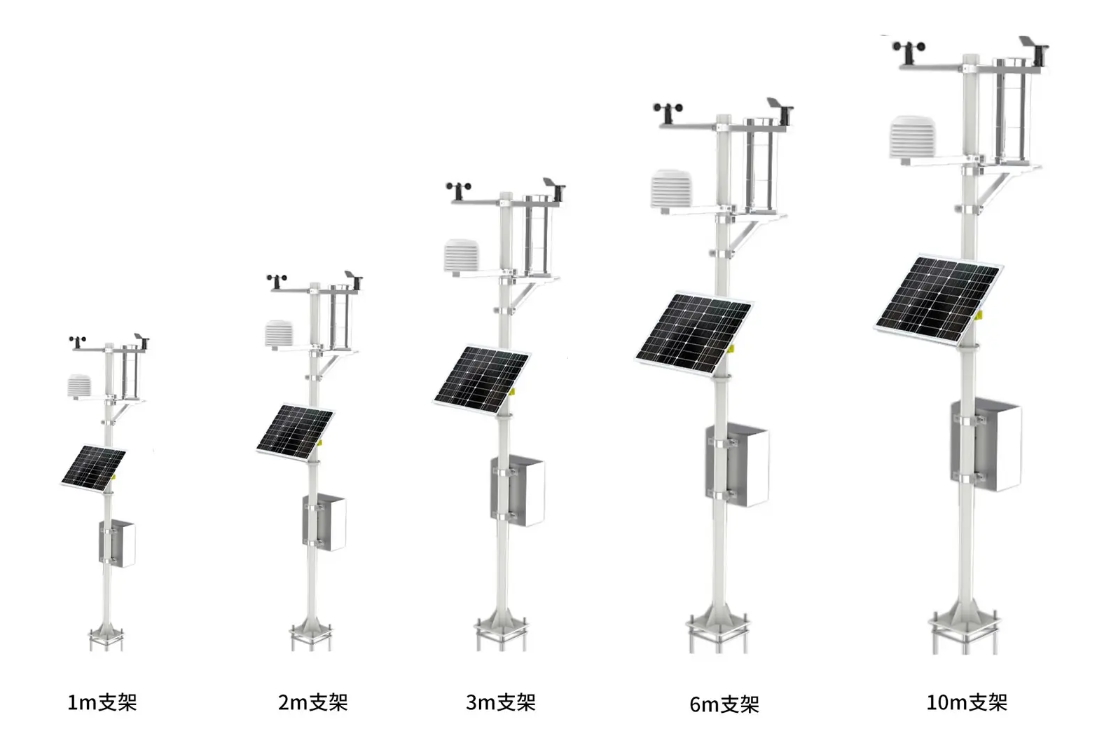
Add the intended position to the schedule: a rain collector opening, a shielded air measurement, the radiation plane or a soil probe depth. A taller support does not automatically improve every observation. The mounting arrangement should avoid obstructing the collector, shadowing the pyranometer or heating the air sensor from nearby surfaces.
NiuBoL mounting brackets include 2 m and 3 m configurations; other depicted mast arrangements require an identified selection. Specify support dimensions, sensor adapters, cable routes and necessary site works. Separate NBL-W-SS and NBL-W-DS instruments are IP65; that rating does not establish corrosion resistance, flood protection or the rating of the completed cabinet.
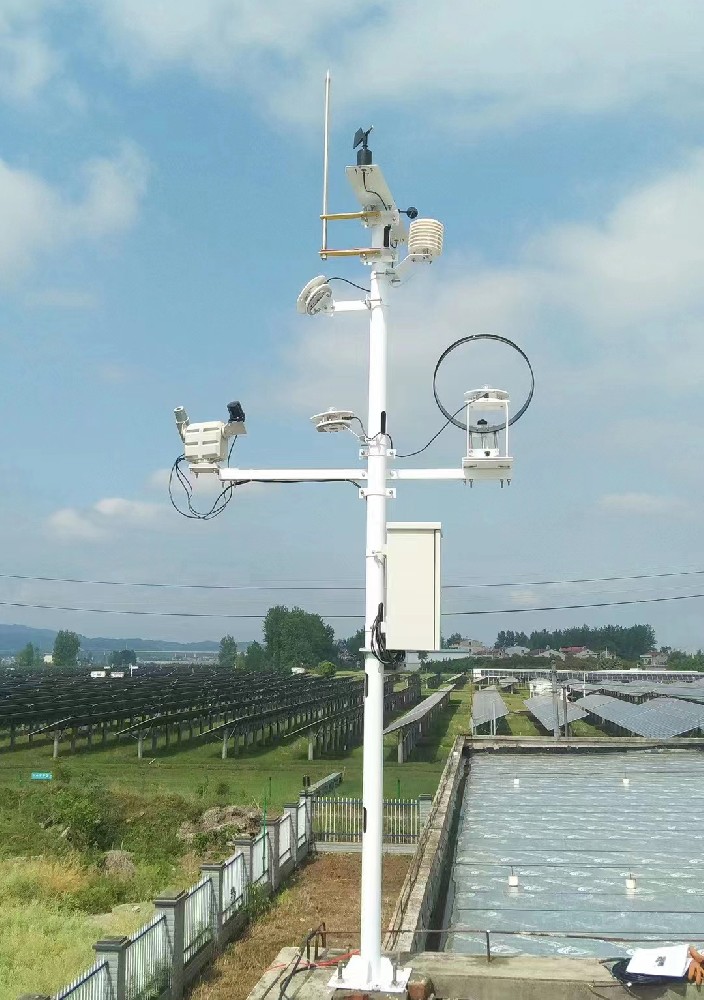
State whether wind is an instantaneous sample or a statistic over a period, and whether rainfall is an interval amount or a running total. Keep observation and transfer times distinguishable. Sending a message more often does not necessarily change acquisition or storage, and a saved interval does not establish high-frequency research data.
A local display can help verify channel identities during setup. Before enabling downstream alarms or calculations, compare its readings with the receiving system and resolve unit, sign or span mismatches. A green status indicator only shows the condition assigned to it; it is not a test of every measurement.
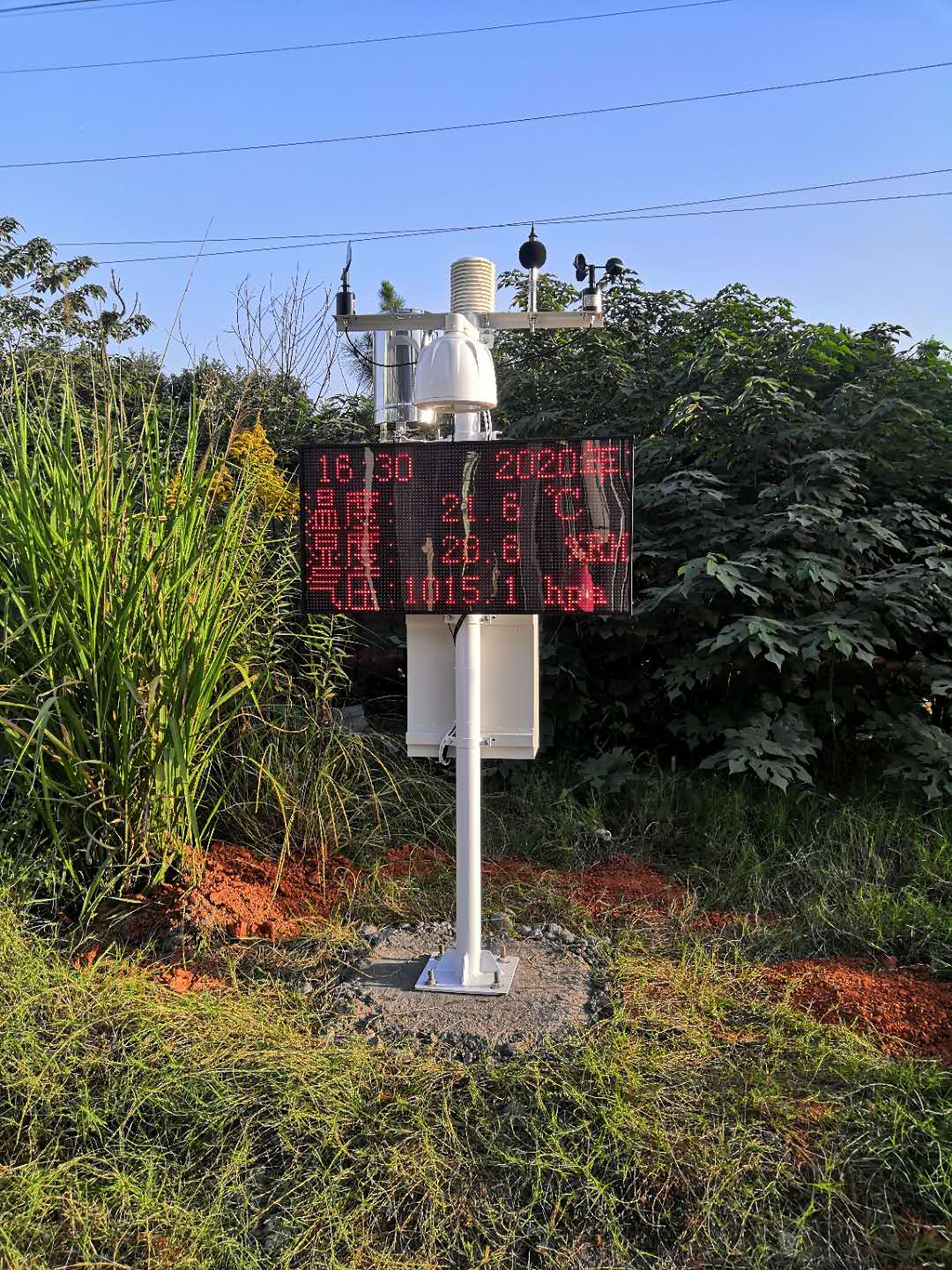
A replacement rain gauge may look similar but use a different increment. If a collector retains the previous mm-per-tip setting, all later totals can be wrong while communication appears normal. Record the installed model, output and conversion with the change date.
For a serial replacement, verify its address, register definition and units. For an analog replacement, verify its span and input configuration. Keep the change limited to affected channels so a service visit does not unintentionally alter unrelated observations.
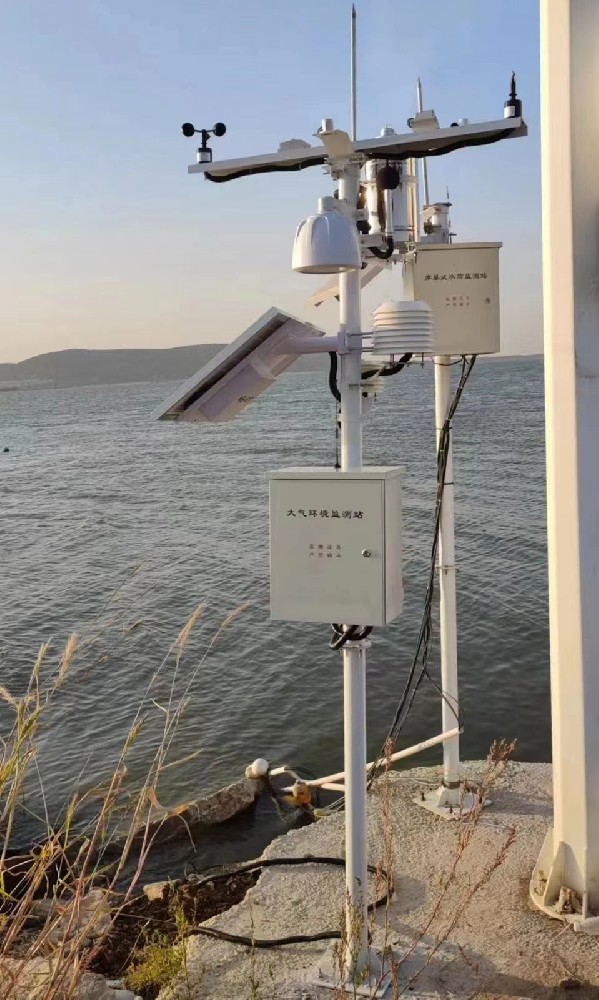
Not necessarily. A compatible serial version can return several quantities through one connection. An analog version may need separate signal channels. Allocate inputs using the selected output and actual wiring.
No. Increment defines the amount represented by each tip or output step. Accuracy has its own stated test conditions. Keep the increment in the conversion settings and the accuracy requirement in instrument selection.
Not from the observation list. Control needs suitable outputs, logic, actuators and feedback with defined operating requirements. Quote and test that scope separately from weather measurement.
Only after the components and services are identified. Output versions, logger inputs, radiation instrument, power, supports and data access can change cost even at the same parameter count. Request an itemized configuration.
Send the required observations, units and intervals, site conditions, receiving system and available power. Include a preliminary channel schedule so NiuBoL can review missing inputs and incompatible signals before quotation.
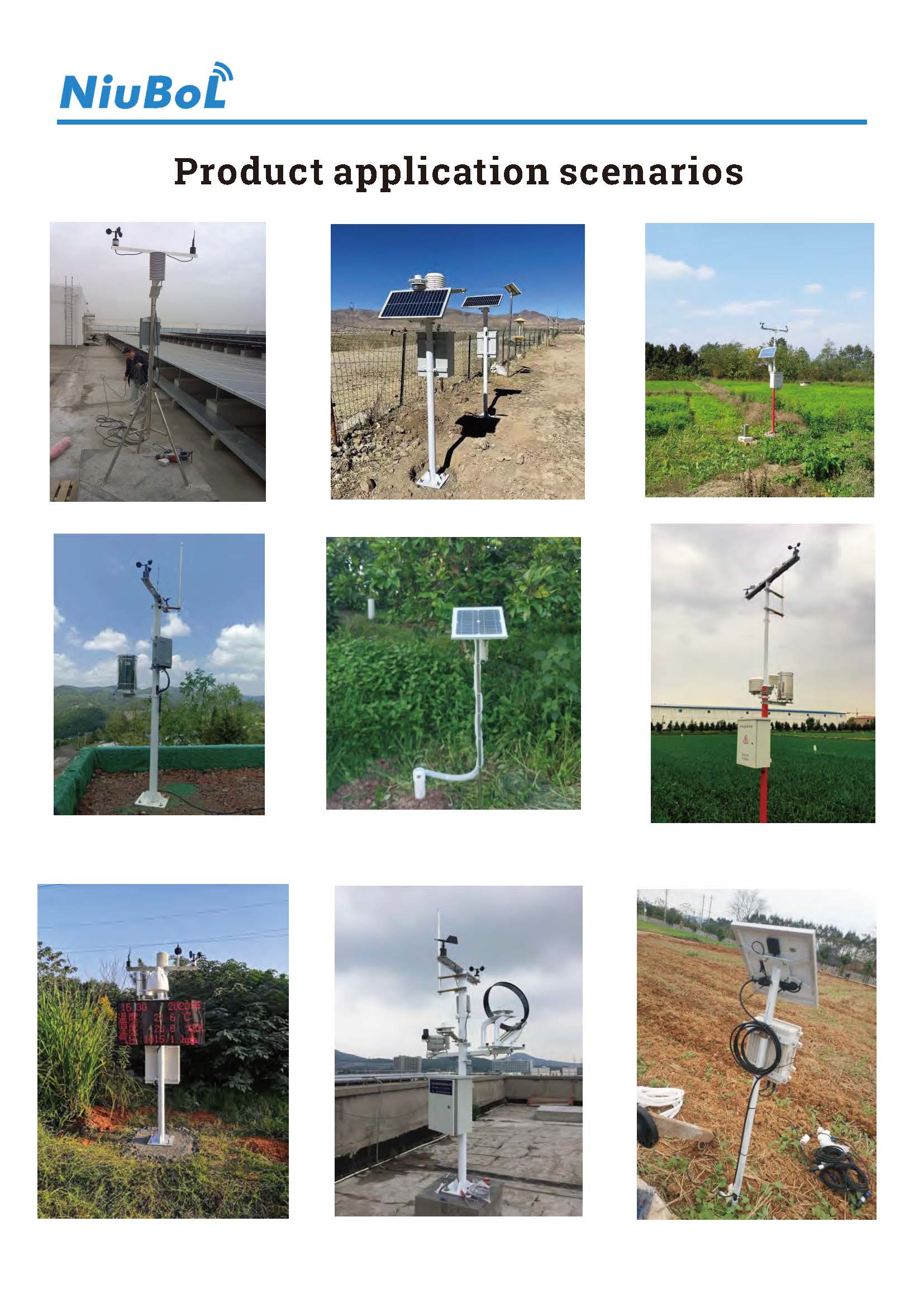
An automatic weather station channel schedule makes the relationship between hardware and records explicit. Name the observations, allocate compatible inputs and retain the conversions and physical positions. The resulting equipment list can be priced, installed and serviced without relying on generic package claims.
Prev:Agricultural Weather Station Trial: Validate a Block Before Rollout
Next:WiFi Weather Station Network Requirements for Industrial Sites
Related recommendations
Sensors & Weather Stations Catalog
 Agriculture Sensors and Weather Stations Catalog-NiuBoL.pdf
Weather Stations Catalog-NiuBoL.pdf
Agriculture Sensors Catalog-NiuBoL.pdf
Water Quality Sensor Catalog-NiuBoL.pdf
Related products
 Combined air temperature and relative humidity sensor
 TDR Soil Moisture & Temperature Sensor for irrigation| RS485 |4-20mA| NBL-S-THR
 Soil pH sensor RS485 soil Testing instrument soil ph meter for agriculture |NBL-S-PH
 Wind Speed sensor Output Modbus/RS485/Analog/0-5V/4-20mA
 Tipping bucket rain gauge for weather monitoring auto rainfall sensor RS485/Outdoor/stainless steel
 Pyranometer Solar Radiation Sensor 4-20mA/RS485


Screenshot, WhatsApp to identify the QR code
WhatsApp number:+8615367865107
(Click on WhatsApp to copy and add friends)

