





— Blogs —
—Products—
 Consumer hotline +8618073152920
WhatsApp:+8615367865107
Address:Room 102, District D, Houhu Industrial Park, Yuelu District, Changsha City, Hunan Province, China
Product knowledge
Time:2025-11-06 16:04:12 Popularity:1219
An agricultural weather station trial should establish whether the proposed measurements support a specific farm decision before the same configuration is ordered for more locations. Test one representative block with identified sensors, local records and field observations. NiuBoL weather and soil instruments can supply those measurements; the trial still needs an agreed decision, comparison method and practical service plan.
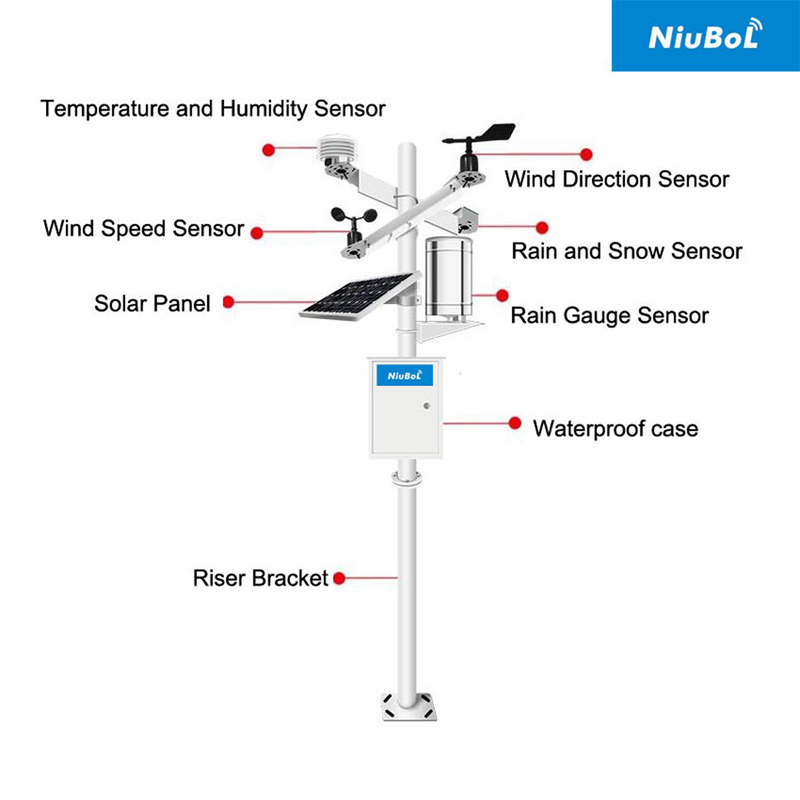
A station can observe air temperature, humidity, wind and rainfall without automatically providing an irrigation schedule or disease warning. Begin the trial with a question such as whether the farm can distinguish a rain event from an irrigation event in its records, or whether a proposed soil measurement point represents the managed block. These are testable questions. A general request to improve productivity is not a trial criterion.
Keep the current management method documented while collecting the new observations. If irrigation practice, crop stage and monitoring equipment all change together, later differences cannot be attributed to the station alone. Record interventions instead of presenting a before-and-after chart as proof of water savings.
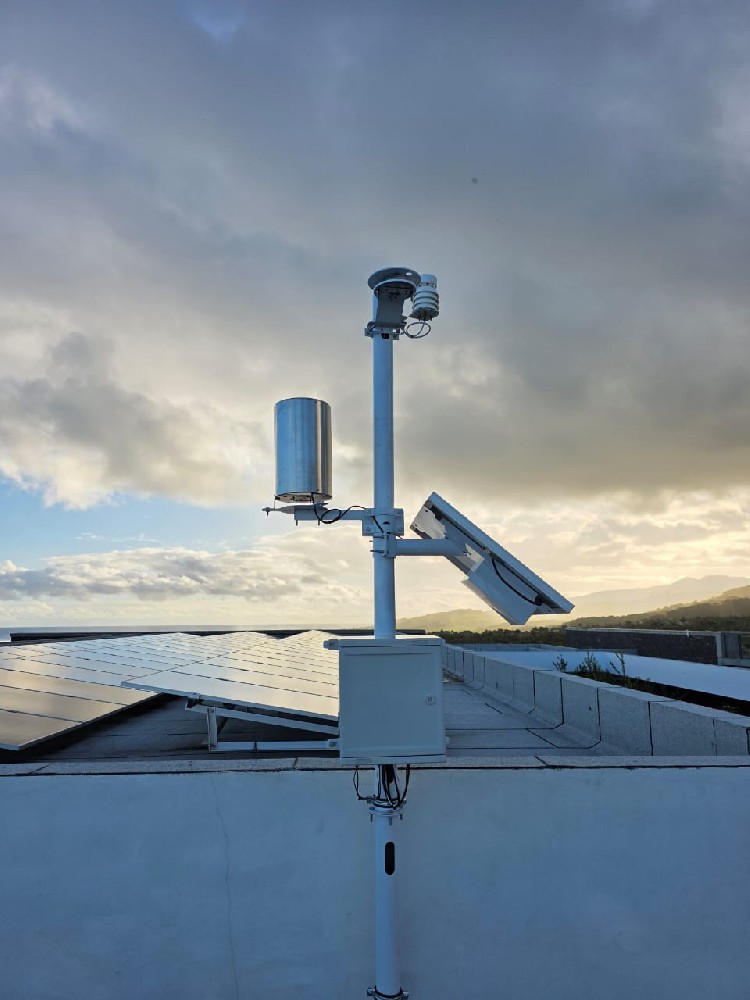
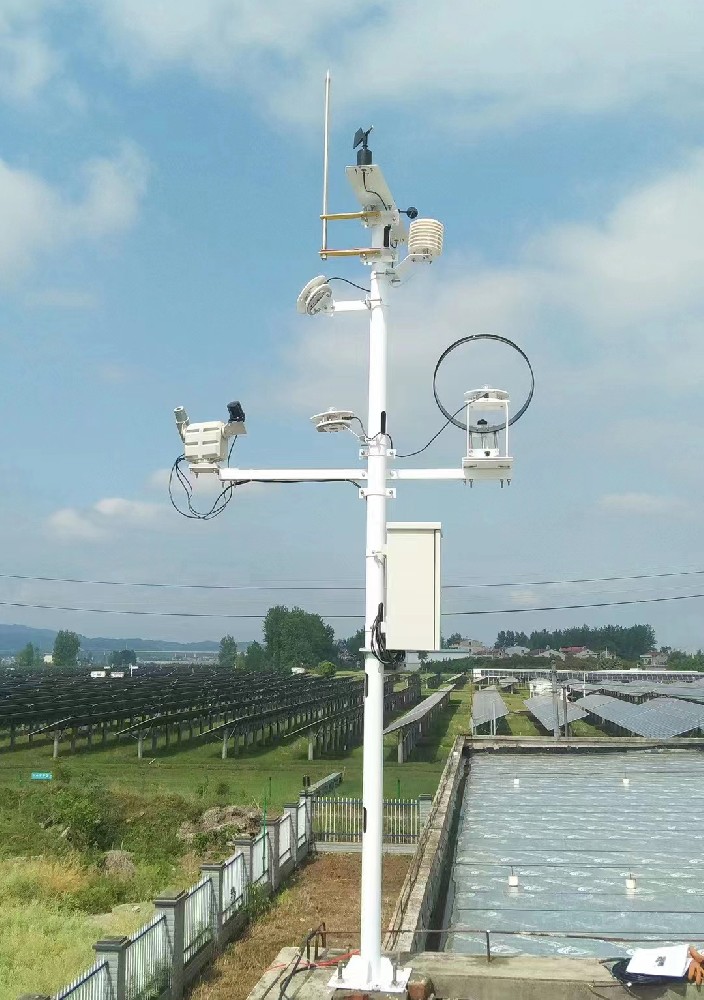
A NiuBoL PV weather installation in Mauritius illustrates a weather assembly with separate radiation measurement. It does not establish the appropriate soil coverage for a farm trial. Use an application case to understand possible equipment arrangements, then select the observations required for the agricultural question.
For an irrigation-related trial, atmospheric observations give weather context while soil probes observe particular positions and depths. They do not measure the same thing. A radiation channel may support a defined weather calculation, but illuminance in lux cannot simply be substituted for irradiance in W/m2.
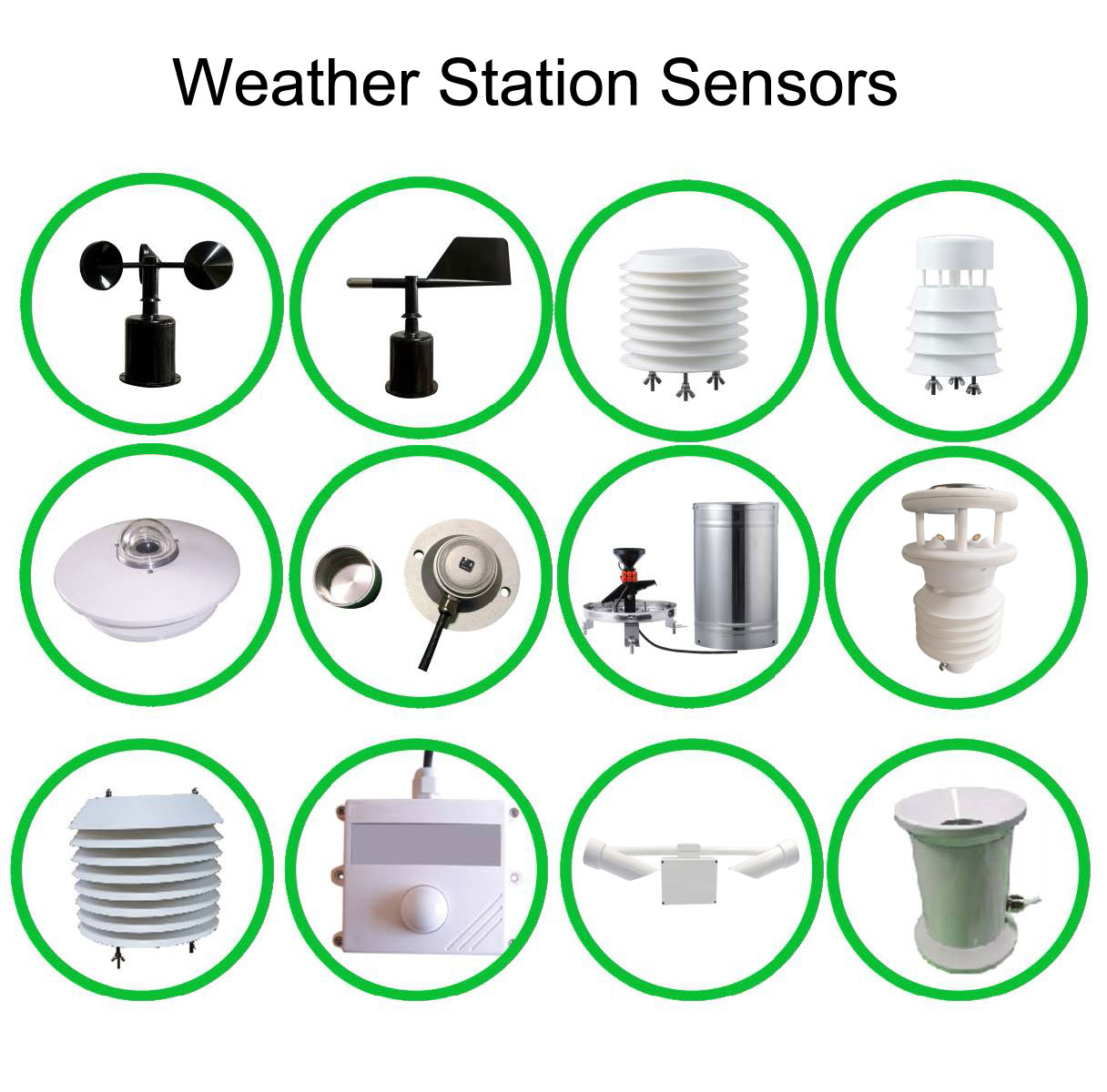
| Trial instrument | Relevant specification | What to establish in the field |
|---|---|---|
| NBL-W-LBTH | Air temperature -40 to 80 C, +/-0.5 C; RH 0-100%, +/-5% RH; DC 12-24 V | Representative shielded air exposure and channel identity |
| NBL-S-TM | FDR volumetric moisture and soil temperature; RS485 Modbus RTU; IP68 | Probe depth, soil contact and position relative to irrigation |
| NBL-W-RS | Selected 0.2 mm tipping increment | Correct count conversion and a clear collection opening |
| NBL-PH-1 | Local FLASH; saving interval 1-240 minutes; configured 4G link | Suitable records and the required retrieval route |
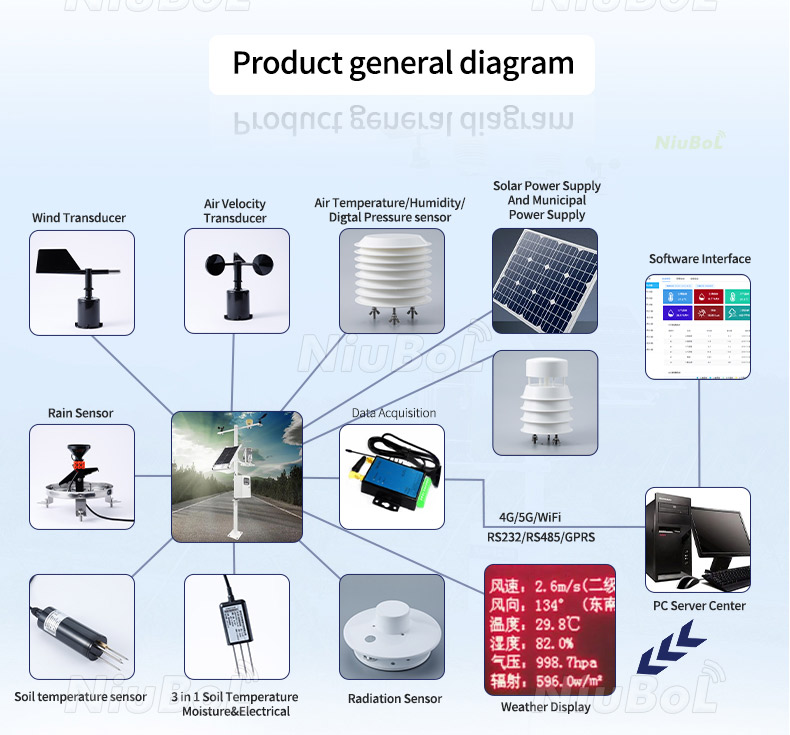
Choose the actual output versions and acquire them through compatible inputs. A serial sensor's electrical connection, Modbus register map and units must match the receiving device. Do not assume every item in a station illustration is supplied or shares the same protocol.
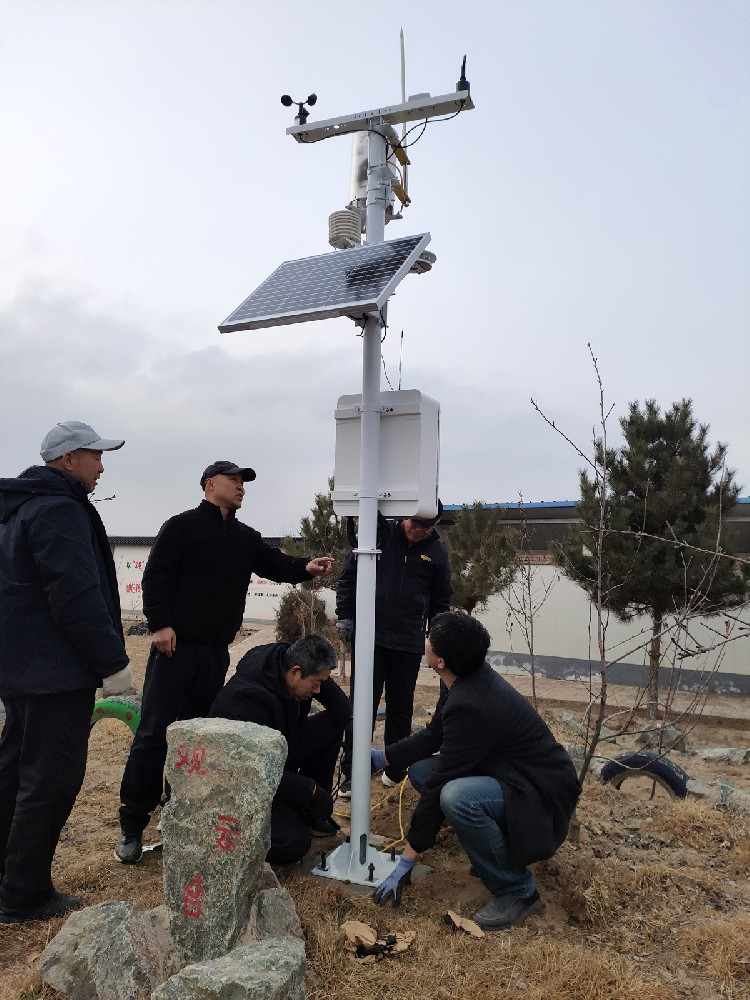
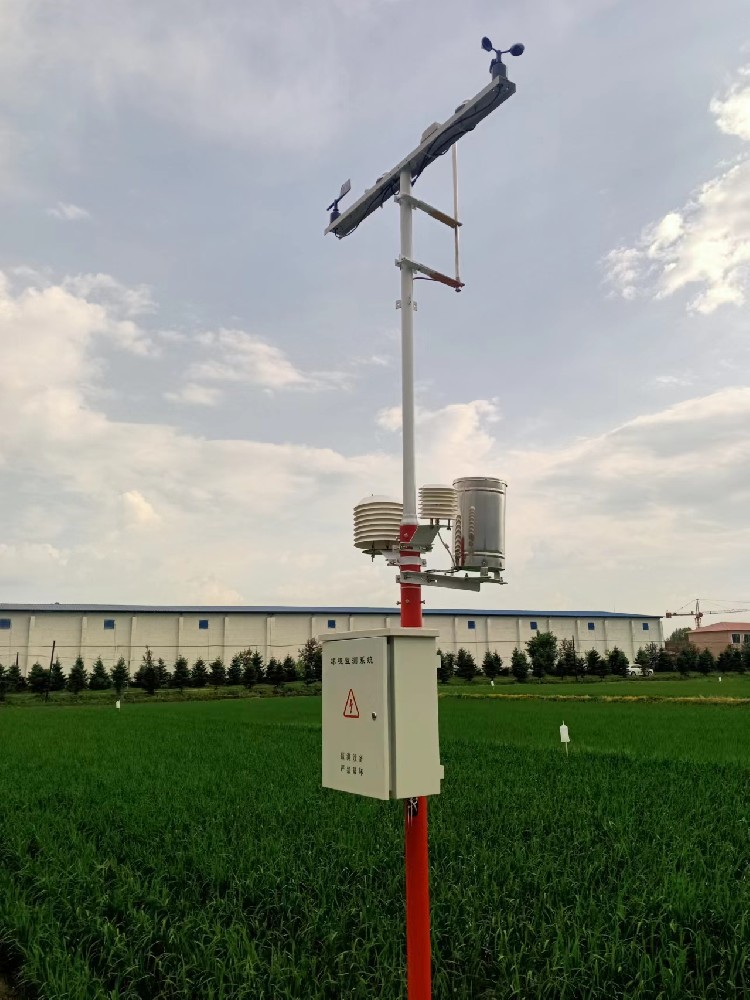
Record a simple block map with the station, soil probes, irrigation lines and relevant boundaries. A probe near one emitter may wet much faster than a point between emitters. If the trial is meant to represent the root zone, identify the intended depth and the reason for that position rather than choose the easiest cable route.
Include a contrasting position when the management question requires comparison. An edge with different soil or irrigation coverage should not silently stand for the whole block. The number of locations follows the variation being investigated, not a universal station-per-hectare rule.
Record rain, irrigation start and stop, affected zone, servicing and any movement of equipment. Where delivered water matters, use suitable delivery information; a valve command is not a volume measurement. Preserve observation timestamps so events can be compared over the same periods.
Review a meaningful wetting and drying sequence where available, not only a dry commissioning day. If the intended conditions do not occur during the trial, report that limit and decide whether observation must continue. Set the observation period around the events needed for the decision; a fixed calendar period does not guarantee they will occur.
If air and rainfall records are usable but soil points repeatedly fail to represent the managed zone, adding more atmospheric parameters will not resolve the placement problem. Reconsider the soil layout. If local records are sound but remote records are incomplete, investigate the onward connection before replacing the sensors.
If an agronomic calculation is required, identify its inputs, method and responsible software. The trial should not pass a calculation that has not been implemented merely because its input channels appear on screen. Keep crop recommendations separate from the instrument's measurement function.
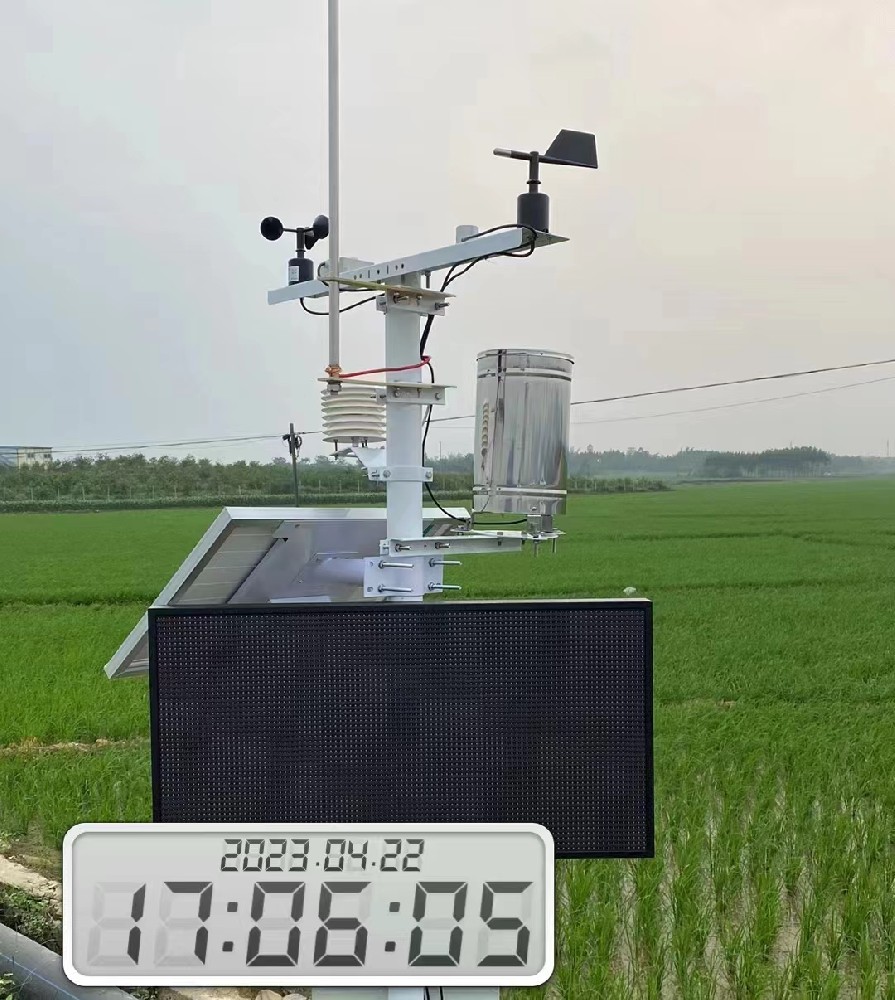
Record how staff reach the instruments, clean the gauge, inspect connectors and retrieve history. Soil work or machinery movement may affect buried cables. These observations help plan the later installation scope and spare equipment without assuming a maintenance-free system.
Before rollout, request an itemized configuration for each required location. A farm may share a data platform but need different sensor placement, cable lengths or power arrangements between blocks. Ask NiuBoL to review those differences rather than duplicate the trial quotation unchanged.
No. It establishes performance at the trial locations under observed conditions. Compare soil, terrain, crop and irrigation differences before extending the result to other blocks.
No. An observation-only trial can establish whether measurements and records are useful. Adding control requires separately specified logic, outputs, hydraulic equipment and feedback.
It shows the response around its sensing position. Delivered volume requires appropriate flow or delivery records. Probe response alone cannot establish uniform watering across the block.
Only a suitable comparison with measured water use and relevant crop and weather conditions can support a quantified outcome. Installing a station and changing a schedule does not establish the saving by itself.
Send the decision being tested, block layout, crop and irrigation arrangement, required observations and available power or network. Include the intended comparison and later rollout scope so NiuBoL can review a practical trial configuration.
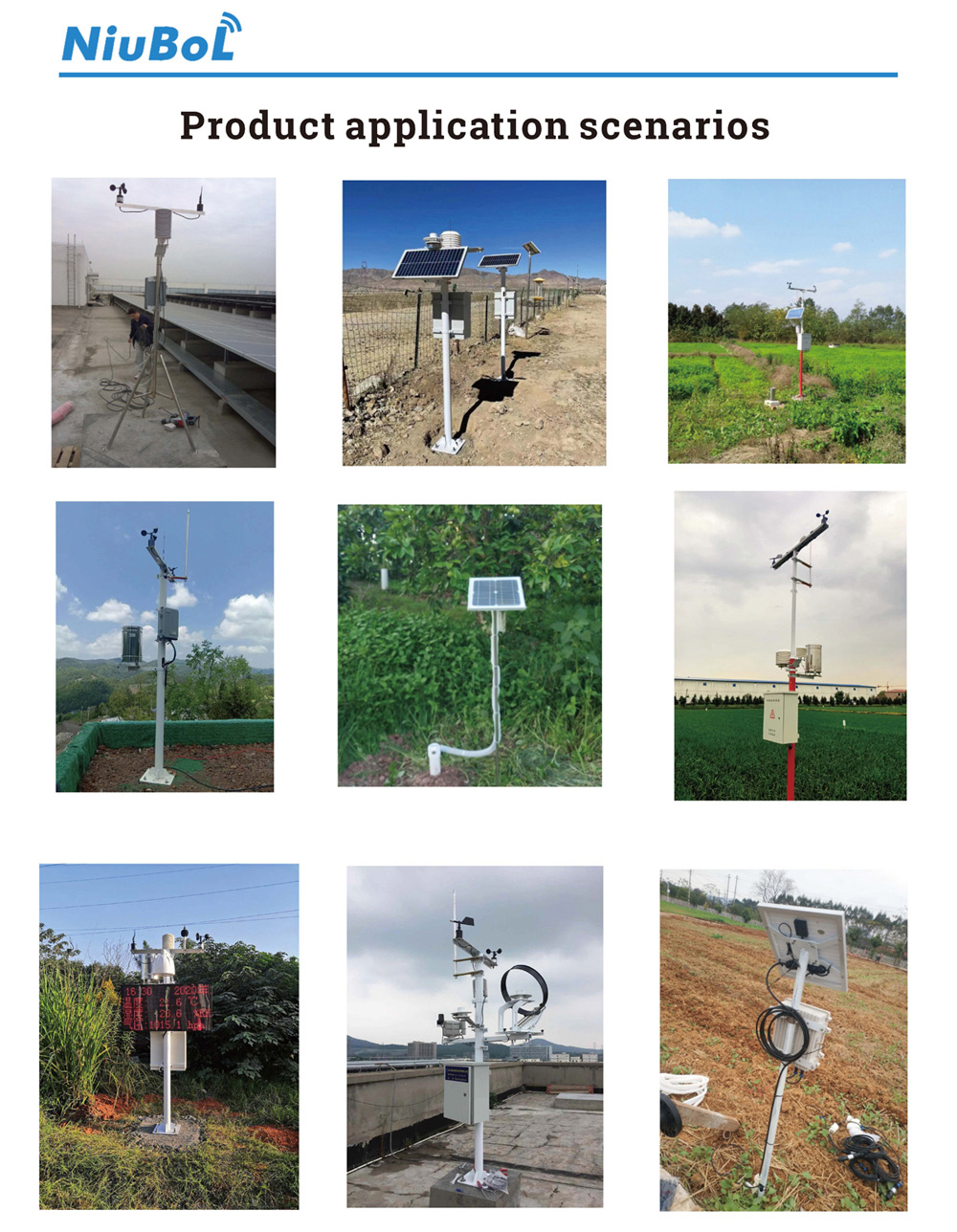
A useful agricultural weather station trial ends with a configuration decision: retain the measurement layout, change a weak point or collect more relevant events. Tie the observations to field activities and service work before wider procurement. That provides a firmer basis for rollout than unsupported savings or a long parameter list.
Prev:Weather Station Tender Specification: Compare Compliant Configurations
Next:Automatic Weather Station Channel Schedule: From Sensor to Record
Related recommendations
Sensors & Weather Stations Catalog
 Agriculture Sensors and Weather Stations Catalog-NiuBoL.pdf
Weather Stations Catalog-NiuBoL.pdf
Agriculture Sensors Catalog-NiuBoL.pdf
Water Quality Sensor Catalog-NiuBoL.pdf
Related products
 Combined air temperature and relative humidity sensor
 TDR Soil Moisture & Temperature Sensor for irrigation| RS485 |4-20mA| NBL-S-THR
 Soil pH sensor RS485 soil Testing instrument soil ph meter for agriculture |NBL-S-PH
 Wind Speed sensor Output Modbus/RS485/Analog/0-5V/4-20mA
 Tipping bucket rain gauge for weather monitoring auto rainfall sensor RS485/Outdoor/stainless steel
 Pyranometer Solar Radiation Sensor 4-20mA/RS485


Screenshot, WhatsApp to identify the QR code
WhatsApp number:+8615367865107
(Click on WhatsApp to copy and add friends)

