





— Blogs —
—Products—
 Consumer hotline +8618073152920
 WhatsApp:+8615367865107
Address:Room 102, District D, Houhu Industrial Park, Yuelu District, Changsha City, Hunan Province, China
Product knowledge
Time:2026-01-02 10:38:18 Popularity:749
Automatic Weather Stations (AWS) serve as important infrastructure for economic construction and national defense services, bearing the sacred mission of climate observation, data collection, and disaster early warning. However, in actual operation, even high-performance automatic weather stations may inevitably produce monitoring errors. To ensure the authenticity and scientific nature of meteorological data, understanding the underlying factors affecting monitoring quality and mastering their application logic is crucial.
As a deep cultivator in the field of smart meteorology, the NiuBoL team will detail the four core factors affecting meteorological monitoring effectiveness in this article and showcase the practical applications of small weather stations in multiple fields.
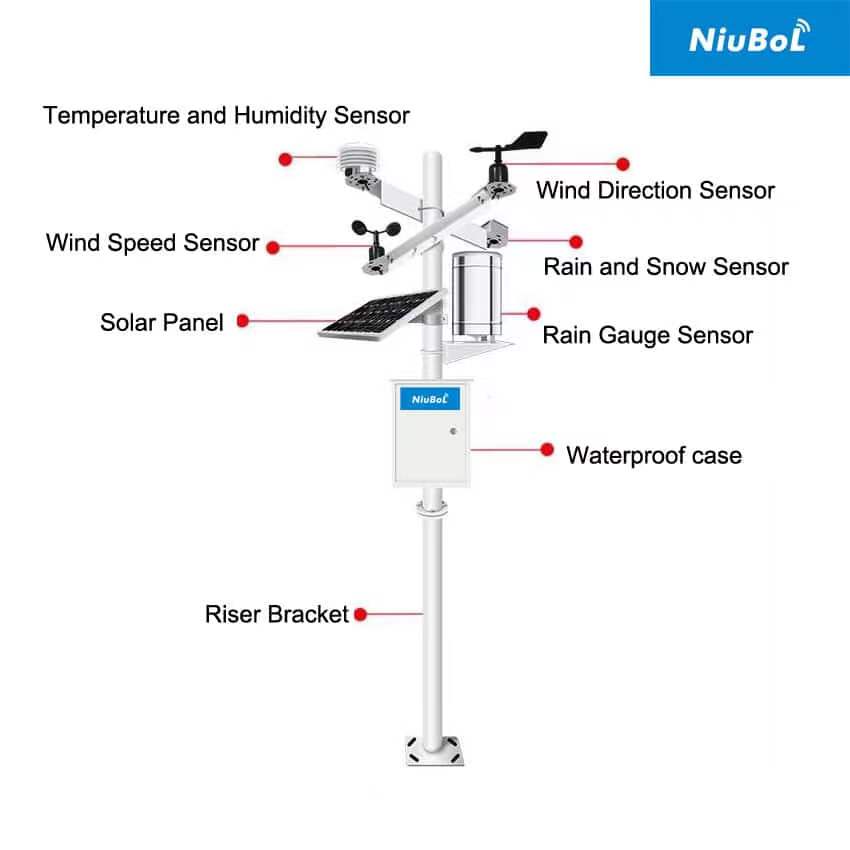
An automatic weather station is a precise system engineering project. From design and development to field operation, any negligence in any link may lead to “distortion” of data.
Technical requirements are the cornerstone determining the quality of a weather station. An excellent automatic weather station must follow strict technical standards in planning and design, circuit integration, material production, and factory inspection.
Design Defects: If the equipment has technical vulnerabilities in anti-electromagnetic interference (EMC) or data algorithm processing, the collected raw signals will carry a large amount of noise.
Manufacturing Process: Details such as housing sealing and interface anti-corrosion treatment directly determine the stable performance of the equipment in extreme weather.
Instrument selection must highly match the monitoring objectives.
Range and Precision: If the sensor selection is inappropriate, monitoring data may not reach expected precision. For example, using a low-range anemometer in high-wind areas will cause data capping.
Systematic and Random Errors: Any physical sensor has errors. NiuBoL recommends using advanced software compensation algorithms to correct known systematic errors, maximizing the restoration of true natural data.
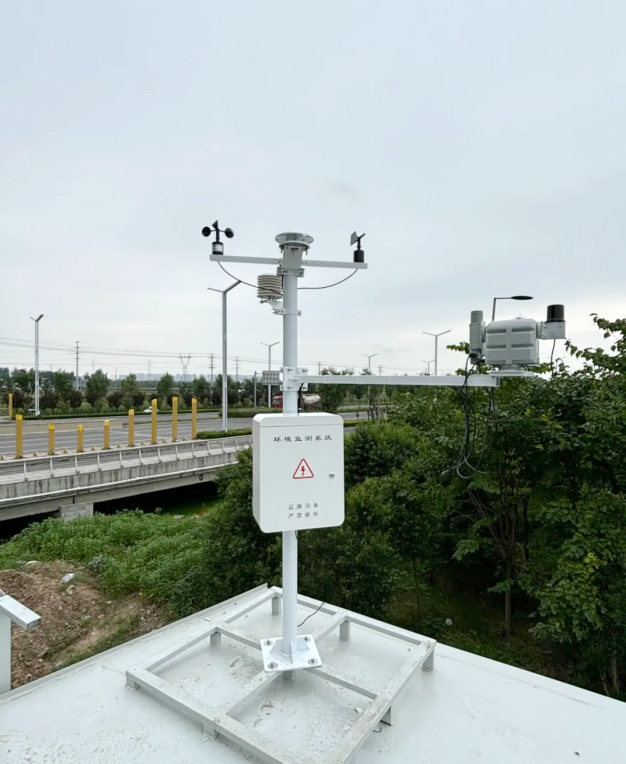
Even highly stable small automatic weather stations require regular “check-ups.”
Hardware Aging: Sensor components exposed to ultraviolet rays and alternating high/low temperatures in the field for long periods will experience performance degradation or drift.
Importance of Calibration: Regular calibration with standard instruments can more effectively control quality. Once component aging is detected, hardware must be replaced promptly to maintain high monitoring standards.
Environment-induced errors are often the most difficult to completely eliminate through technical means, so site selection strategy is crucial.
Pollution Interference: Smoke and dust pollution can adhere to sensor surfaces (especially optical sensors or temperature/humidity probes), causing reading deviations.
Local Environmental Impact: Avoid stationing near local smoke sources or buildings with obvious heat island effects. An open, interference-free environment can qualitatively improve monitoring quality.
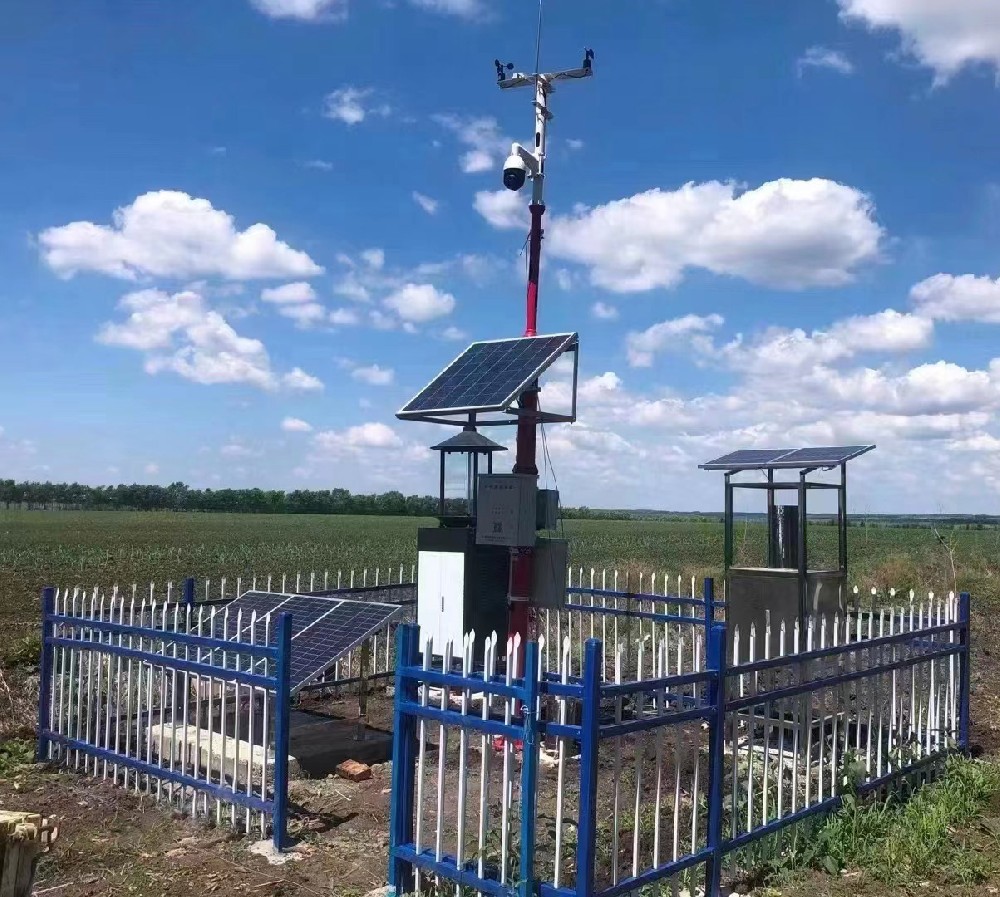
Traditional weather stations often have broad coverage but insufficient finesse, making it difficult to meet the “microclimate” monitoring needs of specific fields. Against this backdrop, small weather stations have emerged.
A small weather station is a portable or fixed intelligent monitoring device that integrates parameters such as air temperature and humidity, light, wind speed and direction, and rainfall. It typically consists of a sensor end, a collector (handheld or wall-mounted), and cloud software (upper computer), with functions for data storage, wireless transmission, and in-depth analysis, serving as an important basis for scientific disaster prevention and mitigation.
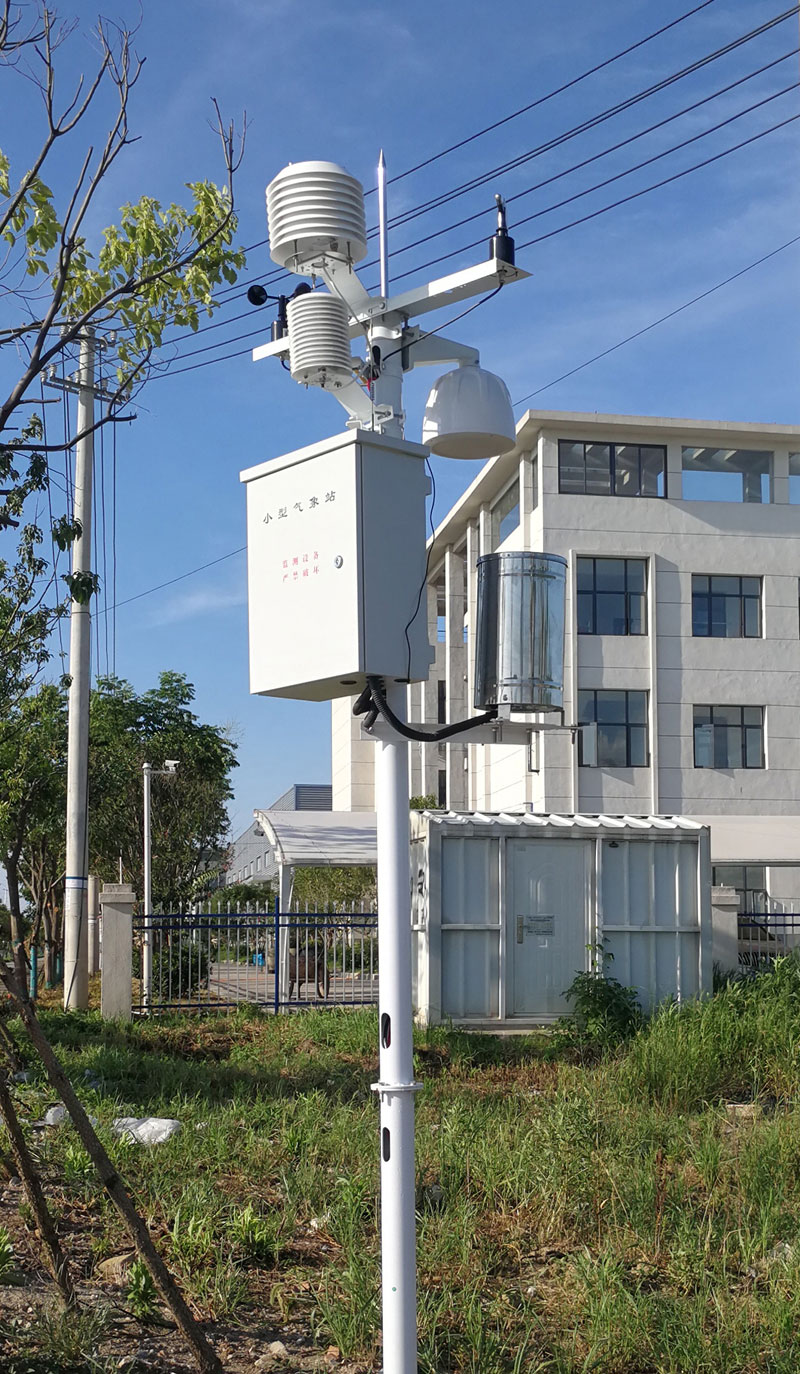
Due to their small size, strong scalability, and easy installation, NiuBoL small weather stations excel in the following fields:
Agriculture and Facility Horticulture
Precisely monitor farmland irrigation climate environments, providing first-hand data for studying crop growth patterns and drought monitoring. In greenhouses, it can precisely control ventilation and heating timing.
Forestry Monitoring and Fire Risk Early Warning
Deploy small monitoring points in vast forests to monitor forest fire risk climate indicators (such as humidity and wind speed) in real time, providing real-time meteorological support for on-site monitoring of sudden fires.
Scientific Research, Education, and Microclimate Studies
Widely used in the construction of meteorological observation stations in universities, middle schools, and primary schools to cultivate students' scientific literacy. Also serves microclimatology research, monitoring climate characteristics of specific urban green spaces or local landforms.
Emergency Response to Sudden Incidents
In flood disasters, chemical leaks, or major outdoor events, portable small weather stations can be quickly deployed to provide instant local meteorological data, assisting command decisions.
Livestock Environmental Monitoring
Monitor environmental indicators in livestock and poultry houses to prevent economic losses in the breeding industry caused by high-temperature heat stress.
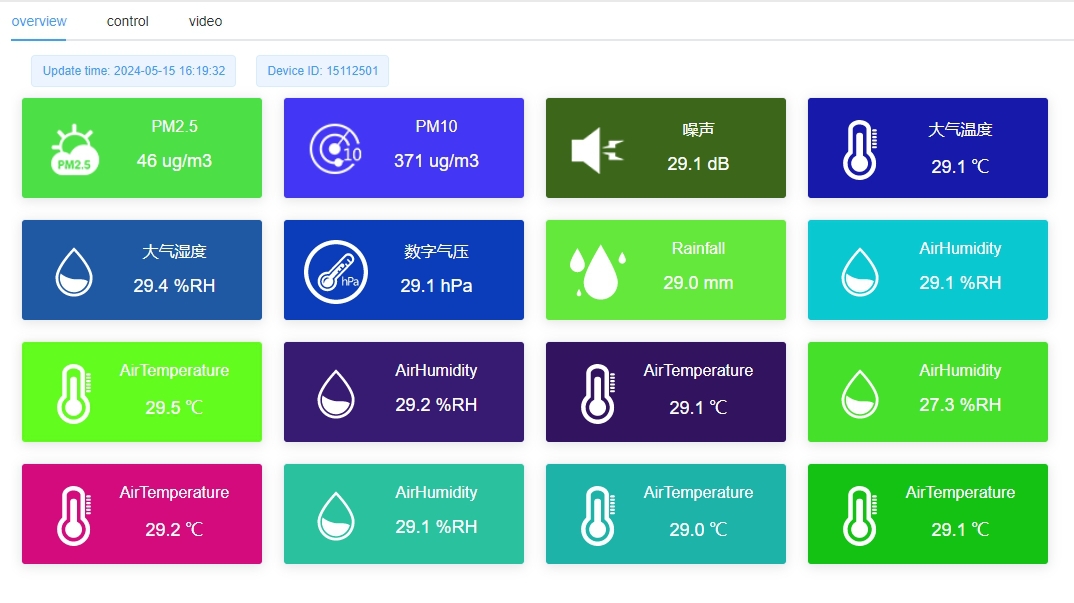
The most prominent feature of NiuBoL small weather stations is their powerful scalability.
Sensor Free Combination: Users can add or reduce sensors based on actual needs.
The collector supports connecting more than a dozen sensors, and different interfaces can often be interchanged without affecting testing accuracy. This means the same system can upgrade from simple “meteorological monitoring” to a comprehensive monitoring platform integrating “soil, environment, and light.”
| Question | Answer |
|---|---|
| Q1: Why does my weather station's rainfall data seem inaccurate? | A: First, check if the station site is near tall buildings or trees with obstructions; second, check if there are fallen leaves or dust blocking the tipping bucket inside the rain gauge; finally, regular sensor calibration is key to ensuring accuracy. |
| Q2: Can small weather station data be viewed remotely? | A: Yes. NiuBoL equipment supports multiple transmission modes, with data uploaded to the cloud platform via 4G/5G or GPRS. Users can view and analyze results in real time via computer or mobile App in the office. |
| Q3: What specific impacts does environmental pollution have on sensors? | A: Dust reduces the response speed of temperature and humidity sensors, while oil smoke or corrosive gases may damage anemometer bearings. In heavily polluted areas, shorten maintenance and cleaning cycles. |
| Q4: What parameters should be mainly considered when selecting instruments? | A: Mainly consider sensor resolution, accuracy, response time, and operating temperature/humidity range. Ensure these parameters cover extreme meteorological conditions in your area. |
| Q5: How long does hardware aging usually take to appear? | A: This depends on environmental severity. It is usually recommended to perform a deep inspection and comparative calibration every 1-2 years to determine if probes or core components need replacement. |
| Q6: What if buildings cannot be completely avoided during site selection? | A: Follow meteorological monitoring standards, placing the weather station upwind of buildings as much as possible, with the distance from obstacles at least 3 times the height of the obstacle. |
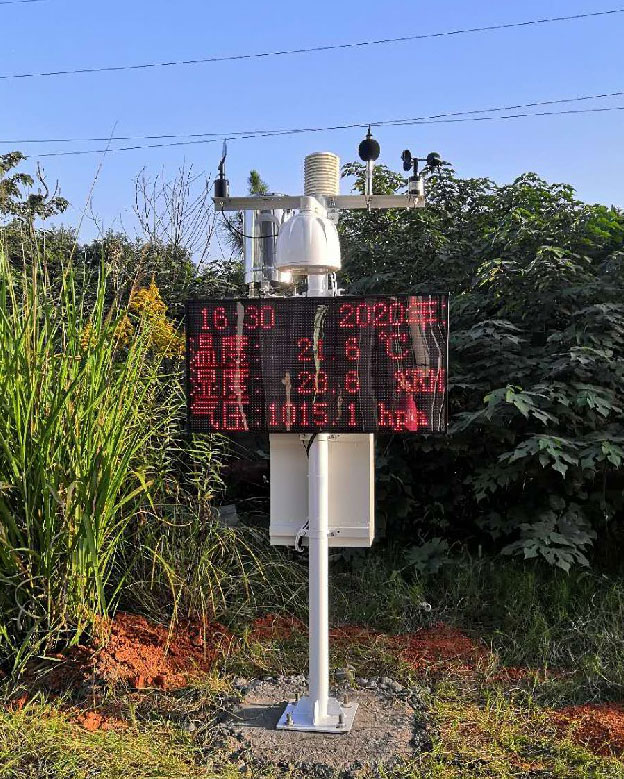
The monitoring quality of automatic weather stations is the result of the combined action of technology, equipment, calibration, and environment. As users, we should select suitable instruments (such as the NiuBoL series), regularly perform inspections and calibrations, and scientifically select sites to eliminate unnecessary interference.
Small weather stations, with their flexible, precise, and portable characteristics, are playing an increasingly important role in agriculture, forestry, and disaster prevention and mitigation. Ensuring every set of meteorological data is precise and reliable is an important guarantee for revitalizing agriculture through science and technology and strengthening the country through data.
Communication Protocols: Supports Modbus-RTU protocol, RS485 signal output.
Data Units: Temperature (°C), Humidity (%RH), Wind Speed (m/s), Rainfall (mm), Air Pressure (hPa).
Protection Level: Host IP65, Sensors IP66.
Measurement Range: Customizable according to needs, such as wind speed 0-60m/s, temperature -40-80°C.
Are you looking for the most suitable station deployment solution for your scientific research project or farm? Contact us, NiuBoL will provide you with full-process smart meteorological solutions from site selection recommendations to instrument calibration.
Prev:Core Advantages of Small Weather Stations and Their Key Role in Increasing Agricultural Yield
Next:NiuBoL Water-Fertilizer Integration Solutions and Full-Scenario Implementation Strategies
Related recommendations
Sensors & Weather Stations Catalog
 Agriculture Sensors and Weather Stations Catalog-NiuBoL.pdf
Weather Stations Catalog-NiuBoL.pdf
Agriculture Sensors Catalog-NiuBoL.pdf
Water Quality Sensor Catalog-NiuBoL.pdf
Related products
 Combined air temperature and relative humidity sensor
 TDR Soil Moisture & Temperature Sensor for irrigation| RS485 |4-20mA| NBL-S-THR
 Soil pH sensor RS485 soil Testing instrument soil ph meter for agriculture |NBL-S-PH
 Wind Speed sensor Output Modbus/RS485/Analog/0-5V/4-20mA
 Tipping bucket rain gauge for weather monitoring auto rainfall sensor RS485/Outdoor/stainless steel
 Pyranometer Solar Radiation Sensor 4-20mA/RS485

Screenshot, WhatsApp to identify the QR code
WhatsApp number:+8615367865107
(Click on WhatsApp to copy and add friends)

