





— Blogs —
—Products—
 Consumer hotline +8618073152920
WhatsApp:+8615367865107
Address:Room 102, District D, Houhu Industrial Park, Yuelu District, Changsha City, Hunan Province, China
Product knowledge
Time:2026-01-02 10:51:43 Popularity:829
Quick Answer: Fertigation monitoring should distinguish the prepared nutrient solution, the water actually delivered through each zone, and the condition of the root zone. EC, pH, flow, pressure and soil moisture answer different questions. Combine the required observations with a suitable dosing and irrigation controller; a soil reading alone cannot verify fertilizer composition or delivered dose.
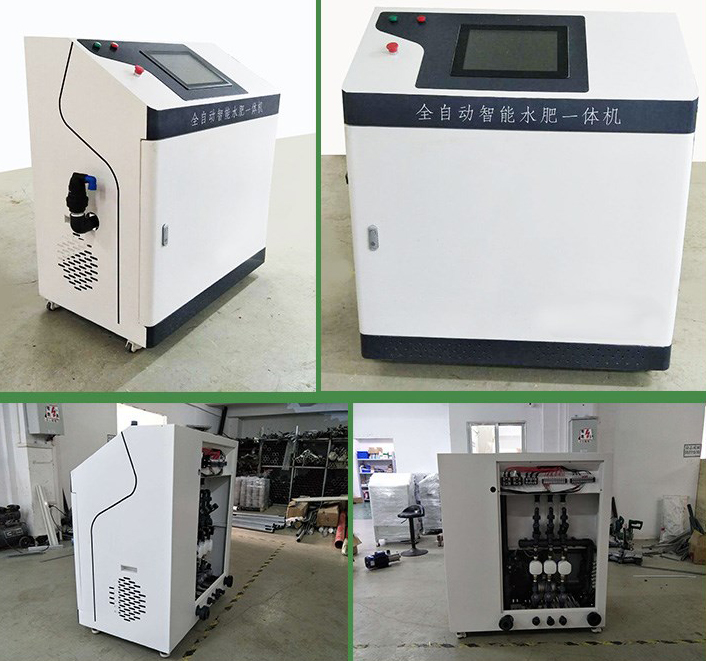
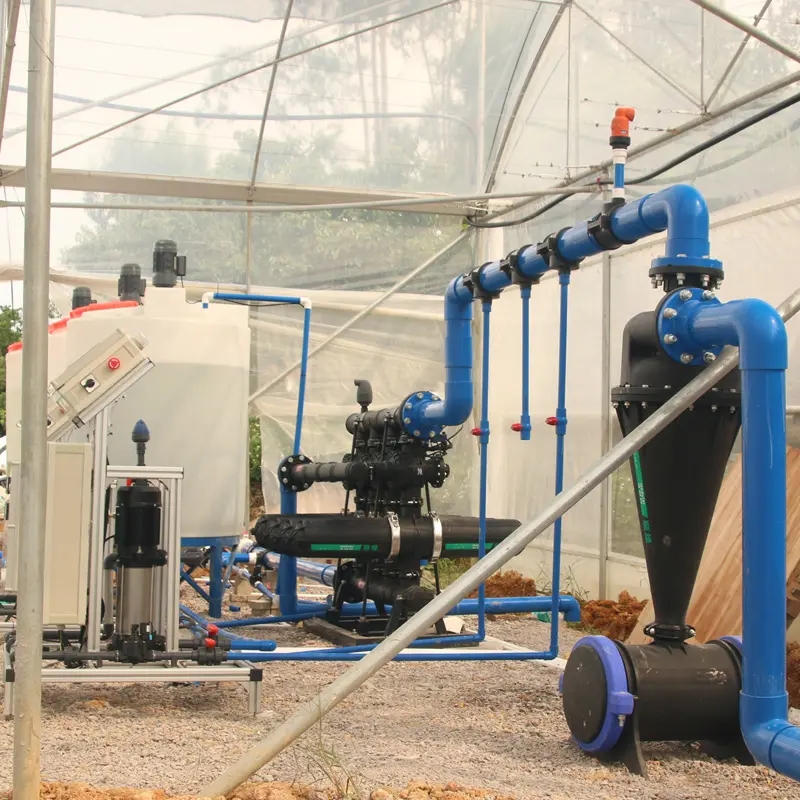
Fertigation carries suitable dissolved fertilizer with irrigation water. The mixing equipment determines how the solution is prepared, the hydraulic network distributes it, and the soil or substrate determines the conditions around roots. A monitoring plan has to identify which part of that route each measurement represents.
An EC value after mixing can help assess the solution's conductivity. Flow and pressure help evaluate delivery. Soil moisture and temperature provide local root-zone context. None substitutes for all the others, and a plausible reading at the mixing skid does not establish that every emitter delivered the intended solution.
| Location | Useful observations | Question answered |
|---|---|---|
| Source water | Water characteristics relevant to the recipe and equipment | What enters the mixing system, including its background conductivity? |
| After mixing | Solution EC, pH and temperature where required | Does the prepared stream follow the intended monitored conditions? |
| Distribution network | Flow, pressure and zone state | Is water moving through the intended hydraulic route? |
| Root zone | Representative soil or substrate observations | How does the monitored local zone respond over time? |
Start a retrofit by locating the missing observation. An existing dosing skid may need a suitable water-quality channel, while an established irrigation controller may need representative soil points. NiuBoL sensing and acquisition options should be matched to that task instead of assuming every project needs the same complete machine.
Electrical conductivity responds to dissolved ions and temperature. Source-water salts contribute to the result alongside added fertilizer. A recipe that achieves a particular EC in one source water may behave differently in another, and two different mixtures can have similar conductivity.
Therefore, do not use EC as a complete analysis of nitrogen, phosphorus and potassium or as proof that the recipe is chemically correct. The agronomic formulation, source-water assessment and compatible fertilizer preparation remain separate requirements. pH adds another useful condition but also does not identify nutrient composition by itself.
Use the actual temperature-compensation definition when comparing instruments. A conductivity value at sample temperature and a temperature-referenced value may differ. Align units as well: 1000 microsiemens/cm equals 1 mS/cm. A factor-of-one-thousand display error can look like an extreme process condition.
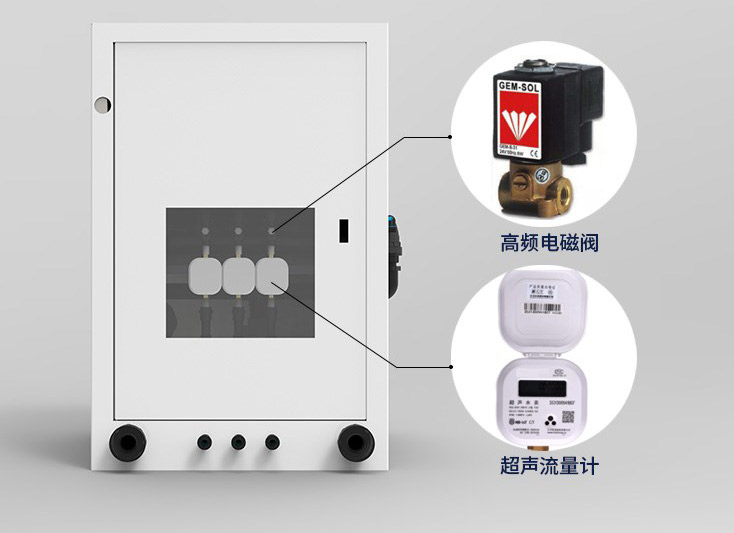
The following NiuBoL water-quality options illustrate instrument selection for an appropriate sampling point. Check fertilizer compatibility and the required concentration range for the actual solution. A range suitable for diluted irrigation water may not suit a concentrated stock tank.
| Characteristic | NBL-WQ-EC example option | NBL-WQ-PH option |
|---|---|---|
| Measurement | 0-5000 microsiemens/cm conductivity option; other ranges are separate selections | 0-14 pH |
| Accuracy and resolution | +/-1% FS; 1 microsiemens/cm increment for the selected 5000 range | +/-0.1 pH; 0.01 pH resolution |
| Temperature and pressure | 0-50 degrees C; below 0.6 MPa | 0-65 degrees C; below 0.2 MPa |
| Supply | 12-24 V DC +/-10% | 12-24 V DC |
| Output and consumption | RS485 Modbus RTU; 0.2 W at 12 V | RS485 Modbus RTU; 0.2 W at 12 V |
| Construction | Wetted ABS/SUS316L/PVC arrangement by version; IP68 | POM; IP68 |
| Installation and cable | 3/4 NPT immersion arrangement; standard cable 5 m | 3/4 NPT immersion arrangement; standard cable 5 m |
Specify the cable jacket and any extension for the actual environment. IP68 probe construction does not protect an open field joint, and a threaded connection alone does not establish a complete pressure-rated dosing assembly. Review the cell, seals and process isolation as well as the instrument.
For the selected 5000 microsiemens/cm range, a 1% full-scale term is 50 microsiemens/cm. That is not 1% of every reading. Check whether the instrument's useful uncertainty meets the intended control band instead of deciding from the display increment alone.

A sensor immediately beside an injection stream can see a local condition rather than the mixed water delivered downstream. Select a representative position with suitable mixing, avoid trapped air and provide service access. If a bypass is used, assess its transport delay and whether it remains representative during flow changes.
Control timing has to allow the prepared stream to reach the feedback point. Repeatedly increasing dosing while waiting for a delayed response can overshoot the intended condition. Establish mixing and transport behavior during commissioning rather than trying to correct it with arbitrary signal smoothing.
Use suitable calibration and comparison procedures for each instrument. A conductivity reference and a pH buffer serve different checks. Cleaning, reference condition and temperature interpretation should be addressed before changing an offset to match an expected recipe.
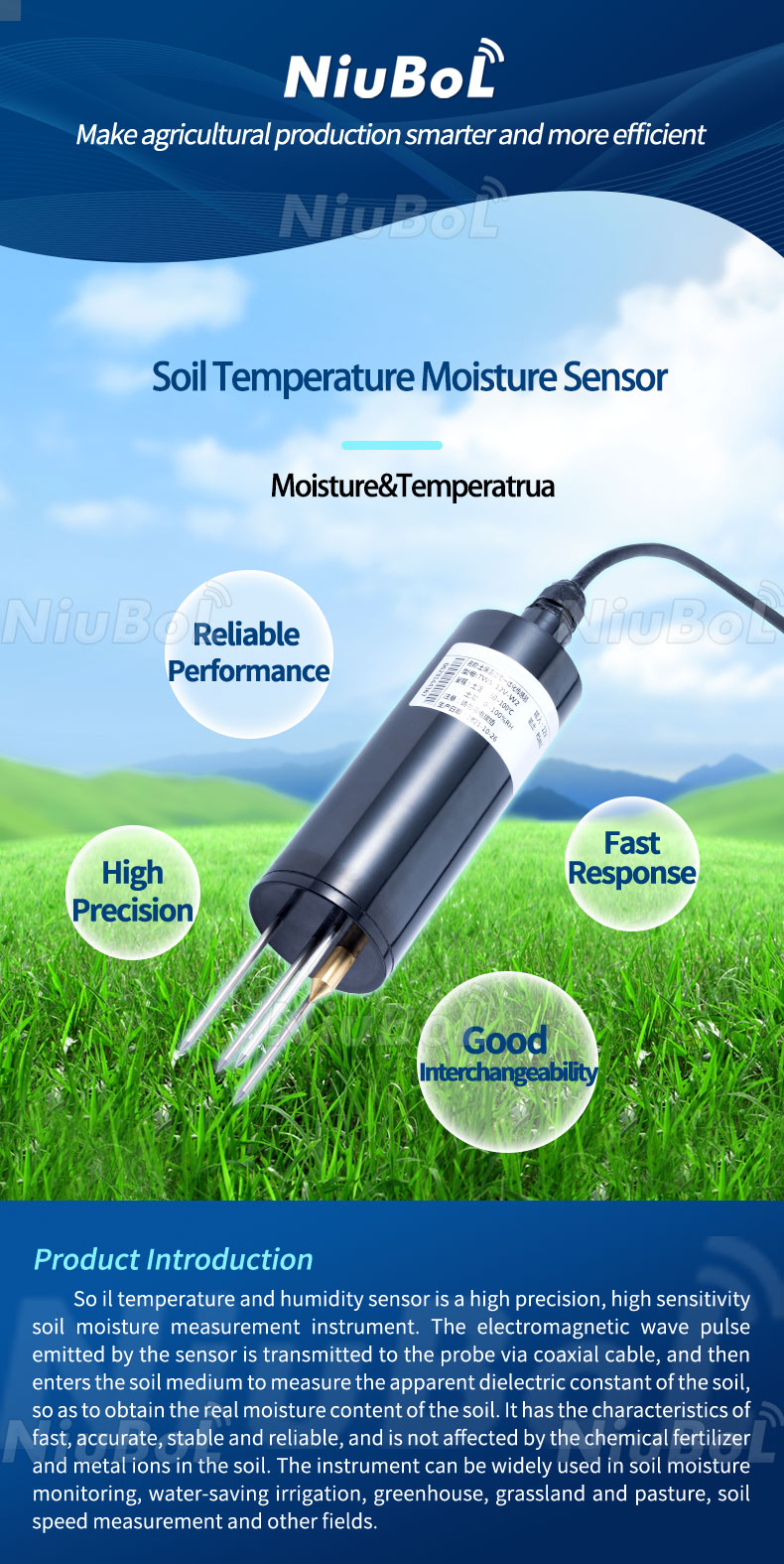
The NBL-S-THR soil moisture and temperature option can support a representative root-zone point. Its moisture range is 0-100%, with stated +/-3% accuracy, and temperature measurement is -50 to +100 degrees C with +/-0.5 degrees C accuracy. The operating environment is -40 to +80 degrees C, supply 12-24 V DC and consumption approximately 0.3 W. Select the RS485 or ordered analog version and protect its field cable connections separately from the IP68 probe.
Those observations can help review wetting and drying, but they do not measure the prepared solution's nutrient ratio. Soil EC, when separately measured, also reflects conditions and method at the soil point rather than a direct analysis of the stock recipe. Keep fast mixing feedback and slower root-zone interpretation in their appropriate roles.
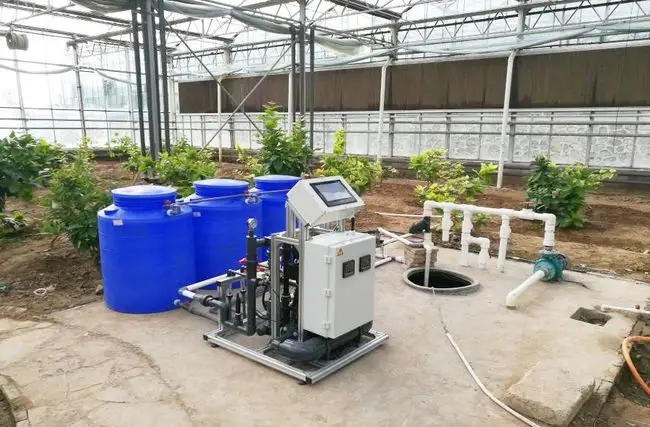
A commanded pump or valve state is not delivered volume. Check actual water flow and pressure through a suitable hydraulic design, and identify which zone is active. A blocked filter, empty source, failed valve or uneven emitter distribution can prevent useful delivery even when the controller and EC display appear normal.
Measure or otherwise verify injection performance through an appropriate commissioning procedure. A controller percentage does not automatically equal the same injection flow under different pressure conditions. The equipment and process engineer should define how the actual ratio and delivery are established.
Protect the water source and connected systems through the project's required hydraulic and electrical design. Sensor communication is not a substitute for suitable isolation, backflow protection, motor protection or operating interlocks. Do not infer such protections from the presence of an integrated cabinet.
For RS485 Modbus RTU channels, verify the delivered addresses, registers, units and scaling. Keep source EC, mixed-water EC, pH and soil observations distinct in the PLC or RTU. Reusing a channel label can create a control mistake while all devices continue communicating.
Define loss-of-reading, stale-data and maintenance behavior before enabling dosing. A disconnected EC probe must not be interpreted as confirmed dilute water. Likewise, a pH fault should not trigger unlimited correction. Use site-approved limits, sequencing and local protective functions rather than a remote notification as the only protection.
Repeat relevant checks after changes to source water, recipe, pipework or controller logic. An accepted initial configuration does not establish that an altered system behaves identically. Maintain the instrument identities and comparison results so a later trend can be interpreted.
For an inquiry, send NiuBoL the source and prepared-water conditions, required EC and pH ranges, soil or substrate, zone plan and existing controller. Include mounting, pressure, cleaning access, supply and cable distances. Separate sensor and acquisition requirements from any dosing machine or hydraulic work so the quotation describes the actual requirement.
No. Different ions and source-water conditions can produce similar conductivity. EC supports a defined monitoring or control method but is not a complete nutrient composition analysis.
Not by assuming it is the same quantity as solution EC. Soil conditions, placement and response timing differ. Define separate roles for solution feedback and root-zone interpretation.
Choose a representative, adequately mixed and serviceable point with suitable pressure and flow. Avoid local injection pockets and assess delay in any bypass.
No. Verify actual hydraulic delivery and injection behavior under representative conditions. Controller state and delivered quantity are different observations.
Not automatically. Compare expected concentrations and the actual instrument range, materials and uncertainty for each location before selecting a probe.
Provide existing instruments and controller inputs, the missing observation, water and root-zone conditions, ranges and installation constraints. This allows a targeted configuration without assuming replacement of the entire fertigation system.
Fertigation monitoring is most useful when mixing quality, hydraulic delivery and root-zone response remain distinct. Select suitable water and soil instruments, verify their units and timing, and test the dosing sequence with the actual network. Do not turn one EC or soil observation into an unsupported nutrient prescription or guaranteed saving.
Prev:Automatic Weather Station Accuracy: Siting and Maintenance
Next:Fertigation System Cost: Equipment Scope, Capacity and Operating Budget
Related recommendations
Sensors & Weather Stations Catalog
 Agriculture Sensors and Weather Stations Catalog-NiuBoL.pdf
Weather Stations Catalog-NiuBoL.pdf
Agriculture Sensors Catalog-NiuBoL.pdf
Water Quality Sensor Catalog-NiuBoL.pdf
Related products
 Combined air temperature and relative humidity sensor
 TDR Soil Moisture & Temperature Sensor for irrigation| RS485 |4-20mA| NBL-S-THR
 Soil pH sensor RS485 soil Testing instrument soil ph meter for agriculture |NBL-S-PH
 Wind Speed sensor Output Modbus/RS485/Analog/0-5V/4-20mA
 Tipping bucket rain gauge for weather monitoring auto rainfall sensor RS485/Outdoor/stainless steel
 Pyranometer Solar Radiation Sensor 4-20mA/RS485


Screenshot, WhatsApp to identify the QR code
WhatsApp number:+8615367865107
(Click on WhatsApp to copy and add friends)

