





— Blogs —
—Products—
 Consumer hotline +8618073152920
WhatsApp:+8615367865107
Address:Room 102, District D, Houhu Industrial Park, Yuelu District, Changsha City, Hunan Province, China
Product knowledge
Time:2026-01-02 10:25:39 Popularity:873
Small weather stations can help agricultural trials explain why crop performance differs between plots, treatments or seasons. Their value is a local record of the conditions experienced during the trial, not a guaranteed increase in yield. For a farm research team, seed producer or agricultural contractor, the useful configuration is the one that measures the variables needed to interpret the experiment and keeps those observations comparable over time.
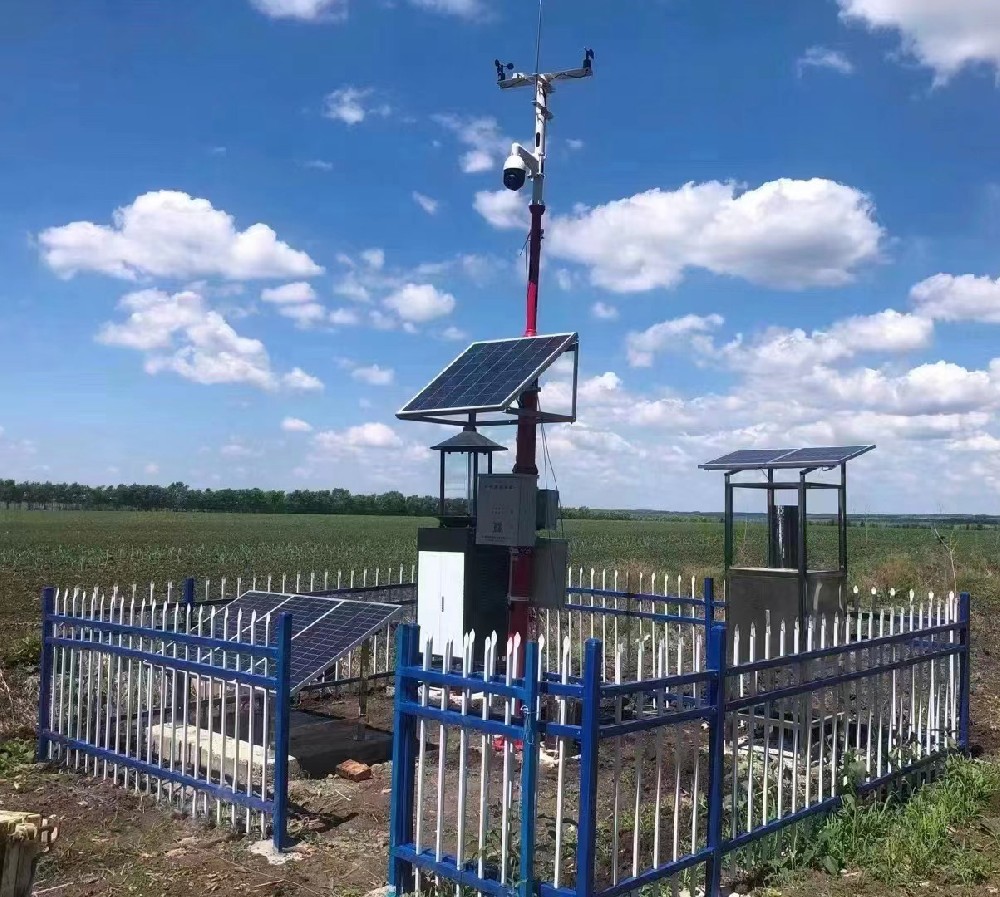
A harvest result combines weather, soil, crop genetics, nutrition, water management, pests and field operations. If two treatments produce different yields, weather observations can help identify whether they experienced comparable heat, rain or wind. They cannot, on their own, prove that one treatment caused the difference. The trial design, replicated observations and agronomic measurements remain necessary.
Consider two seasons with similar total rainfall. In one, much of the rain arrives before flowering; in the other, it arrives after the period of greatest water demand. A seasonal total conceals that difference. Time-resolved observations allow the research team to align weather events with sowing, flowering, irrigation and harvest dates instead of relying on a distant station's monthly average.
The same distinction applies to temperature. A daily mean can hide a short cold event or a hot afternoon. Decide which exposure matters to the study before specifying the stored statistics. A station intended to characterize heat exposure needs more than a daily average copied into a spreadsheet after harvest.
| Trial question | Useful observation | Additional information needed |
|---|---|---|
| Do varieties develop at different rates? | Air temperature through the growing period | Planting dates, growth-stage observations and a crop-appropriate thermal-time method |
| Did water availability differ between treatments? | Rainfall and relevant weather-demand inputs | Irrigation volume, soil water, rooting depth and drainage |
| Does a covering alter the crop environment? | Comparable inside and outside temperature, humidity and light observations | Cover properties, ventilation settings and sensor positions |
| Was crop damage associated with a cold event? | Temperature at the relevant observation heights and times | Crop-surface conditions, growth stage and damage assessment |
| Did disease pressure coincide with wet conditions? | The weather and surface-wetness inputs required by the selected model | Crop and pathogen observations and local validation of the model |
NiuBoL modular stations can combine separate wind, rainfall, air-condition, radiation and soil sensors. The range of available instruments is useful when a trial changes its measurement needs, but the illustrated sensor collection is not a standard package containing every device. Identify the channels actually ordered and distinguish an optional future measurement from a channel available on day one.
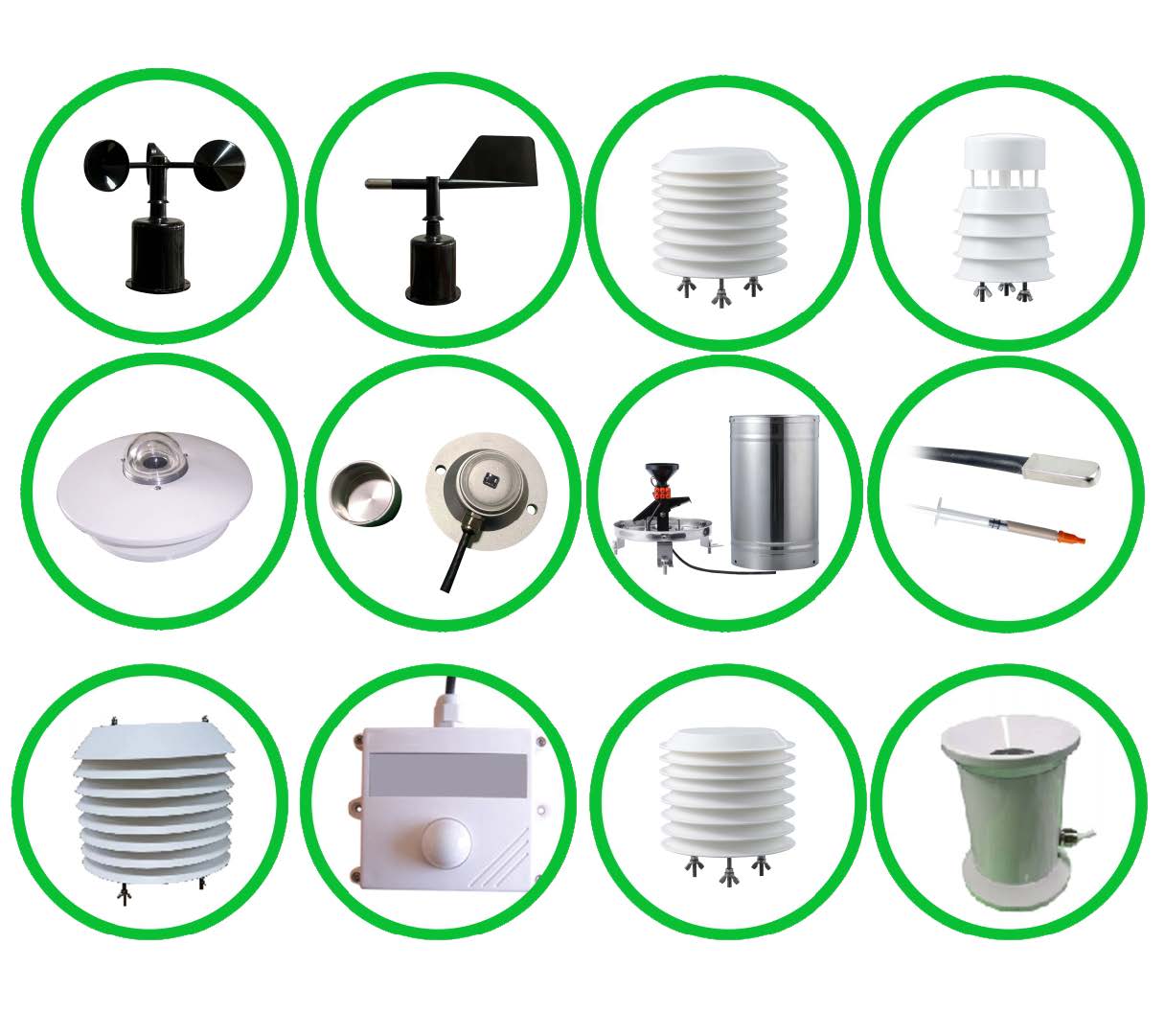
These light measurements answer different questions. Solar irradiance in W/m2 is relevant to energy-based calculations; PAR measurements concern the photosynthetically active waveband; illuminance in Lux is weighted to human visual response. A trial studying shading or supplemental lighting should name its required quantity and unit instead of ordering an unspecified light sensor.
For reference evapotranspiration, the weather inputs and processing should follow the chosen method. FAO Irrigation and Drainage Paper 56, Chapter 3 describes the temperature, humidity, radiation and wind information used in the FAO Penman-Monteith approach. A small station does not produce a valid ETo result merely because it records temperature and rain. Document measured inputs and any estimated inputs separately.
The NiuBoL NBL-W-LBTH is an example of a combined atmospheric temperature, humidity and pressure sensor for a modular station. Its louvered shield allows air circulation while reducing direct solar exposure of the sensing elements. These model specifications help select the instrument; they do not include every installation effect in a field comparison.
| NBL-W-LBTH parameter | Specification | Implication for a trial |
|---|---|---|
| Air temperature | -40 to 80 degrees C; +/-0.5 degrees C; 0.1 degree C resolution | Do not equate the displayed decimal place with measurement accuracy. |
| Relative humidity | 0-100% RH; +/-5% RH; 0.1% RH resolution | Small differences need interpretation alongside exposure and instrument checks. |
| Atmospheric pressure | 10-1200 hPa; +/-1.5 hPa; 0.1 hPa resolution | Identify this as pressure at the measurement location. |
| Supply | 12-24 V DC | Check the delivered voltage at the installed sensor. |
| Interface | RS485 Modbus RTU or selected 4-20 mA configuration | Order the output that matches the logger inputs. |
| Operating environment | -40 to 80 degrees C; 0-100% RH | Logger, battery and connections have their own operating limits. |
For illustration, readings of 22.2 and 22.6 degrees C differ by 0.4 degrees C. Two sensors each specified at +/-0.5 degrees C can have opposite-signed errors totaling 1.0 degree C in a simple worst-case comparison. This is not a complete uncertainty calculation, but it shows why that single 0.4-degree difference is insufficient to establish a treatment effect. A paired instrument check and repeated observations are more informative.
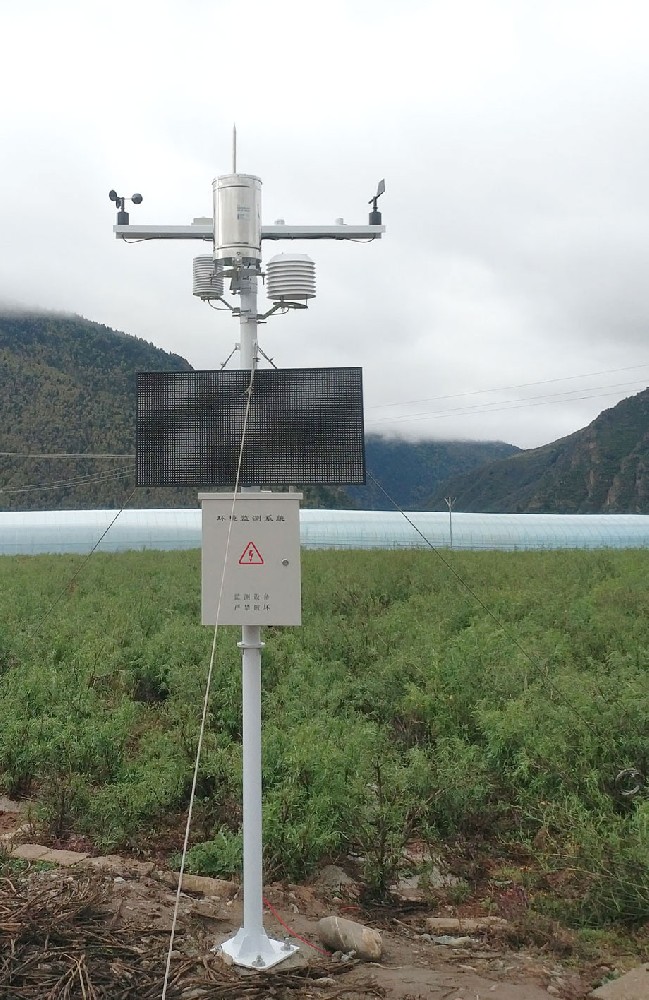
Before separating instruments across treatments, operate them together under comparable exposure and compare time-aligned readings. Use similar mounting heights and shields for a like-for-like comparison. Record persistent offsets and investigate them; do not automatically subtract an offset obtained under one condition from an entire season of data.
After installation, distinguish the intended treatment effect from an accidental mounting difference. A sensor above a shaded plot and another beside a sun-heated wall do not form a useful test of the shade treatment. If canopy conditions are the subject, define the position relative to the changing canopy. If background weather is the subject, keep the station outside the treatment's direct influence.
One background weather station may serve adjacent plots exposed to similar weather, while soil-water or canopy measurements remain plot-specific. Separate slopes, sheltered areas or distant sites may need additional observations. Determine this from the experimental question and field variation, not a universal number of hectares per station.
Small describes physical size, not deployment method. A compact fixed installation can maintain one observation location throughout a season. A portable station can be useful for temporary surveys, but sequential visits cannot be treated as simultaneous measurements when conditions change between visits. Record relocation times, height, orientation and the stabilization procedure for any moved sensor.
For a temporary installation, confirm that the support remains stable through wind, irrigation work and access by field machinery. For a permanent station, include a service route that does not disturb the plots. The practical advantage of modular construction is that individual instruments can be accessed or replaced; every replacement must still be recorded in the trial history.
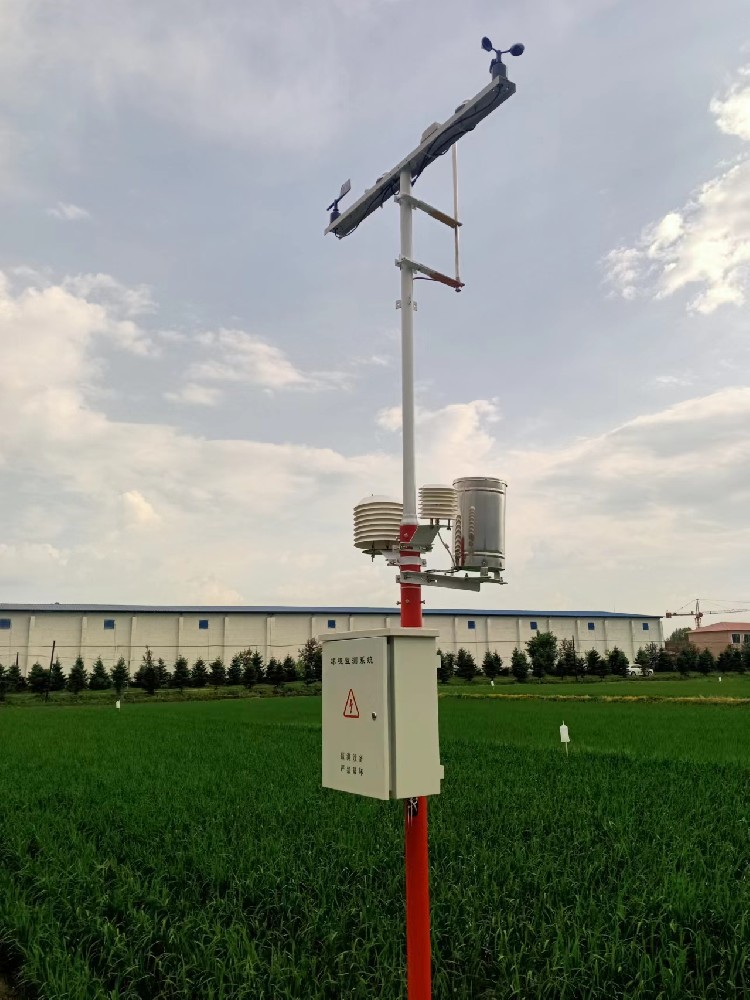
A research dataset should link each observation to its sensor, location, time and unit. Keep field-operation notes on the same time basis. An irrigation event recorded in local time and weather data recorded in UTC can appear misaligned unless the conversion is explicit. Similarly, the start and end of a daily rainfall total must be consistent across sites.
Specify sampling, calculation and storage separately. A logger might sample frequently, calculate interval statistics and transmit less often. If the study needs a maximum or the duration above a temperature threshold, ensure the implemented sampling and aggregation can provide that result. An occasional uploaded snapshot cannot reconstruct an excursion that was never stored.
Use RS485 Modbus RTU for compatible digital sensors, with the logger decoding each model's register map. The logger or gateway provides the selected remote connection. Cellular communication, local storage and delayed upload depend on that equipment; they are not properties conferred by the sensor's RS485 port. Trial data should remain exportable with clear units rather than being available only as a chart image.
Mark gaps and maintenance periods. A missing rainfall channel is not a valid zero, and a sensor replaced halfway through a trial should not disappear from the equipment history. Keep a working copy of raw observations so any later filtering or recalculation can be explained.
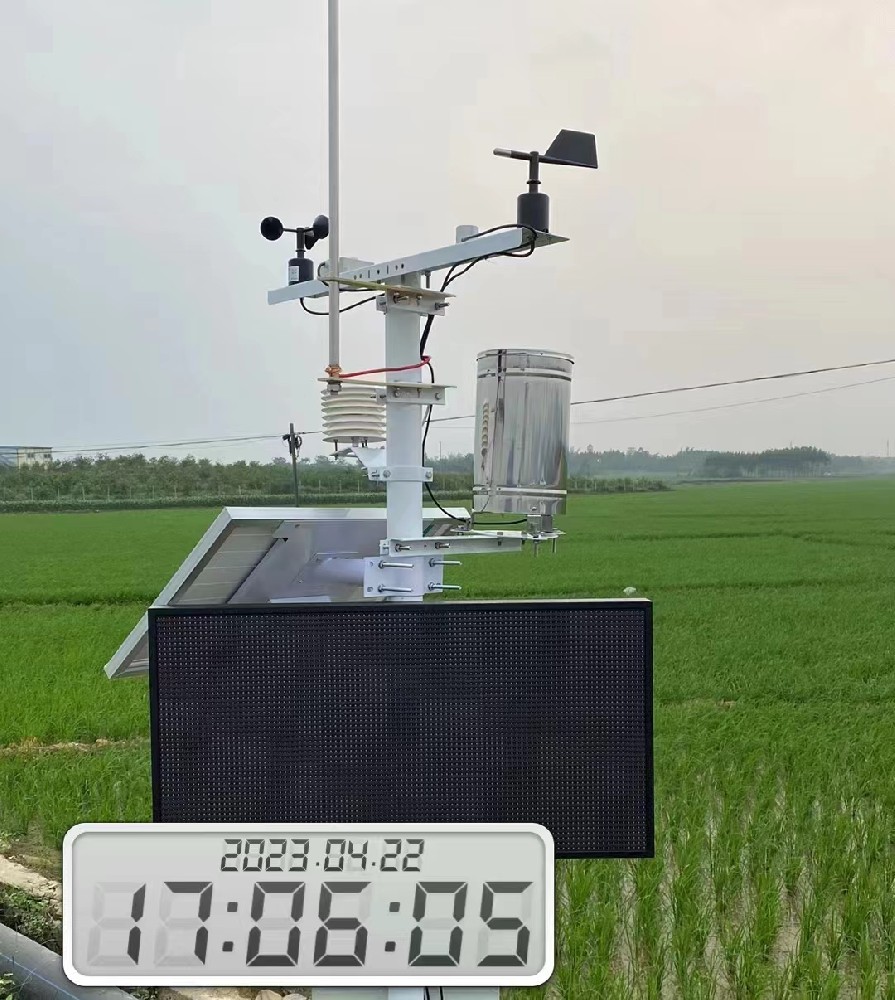
In variety trials, the station provides environmental context for development and yield observations. In irrigation experiments, pair the weather record with measured applications and root-zone observations. In greenhouse comparisons, outdoor weather describes the boundary conditions while indoor sensors describe the actual treatment environment. These roles justify different sensor locations even when the same acquisition platform is used.
Measured weather and a forecast also have different roles. A station records conditions at its location; forecasting or disease-risk calculations require additional models and inputs. Do not describe a local temperature or humidity channel as an automatic prediction of crop loss. Where warnings are needed, validate the complete model and response procedure separately from the measurement hardware.
At the end of the season, review whether the dataset resolves the original uncertainty. Did the measurements identify a period of heat exposure, confirm a treatment's microclimate difference or explain an irrigation discrepancy? This is a more useful assessment of the station than assuming that any yield increase after installation was caused by monitoring.
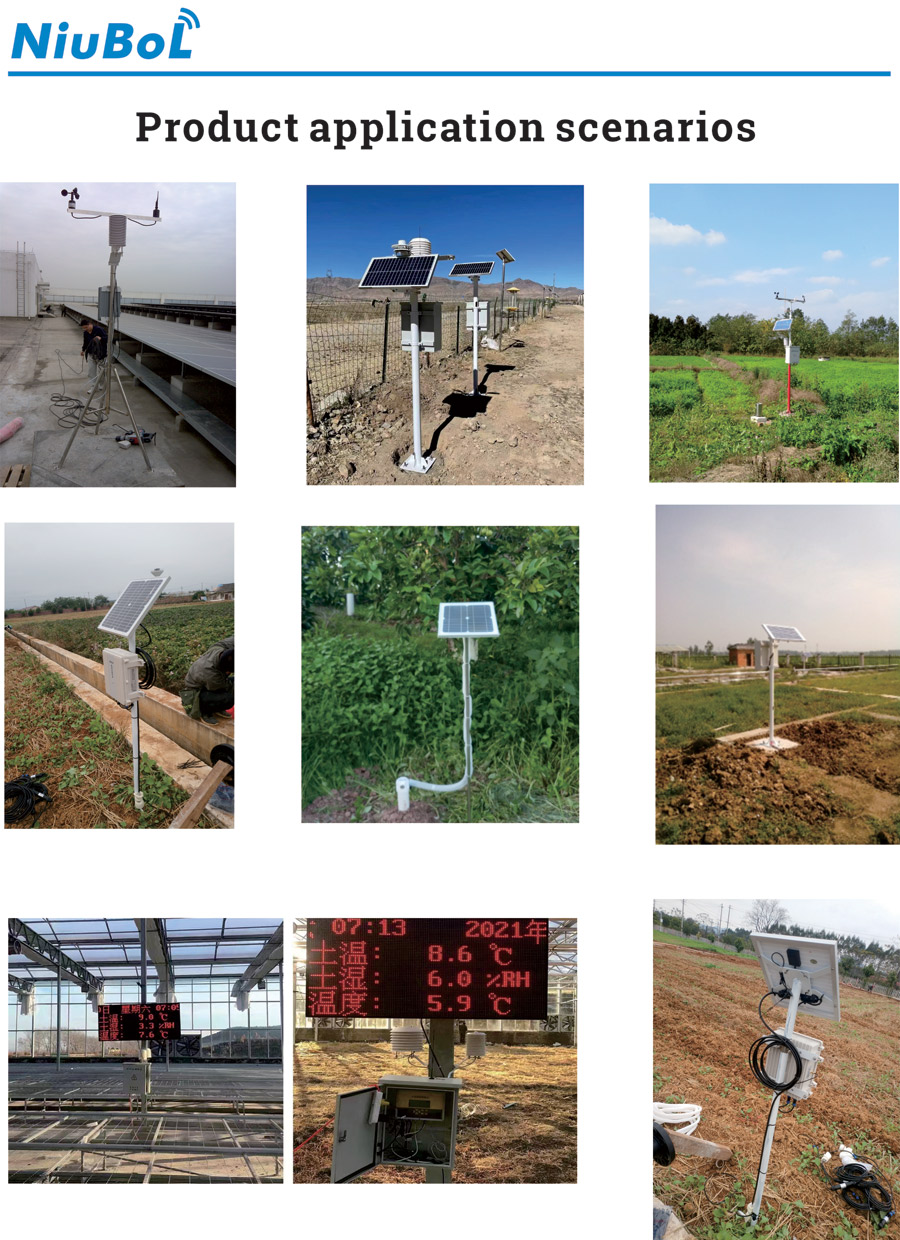
Yes, when its measurement performance, exposure, timing and documentation meet the study's requirements. Physical size does not establish a research classification. Specify calibration needs and the smallest difference the study must resolve before selecting the instruments.
Not necessarily. Background weather can sometimes be shared, while treatment-dependent measurements need plot-level instruments. Assess spatial variation and the experimental design. Adding one sensor to each treatment does not replace replication where replication is required.
It can support a survey, but the result combines location and measurement time. If the purpose is to compare rapidly changing conditions, simultaneous fixed measurements may be necessary. Record the survey sequence and avoid attributing all differences to location.
That depends on the complete load, local sunlight, battery operating limits and communication schedule. Size for the difficult period and allow service access. A solar panel on the mast does not establish a particular number of backup days.
Record the old and new identifiers, replacement time, calibration information and installation position. Where feasible, compare the instruments before the change. Investigate any discontinuity rather than treating the replacement as an invisible event.
Provide the study question, site layout, required variables, expected differences, trial duration and export requirements. Identify existing instruments and any calibration or comparison procedure. This allows the proposed station to support the experiment without duplicating measurements already available.
Small weather stations are useful in agricultural trials when they make environmental comparisons more defensible. Select channels for the study, compare instruments before deployment and preserve the time and location of every observation. NiuBoL weather sensors and acquisition equipment can support that record; conclusions about yield still depend on the experimental design and crop evidence.
Prev:Rain Gauge Selection for Unattended Stations: Types and Field Limits
Next:Automatic Weather Station Accuracy: Siting and Maintenance
Related recommendations
Sensors & Weather Stations Catalog
 Agriculture Sensors and Weather Stations Catalog-NiuBoL.pdf
Weather Stations Catalog-NiuBoL.pdf
Agriculture Sensors Catalog-NiuBoL.pdf
Water Quality Sensor Catalog-NiuBoL.pdf
Related products
 Combined air temperature and relative humidity sensor
 TDR Soil Moisture & Temperature Sensor for irrigation| RS485 |4-20mA| NBL-S-THR
 Soil pH sensor RS485 soil Testing instrument soil ph meter for agriculture |NBL-S-PH
 Wind Speed sensor Output Modbus/RS485/Analog/0-5V/4-20mA
 Tipping bucket rain gauge for weather monitoring auto rainfall sensor RS485/Outdoor/stainless steel
 Pyranometer Solar Radiation Sensor 4-20mA/RS485


Screenshot, WhatsApp to identify the QR code
WhatsApp number:+8615367865107
(Click on WhatsApp to copy and add friends)

