





— Blogs —
—Products—
 Consumer hotline +8618073152920
 WhatsApp:+8615367865107
Address:Room 102, District D, Houhu Industrial Park, Yuelu District, Changsha City, Hunan Province, China
Product knowledge
Time:2026-04-27 08:58:05 Popularity:367
In the process of industrial modernization, heavy metal pollution, especially cadmium (Cd) pollution, has become a major and difficult point in global water environment governance. As a toxic element with high accumulation, long half-life, and difficulty in natural degradation, cadmium enters the water cycle system through surface runoff, industrial sewage, and other channels. It not only destroys ecological balance but also poses a serious threat to human health through food chain enrichment.
For environmental protection system integrators, engineering contractors, and IoT solution providers, understanding the chemical characteristics of cadmium, identifying pollution sources, and deploying high-precision online monitoring systems are the core links in building compliant industrial wastewater treatment systems.
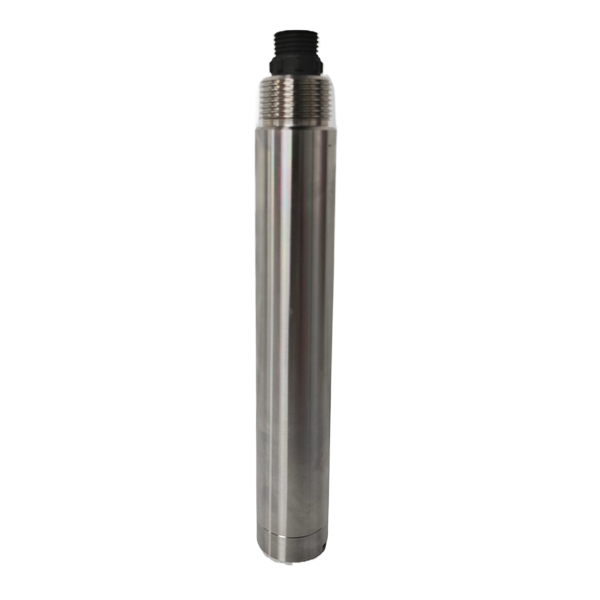
Cadmium mainly exists in nature in the form of greenockite (CdS) and is often associated with zinc, lead, and other minerals. Due to its excellent physical and chemical properties, it is widely used in many industrial fields:
1. Alloy Manufacturing: Cadmium can improve the tensile strength and wear resistance of copper alloys; cadmium-nickel alloys are key materials for aircraft engine bearings.
2. Nuclear Industry Applications: With a large thermal neutron capture cross-section, silver-indium-cadmium alloys are often made into control rods for nuclear reactors.
3. Surface Treatment and Chemical Industry: Used for electroplating corrosion protection, rechargeable batteries (nickel-cadmium batteries), plastic stabilizers, fluorescent powders, and high-grade pigments (such as cadmium yellow).
However, it is the wastewater discharged from these industrial processes that constitutes the main source of cadmium pollution in water bodies. Especially in sulfuric acid production, phosphate fertilizer manufacturing, and non-ferrous metal smelting, the cadmium concentration in process wastewater can reach hundreds of micrograms per liter. If discharged without strict monitoring, it will lead to disastrous environmental consequences.
Cadmium is not an essential element for the human body. Once it enters the organism, its excretion is extremely slow, and it mainly accumulates in the kidneys and liver.
Kidney Damage: The kidney is the target organ of cadmium poisoning, with about 1/3 of the accumulated amount concentrated here. Cadmium inhibits enzyme system functions, damages renal tubules, and leads to proteinuria, glucosuria, and calcium loss.
Bone System Destruction: Long-term intake of cadmium-contaminated water or food can lead to osteoporosis, softening, and deformation, causing the famous "Itai-itai disease".
Reproductive and Carcinogenic Risks: Studies have shown that cadmium has a metalloestrogenic effect, which may damage male reproductive factors and is highly associated with the occurrence of malignant tumors such as breast cancer.
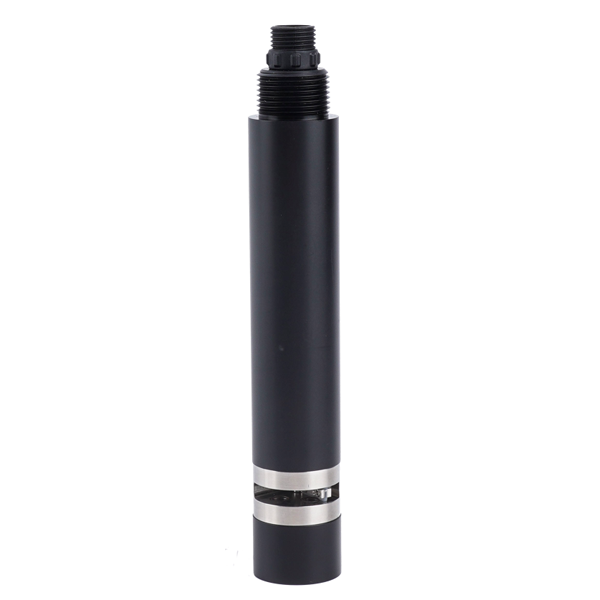
In zero liquid discharge (ZLD) or compliant discharge projects, the deployment of total cadmium online analyzers is the key to reducing environmental risks. NiuBoL is committed to providing high-reliability water quality perception layer equipment for industrial integration solutions.
Mainstream industrial total cadmium analyzers adopt the acid oxidation-dithizone colorimetry method, with the following engineering logic:
1. Digestion Pretreatment: The injection pump injects the water sample into the reaction cell and adds a strong acidic oxidant to convert complexed or particulate cadmium into free divalent cadmium ions (Cd²⁺).
2. Alkaline Extraction: Adjust the solution to a strongly alkaline environment and add a specific dithizone chromogenic reagent for extraction reaction.
3. Photoelectric Measurement: The complex formed by cadmium and the chromogenic reagent has characteristic absorption at a specific wavelength. The precise concentration of total cadmium in water is calculated by measuring the change in absorbance and combining it with the standard curve.
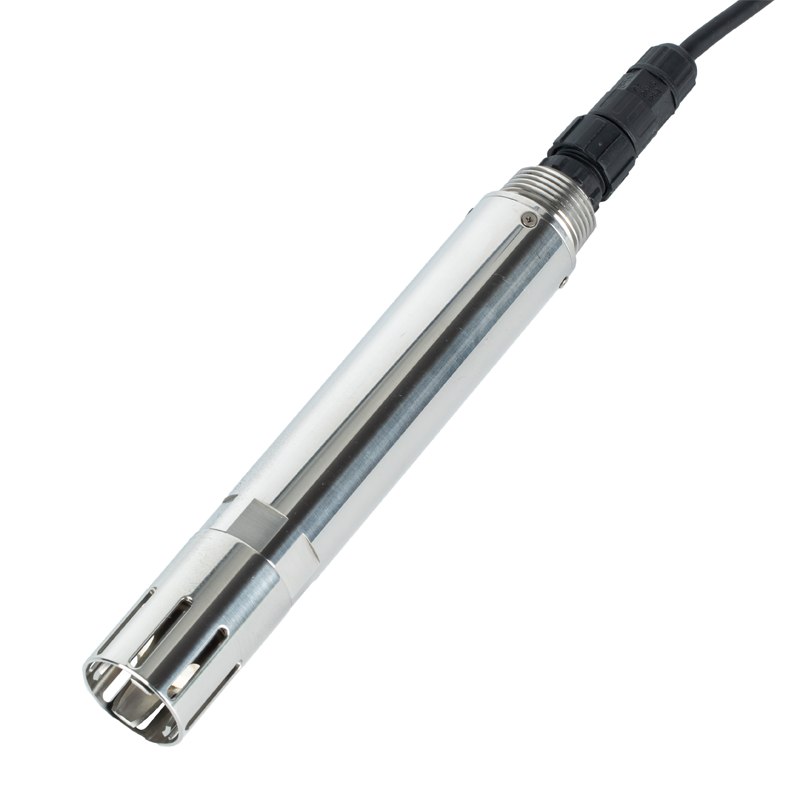
| Equipment Name | Measurement Parameter | Measurement Range | Typical Application Scenarios |
|---|---|---|---|
| Total Cadmium Online Analyzer | Total Cd (Total Cd) | 0.01 - 5.0 mg/L (expandable) | Monitoring at smelting and electroplating plant outlets |
| Heavy Metal Monitoring System | Cu, Pb, Zn, Cd | Multi-parameter integration | Comprehensive outlet monitoring in industrial parks |
| Multi-Parameter Water Quality Monitor | pH, conductivity, turbidity | Basic five parameters | Influent early warning at wastewater treatment plants |
| Industrial Ammonia Nitrogen Analyzer | NH₃-N | 0.1 - 1000 mg/L | Wastewater monitoring at fertilizer plants |
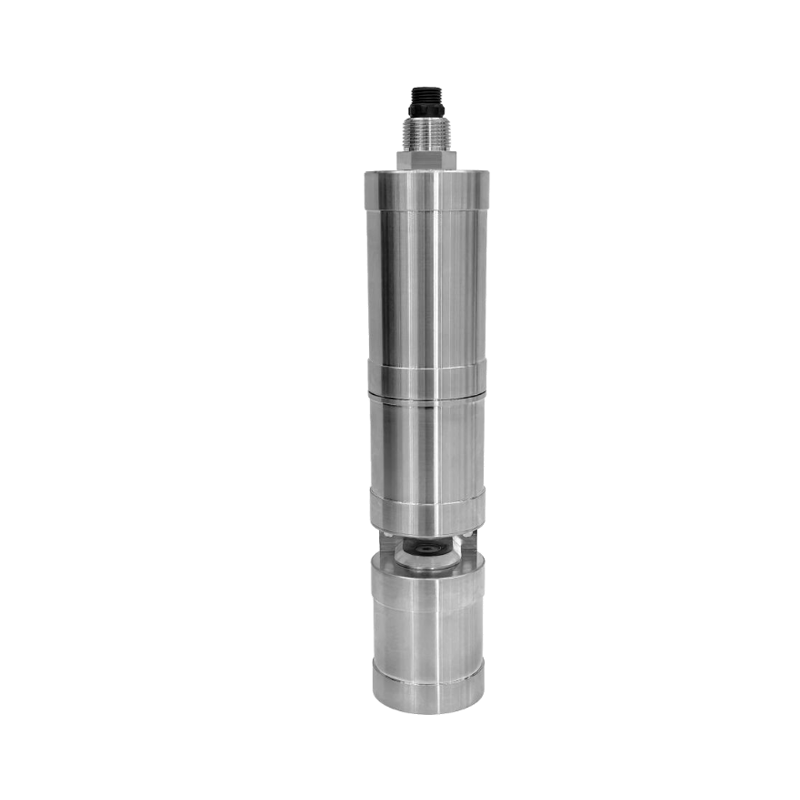
For project contractors, the following engineering details need to be noted when integrating monitoring systems:
1. Deployment of Automated Pretreatment Systems
Industrial wastewater has complex composition and contains a large amount of suspended solids and interfering ions. The integration scheme should include an automatic sampling and filtration system to prevent impurities from clogging the injection pump and reaction tubing of the analyzer, ensuring long-term maintenance-free operation.
2. Real-Time Data Integration and Threshold Alarm
Connect NiuBoL sensors to the factory's DCS (distributed control system) or remote cloud platform through the RS485 communication protocol. Set multi-level alarm thresholds. Once the cadmium concentration approaches the discharge limit, immediately link to open a closed-loop cycle or emergency storage tank.
3. Environmental Adaptability Design
Petrochemical, smelting, and other environments are usually highly corrosive. Monitoring equipment should be installed in instrument rooms with corrosion protection, temperature control, and humidity control. Sensor probes should use acid-alkali resistant and anti-pollution materials to extend the service life of consumables.
Q1: What is the national standard limit for cadmium in drinking water?
A1: According to China's "Standards for Drinking Water Quality" (GB 5749-2022), the limit for cadmium in drinking water is 0.005 mg/L. Industrial wastewater discharge should refer to relevant industry standards (such as GB 8978).
Q2: Why is the dithizone colorimetry method the mainstream method for total cadmium analysis at present?
A2: This method has extremely high sensitivity and selectivity. Through online extraction technology, the detection limit can be reduced to a very low level, fully meeting the needs of industrial compliant discharge and environmental background value monitoring.
Q3: Will lead or zinc in water samples interfere with cadmium measurement?
A3: In the dithizone colorimetry method, by adjusting the pH value of the reaction solution and adding specific masking agents (such as cyanide or tartrate), the interference of accompanying metals such as lead and zinc can be effectively eliminated.
Q4: What are the common causes of data drift in sensors?
A4: Main causes include insufficient digestion, reagent deterioration, optical window contamination, or peristaltic pump tube aging. NiuBoL analyzers have an automatic calibration function, which can significantly reduce the impact of such drift on measurement accuracy.
Q5: How to handle the waste liquid generated during analyzer operation?
A5: Total cadmium online analyzers produce a small amount of waste liquid containing chemical reagents after the color reaction. During system integration, special waste liquid collection buckets should be equipped and regularly processed uniformly by qualified third-party environmental protection companies.
Q6: Where does cadmium enrich in zero discharge (ZLD) systems?
A6: In the evaporation crystallization process, cadmium usually enriches in the produced crystalline salt or dry sludge. Therefore, identification and disposal of the solid waste properties of crystalline salt is an important part of zero discharge engineering.
Q7: Why does wastewater from phosphate fertilizer plants have high cadmium content?
A7: Phosphate ore generally contains trace cadmium impurities. In the process of extracting phosphoric acid with sulfuric acid, cadmium in the ore is transferred into the wastewater. Therefore, phosphorus chemical enterprises must focus on monitoring cadmium indicators.
Q8: What are the advantages of RS485 communication compared to 4-20mA analog signals?
A8: RS485 (Modbus-RTU) can transmit more dimensions of data, including measured values, equipment status alarms, reagent remaining quantity, etc., and has strong anti-interference ability, making it suitable for system integration in digital factories.
The core of reducing cadmium hazards in the water environment lies in the deep integration of "source control" and "precision monitoring". By deploying high-performance total cadmium online analyzers, system integrators can provide industrial customers with transparent and traceable water quality data support.
When dealing with highly stable and refractory heavy metal pollution, engineering solutions should not only focus on the effectiveness of end-of-pipe treatment but also establish a solid environmental safety defense line through professional water quality perception technologies such as NiuBoL. This is not only a necessary measure to fulfill environmental compliance but also a long-term investment responsible for ecological civilization and human health.
 NBL-WQ-CL Water Quality Sensor Online Residual Chlorine Sensor.pdf
NBL-WQ-DO Online Fluorescence Dissolved Oxygen Sensor.pdf
NBL-WQ-NHN Ammonia Nitrogen Water Quality Sensor.pdf
NBL-WQ-COD Online Water Quality COD Sensor.pdf
NBL-WQ-PH Online pH Water Quality Sensor.pdf
Prev:Treatment Paths and Online Monitoring System Selection for Domestic Sewage and Domestic Wastewater
Related recommendations
Sensors & Weather Stations Catalog
Agriculture Sensors and Weather Stations Catalog-NiuBoL.pdf
Weather Stations Catalog-NiuBoL.pdf
Agriculture Sensors Catalog-NiuBoL.pdf
Water Quality Sensor Catalog-NiuBoL.pdf
Related products
 Combined air temperature and relative humidity sensor
 Soil Moisture Temperature sensor for irrigation|NBL-S-THR
 Soil pH sensor RS485 soil Testing instrument soil ph meter for agriculture |NBL-S-PH
 Wind Speed sensor Output Modbus/RS485/Analog/0-5V/4-20mA
 Tipping bucket rain gauge for weather monitoring auto rainfall sensor RS485/Outdoor/stainless steel
 Pyranometer Solar Radiation Sensor 4-20mA/RS485

Screenshot, WhatsApp to identify the QR code
WhatsApp number:+8615367865107
(Click on WhatsApp to copy and add friends)

