





— Blogs —
—Products—
 Consumer hotline +8618073152920
 WhatsApp:+8615367865107
Address:Room 102, District D, Houhu Industrial Park, Yuelu District, Changsha City, Hunan Province, China
Product knowledge
Time:2026-04-27 09:00:05 Popularity:392
Under the dual tightening of resource constraints and environmental protection policies, the petroleum refining and petrochemical industries are accelerating toward the era of "wastewater zero discharge" (Zero Liquid Discharge, ZLD). Petrochemical wastewater, due to its complex composition, high salinity, large water volume fluctuations, and containing a large amount of refractory organic matter, has become one of the most challenging areas in industrial water treatment.
For system integrators, IoT solution providers, and environmental engineering companies, building a stable and precise real-time monitoring system is the cornerstone for achieving stable operation of zero discharge processes. This article, combined with industry standards, deeply analyzes the core monitoring indicators at various process nodes of petrochemical wastewater and discusses how to optimize overall treatment energy efficiency through the digital perception layer.
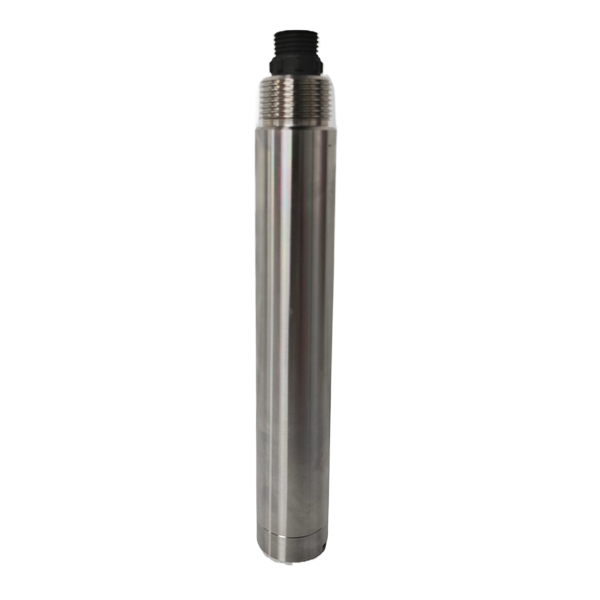
Petroleum refining industrial sewage mainly comes from crude oil electro-desalting drainage, unit condensate water, ground flushing water, and circulating water field sewage. Its technical difficulties are concentrated in:
1. High salinity and shock load: Production fluctuations cause drastic changes in water volume and salt concentration, easily impacting the downstream biochemical system.
2. Refractory organic matter: After conventional secondary treatment, a large amount of long-chain hydrocarbons, benzene series, and other toxic and harmful substances remain in the wastewater.
3. Heavy metal enrichment: With the increase in reclaimed water reuse rate, the concentration of heavy metals (such as mercury, arsenic, nickel, lead) discharged from specific processes gradually accumulates.
To ensure closed-loop control of the zero discharge process (usually including pretreatment, membrane concentration, and thermal evaporation solidification), key monitoring points must be set throughout the entire production process.
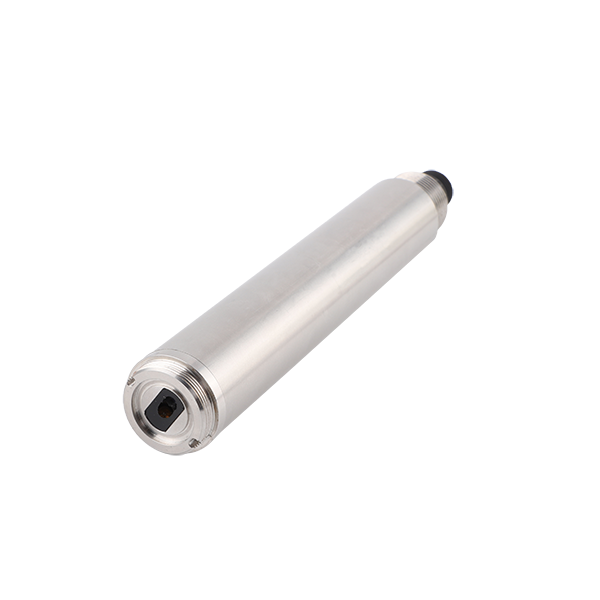
The total discharge outlet is the last line of defense for enterprise environmental compliance, with the most comprehensive monitoring indicators.
Basic parameters: Flow, pH value, suspended solids (SS), chemical oxygen demand (COD), ammonia nitrogen.
Characteristic pollutants: Petroleum substances, total nitrogen (TN), total phosphorus (TP), sulfide, volatile phenols, total organic carbon (TOC).
Metals and organic toxicity: Total vanadium, total cyanide, and BTEX components such as benzene, toluene, xylene (o/m/p), and ethylbenzene.
According to the process characteristics of different production units, specific water quality analyzers need to be installed to achieve pollution traceability.
| Unit/Link | Core Monitoring Indicators | Monitoring Purpose |
|---|---|---|
| Delayed Coking Unit | Benzo(a)pyrene | Monitor polycyclic aromatic hydrocarbon pollution in cold coke water and coke cutting water |
| Atmospheric and Vacuum Distillation Unit | Total mercury, alkyl mercury | Strictly control mercury flow in electro-desalting wastewater |
| Acid Water Stripping Unit | Total arsenic | Evaluate stripping efficiency and arsenic removal effect |
| Flue Gas Desulfurization System | Total nickel | Monitor catalytic gasoline adsorption desulfurization and catalytic cracking desulfurization wastewater |
| Tetraethyl Lead / Aviation Gasoline | Total lead | Special protection for specific additive units |
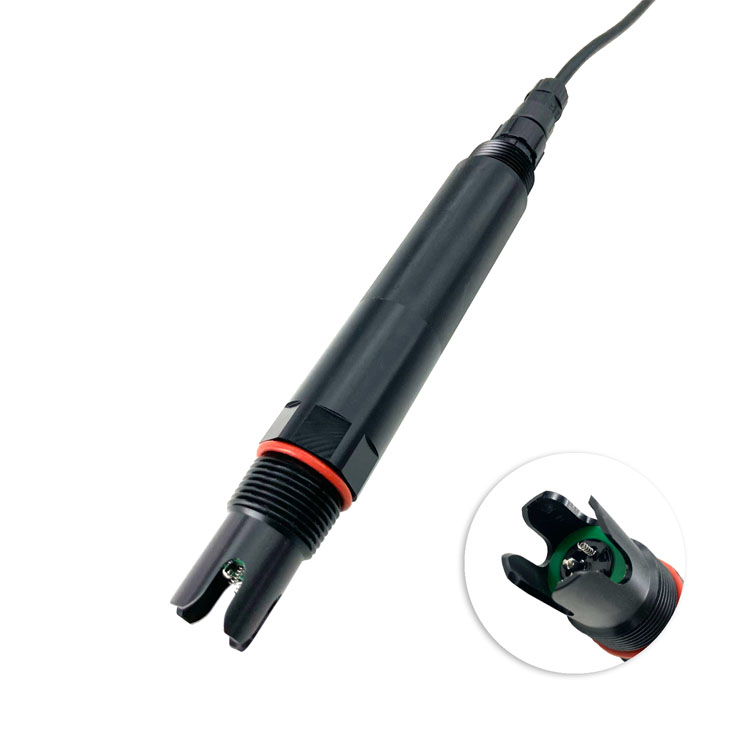
To prevent initial rainwater from carrying residual pollutants from the production area into natural water bodies, focus on monitoring: pH value, COD, ammonia nitrogen, petroleum substances, and suspended solids.
In zero discharge technical solutions, monitoring is no longer just for environmental reporting but the "eyes" for process optimization. NiuBoL provides a series of industrial-grade sensors for engineering companies to provide reliable data support under high-salt, high-corrosion, and complex working conditions.
| Sensor Name | Measurement Parameter | Technical Principle | Communication Protocol | Material Process |
|---|---|---|---|---|
| NB-W600 COD Meter | 0-1000/5000 mg/L | UV 254nm absorption method | RS485 (Modbus-RTU) | 316L stainless steel / titanium alloy |
| NB-EC400 Conductivity | 0-200,000 uS/cm | Electrode / electromagnetic induction | RS485 (Modbus-RTU) | Anti-fouling ring structure |
| NB-PH200 Industrial pH Meter | 0-14 pH | Composite electrode / solid electrolyte | RS485 (Modbus-RTU) | Polytetrafluoroethylene housing |
| NB-OIL Petroleum Substances Monitoring | 0-50/100 mg/L | UV fluorescence method | RS485 (Modbus-RTU) | Automatic cleaning brush design |
| NB-TU800 Suspended Solids Meter | 0-1000 mg/L | 90° scattered light method | RS485 (Modbus-RTU) | Optical compensation technology |
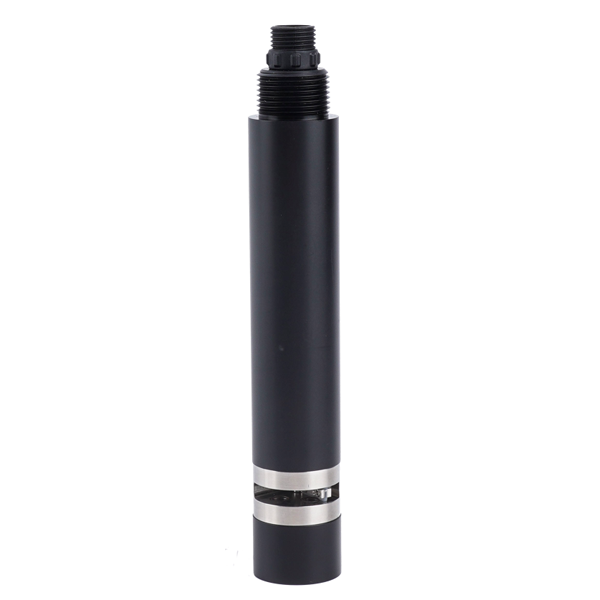
As system integrators, the following engineering guidelines should be strictly followed when designing zero discharge solutions to ensure stable operation after project delivery.
Monitoring concentration alone cannot accurately assess the total pollution load. Zero discharge systems require simultaneous access to electromagnetic flowmeter or ultrasonic flowmeter data when monitoring pollutants (such as COD and petroleum substances). Through flow-weighted calculation, the controller can precisely adjust chemical dosing and the operating pressure of the reverse osmosis (RO) system.
Before entering the membrane treatment unit, refractory organic matter must be treated through electrodialysis (ED) or advanced oxidation processes (AOPs). At this time, the application of online TOC (total organic carbon) analyzers is crucial. It reflects organic load fluctuations more quickly and directly than COD and effectively protects expensive membrane components from organic pollution.
Petrochemical production is highly continuous. Any monitoring blind spot may lead to serious scaling or corrosion in the downstream evaporation crystallization system (such as MVR). The system should have:
1. Automatic cleaning and calibration functions: Reduce numerical drift caused by oil substances wrapping the sensor.
2. High-frequency sampling: Ensure trend graphs are generated daily or even hourly during discharge to provide data benchmarks for equipment maintenance.

Q1: Why does the total discharge outlet of petrochemical wastewater need to monitor total organic carbon (TOC)?
A1: COD reflects chemical oxygen demand, while TOC directly measures the carbon content in the waste liquid. In petrochemical wastewater, some nitrogen- and sulfur-containing compounds interfere with COD measurement. TOC provides a more accurate assessment of total organic matter and has a higher monitoring frequency, which is conducive to the automated regulation of zero discharge systems.
Q2: What are the advantages of the RS485 (Modbus-RTU) protocol in petrochemical monitoring systems?
A2: In large industrial sites such as petroleum refineries, wiring distances are long and electromagnetic interference is strong. The RS485 protocol has good anti-interference ability, and Modbus-RTU is the universal standard for industrial IoT, making it convenient for system integrators to connect NiuBoL sensors to various PLC, DCS, or cloud control systems.
Q3: How to solve the problem of oil substances polluting sensor probes?
A3: This is a pain point in petrochemical industry monitoring. It is recommended to use probes with "ultrasonic self-cleaning" or "mechanical wiper automatic cleaning" functions, such as NiuBoL's optical sensors, which can effectively remove surface oil films and extend maintenance cycles.
Q4: What requirements do high-salinity wastewater in zero discharge systems have for conductivity sensors?
A4: Conventional conductivity sensors are prone to electrode polarization in high-salinity environments. Inductive conductivity meters or four-electrode sensors with temperature compensation should be selected, with the measurement range covering more than 200,000 uS/cm.
Q5: Why does electro-desalting wastewater require special monitoring of total mercury?
A5: Crude oil generally contains trace mercury. In the electro-desalting process, mercury is discharged with washing water. Mercury is a Class I pollutant, and national standards require strict compliance at workshop discharge outlets or facility outlets to prevent it from entering the downstream treatment system and causing secondary sludge pollution.
Q6: What precautions should be taken when installing water quality monitoring stations in cold regions?
A6: Petroleum refineries are mostly distributed in northern and northwestern regions. Water quality analyzers need to be integrated into instrument cabinets or rooms with constant temperature functions, and sampling pipelines must be equipped with electric heat tracing to prevent water samples from freezing and affecting automatic analysis.
Q7: How can system integrators reduce the operation and maintenance costs of zero discharge projects?
A7: The key lies in sensor life management. By selecting digital sensors, integrators can remotely monitor the health status of probes (such as light source life and electrode response speed) to achieve "on-demand maintenance" instead of "regular maintenance".
Q8: How do sulfides in petrochemical wastewater affect online monitoring equipment?
A8: Sulfides have strong reducing properties and can interfere with COD measurement. At the same time, hydrogen sulfide gas can corrode circuit boards. In system design, the sealing level of sensors (IP68) should be strengthened, and targeted oxidation treatment should be performed in the pretreatment stage.
Zero discharge in the petrochemical industry is a systematic project. Its success depends not only on the selection of evaporators or membrane components but also on the precise perception of water quality fluctuations throughout the production process. From full-indicator supervision at the total discharge outlet to special monitoring of units such as delayed coking and atmospheric and vacuum distillation, water quality monitors provide core control parameters for zero discharge systems.
 NBL-WQ-CL Water Quality Sensor Online Residual Chlorine Sensor.pdf
NBL-WQ-DO Online Fluorescence Dissolved Oxygen Sensor.pdf
NBL-WQ-NHN Ammonia Nitrogen Water Quality Sensor.pdf
NBL-WQ-COD Online Water Quality COD Sensor.pdf
NBL-WQ-PH Online pH Water Quality Sensor.pdf
Related recommendations
Sensors & Weather Stations Catalog
Agriculture Sensors and Weather Stations Catalog-NiuBoL.pdf
Weather Stations Catalog-NiuBoL.pdf
Agriculture Sensors Catalog-NiuBoL.pdf
Water Quality Sensor Catalog-NiuBoL.pdf
Related products
 Combined air temperature and relative humidity sensor
 Soil Moisture Temperature sensor for irrigation|NBL-S-THR
 Soil pH sensor RS485 soil Testing instrument soil ph meter for agriculture |NBL-S-PH
 Wind Speed sensor Output Modbus/RS485/Analog/0-5V/4-20mA
 Tipping bucket rain gauge for weather monitoring auto rainfall sensor RS485/Outdoor/stainless steel
 Pyranometer Solar Radiation Sensor 4-20mA/RS485

Screenshot, WhatsApp to identify the QR code
WhatsApp number:+8615367865107
(Click on WhatsApp to copy and add friends)

