





— Blogs —
—Products—
 Consumer hotline +8618073152920
WhatsApp:+8615367865107
Address:Room 102, District D, Houhu Industrial Park, Yuelu District, Changsha City, Hunan Province, China
Product knowledge
Time:2025-09-06 14:40:22 Popularity:1113
Portable and fixed anemometers serve different observation tasks. A handheld instrument is useful for attended spot checks; a fixed installation provides measurements at a defined exposure over time. Mounting style alone does not determine accuracy. Compare the actual sensor specification, observation interval and data path required by the project.

A technician investigating airflow at several positions needs mobility. An operator checking wind throughout a work shift needs continuity at a representative position. A portable measurement can identify a local condition during the visit, but it cannot describe the wind during hours when no one was measuring.
Portability also needs a clear definition. A handheld vane meter, a temporary tripod station and a transportable multi-parameter weather station are different arrangements. Some temporary stations can log unattended when properly configured. Do not reject all movable equipment as unsuitable for continuous recording or assume every handheld device has that capability.
A portable instrument can help investigate airflow around a ventilation opening, compare positions during a site visit or check whether an installed system is responding. Record the height, position, orientation, observation period and conditions. A reading taken near a wall is evidence about that location, not automatically a free-field wind observation.
The operator can disturb airflow. Keep the sensing element clear of the body and nearby obstructions according to the instrument's intended use. For a directional handheld rotor, alignment with the flow matters. Do not label its maximum-display function as a defined meteorological gust without checking how that value is calculated.

A fixed sensor is appropriate when a project needs a repeatable exposure and an unattended record: farm weather observations, industrial environmental monitoring or site operating decisions that depend on changing wind. It still needs power, a suitable mounting position and a receiving device. Permanent mounting does not make a sheltered or turbulent location representative.
| Decision | Attended portable measurement | Fixed or configured temporary station |
|---|---|---|
| Several locations in one visit | Practical for moving between positions | Requires separate sensors or relocation with location records |
| Unattended time series | Only if the actual instrument supports and is installed for it | Requires a logger, observation settings and stable exposure |
| Wind direction | Not included in every handheld speed meter | Requires a direction channel or combined wind sensor |
| Controller connection | Verify available data output; a display may be the only output | Match the selected RS485, analog or pulse version to the receiver |
| Project acceptance | Check the measurement method and intended duty | Check the sensor, installation and complete data path |
Neither column establishes a price or accuracy class. Compare actual quotations for equivalent functions and the measured quantity. A speed-only handheld display is not an equivalent package to a mast-mounted wind speed and direction system with recording and communications.
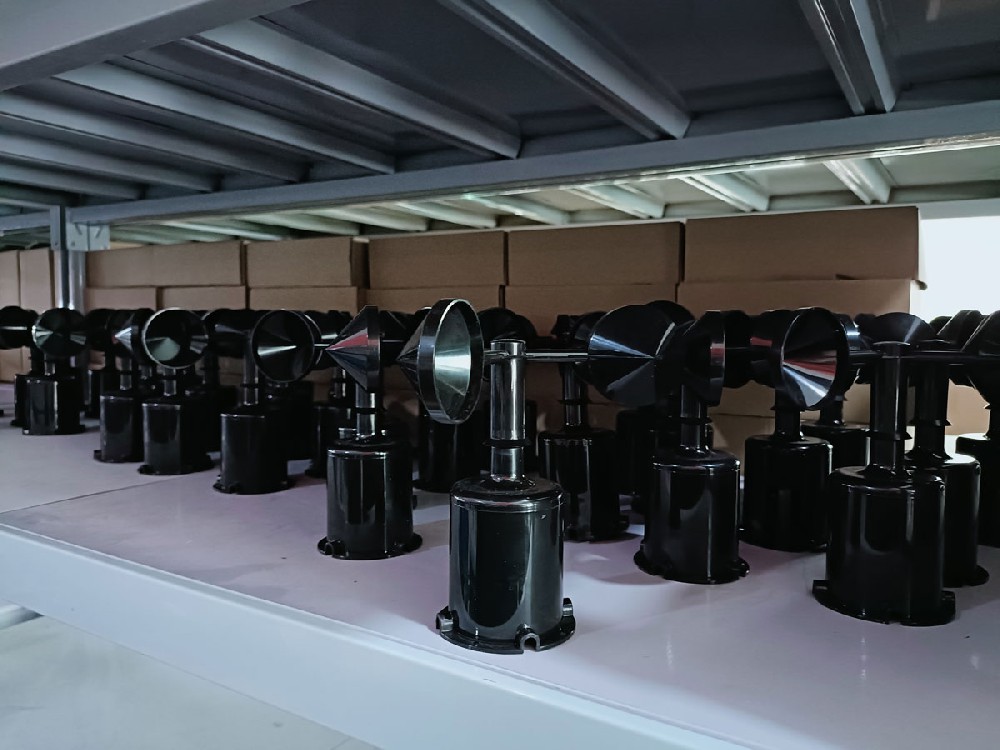
The NiuBoL NBL-W-SS cup anemometer offers 0-45 m/s or 0-70 m/s measurement ranges. Its specified accuracy is +/-(0.3 + 0.03V) m/s, where V is wind speed, and its resolution is 0.1 m/s. At 10 m/s, the expression gives +/-0.6 m/s. The 0.1 m/s resolution is not a +/-0.1 m/s accuracy claim.
This calculation is a reading of the sensor specification, not the uncertainty of an entire installed station. Obstructions, mast interference, mounting and the observation method can introduce additional effects. Compare portable and fixed candidates using their own specifications rather than assigning every fixed sensor an unsupported +/-0.1-0.3 m/s accuracy.
NBL-W-SS measures speed. The NBL-W-DS wind direction sensor provides a separate 0-360 degree direction channel with specified +/-3 degree accuracy. A combined ultrasonic unit provides another configuration route. Select the channels needed; the term anemometer does not guarantee both speed and direction in every product.
Ultrasonic wind sensors determine airflow using acoustic transit-time differences and do not use conventional rotating cups. Keep their paths unobstructed and orient the unit according to the direction reference. Absence of a cup rotor does not eliminate inspection of the housing, mounts, contamination and power connection.
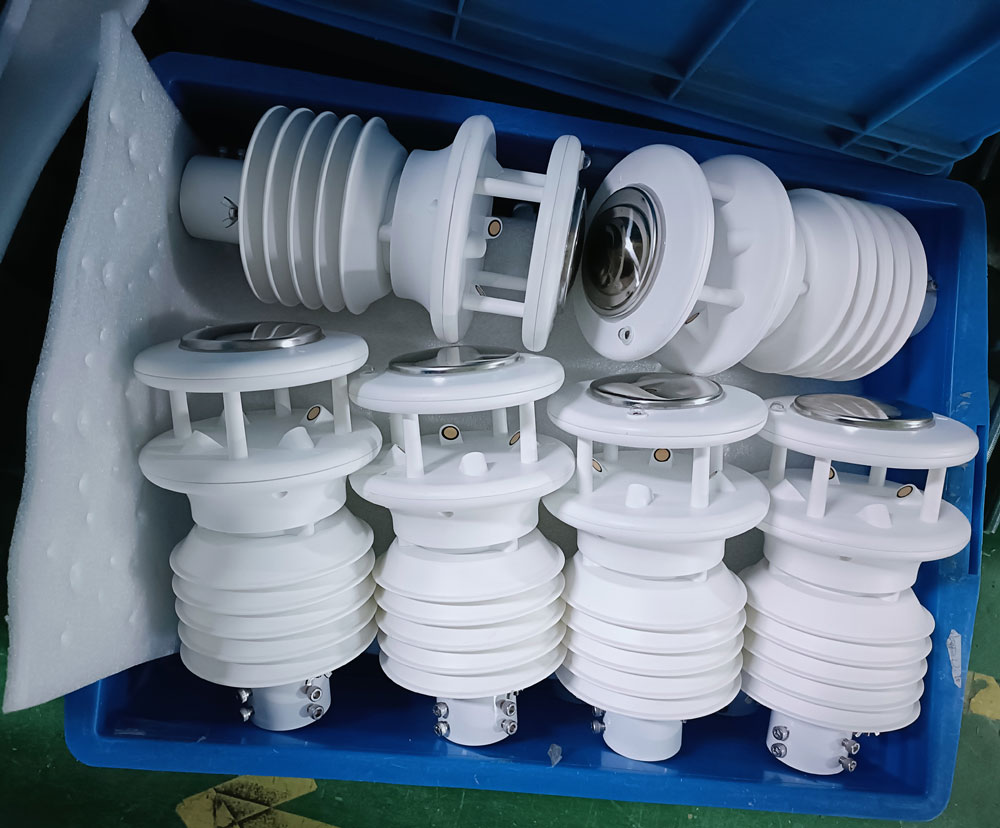
The sensor assemblies below combine wind and other weather measurements. The NBL-W-91GUWS configuration includes wind and additional environmental channels. Its other channels should be evaluated independently; selecting an integrated unit does not mean a project needs every available measurement.
A handheld spot reading, an instantaneous serial value and a logger's ten-minute average may differ even when the instruments work correctly. Establish sampling, averaging and gust processing before comparing records. For direction, use suitable circular processing rather than a simple arithmetic average across north: 359 degrees and 1 degree should not average to 180 degrees.
For RS485 Modbus RTU integration, confirm the actual sensor version, address, serial settings, register scaling and channel order. A 4-20 mA or pulse version needs the corresponding receiver input. The logger must also handle missing observations and power interruptions without turning a lost signal into a calm-wind report.
NBL-W-SS is specified as IP65. Review connectors, cable entries and the receiving enclosure separately, and assess freezing or contamination where relevant. An ingress rating does not establish the complete station's suitability for every exposed location.
For cranes or other equipment with wind-related operating restrictions, use the equipment manufacturer's limits and the project's required monitoring arrangement. Do not substitute a convenient handheld reading for a specified safety system or assume a general environmental sensor is certified for a safety function.
No. Compare the actual specifications and measurement conditions. Portability affects handling and exposure, but it does not define a universal accuracy class. A poorly located fixed sensor may be less representative than a correctly used portable instrument for a specific spot check.
Yes, when its sensors, mounts, power and logger are configured for unattended operation. Record the installation position and any relocation so observations from different exposures are not treated as one unchanged series.
Not necessarily. NBL-W-SS is a speed sensor. Add a suitable direction sensor such as NBL-W-DS or select a combined configuration when direction is required. Confirm direction orientation during installation and commissioning.
Compare the required functions and installed scope: sensor channels, mounts, logger, power, communications and service access. Obtain current configuration-specific quotations; generic price bands for portable and fixed categories are not reliable purchase figures.
It can help diagnose a channel, but it does not validate the entire long-term record. Match exposure and time basis, use an appropriate reference, and investigate discrepancies before changing scaling. Include logger and timestamp checks as well as sensor response.
For a NiuBoL wind-monitoring inquiry, state whether the task is a survey, temporary campaign or permanent record. Include required speed and direction channels, exposure, expected extremes and controller inputs so the configuration can be reviewed against that task.
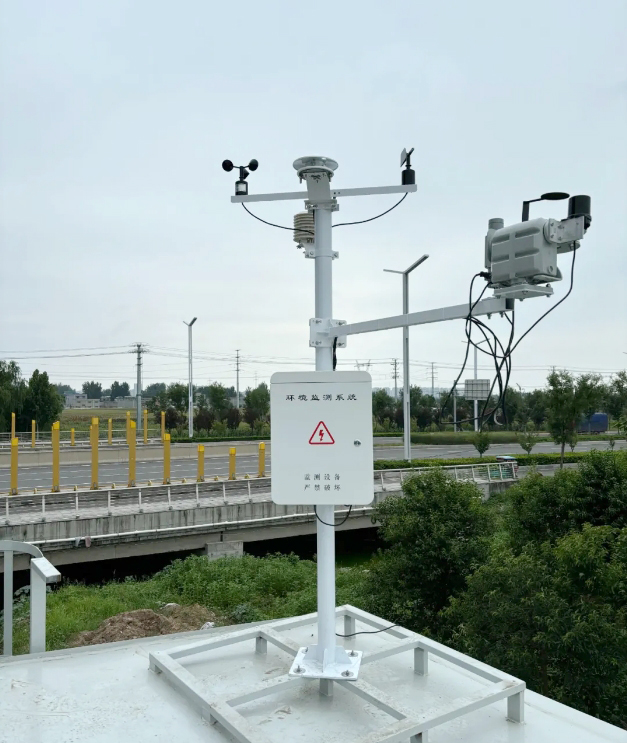
Choose portable and fixed anemometers by the observation required, not presumed price or accuracy tiers. Use portable equipment for an appropriately documented attended task and a properly configured station for repeatable unattended records. Specify exposure, time basis and data acquisition along with the sensor.
Prev:Supply Chain for IoT Agriculture Sensors: Repeat Orders and Spares
Next:Agriculture Sensor Certifications: Review Model and Document Scope
Related recommendations
Sensors & Weather Stations Catalog
 Agriculture Sensors and Weather Stations Catalog-NiuBoL.pdf
Weather Stations Catalog-NiuBoL.pdf
Agriculture Sensors Catalog-NiuBoL.pdf
Water Quality Sensor Catalog-NiuBoL.pdf
Related products
 Combined air temperature and relative humidity sensor
 TDR Soil Moisture & Temperature Sensor for irrigation| RS485 |4-20mA| NBL-S-THR
 Soil pH sensor RS485 soil Testing instrument soil ph meter for agriculture |NBL-S-PH
 Wind Speed sensor Output Modbus/RS485/Analog/0-5V/4-20mA
 Tipping bucket rain gauge for weather monitoring auto rainfall sensor RS485/Outdoor/stainless steel
 Pyranometer Solar Radiation Sensor 4-20mA/RS485


Screenshot, WhatsApp to identify the QR code
WhatsApp number:+8615367865107
(Click on WhatsApp to copy and add friends)

