





— Blogs —
—Products—
 Consumer hotline +8618073152920
WhatsApp:+8615367865107
Address:Room 102, District D, Houhu Industrial Park, Yuelu District, Changsha City, Hunan Province, China
Product knowledge
Time:2025-11-22 15:26:38 Popularity:811
Quick Answer: A compact weather station combines a selected set of meteorological measurements with acquisition equipment in a small installation. An integrated weather sensor reduces separate mounting and wiring; a modular station allows different exposures, measurement methods and replacement choices. Select between them by the observations required, not by the number of channels advertised. The logger, communication device and power supply must be specified separately even when supplied as one package.
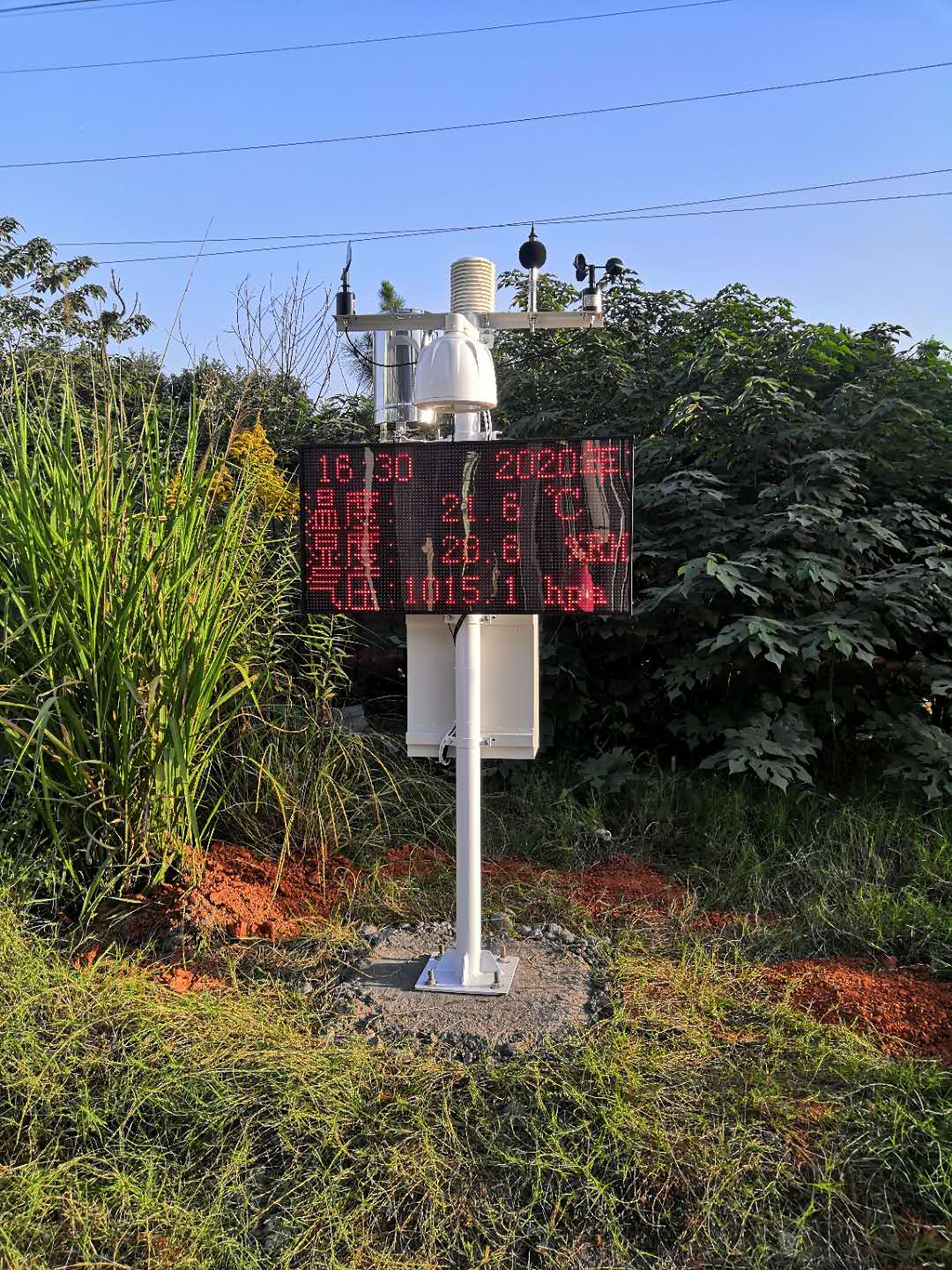
A small footprint can mean one combined sensor head, several instruments on a short crossarm or a portable assembly used for temporary observations. These arrangements can all support multi-parameter monitoring, but they have different limits. A lightweight sensor head is not necessarily a complete portable weather monitoring system with transport protection, storage and independent power.
Begin with a list of quantities and units: air temperature, relative humidity, wind speed and direction, pressure, rainfall and any additional light or air-quality measurements. Identify which measurements are mandatory and which are optional. A six-channel configuration should not be assumed to contain radiation, particles or soil measurements simply because they appear elsewhere in a product range.
| Arrangement | Reason to choose it | Question to resolve |
|---|---|---|
| Integrated ultrasonic head | Fewer separate instrument mounts and sensor cables; one serial connection | Can the common installation position provide suitable exposure for all required channels? |
| Modular mast-mounted station | Independent instrument choice, positioning and replacement | Are the mast, cable routes and logger inputs adequate for the selected combination? |
| Temporary field assembly | Repeatable observations during a survey or defined project period | Can the equipment be leveled, oriented, powered and secured consistently at each deployment? |
Ultrasonic wind sensing compares acoustic travel times along opposing paths. It avoids rotating cups and a vane, but still requires unobstructed acoustic paths and appropriate mounting. Mechanical wind sensors remain a practical option where their response, starting behavior and maintenance fit the task. Neither technology is automatically more accurate in every application.
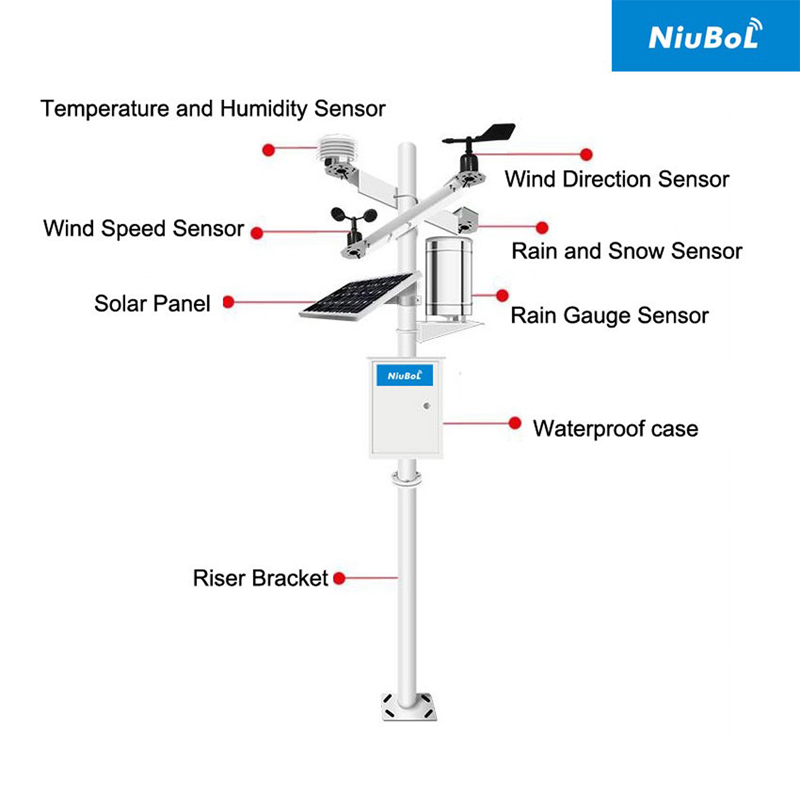
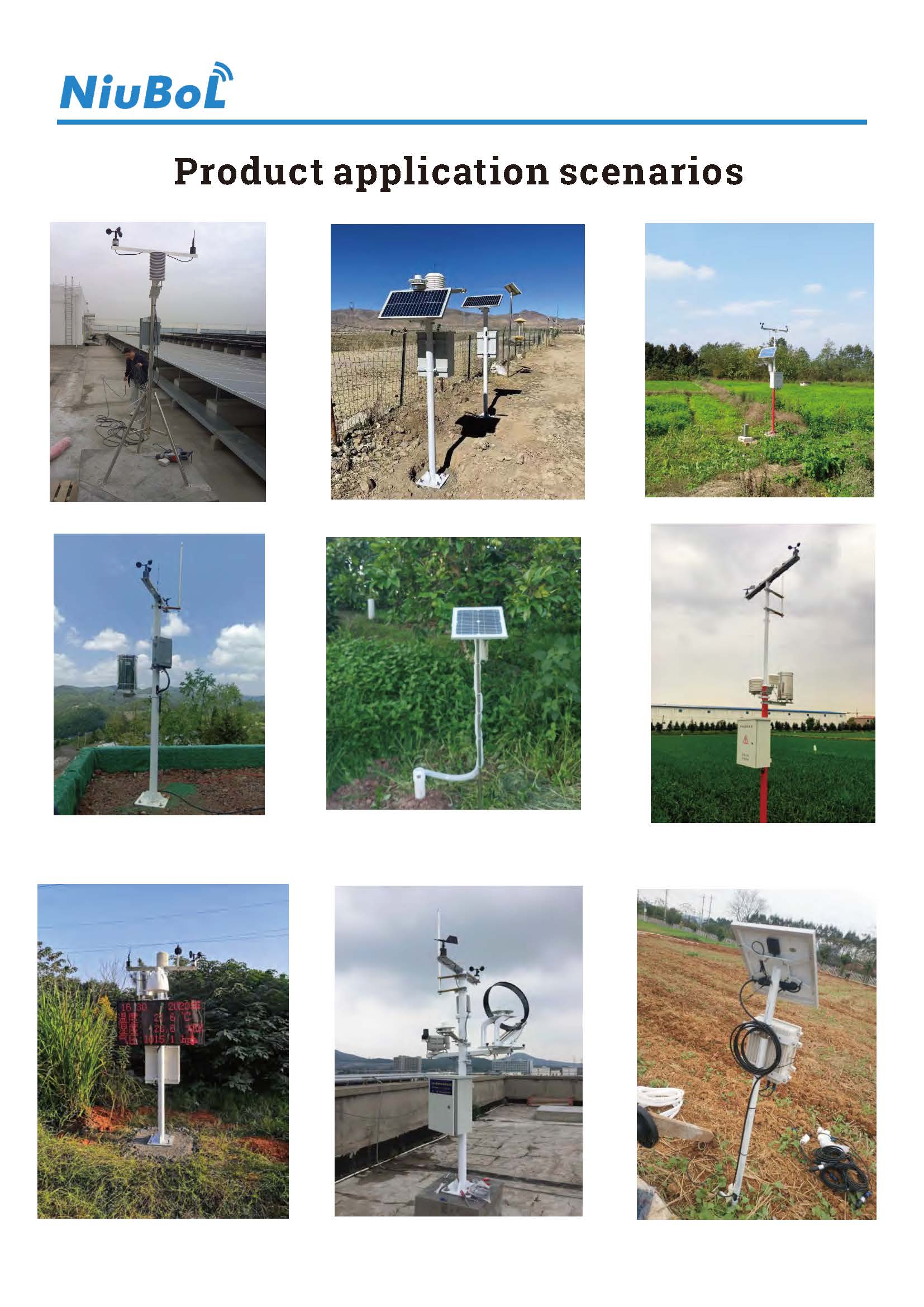
The available instruments pictured below illustrate configuration choices, not a promise that every item is included. Separate sensors can be useful when the rain collector needs a different position from the wind measurement or when a radiation sensor requires an unshaded view that the preferred mast position cannot provide.
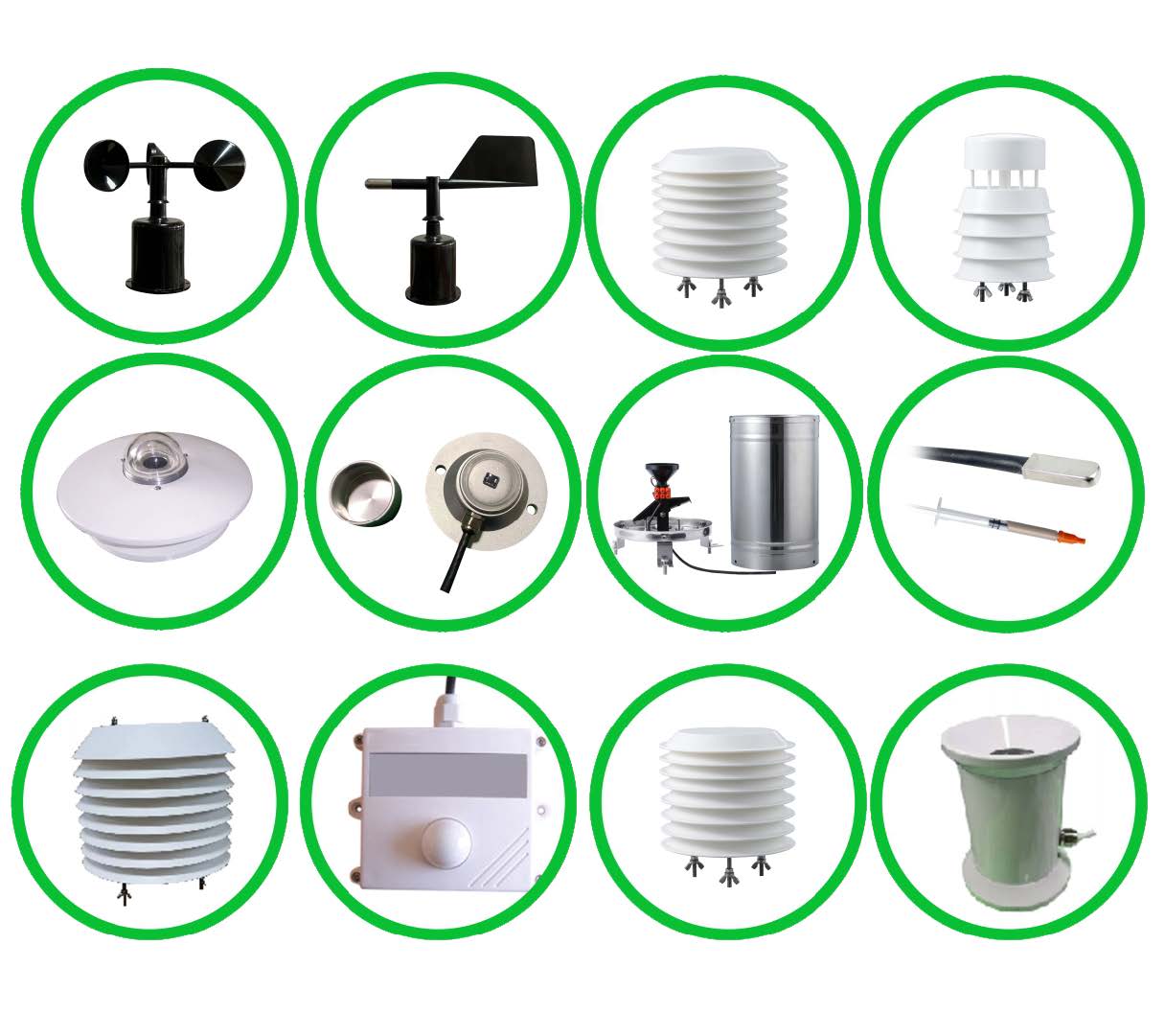
The NiuBoL NBL-W-61GUWS combines wind speed, wind direction, air temperature, relative humidity, pressure and rainfall. Its rainfall channel uses piezoelectric impact sensing, not a tipping bucket or optical detector. This configuration offers a useful reference for an integrated weather sensor; the modular stations in the photographs are separate arrangements.
| Channel | Range and resolution | Stated accuracy |
|---|---|---|
| Wind speed | 0-60 m/s; 0.01 m/s | +/-(0.3 m/s + 3% FS) |
| Wind direction | 0-359 degrees; 1 degree | +/-3 degrees |
| Air temperature | -40 to 80 C; 0.1 C | +/-0.5 C |
| Relative humidity | 0-100% RH; 0.1% RH | +/-5% RH |
| Atmospheric pressure | 10-1100 hPa; 0.1 hPa | +/-1.5 hPa |
| Rainfall | 0-8 mm/min; 0.01 mm | +/-10%; agree the evaluation conditions for the intended use |
The wind-speed specification contains a full-scale term. On a 60 m/s span, 3% FS is 1.8 m/s, so the combined stated limit is +/-2.1 m/s. It is not +/-0.3 m/s throughout the range. A 0.01 m/s output increment also does not establish that changes of that size are accurate. Compare the stated error with the project's required tolerance before choosing this configuration.
| Item | NBL-W-61GUWS reference configuration | What remains to be specified |
|---|---|---|
| Supply | 12-24 V DC | Supply at the sensor under load, including cable voltage drop |
| Communication | RS485 Modbus RTU; 9600 bps | Logger support, register interpretation and any remote reporting connection |
| Average sensor consumption | 0.4 W without a dust sensor; 1 W with a dust sensor | Logger, modem, display and other loads; not a complete station power rating |
| Operating environment | -40 to 80 C; 0-95% RH | Environmental limits of the battery, logger and other supplied equipment |
| Protection | IP65 sensor housing | Connector sealing, cable entries and enclosure protection |
| Cable assembly | Length, jacket and termination to be agreed for the installation | Strain relief, routing, surge exposure and portability requirements |
Adding a dust sensor changes both measurement scope and demand. Likewise, including a display or frequent cellular reporting can dominate the power budget of a compact weather station. Compare configurations using the same loads and acquisition schedule. Do not apply the bare sensor's consumption or environmental limits to every component in a packaged station.
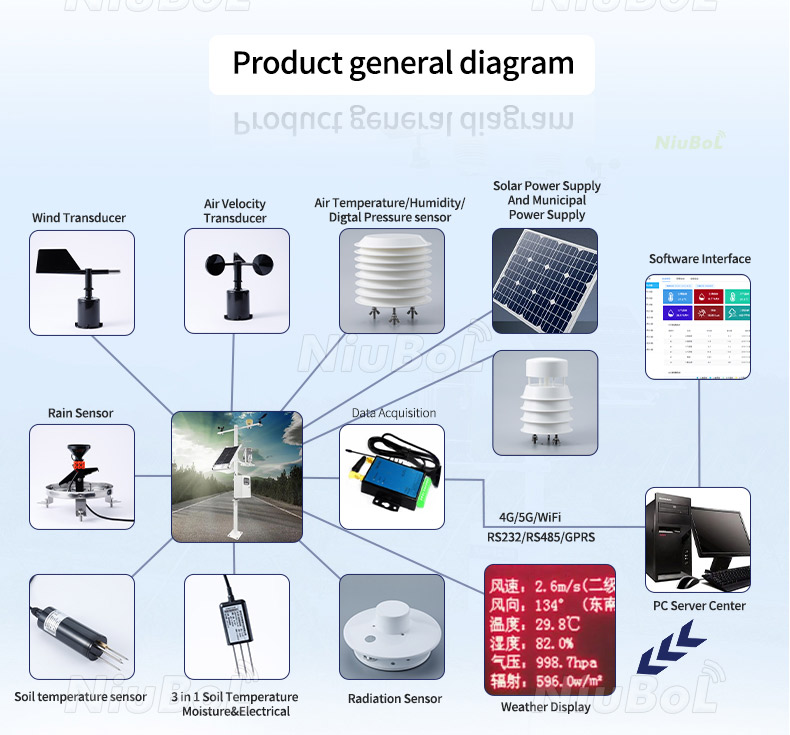
The weather station data logger reads local sensor values and stores or processes them. Remote connectivity is a separate function, implemented by the selected logger or gateway. RS485 is not a cellular network, and Modbus RTU does not itself provide an internet dashboard, a mobile application or a guaranteed interface to another platform.
For a PLC or RTU installation, confirm supply, serial format, address, register map, channel scale and signed temperature handling. Read the actual device before programming the final channel list. Some product families reserve positions for optional channels; a missing option should not be interpreted as a valid zero measurement.
Set sampling, logging and upload intervals separately. A five-minute upload can carry a mean, maximum or single end-of-interval sample, and those records answer different questions. For rainfall, establish whether a field is an interval total or an accumulation since reset. For wind, specify the averaging or gust procedure rather than labeling a maximum uploaded value as a defined gust.
Pressure and temperature trends add context but do not make the instrument a self-contained forecasting service. A dashboard also needs reliable unit labels. An irradiance value in W/m2, illuminance in lux and photosynthetic photon flux in umol/m2/s are different quantities. Choose an appropriate additional instrument when the application needs one of these measurements.
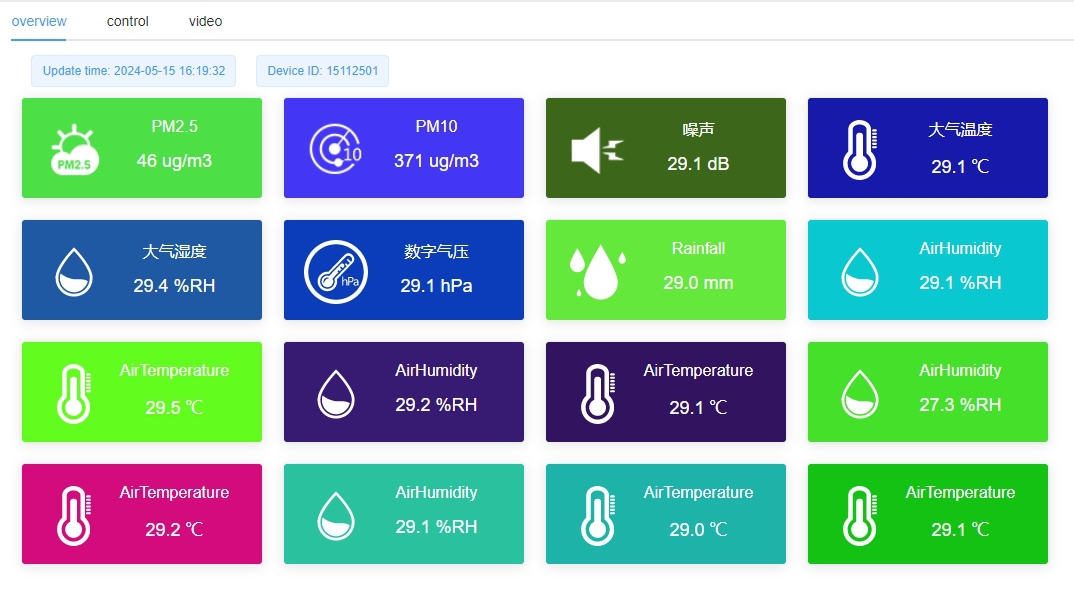
The display example below shows several environmental values. For procurement, identify the sensor and input behind each field. Do not infer that an integrated head measures soil moisture, CO2 or both particle fractions because the software can display those labels. The quotation should map every required value to hardware and a stored data field.
Check how the application handles a disconnected channel, an old observation and a unit change. If a sensor is added later, retain a distinct commissioning date so that earlier zeros are not mistaken for historical observations. For multi-site comparisons, record the measurement height and exposure as well as the station's location.
A compact weather station still needs orientation. For the ultrasonic configuration, align its reference correctly with the required north direction and account for compass limitations near steel structures or electrical equipment. Keep the sensor head level and the mast stable. Transporting a temporary assembly requires these checks again at the next site.
Do not place a temperature sensor next to an exhaust, hot roof or sun-heated enclosure and assume compensation will remove the exposure error. Keep airflow clear and inspect the radiation shield. For rainfall, check nearby obstructions, splash and drainage. An integrated head reduces separate mounting work but may constrain the heights available for individual measurements.
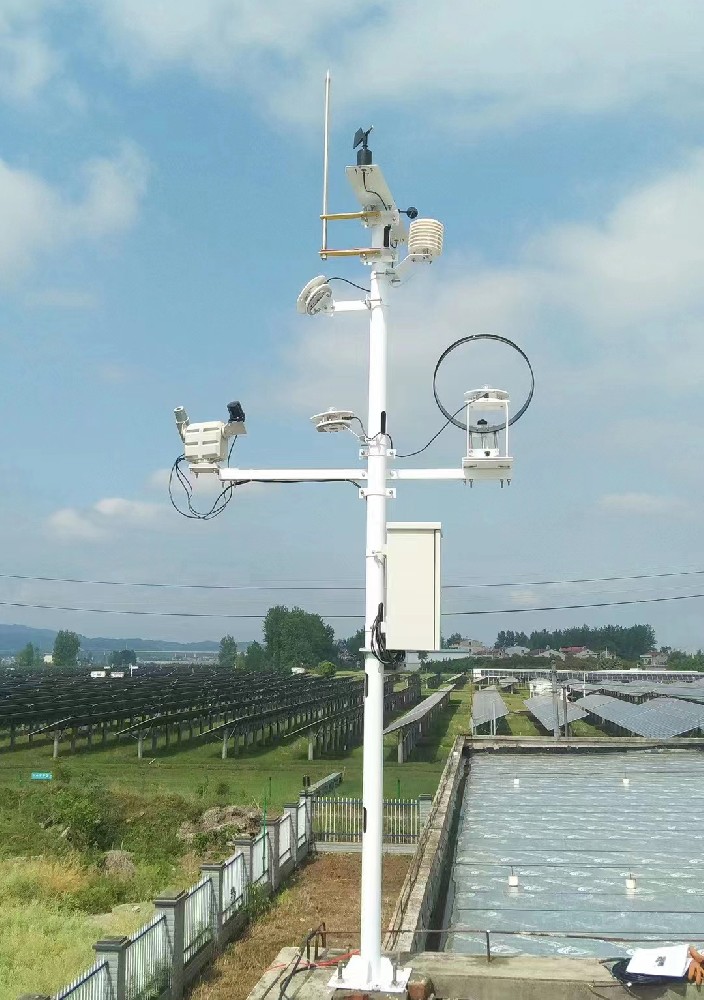
The modular installation below includes instruments that require their own exposure checks. A pyranometer needs a suitable level and unobstructed view for its intended measurement plane. Its presence does not turn an illuminance channel into a radiation channel. Evaluate each required quantity at the proposed location before accepting the overall installation.
For agricultural monitoring, a compact station can provide local air, wind and rainfall context; crop-canopy or soil measurements may require separate points. For an industrial site, a small mast can supply operational weather information provided nearby buildings do not make the exposure unsuitable. For field teaching and temporary surveys, a relocatable assembly can support comparisons if setup and timestamps are repeatable.
Projects requiring reference-network observations, aviation operational use, wind-resource certification or protective control need an explicit performance and acceptance specification. General environmental measurements are not evidence of approval for those duties. Where the required accuracy, response or exposure is not met, choose different instruments or a more distributed layout.
For a NiuBoL quotation, list mandatory channels, permitted error, installation setting, required records and receiving system. State whether the assembly will remain fixed or move frequently, and identify the power and communication available. Ask separately about replacement of one component, transport accessories and data export. This makes the comparison about useful measurements rather than the highest channel count.
No. It may use one integrated head or several instruments on a compact mounting arrangement. Check the supplied components, acquisition equipment and power package rather than relying on the word compact.
The six-channel configuration described here includes wind speed, wind direction, temperature, humidity, pressure and rainfall. Radiation or other additional measurements need a corresponding configuration or separate sensor and acquisition input.
No. Although there are no rotating wind components, acoustic paths, surfaces, mounting and connections still need inspection. Debris, icing and exposure problems can affect observations. Plan service according to the site and observed condition.
Only if the complete assembly can be moved, powered and set up safely and repeatably. Check mounting stability, orientation, transport protection and acquisition during a power change. A small head alone does not establish portability of the system.
Resolution is the smallest reported increment. Accuracy describes permitted measurement error under stated conditions. The 61GUWS wind output has 0.01 m/s resolution, but its full-scale accuracy term is much larger. Select by the required error, not display precision.
Its RS485 Modbus RTU output requires a compatible acquisition device. Remote reporting needs the selected logger or gateway and an agreed platform connection. Verify the complete path before ordering multiple stations.
Use the same channels, accuracy conditions, mounting, power and data requirements. Separate the integrated head price from logger, communication, installation and recurring services. A lower component price may not describe the same measurement system.
A compact weather station is a configuration choice, not a universal specification. An integrated head can simplify mounting and acquisition, while modular instruments offer more freedom in exposure and replacement. Compare NiuBoL options against the actual channels, error limits and deployment method, then verify that the logger and communication arrangement preserve those measurements.
Prev:Agricultural Weather Station for Crop Disease Monitoring: Inputs and Limits
Next:Outdoor Weather Station Data Mismatch: Local Display vs Cloud
Related recommendations
Sensors & Weather Stations Catalog
 Agriculture Sensors and Weather Stations Catalog-NiuBoL.pdf
Weather Stations Catalog-NiuBoL.pdf
Agriculture Sensors Catalog-NiuBoL.pdf
Water Quality Sensor Catalog-NiuBoL.pdf
Related products
 Combined air temperature and relative humidity sensor
 TDR Soil Moisture & Temperature Sensor for irrigation| RS485 |4-20mA| NBL-S-THR
 Soil pH sensor RS485 soil Testing instrument soil ph meter for agriculture |NBL-S-PH
 Wind Speed sensor Output Modbus/RS485/Analog/0-5V/4-20mA
 Tipping bucket rain gauge for weather monitoring auto rainfall sensor RS485/Outdoor/stainless steel
 Pyranometer Solar Radiation Sensor 4-20mA/RS485


Screenshot, WhatsApp to identify the QR code
WhatsApp number:+8615367865107
(Click on WhatsApp to copy and add friends)

