





— Blogs —
—Products—
 Consumer hotline +8618073152920
 WhatsApp:+8615367865107
Address:Room 102, District D, Houhu Industrial Park, Yuelu District, Changsha City, Hunan Province, China
Product knowledge
Time:2026-01-09 17:09:31 Popularity:1233
Automatic weather stations operate long-term in the field, facing multiple challenges such as sun exposure, rain, lightning interference, and animal damage. Even high-performance NiuBoL meteorological monitoring equipment may experience data jumps, losses, or stagnation in extreme environments or due to long-term lack of maintenance.
For agricultural production and scientific research analysis, precise data is the premise of all decisions. Mastering a systematic fault troubleshooting logic not only extends equipment lifespan but also ensures every set of meteorological data has scientific reference value.
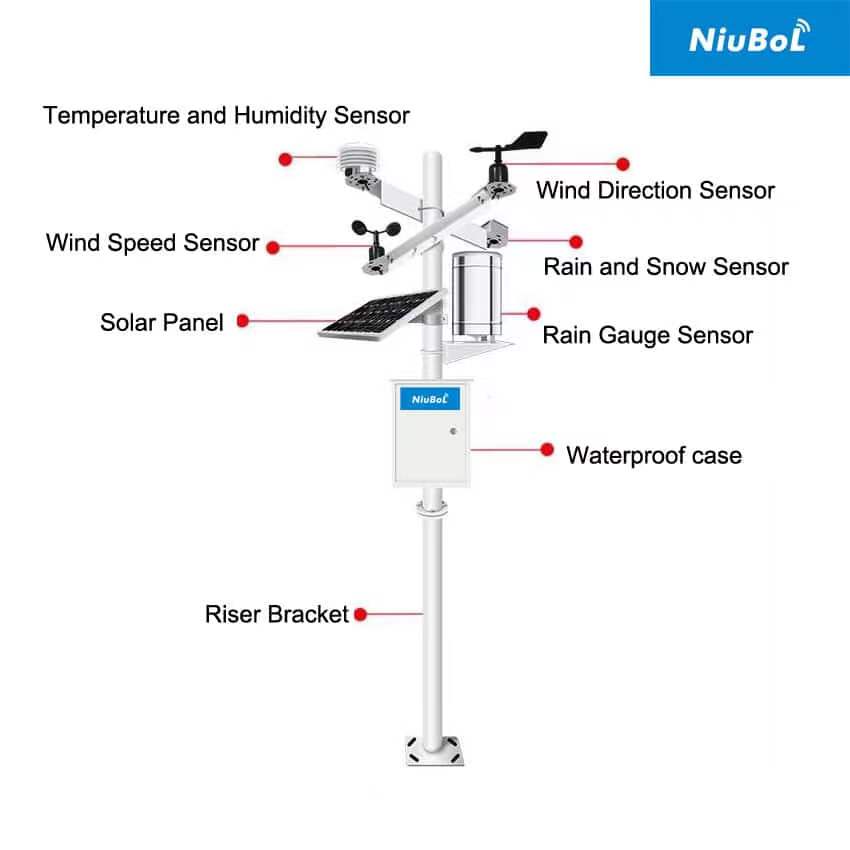
1. Rain Sensor: Data Missing or Accuracy Deviation
Rainfall data differs greatly from nearby stations, or shows zero despite rain, usually caused by physical blockage or electrical connection issues.
Fault Manifestations: Rain gauge funnel jammed, collector channel poor contact, sensor housing damaged.
In-Depth Troubleshooting Logic:
Physical Level: Check if the rain cylinder funnel has leaves, bird droppings, or insects.
Electrical Level: Check if the aviation plug or wiring terminal between the sensor and collector is loose or oxidized.
Troubleshooting Methods:
Regularly clean the funnel and tipping bucket interior.
Re-plug and secure the wiring.
If manual simulation tipping still shows no data, replace the sensor.
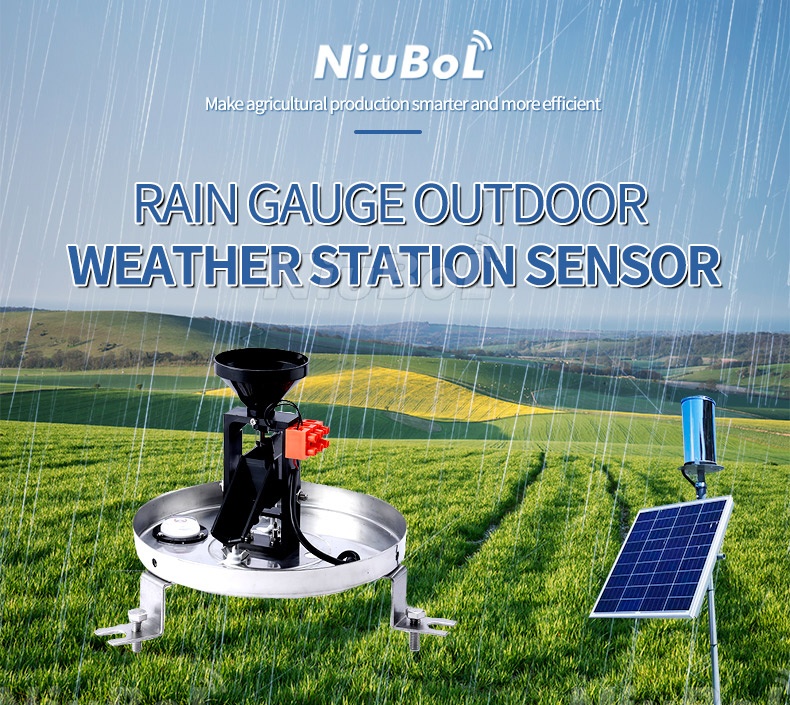
2. Temperature and Humidity Sensor: Abnormal Values or Stagnant Unchanged
Data deviates excessively from historical extremes, or values remain fixed at a certain number (i.e., "frozen").
Fault Manifestations: Surrounding environmental interference, internal component failure, line breakage or short circuit.
In-Depth Troubleshooting Logic:
Environmental Detection: Check if there are new heat sources or obstructions around the sensor.
Electrical Measurement: For some analog signal sensors, use a multimeter to measure the resistance or current value at the output end, judging if it matches the characteristic curve corresponding to the current temperature.
Troubleshooting Methods:
Check lines for animal bites or long-term exposure causing insulation cracking.
Check if wiring terminals are fastened.
If component drift is confirmed to be excessive, replace with a new temperature and humidity sensor.
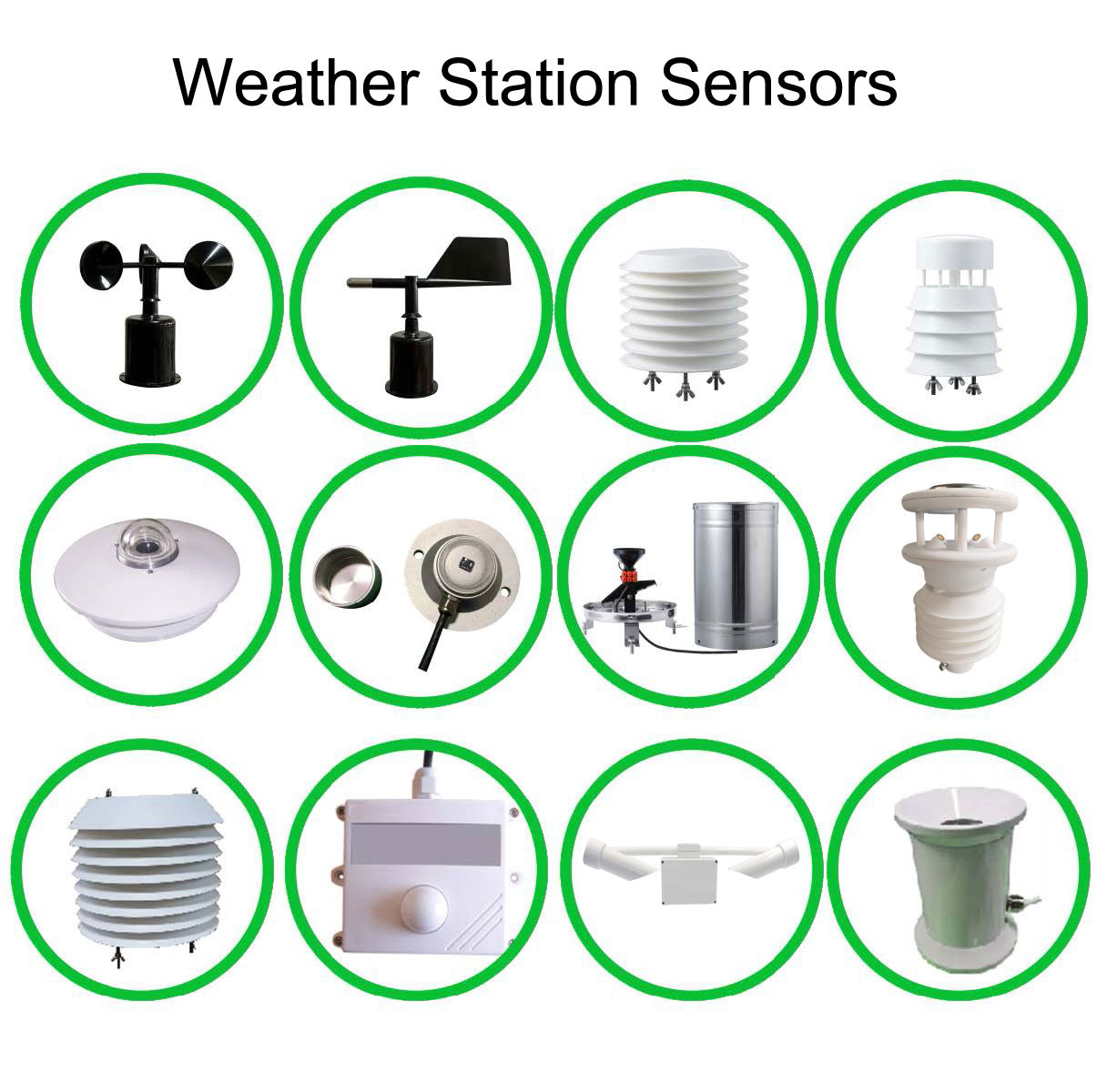
3. Wind Direction Sensor: Data Long-Term Stagnant
The wind vane rotates normally in the wind, but background data maintains a single value for a long time.
Fault Manifestations: Poor wiring head contact, system power supply abnormality, hidden breaks in transmission lines.
In-Depth Troubleshooting Logic:
Power Supply Verification: Confirm if the voltage output from the collector to the wind direction sensor is within the rated range (usually DC 5V or 12V).
Signal Integrity: Check if the aviation plug pins are bent or rusted.
Troubleshooting Methods:
Check cable paths, repair broken sections.
Ensure power supply system (solar or power adapter) output is stable.
If necessary, replace the sensor's internal code disk/encoder module.
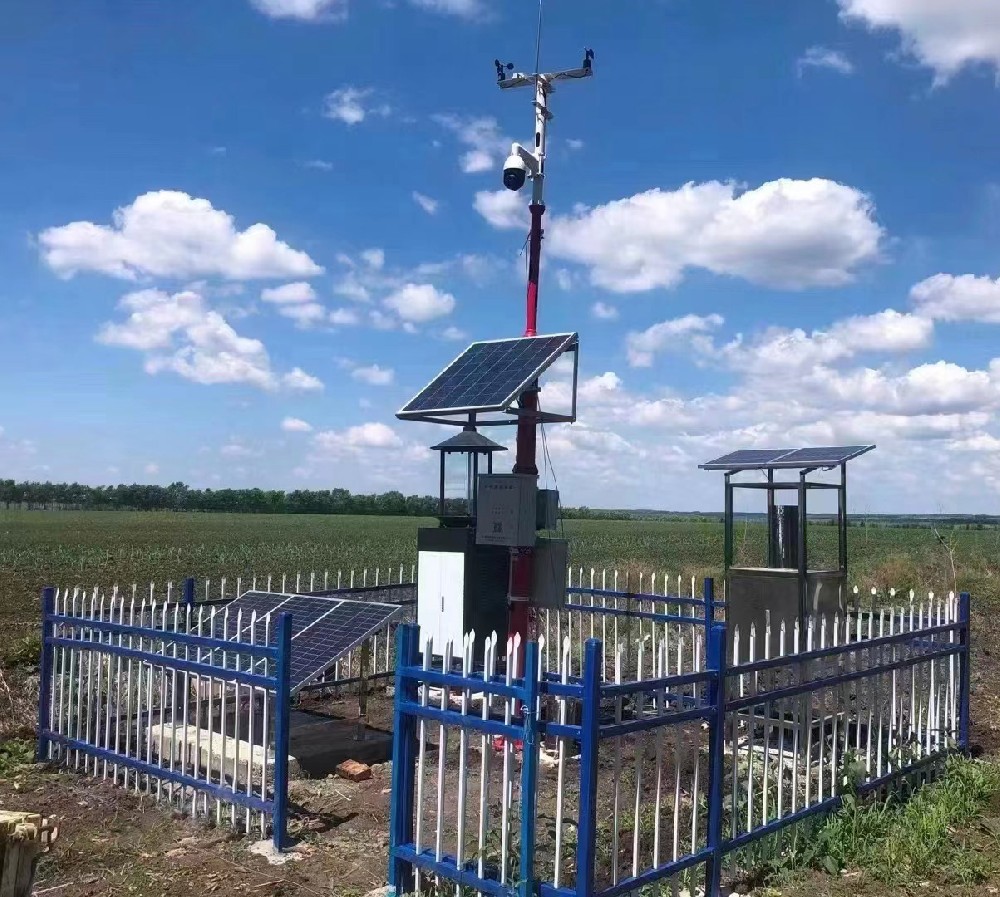
4. Wind Speed Sensor: Values Significantly Too Large or Too Small
Wind speed values obviously do not match sensory experience, or wind cups rotate rapidly but readings are extremely small.
Fault Manifestations: Sensor physical damage (bearing wear), power supply voltage fluctuations, collector pulse counting channel abnormality.
In-Depth Troubleshooting Logic:
Physical Inspection: Gently flick the wind cups with hand, observe if there is obvious resistance or abnormal noise.
Logic Verification: Switch the wind speed access channel on the collector, judge if it is sensor fault or collector module damage.
Troubleshooting Methods:
Replace damaged wind cups or the entire sensor.
Check power voltage stability.
Eliminate collector channel interference factors.
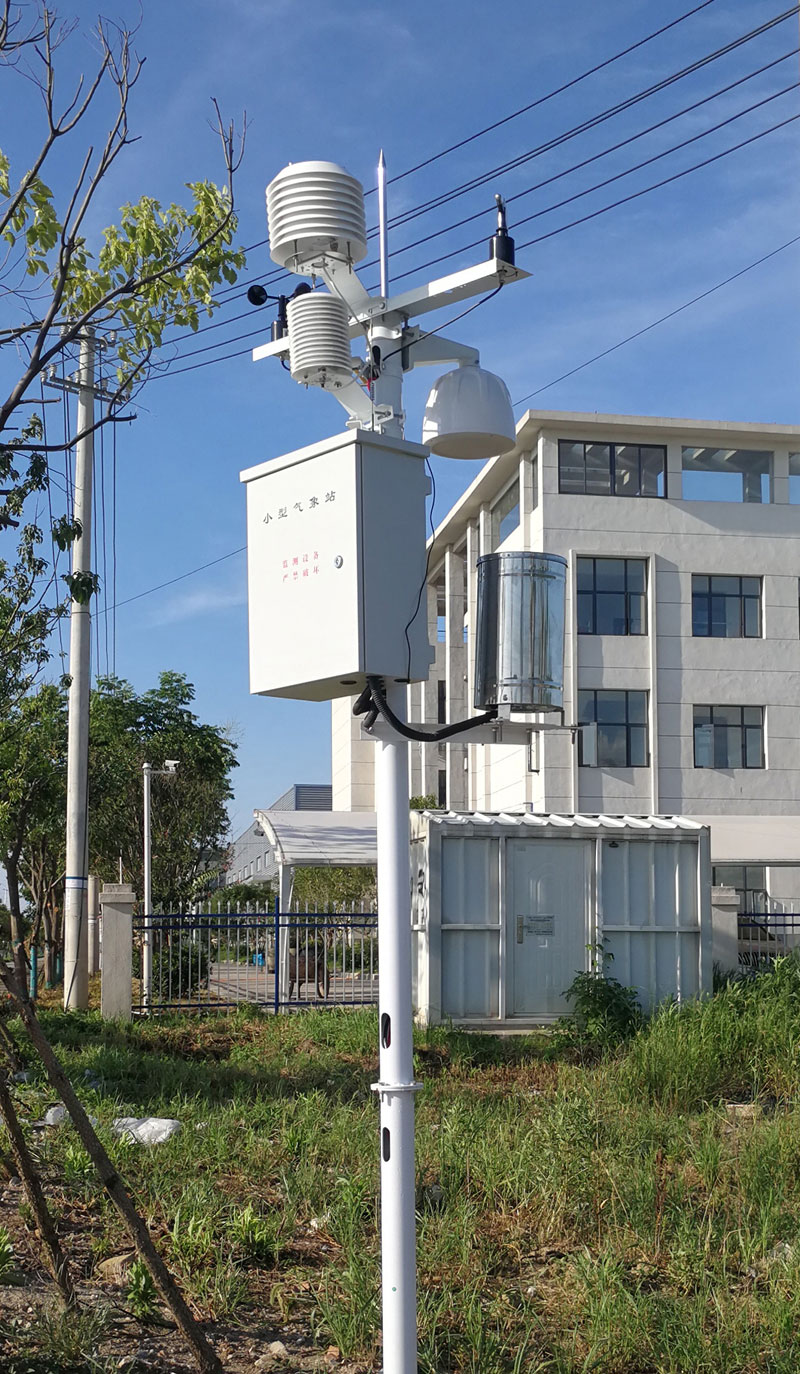
Besides individual sensors, NiuBoL technical experts recommend paying attention to the following three system-level issues:
Communication Link "Fake Death" and Interference
Manifestation: Sensors work normally locally, but cloud platform data is intermittent.
Causes: Communication module (4G/5G) antenna loose, SIM card signal blocked, or nearby strong magnetic/electric interference sources.
Countermeasures: Check communication antenna gain, ensure equipment is away from high-radiation facilities like transformers.
Power Supply "Sub-Health" State
Manifestation: Data normal during the day, disappears or jumps at night or on rainy days.
Causes: Dust on solar panels leading to low charging efficiency, battery aging with increased internal resistance, unable to support night loads.
Countermeasures: Regularly wipe solar panels, detect battery terminal voltage.
Lightning Protection and Grounding Deficiency
Manifestation: Multiple sensors fail simultaneously after thunderstorms.
Causes: Lightning rod downlead broken, or grounding resistance too large, leading to induced lightning burning the mainboard.
Countermeasures: Detect grounding resistance before each thunderstorm season, ensure lightning protection facilities are reliably connected.
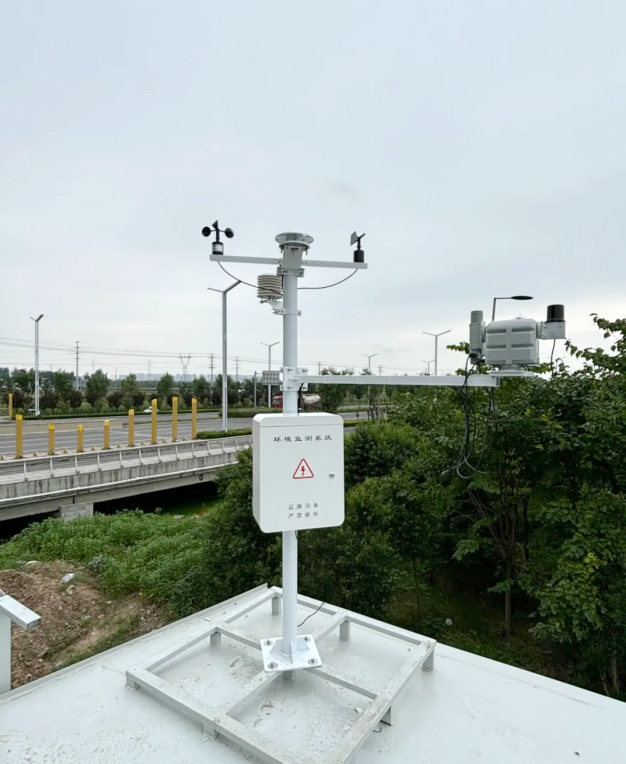
Q1: How to quickly distinguish if it's the sensor that's broken or the collector?
A: The simplest method is the "cross-swap method." Connect the suspected faulty sensor to another known normal collector channel. If the fault persists, it's the sensor issue; if data returns to normal, it's the collector channel damaged.
Q2: How often does the rain gauge need cleaning?
A: Depends on the environment. In dusty or wooded areas, suggest checking once a month. When cleaning, do not forcefully touch the tipping bucket to avoid changing its balance torque, leading to inaccurate measurements.
Q3: The wind speed anemometer cups rotate very smoothly, but data is always 0, what's going on?
A: This situation is mostly a signal transmission issue. Please focus on checking if the sensor's signal output line (usually pulse or RS485 signal line) is broken, or if the collector's pulse counting port is burned out.
The efficient operation of automatic weather stations relies on standardized daily maintenance. As a NiuBoL user, it is recommended that you establish a "regular inspection table," recording the activation date and historical fault records for each sensor. Through cleaning the rain gauge, comparing temperature and humidity, fastening lines, and detecting lightning protection systems, you can preemptively eliminate the vast majority of potential faults, ensuring every set of meteorological data is precise and error-free.
Related recommendations
Sensors & Weather Stations Catalog
 Agriculture Sensors and Weather Stations Catalog-NiuBoL.pdf
Weather Stations Catalog-NiuBoL.pdf
Agriculture Sensors Catalog-NiuBoL.pdf
Water Quality Sensor Catalog-NiuBoL.pdf
Related products
 Combined air temperature and relative humidity sensor
 TDR Soil Moisture & Temperature Sensor for irrigation| RS485 |4-20mA| NBL-S-THR
 Soil pH sensor RS485 soil Testing instrument soil ph meter for agriculture |NBL-S-PH
 Wind Speed sensor Output Modbus/RS485/Analog/0-5V/4-20mA
 Tipping bucket rain gauge for weather monitoring auto rainfall sensor RS485/Outdoor/stainless steel
 Pyranometer Solar Radiation Sensor 4-20mA/RS485

Screenshot, WhatsApp to identify the QR code
WhatsApp number:+8615367865107
(Click on WhatsApp to copy and add friends)

