





— Blogs —
—Products—
 Consumer hotline +8618073152920
 WhatsApp:+8615367865107
Address:Room 102, District D, Houhu Industrial Park, Yuelu District, Changsha City, Hunan Province, China
Product knowledge
Time:2026-03-04 09:54:36 Popularity:264
In smart agriculture, environmental engineering, and land remediation projects, accurate acquisition of soil environmental parameters is the core of system decision logic. For system integrators (SI) and project contractors, selecting soil instruments with industrial stability, high-compatibility protocols, and ease of on-site deployment is the foundation for ensuring smooth project delivery and long-term stable operation.
As a professional environmental monitoring equipment manufacturer, NiuBoL is committed to providing partners with a full range of soil perception terminals. This article analyzes from an engineering integration perspective the current mainstream industrial-grade soil instruments and their application logic in complex projects.
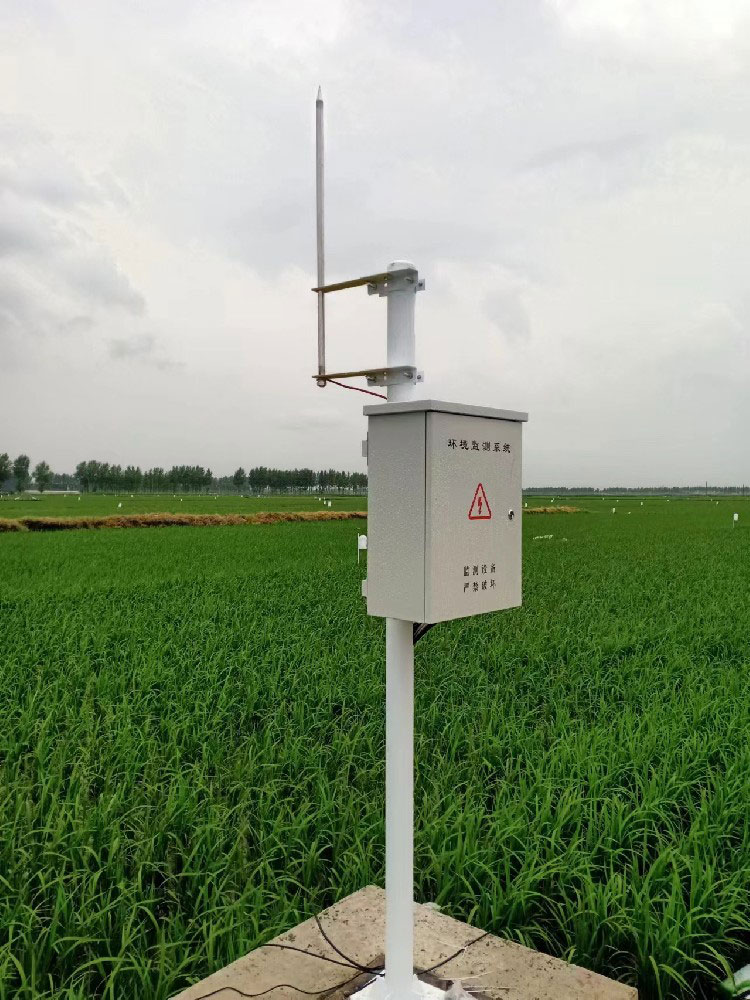
In modern agricultural IoT (Ag-IoT) architecture, soil perception devices typically serve as Modbus bus slaves, cooperating with edge gateways or RTUs. The following are four most representative industrial-grade soil monitoring terminals:
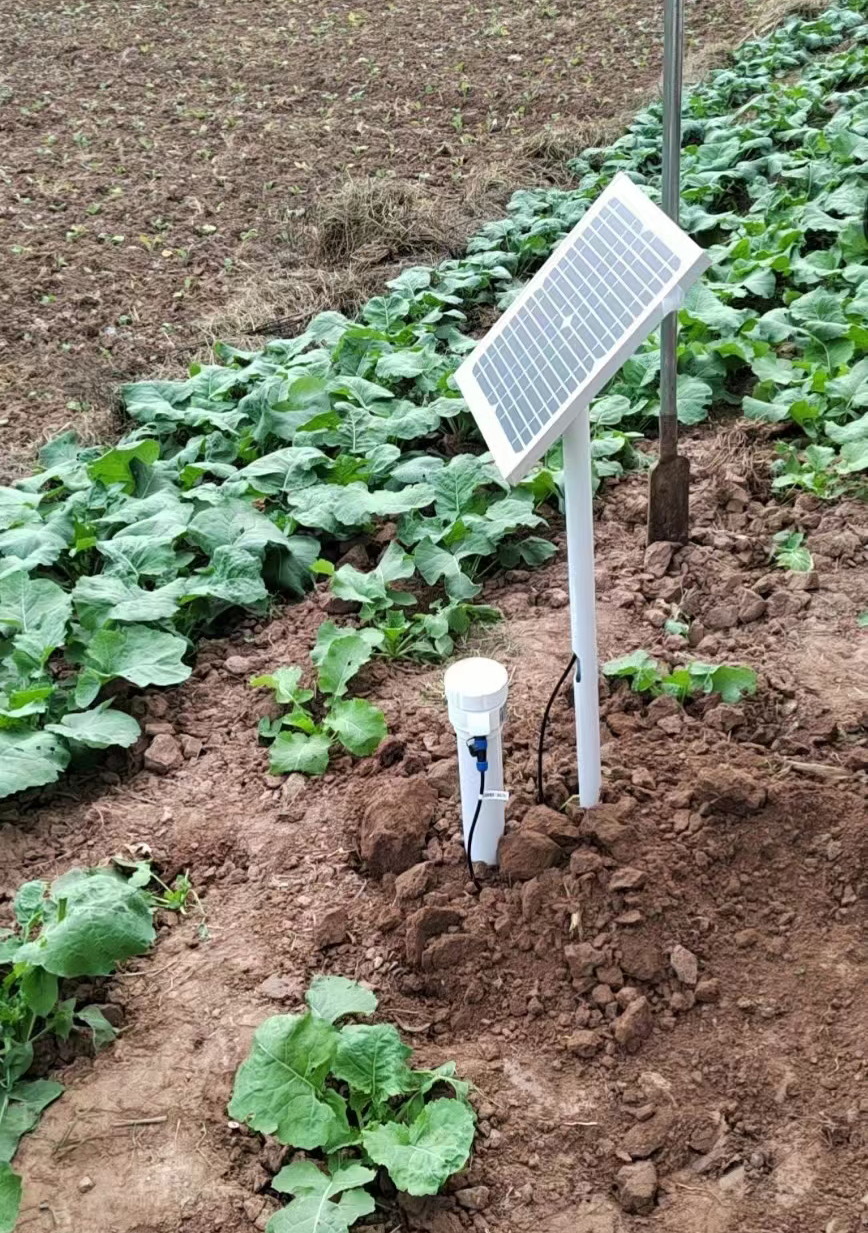
1. Tubular Soil Moisture Monitoring Instrument (Layered Monitoring Standard)
Unlike traditional single-point sensors, the tubular soil moisture monitoring instrument uses non-contact measurement technology to sense soil dielectric constant through the plastic tube wall.
Integration Advantages: A single deployment can obtain multi-depth (e.g., 10cm, 20cm, 30cm, 40cm) moisture and temperature data. The shell uses UV-resistant and corrosion-resistant materials, buried underground without affecting cultivation, with long maintenance cycles.
Engineering Value: Greatly simplifies wiring complexity for multi-layer soil monitoring and is standard equipment in high-standard farmland construction projects.
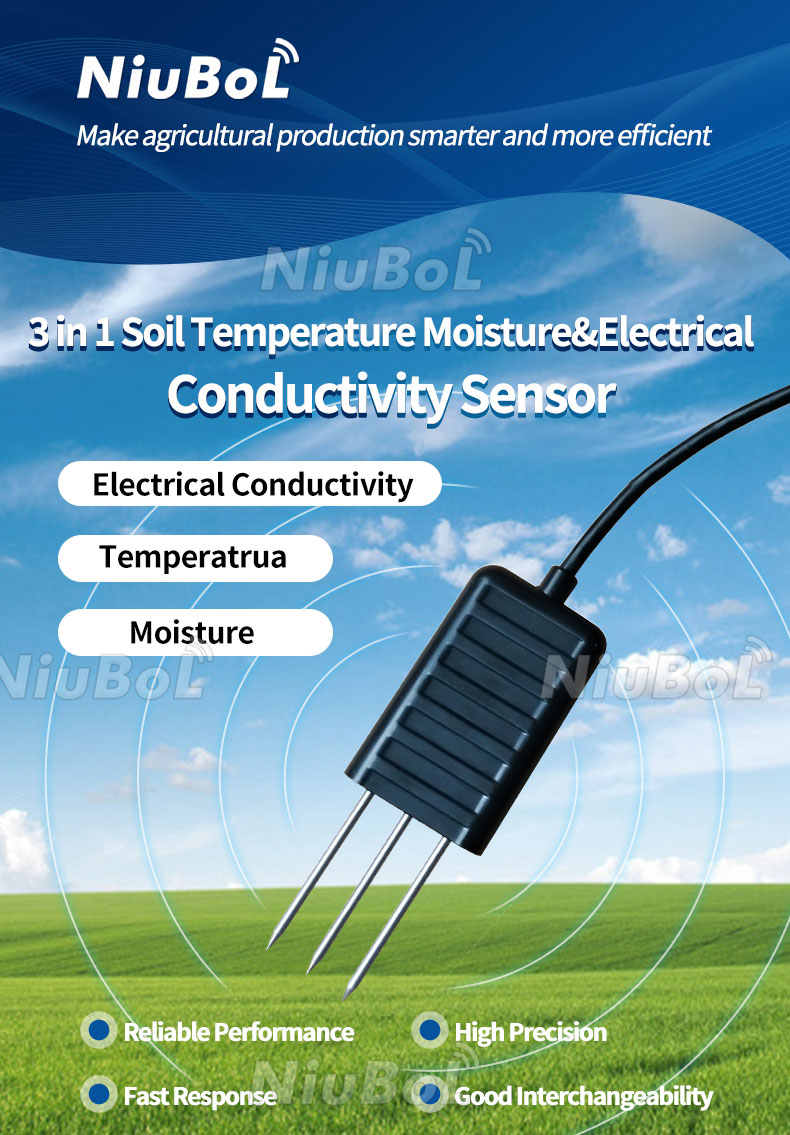
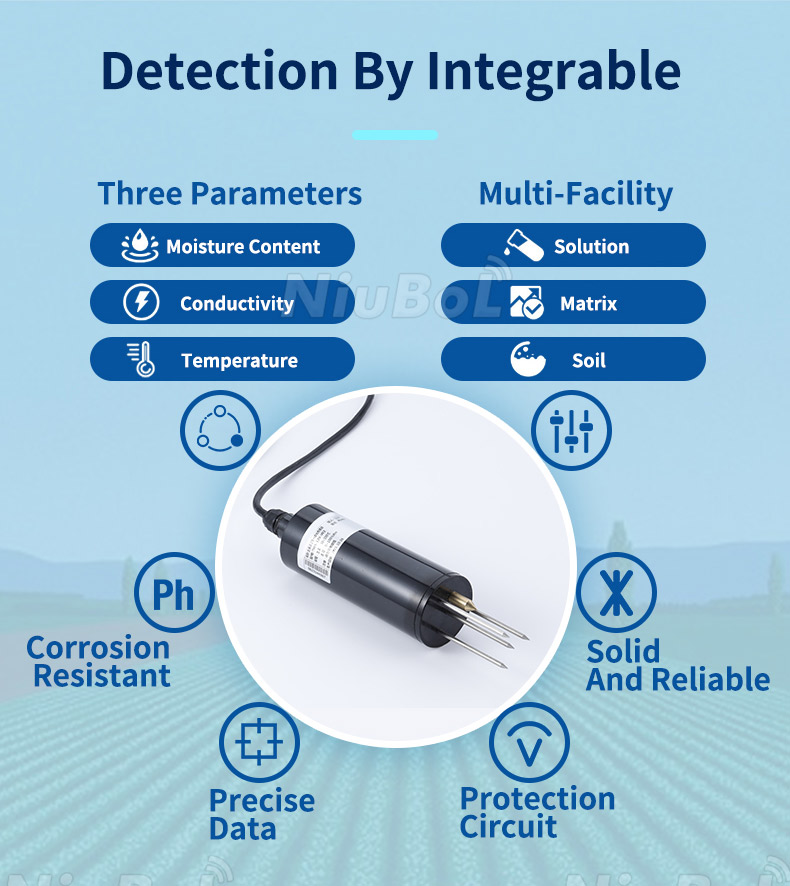
2. Industrial-Grade Soil Moisture/Temperature/Salinity Three-Parameter Sensor
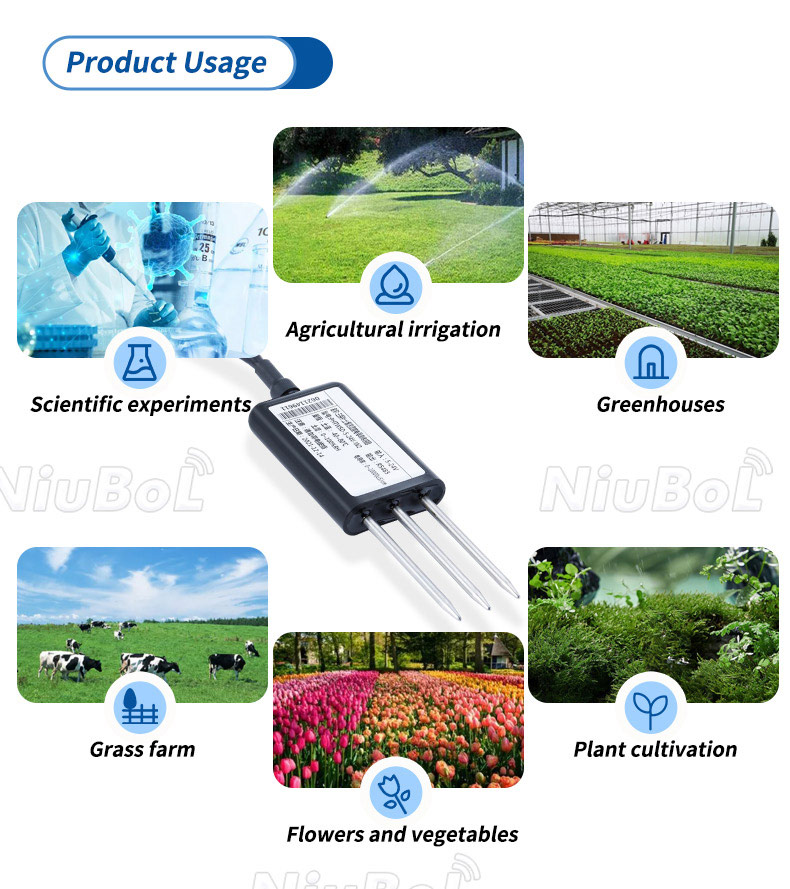
Developed based on FDR (Frequency Domain Reflectometry) principle for real-time online monitoring of soil volumetric water content (VWC), electrical conductivity (EC), and temperature.
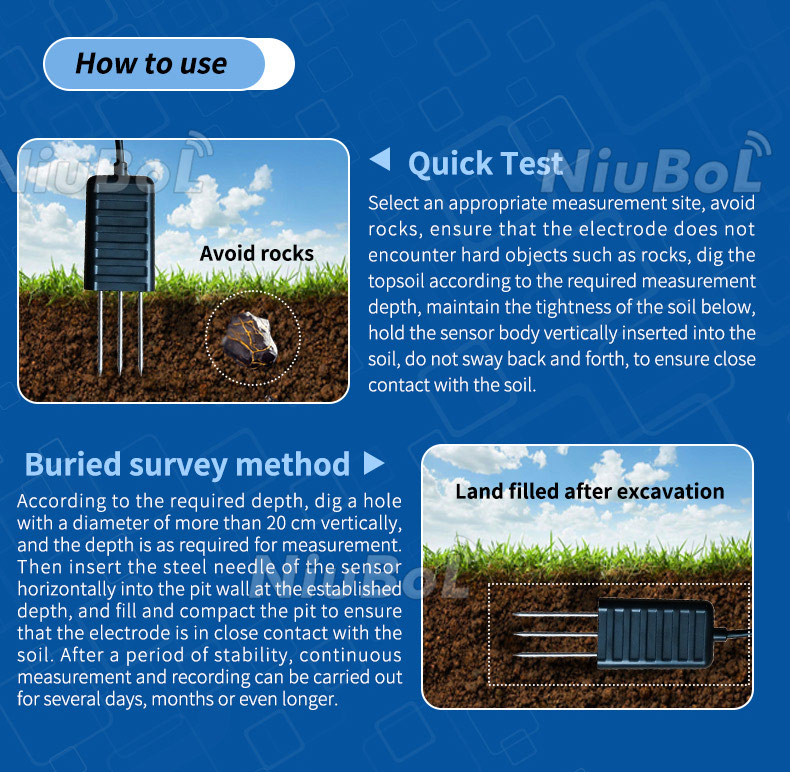
Technical Specifications: Uses stainless steel probes with extremely strong resistance to saline-alkali corrosion. Outputs standard RS485 (Modbus-RTU) signal, seamlessly interfacing with various PLCs or collectors.
Application Fields: Water-fertilizer integration systems, saline-alkali land improvement projects.
3. Soil Hardness and Structure Analyzer
Soil hardness (compaction) directly affects plant root development and mechanized operation efficiency.
Performance Features: Uses pressure sensing principle, digitally outputs force data per unit area (Pa or kg/cm²).
Integration Value: Provides objective physical structure data support in land leveling or high-standard farmland acceptance projects.
4. Soil Heavy Metal and Pollution Rapid Detector
For cultivated land red line protection and industrial site remediation projects, NiuBoL provides portable or integrated heavy metal analysis terminals.
Functional Logic: Rapid screening of heavy metals such as lead, chromium, arsenic, and cadmium in soil. In remediation projects, combined with GPS positioning systems, it can quickly generate soil pollution heat maps to guide precise remediation operations.
When conducting project bidding or technical selection, the following standardized parameters are key indicators for evaluating sensor performance:
| Monitoring Element (Parameter) | Measurement Range (Range) | Resolution (Res.) | Accuracy | Output Protocol (Signal) |
|---|---|---|---|---|
| Soil Volumetric Water Content (VWC) | 0% ~ 100% | 0.1% | ±3% (within 0-50% range) | RS485 (Modbus-RTU) |
| Soil Temperature | -40℃ ~ 80℃ | 0.1℃ | ±0.5℃ | RS485 (Modbus-RTU) |
| Electrical Conductivity (EC/Salinity) | 0 ~ 10,000 us/cm | 1 us/cm | ±5% | RS485 / 4-20mA |
| Soil Hardness | 0 ~ 100 kg/cm² | 0.1 kg/cm² | ±1% F.S | RS485 / Analog |
| Soil pH Value | 0 ~ 14 pH | 0.01 pH | ±0.1 pH | RS485 / 4-20mA |
| Tubular Monitoring Depth | 10cm - 100cm (optional) | Layered optional | Industrial-grade precision standard | RS485 / 4G / GPRS |
Scenario One: High-Standard Farmland and Smart Irrigation System
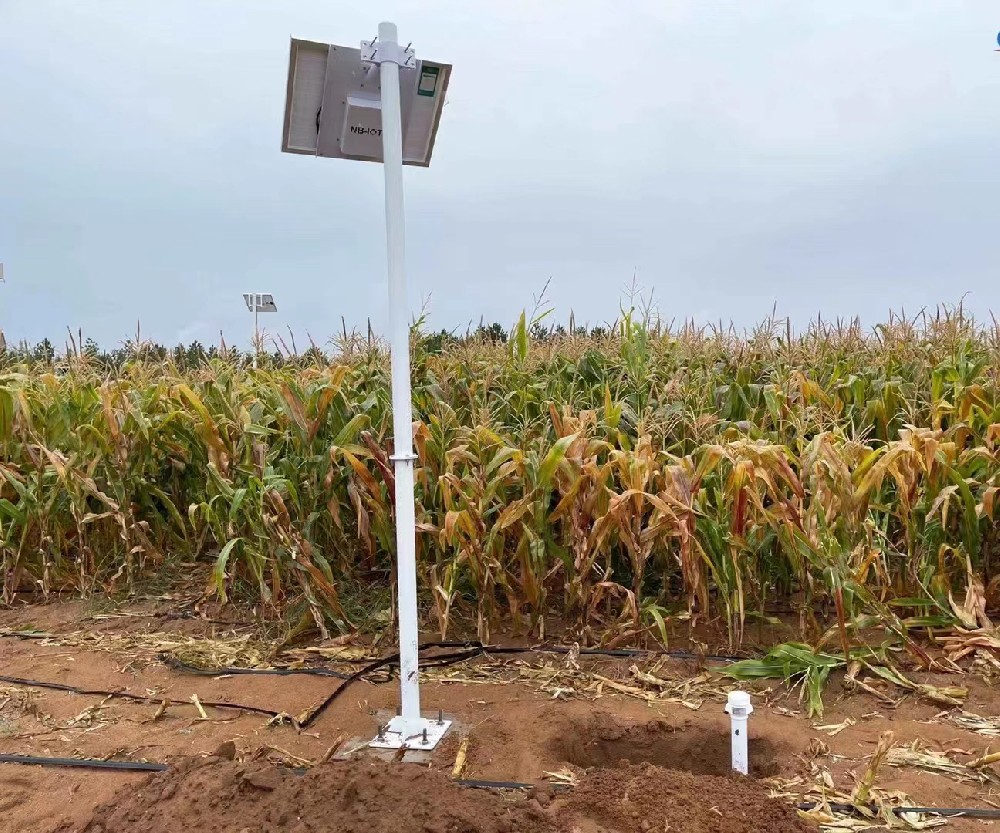
System integrators deploy NiuBoL tubular soil moisture instruments to build a real-time moisture monitoring network. When the system detects moisture below threshold at 20cm depth, the edge gateway triggers solenoid valve opening via Modbus command for precision pulse irrigation.
Scenario Two: Ecological Restoration and Saline-Alkali Land Improvement
In saline-alkali land improvement projects, long-term trend monitoring of soil electrical conductivity (EC) is crucial. NiuBoL three-parameter sensors stably monitor soil changes after salt drainage, providing dynamic remediation effect evaluation data for engineering parties.
Scenario Three: Industrial Park Environmental Risk Control
Using soil heavy metal detection and pH online sensors to establish park soil environmental red line monitoring system. Accesses factory monitoring large screen via RS485 link; upon chemical leakage, the system immediately captures pH or heavy metal index anomalies and alarms.
For project site delivery, installation quality directly determines data credibility:
Tight Contact: Sensor probes or tube walls must fit tightly with soil. When installing tubular instruments, use special soil augers; avoid over-reaming, as air gaps can cause significant data drift.
Lightning Protection and Surge Prevention: In outdoor large-field projects, RS485 bus should be equipped with industrial-grade lightning arresters, and ensure reliable grounding of sensor metal brackets.
Anti-Corrosion Treatment: Although NiuBoL sensors have high protection rating (IP68), for projects in long-term acidic soil environments, additional gel waterproofing at connection points is recommended.
Q1. How do NiuBoL sensors access third-party IoT platforms?
A: All NiuBoL soil sensors use standard Modbus-RTU protocol. We provide complete register mapping tables; integrators can convert data to JSON/MQTT format via any RS485-supporting gateway or DTU for upload to the cloud.
Q2. What are the core advantages of tubular moisture instruments compared to traditional probe types?
A: Tubular instruments require no pit digging for deployment, can be quickly installed with special tools without destroying soil structure, and most importantly, monitor layered data in vertical profiles, while probe types typically measure only single points.
Q3. Do EC sensors require calibration in different soil types?
A: NiuBoL sensors are factory-calibrated to standard. For extremely special soil types (e.g., high clay or very sandy), we support customer offset compensation correction via host computer.
Q4. How is the corrosion resistance of the sensors? How long can they be buried underground?
A: Our stainless steel probe sensors use special encapsulation processes, resistant to acid, alkali, and salt corrosion. In normal agricultural environments, designed service life is typically 3-5 years or more.
Q5. Do you provide portable equipment or only online sensors?
A: We provide both RS485 sensors for online integration and portable detectors with handheld display terminals to meet different needs for on-site spot checks and long-term monitoring.
Q6. What is the RS485 signal transmission distance limit in the field?
A: Using standard industrial-grade shielded twisted pair, transmission distance can reach 1200 meters. For longer distances, recommend cooperating with our 4G wireless modules.
Q7. How to solve the problem of soil sensors being interfered by ambient temperature?
A: NiuBoL sensors internally integrate high-precision temperature compensation algorithms that automatically eliminate volumetric water content reading fluctuations caused by temperature changes.
Q8. Do you support OEM/ODM customization?
A: We focus on B2B cooperation, supporting brand customization (white-label), specific communication protocol modifications, and customized development of shell structures to fully support integrators in project bidding.
Soil monitoring is not only the cornerstone of smart agriculture but also the prerequisite for scientific and digital environmental engineering. With profound hardware manufacturing heritage and understanding of industrial-grade application scenarios, NiuBoL provides global system integrators with full-case support from basic sensors to multi-parameter integrated terminals.
By offering high-stability, low-maintenance-cost soil instruments, we help partners shorten project delivery cycles and enhance end-customer digital management levels.
Related recommendations
Sensors & Weather Stations Catalog
 Agriculture Sensors and Weather Stations Catalog-NiuBoL.pdf
Weather Stations Catalog-NiuBoL.pdf
Agriculture Sensors Catalog-NiuBoL.pdf
Water Quality Sensor Catalog-NiuBoL.pdf
Related products
 Combined air temperature and relative humidity sensor
 Soil Moisture Temperature sensor for irrigation
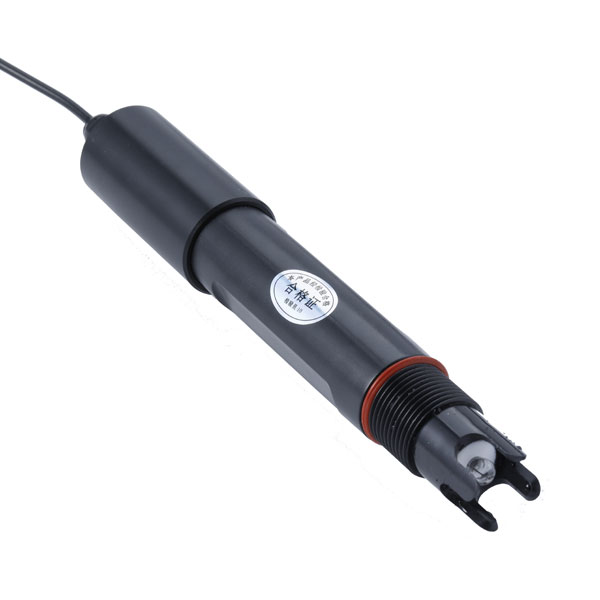 Soil pH sensor RS485 soil Testing instrument soil ph meter for agriculture
 Wind Speed sensor Output Modbus/RS485/Analog/0-5V/4-20mA
 Tipping bucket rain gauge for weather monitoring auto rainfall sensor RS485/Outdoor/stainless steel
 Pyranometer Solar Radiation Sensor 4-20mA/RS485

Screenshot, WhatsApp to identify the QR code
WhatsApp number:+8615367865107
(Click on WhatsApp to copy and add friends)

