





— Blogs —
—Products—
 Consumer hotline +8618073152920
WhatsApp:+8615367865107
Address:Room 102, District D, Houhu Industrial Park, Yuelu District, Changsha City, Hunan Province, China
Product knowledge
Time:2025-09-25 11:07:50 Popularity:1253
Vineyard soil moisture monitoring is useful when probe locations and depths explain how a drip-irrigated block wets and dries. Read the soil trace alongside irrigation delivery, rainfall and crop observations. A rising value confirms a local response, not the uniform wetting of an entire vineyard or an automatic improvement in grape quality.
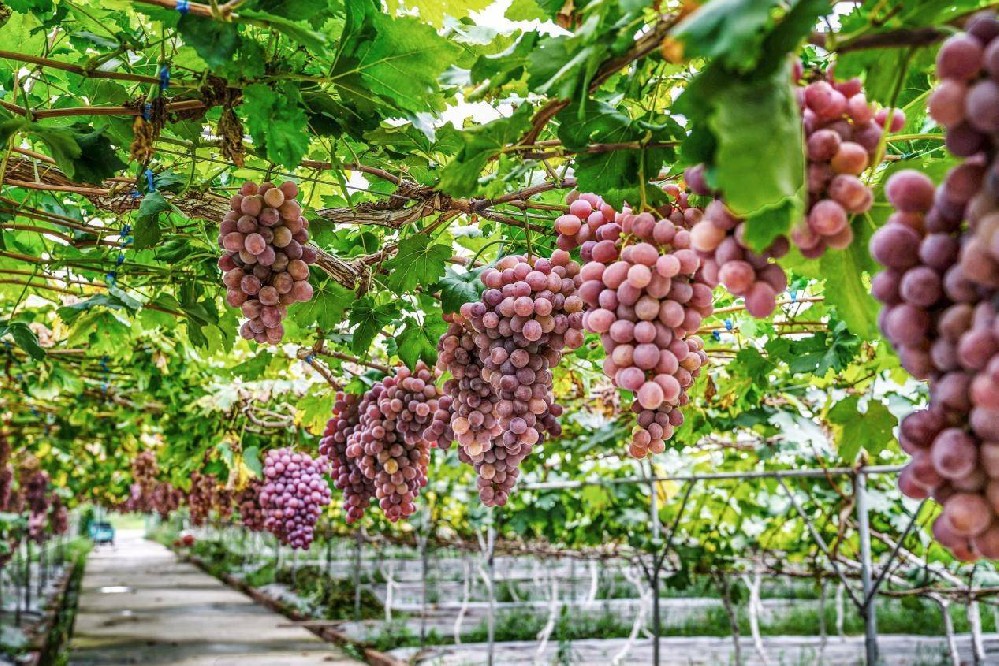
Separate blocks with different irrigation control, soil profile, slope or planting characteristics. A sensor should represent the decision made for that block. A low spot, a shallow soil pocket and a well-drained slope may need different interpretation even if they share a variety and a calendar schedule.
Within a selected block, record the probe's distance from the emitter and vine, its depth and the surrounding soil. Do not prescribe 30 cm and 60 cm simply because those depths are common in an illustration. Examine the actual root distribution and soil horizons with the agronomy team, then choose positions that can answer a specific wetting or drying question.
| Observed pattern | Useful investigation | What not to conclude immediately |
|---|---|---|
| Upper point responds, lower point changes little | Check event duration, wetting geometry and whether the lower point is in the intended wetted volume. | It does not automatically prove that all deeper roots lack water. |
| Lower point changes quickly before the upper point | Inspect preferential flow, installation disturbance and emitter-to-probe position. | It is not proof of uniform downward wetting. |
| Little response despite an irrigation command | Verify flow, pressure, emitter condition and sensor contact. | Do not increase the irrigation dose solely because the dashboard remained flat. |
| One location remains much wetter than others | Check local soil, leaks, drainage and topography. | A wet point should not silently become the average for the whole block. |
These patterns direct an inspection; they are not diagnoses without field checks. A second depth adds information about another local volume, not a continuous root profile. If the field question concerns a different part of the block, another representative location may be more useful than additional probes in the same hole.

The NiuBoL NBL-S-THR measures moisture and temperature using TDR moisture sensing. The NBL-S-TMC adds EC and uses FDR for moisture. They are different configurations; compare the required quantities, output and installation rather than treating the names as interchangeable.
| Probe | Selected parameters | Vineyard selection point |
|---|---|---|
| NBL-S-THR | Moisture 0-100%, +/-3%; temperature -50 to 100 C, +/-0.5 C; DC 12-24 V; IP68 | Two-channel root-zone observation; choose the output version for the receiving equipment. |
| NBL-S-TMC | Moisture 0-100%, +/-5%; temperature -40 to 80 C, +/-0.5 C; EC 0-10000 microsiemens/cm, +/-5%; IP68 | EC adds conductivity context, not separate N, P and K measurements. |
| NBL-S-TMC EC compensation | 0-50 C temperature-compensation range | Retain soil temperature and measurement conditions when comparing EC trends. |
A change in field EC during wetting or fertigation does not establish how much fertiliser the vine absorbed. Water content and dissolved ions can both affect the response. If the project requires a particular nutrient concentration or a laboratory salinity measure, specify an appropriate sampling and analytical method separately.
Place electrodes in close contact with the soil and avoid forcing them against stones or large roots. A disturbed cavity or loose backfill can collect water differently from the surrounding profile. Protect and route the cable so it does not guide surface water directly to the sensing area.
Keep enough access to identify and service each channel without disturbing the measurement zone repeatedly. Record installation photographs and dimensions for later comparison. When a probe is replaced, preserve the old record and replacement time; a step in the trace may be an installation change rather than a change in vine water use.

A controller runtime describes an instruction, not a measured volume. For illustration, an emitter rated at 2 L/hour running for one hour has a nominal delivery of 2 L. Two thousand such emitters would give a nominal 4 m3 for that event. Actual delivery can differ because of pressure, blockage, leakage and equipment condition.
Use a suitable flow measurement or field checks to evaluate that difference. Relate the event to the local moisture response and subsequent drying, allowing for the observed wetting pattern. If a pulse is changed, retain the previous settings and compare the response before making another adjustment. Changing several variables at once makes it difficult to identify the reason for a different trace.
Rainfall and atmospheric conditions help explain changes in a block's water balance. A weather station does not measure the moisture surrounding the roots, and a soil probe does not directly measure vine stress. Any crop-water or deficit-irrigation strategy needs a suitable agronomic method and field observations beyond a universal moisture percentage.
A NBL-PH-1 logger can collect compatible soil and weather channels and retain local records. Keep rainfall totals, irrigation events and sensor timestamps on a comparable basis. A missed observation must remain distinguishable from a real dry reading or a valid period without rainfall.
For a new installation, compare manual field observations, delivery and probe response through representative irrigation events. Decide whether the record changes a block-level decision and how much maintenance it needs. Expansion should follow a demonstrated information gap, not a fixed sensor count per hectare.
Where a system connects to irrigation control, verify the selected RS485 Modbus RTU registers or analog scaling at the controller. The irrigation supplier must separately define pump and valve operation, delivery limits and response to missing measurements. A remote-access service does not replace those local functions.
For a NiuBoL quotation, provide block layout, soil observations, proposed depths and emitter positions, required channels and receiving equipment. State whether monitoring alone or control integration is required. Claims about water saving, fruit composition or wine awards require actual project records and should not be inferred from a successful sensor installation.

Choose depths from the actual root zone and soil profile. Record their relation to the emitter and vine. A common depth in another installation is not evidence that it represents the managed water volume in this block.
It indicates the condition around that probe. Check whether the location represents the intended root zone and whether delivery reached the rest of the block. A saturated point beneath one emitter cannot establish uniform irrigation.
No. It reflects conductivity under the local moisture, temperature and ionic conditions. Use appropriate reference sampling where individual nutrients or a defined laboratory salinity result are required.
Wetting geometry, preferential paths and disturbed soil can change the sequence. Check the installation and hydraulic conditions before treating the pattern as a true profile-wide response or changing the schedule.
Use measured delivery, rainfall, area and suitable crop records with a defined comparison. Keep operating changes identifiable. Sensor traces and commanded runtimes alone do not prove a percentage saving or unchanged crop performance.
Vineyard soil moisture monitoring should explain the response of a managed drip-irrigation block. NiuBoL soil probes and data loggers can support that observation. Choose representative positions, verify delivered water and investigate the trace before assigning irrigation or crop-quality conclusions to it.
Prev:Rainfall Sensors and Their Role in Smart Agriculture
Next:AI in Precision Agriculture: What Sensor Data Must Provide
Related recommendations
Sensors & Weather Stations Catalog
 Agriculture Sensors and Weather Stations Catalog-NiuBoL.pdf
Weather Stations Catalog-NiuBoL.pdf
Agriculture Sensors Catalog-NiuBoL.pdf
Water Quality Sensor Catalog-NiuBoL.pdf
Related products
 Combined air temperature and relative humidity sensor
 TDR Soil Moisture & Temperature Sensor for irrigation| RS485 |4-20mA| NBL-S-THR
 Soil pH sensor RS485 soil Testing instrument soil ph meter for agriculture |NBL-S-PH
 Wind Speed sensor Output Modbus/RS485/Analog/0-5V/4-20mA
 Tipping bucket rain gauge for weather monitoring auto rainfall sensor RS485/Outdoor/stainless steel
 Pyranometer Solar Radiation Sensor 4-20mA/RS485


Screenshot, WhatsApp to identify the QR code
WhatsApp number:+8615367865107
(Click on WhatsApp to copy and add friends)

