





— Blogs —
—Products—
 Consumer hotline +8618073152920
 WhatsApp:+8615367865107
Address:Room 102, District D, Houhu Industrial Park, Yuelu District, Changsha City, Hunan Province, China
Product knowledge
Time:2026-02-07 15:05:21 Popularity:681
A tower crane dust monitor samples the air entering its inlet at a particular location and time. It does not look down over the whole construction site like a camera. A high mounting point can add useful observations near elevated work, but its height, surrounding structure and movement change what the readings represent. Select it as a defined monitoring point, not a substitute for every boundary or worker-exposure measurement.
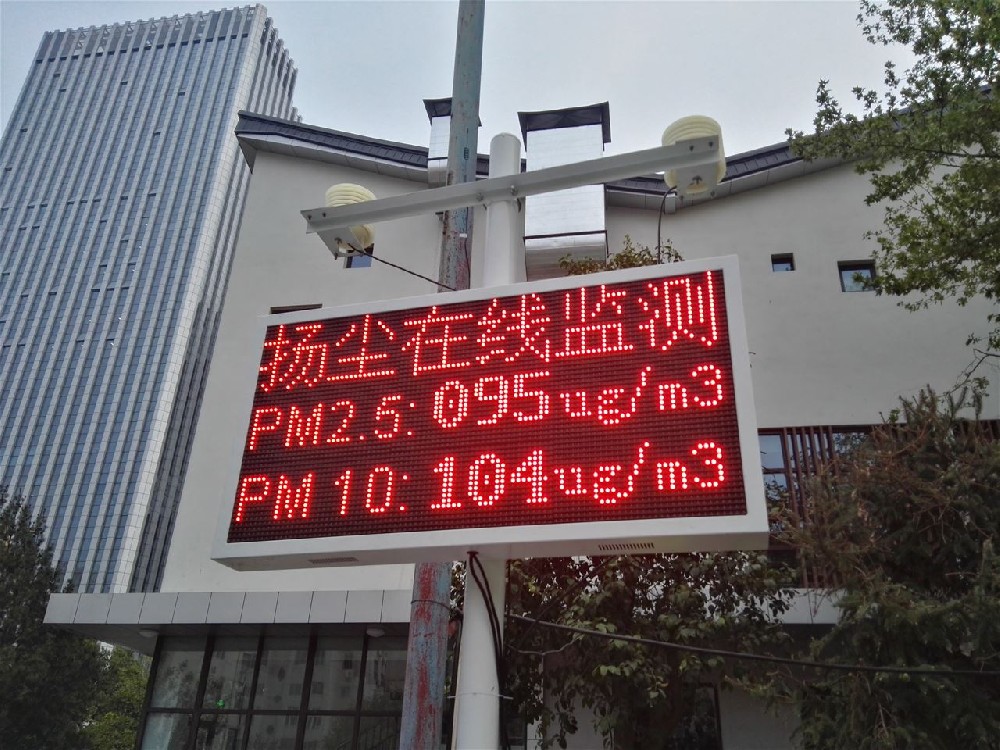
A project may need to investigate dust near an upper-floor activity, compare concentrations at different elevations or supplement a fixed perimeter network. These are different from demonstrating compliance at a prescribed boundary location. Establish the purpose before choosing the crane, rooftop or mast as the support.
The US EPA guidance on air-sensor siting emphasizes free airflow and the influence of nearby sources and obstructions. Those principles are relevant here: moving a sensor higher does not automatically make its sample more representative. It may move the inlet away from the plume the project needs to observe.
| Location | Useful question | Important limitation |
|---|---|---|
| Fixed boundary point | What concentration occurs at this defined edge location? | Does not describe every elevated activity |
| Approved crane attachment | What air reaches this elevated inlet during site operations? | Crane structure, height changes or motion can alter interpretation |
| Stable rooftop point | What occurs near this building level and exposure? | Parapets, exhaust and nearby work can dominate |
| Worker exposure instrument | What does the relevant personal exposure method assess? | A different task from a general ambient PM station |
For regulatory reporting, agree the approved method, siting and averaging requirements with the responsible authority. A factory sensor range or an environmental dashboard is not evidence of approval for that use. Do not replace a required reference or personal exposure method with an elevated ambient monitor without resolving the measurement difference.
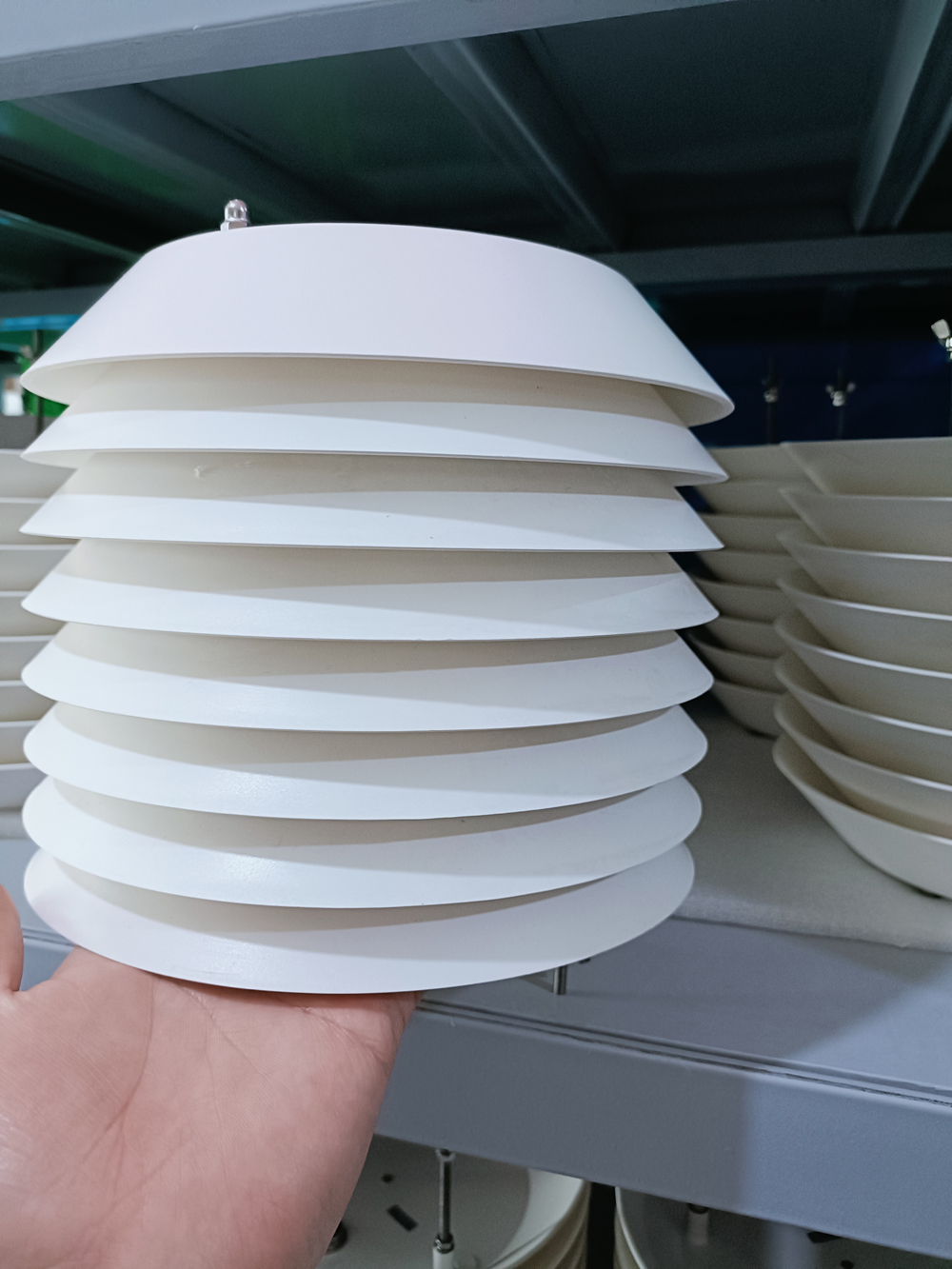
The NiuBoL NBL-W-PM integrated sensor uses laser scattering with a fan-assisted air path to report PM2.5 and PM10. It provides local particle measurements to acquisition equipment. It does not automatically measure total suspended particles, respirable crystalline silica or the chemical identity of the dust.
| Parameter | NBL-W-PM |
|---|---|
| PM2.5 range | 0-1,000 ug/m3 |
| PM10 range | 0-2,000 ug/m3 |
| Error specification | +/-15% or +/-10 ug/m3, whichever is greater, at 25 C and 50% RH |
| Minimum detected particle diameter | 0.3 micrometre |
| Supply and sensor power | 12-24 V DC; 350 mW |
| Interface | RS485 Modbus RTU; 9600 bps |
| Ambient range | -20 to +60 C; protect against condensation and liquid ingress |
| Standard instrument cable | 2.5 m; extension requires a suitable network and electrical design |
The error specification has stated test conditions, not a guarantee for every aerosol and humidity level. A temperature/RH channel can help flag difficult conditions but does not by itself prove that the PM instrument automatically corrects hygroscopic growth or water droplets. Keep weather context available and investigate spikes associated with spray or condensation.
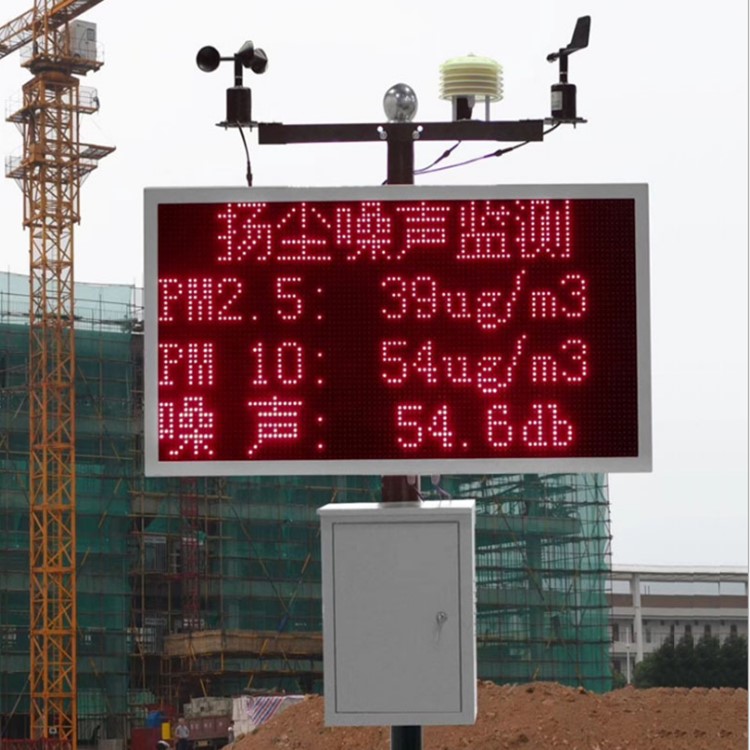
The crane owner, manufacturer and responsible engineering team must review the proposed attachment and its location. Include the enclosure, display, solar panel, antenna and brackets in that review. The sensor's own mass is only part of the added load; exposed area and the position of accessories also matter.
The UK HSE tower-crane safety bulletin on slew brakes and release mechanisms discusses added signage and requires attention to manufacturer approval and competent design of accessory brackets. It illustrates why a broad panel or enclosure cannot be treated as a negligible attachment. Apply the relevant local requirements and approved crane arrangement for the actual installation.
Do not drill, weld or clamp to an arbitrary member based solely on a generic monitor drawing. Check working clearances, climbing arrangements, rotating parts, cable paths and the crane's operational procedures. Select a location that can be serviced safely; a sensor that cannot be reached for inspection may be a poor choice even if its initial readings appear useful.
There is no universal instruction to mount a dust monitor 10-20 m above every work surface. Determine whether the inlet will sample the intended air and whether the installation is approved. A stationary mounting on a suitable support may be preferable where a crane arrangement changes too often to maintain a consistent measurement location.
Identify where air enters and leaves the instrument, and preserve the intended flow path. A weatherproof enclosure that blocks the inlet can invalidate an otherwise functioning sensor. Check the influence of nearby surfaces, exhaust, material handling and direct water spray; neither a rain shield nor a radiation shield is permission to enclose the sampling opening.
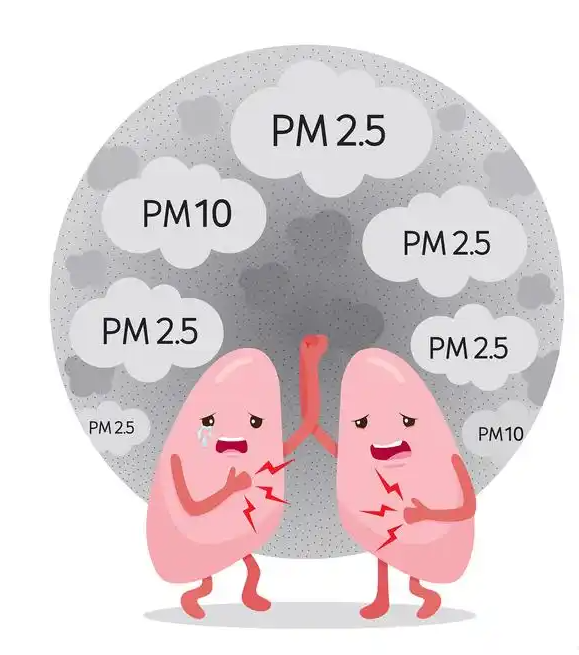
The PM illustration below identifies particle size fractions. It should not be used to interpret the station as a personal health assessment instrument. For the engineering application, the important distinction is that ambient PM readings describe the sampled air, while occupational exposure and material-specific hazards may require separate approved methods.
If the crane slews, climbs or is relocated, retain the location or operational context needed to interpret the record. A concentration change can result from moving the inlet rather than changing emissions. Do not calculate a vertical concentration profile from sensors that were sampled at different times under changing weather without accounting for that difference.
Wind data can help explain transport direction but cannot uniquely identify a source from one PM observation. Crane members and nearby buildings can disturb local airflow, and distant sources may contribute. Use activity logs and, where needed, additional fixed points to test an attribution instead of labeling every downwind increase as proof of one operation's emissions.
The particle sensor's 350 mW load is not the complete tower crane dust monitor load. A continuously powered sensor alone uses 8.4 Wh in 24 hours. The display, modem, logger and any auxiliary equipment can change the total significantly. Obtain the actual component power schedule before choosing a solar supply or battery.
Assess shading and changing orientation if a solar panel moves with the support. Confirm cable strain relief, routing and protection through the approved crane arrangement. Do not infer winter autonomy or battery charging capability from a generic lithium-battery label. If continuous monitoring is required, a proposed sleep schedule must be evaluated against the data requirement.
At the acquisition side, match RS485 address, serial settings and channel units. Upstream mobile data, Ethernet and authority-specific reporting belong to the selected gateway and software. Changing a server IP address alone does not establish compatibility with a reporting platform, its authentication or data-quality requirements.
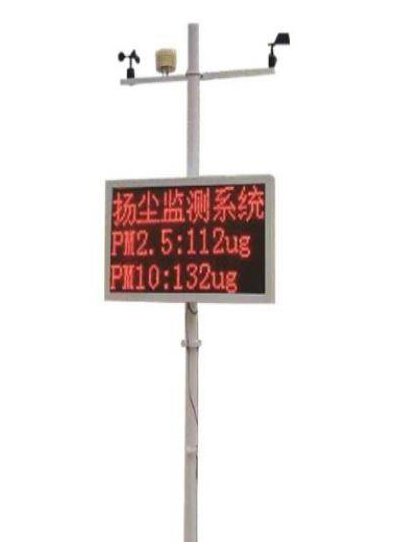
Before elevated deployment, compare the candidate instruments side by side at a suitable accessible position. This helps separate instrument differences from later location differences. The comparison is not a substitute for required calibration or regulatory approval, but it provides a useful baseline for a multi-height study.
After installation, review measurements against activity, wind, humidity, spray events and crane changes. Keep the inlet position, height reference and maintenance dates with the data. If a boundary point remains high while an elevated point stays low, do not automatically declare the boundary instrument biased; the two inlets may be sampling different air.
Plan inspection according to contamination and access, not a fixed six- or twelve-month interval chosen because climbing is inconvenient. Include checks of the air path, fan condition, attachments, cables and data freshness. Electrical bonding and surge arrangements need a site design; do not connect to a lightning conductor solely on the basis of a generic installation suggestion.
For a quotation, send the intended monitoring task, candidate support, attachment restrictions, required particle fractions, display needs, power availability and reporting interface. Separate the sensor package from access equipment, structural review and ongoing service so that the installed cost is visible.
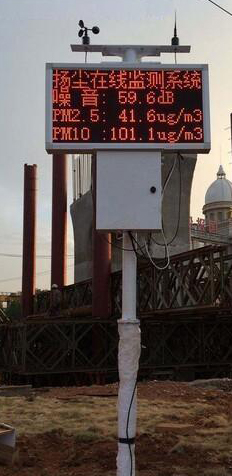
Not automatically. The locations represent different air and may serve different reporting purposes. Keep required boundary measurements and add an elevated point only for a defined supplementary task or an explicitly approved alternative arrangement.
No. The PM sensor samples air at its inlet. Height can change exposure to different plumes, but it does not create camera-like coverage of the work areas below.
It reports PM2.5 and PM10 by optical measurement. These values do not identify chemical composition or replace material-specific exposure assessment. Specify separate methods where those are the project requirements.
No. Review the complete added assembly, wind loading, clearances, cable routing and maintenance access with the responsible crane parties. A monitor supplier's bracket drawing does not approve attachment to every crane.
No. It provides context unless a specific correction method has been supplied and validated. Investigate spray and condensation effects rather than assuming a generic compensation algorithm makes every reading valid.
Check instruments side by side before separating them, then review elevated and fixed-point records with matched time periods and operational context. Test stale-data indication separately from environmental agreement.
A tower crane dust monitor is useful when its local sample answers a defined elevated-monitoring question. Select and approve the attachment, preserve the sampling path and retain crane and weather context. NiuBoL PM sensors can supply particle data to that system, but monitoring coverage, structural approval and reporting acceptance must be established for the actual project.
Prev:PV Soiling Sensor Maintenance: Cleaning and Baseline Changes
Next:High-Reliability Industrial-Grade Ultrasonic Integrated Weather Station
Related recommendations
Sensors & Weather Stations Catalog
 Agriculture Sensors and Weather Stations Catalog-NiuBoL.pdf
Weather Stations Catalog-NiuBoL.pdf
Agriculture Sensors Catalog-NiuBoL.pdf
Water Quality Sensor Catalog-NiuBoL.pdf
Related products
 Combined air temperature and relative humidity sensor
 TDR Soil Moisture & Temperature Sensor for irrigation| RS485 |4-20mA| NBL-S-THR
 Soil pH sensor RS485 soil Testing instrument soil ph meter for agriculture |NBL-S-PH
 Wind Speed sensor Output Modbus/RS485/Analog/0-5V/4-20mA
 Tipping bucket rain gauge for weather monitoring auto rainfall sensor RS485/Outdoor/stainless steel
 Pyranometer Solar Radiation Sensor 4-20mA/RS485

Screenshot, WhatsApp to identify the QR code
WhatsApp number:+8615367865107
(Click on WhatsApp to copy and add friends)

