





— Blogs —
—Products—
 Consumer hotline +8618073152920
WhatsApp:+8615367865107
Address:Room 102, District D, Houhu Industrial Park, Yuelu District, Changsha City, Hunan Province, China
Product knowledge
Time:2025-11-02 15:38:46 Popularity:1037
Environmental sensor accuracy must be assessed per measurement channel, in its stated units and operating conditions. Display resolution, enclosure protection and the number of parameters do not establish measurement accuracy. For a NiuBoL monitoring system, compare the actual sensor specifications first, then examine how exposure, installation and data conversion affect the value received by the logger.
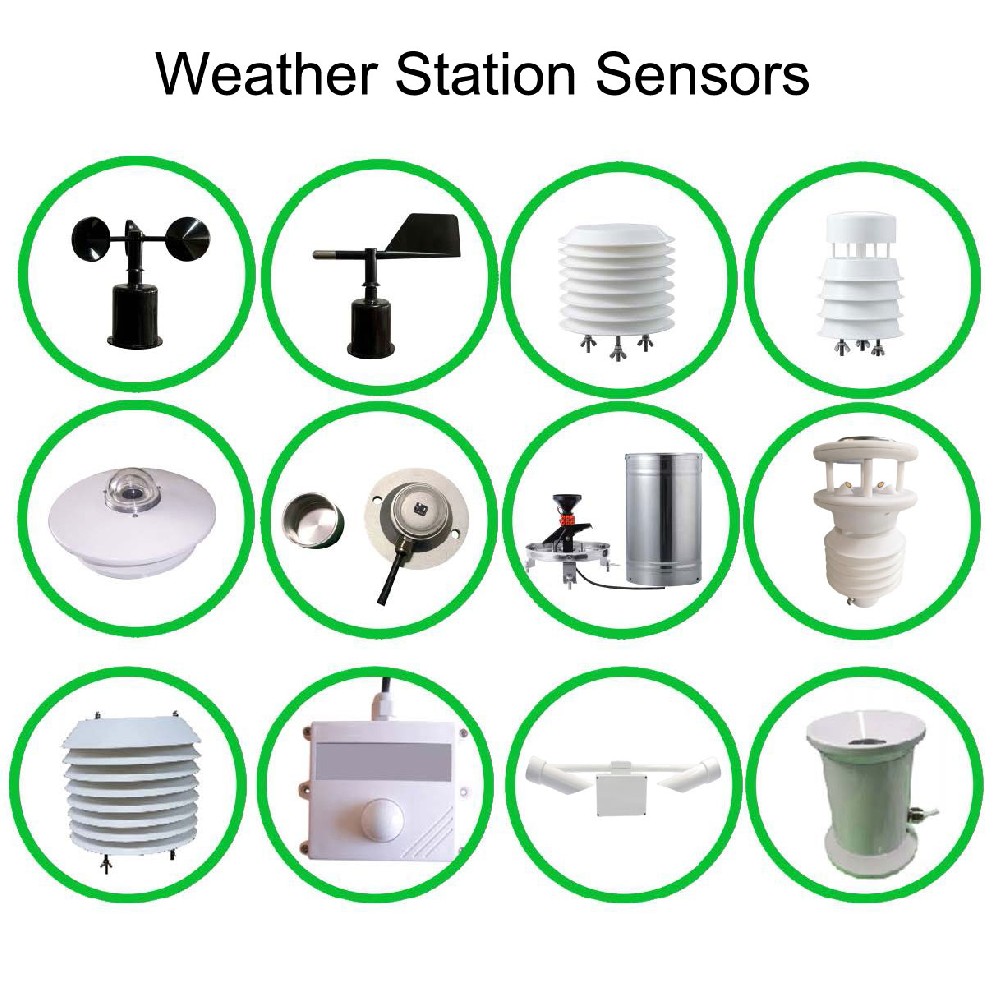
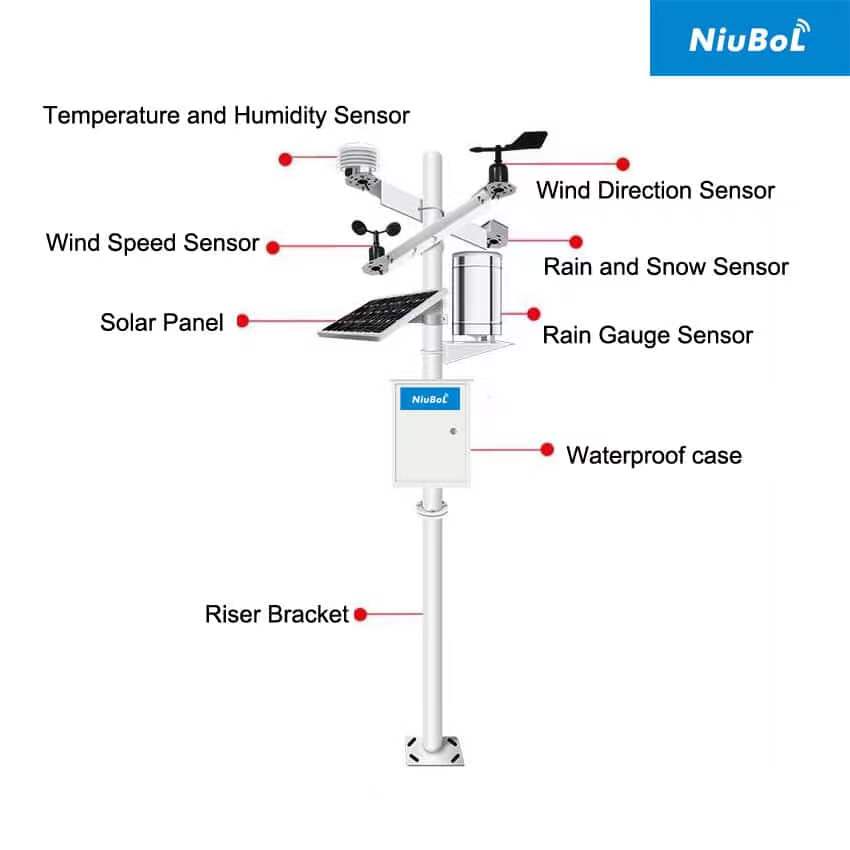
A modular station combines different physical measurements. Air temperature uses degrees, pressure uses pressure units, rainfall uses a depth increment and wind speed uses a velocity. A single “high-precision” label does not explain whether any of these channels can resolve the change that matters to a project.
Begin with the intended comparison. Detecting a broad seasonal trend is not the same task as distinguishing two nearby locations with a small expected difference. Specify the quantity and the size of the difference of interest. Then check whether the complete measurement arrangement, including placement and reference comparison, can support that task.

| Term | What it tells the buyer | What it does not establish |
|---|---|---|
| Range | The stated span of the measurement channel | Equal accuracy throughout every environmental condition |
| Resolution | The smallest reported increment | That every final digit represents a distinguishable physical change |
| Accuracy specification | The stated error limit under its applicable conditions | The representativeness of an unsuitable installation location |
| Repeatability | How consistently a measurement repeats under comparable conditions | Freedom from a consistent offset |
| IP protection | Enclosure protection for the rated item | Chemical compatibility, calibration stability or protection of every cable joint |
For water quality instruments, the measurement method and sample arrangement are also essential. A probe affected by deposits may provide a stable but biased value. Cleaning and comparison with an appropriate reference must distinguish a sensor problem from a change in the sample. Buying additional decimal places does not remove fouling.
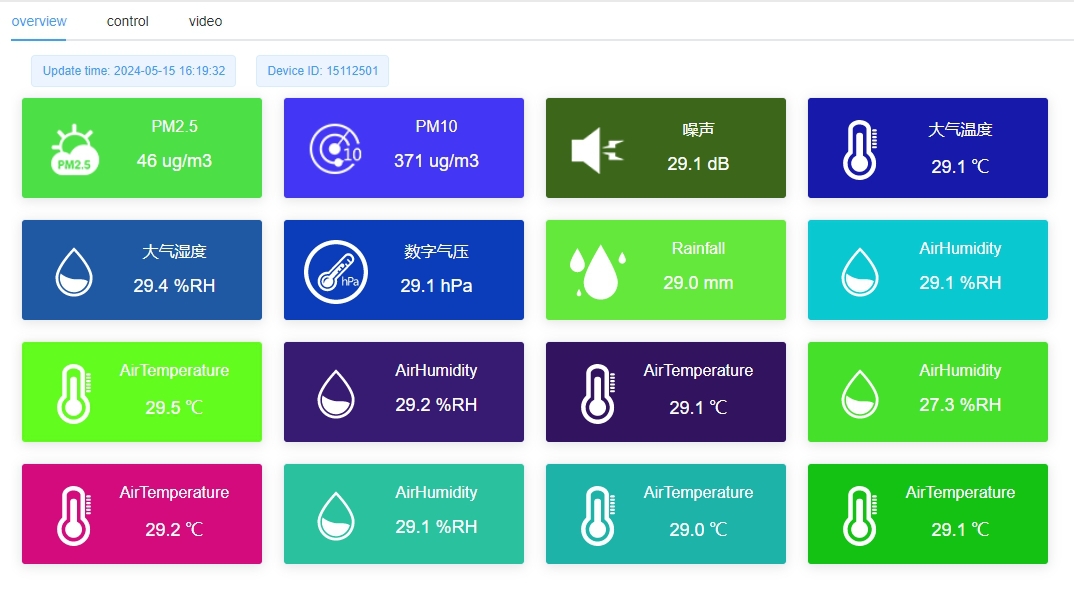
The NBL-W-LBTH temperature, humidity and pressure sensor illustrates why units matter. Its temperature resolution is 0.1 C, but its temperature accuracy is ±0.5 C. Relative-humidity resolution is 0.1%RH, while accuracy is ±5%RH. Pressure resolution is 0.1 hPa, with accuracy of ±1.5 hPa. The finer displayed increment does not replace the accuracy limit.
| NBL-W-LBTH channel | Range | Specified accuracy | Resolution |
|---|---|---|---|
| Air temperature | -40 to 80 C | ±0.5 C | 0.1 C |
| Relative humidity | 0-100%RH | ±5%RH | 0.1%RH |
| Barometric pressure | 10-1200 hPa | ±1.5 hPa | 0.1 hPa |
| Supply and output | DC 12-24 V; RS485 Modbus RTU or 4-20 mA version | ||
For example, two air-temperature readings 0.2 C apart do not by themselves establish a real spatial temperature difference when each instrument has a ±0.5 C specification. A suitable comparison procedure and reference may be needed. Do not simply add specifications from unrelated quantities into a station-wide percentage.
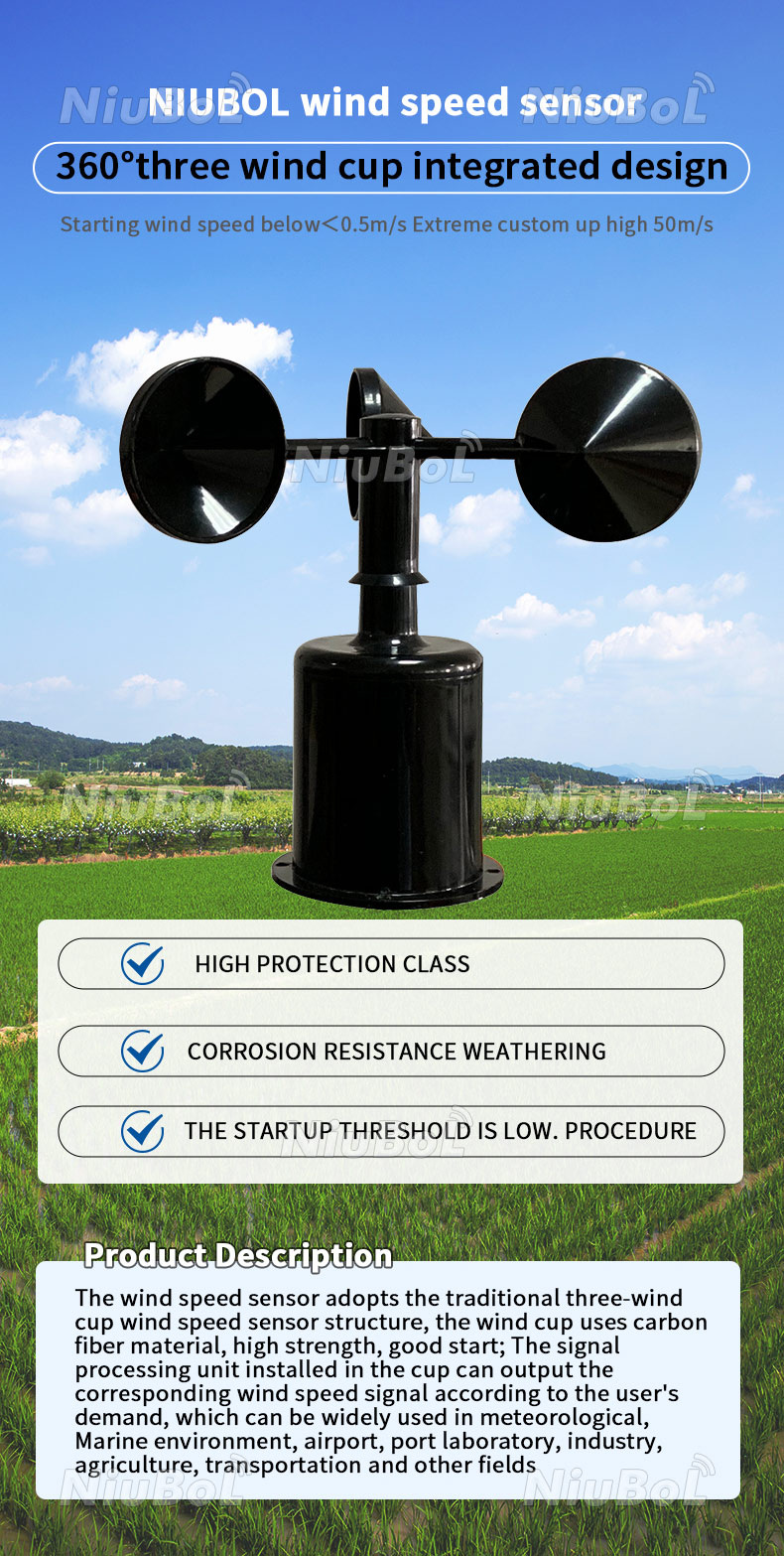
The NBL-W-SS wind speed sensor uses a three-cup arrangement. Specify IP65 for the NBL-W-SS and NBL-W-DS wind sensors, not a blanket IP68 rating for the station. That protection rating does not make a wind measurement beside an obstruction equivalent to an open-site measurement, nor does it establish an anti-icing capability.
Wind speed and wind direction are separate channels. A cup anemometer cannot provide direction by itself. For a site comparison, record mounting position and nearby obstacles; otherwise, a change in exposure may be mistaken for an instrument error. Inspect the mechanical condition of the cups and mount before changing software scaling to make a result match another station.
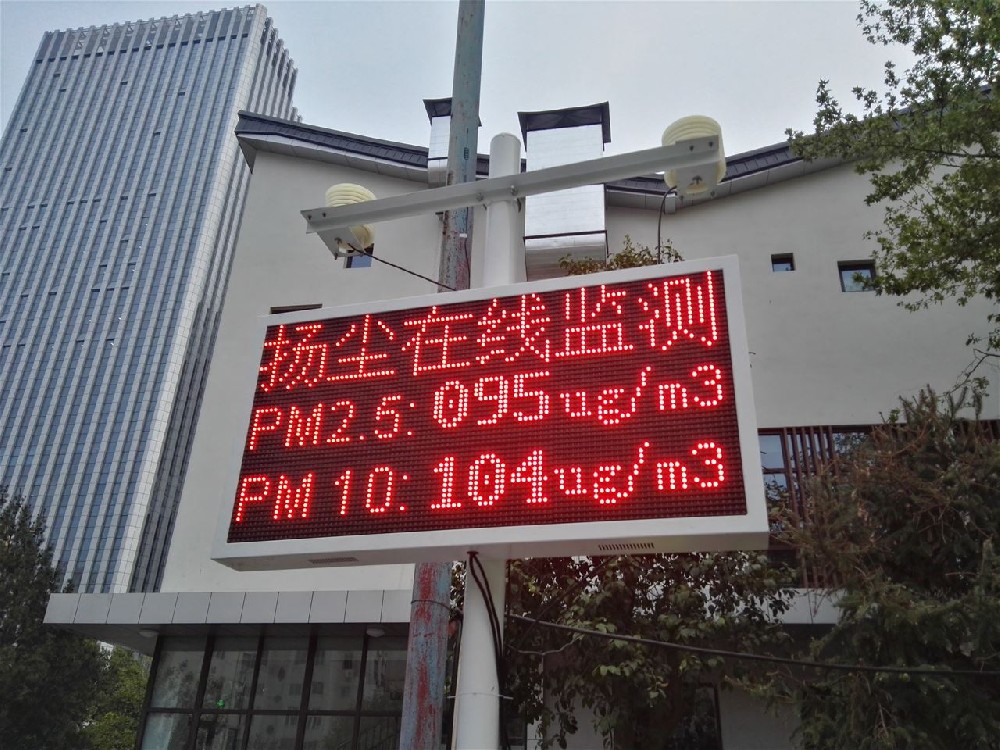
Environmental sensor accuracy can be undermined after sensing. An incorrectly decoded register, wrong analog range or mistaken pressure unit can produce a plausible-looking value with a large error. Check the acquisition path using a known sensor reading before evaluating field performance.
For the RS485 Modbus RTU version of NBL-W-LBTH, the documented temperature, humidity and pressure values use a scale factor of 0.1. A decimal temperature value of 180 represents 18.0 C, not 180 C. Configure the PLC or data logger accordingly and verify the displayed units. An analog version requires its matching conversion and input configuration rather than that register rule.
The logger's time settings also matter. A short observation compared with a longer average may differ even when neither sensor is faulty. Keep sampling interval, averaging period and timestamps consistent when testing a replacement. Do not infer drift from two records that describe different time windows.
Begin by checking installation, service condition and configuration. Place a suitable reference near the point being evaluated without changing the exposure in a way that invalidates the comparison. Allow the instruments to respond to the same conditions and record the reference identification, time and operating state.
If the difference varies with sun exposure, investigate shielding and nearby heat sources. If it appears after rain or prolonged high humidity, inspect the condition of the sensing assembly and installation. If every value is wrong by a consistent multiplier, inspect the conversion before replacing hardware. These observations narrow the investigation; they do not establish a universal fault diagnosis.
For formal acceptance, agree the comparison method and applicable limits before ordering. A product accuracy specification is not automatically a site-wide acceptance limit, particularly where the reference and installed device have different exposure or response characteristics. Ask NiuBoL for the selected model's data format and specification when preparing that procedure.
No. Resolution describes the reporting increment. NBL-W-LBTH, for example, has 0.1 C temperature resolution and ±0.5 C specified accuracy. Both values belong in a meaningful comparison.
No. Protection is model-specific. NBL-W-SS and NBL-W-DS wind sensors are specified as IP65; a buried soil probe may have a different rating. Check the actual item, including exposed connections.
A dashboard can apply the correct units and processing, but it cannot recover an unmeasured quantity or correct unsuitable exposure by itself. Displaying more digits does not improve the underlying measurement.
Compare method, installation, output scaling, service condition and recording interval before deciding which reading is wrong. Two devices at different positions or with different averaging periods may not be measuring the same conditions.
Name the quantity, operating range, difference to be detected, installation environment and reference or acceptance method. This is more useful than requesting a “research-grade” station without channel-specific limits.
Environmental sensor accuracy is a channel-by-channel question. Compare ranges, accuracy and resolution separately, keep protection ratings model-specific, and verify that the receiving equipment preserves the intended units and scaling. A clear measurement comparison is more valuable than a general high-precision label.
Prev:PV Soiling Sensor Readings for Cleaning Decisions
Next:Environmental Monitoring Equipment Selection: Portable Survey or Fixed Station?
Related recommendations
Sensors & Weather Stations Catalog
 Agriculture Sensors and Weather Stations Catalog-NiuBoL.pdf
Weather Stations Catalog-NiuBoL.pdf
Agriculture Sensors Catalog-NiuBoL.pdf
Water Quality Sensor Catalog-NiuBoL.pdf
Related products
 Combined air temperature and relative humidity sensor
 TDR Soil Moisture & Temperature Sensor for irrigation| RS485 |4-20mA| NBL-S-THR
 Soil pH sensor RS485 soil Testing instrument soil ph meter for agriculture |NBL-S-PH
 Wind Speed sensor Output Modbus/RS485/Analog/0-5V/4-20mA
 Tipping bucket rain gauge for weather monitoring auto rainfall sensor RS485/Outdoor/stainless steel
 Pyranometer Solar Radiation Sensor 4-20mA/RS485


Screenshot, WhatsApp to identify the QR code
WhatsApp number:+8615367865107
(Click on WhatsApp to copy and add friends)

