





— Blogs —
—Products—
 Consumer hotline +8618073152920
 WhatsApp:+8615367865107
Address:Room 102, District D, Houhu Industrial Park, Yuelu District, Changsha City, Hunan Province, China
Product knowledge
Time:2026-03-08 15:42:11 Popularity:518
In the field of smart agriculture transformation and agricultural IoT integration, agricultural weather stations have become the core tool for system integrators, IoT solution providers, and engineering companies to address climate change, enhance disaster defense capabilities, and achieve precision planting. The system collects elements such as air temperature, humidity, wind speed and direction, air pressure, rainfall, and soil temperature/humidity in real time, transmitting data to the cloud platform via GPRS/4G/LoRa, supporting threshold alarms, crop model matching, and automated linkage. As a professional manufacturer, NiuBoL provides multi-element automatic weather stations and integrated observation equipment, suitable for open-field farmland, greenhouses, and high-standard farmland projects, ensuring data accuracy, system robustness, and expansion compatibility.
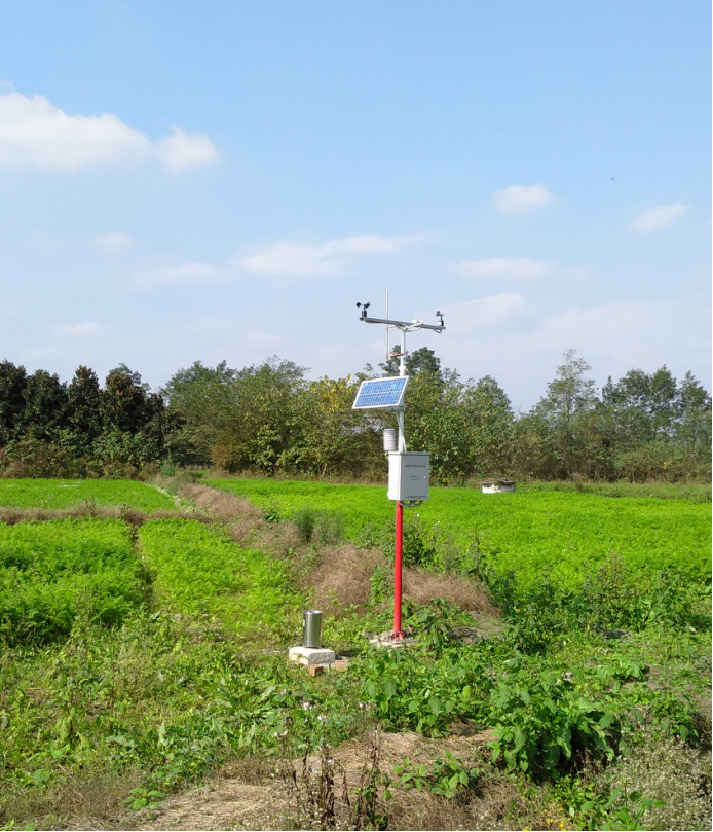
NiuBoL agricultural weather station adopts a modular architecture, integrating high-precision sensor arrays and embedded data collectors to achieve continuous monitoring of field microclimate elements.
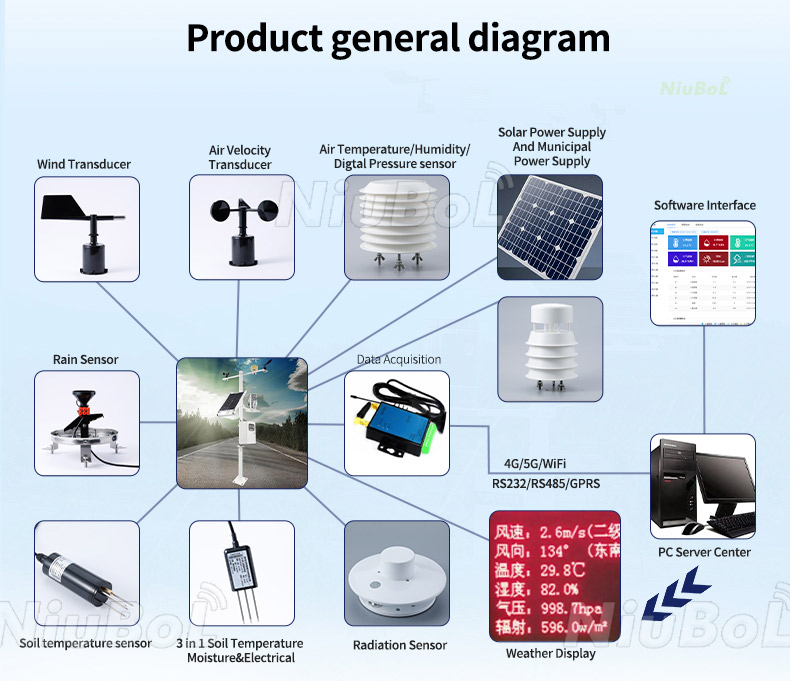
Engineering practice shows that the system optimizes sensor design for agricultural disaster pain points:
Air Temperature/Humidity: Uses digital integrated sensors with built-in temperature compensation algorithms to avoid drift errors in traditional analog circuits.
Wind Speed/Direction: Ultrasonic integrated module, more resistant to dust accumulation than three-cup type, response time shortened to 0.5 seconds.
Rainfall: Optical rain gauge design improves anti-clogging performance by 30%, suitable for high-intensity rainfall scenarios.
Atmospheric Pressure: High-resolution silicon piezoresistive sensor with automatic altitude correction.
Soil Temperature/Humidity: Multi-layer dielectric probe, compatible with saline-alkali soil types, measurement depth up to 100 cm.
Extended Elements: Optional photosynthetically active radiation, leaf wetness, or CO₂ sensors to meet specific crop needs.
Data sampling interval is flexibly configurable (1-60 minutes), with the collector featuring built-in edge computing module for preliminary noise filtering and instant alarms.
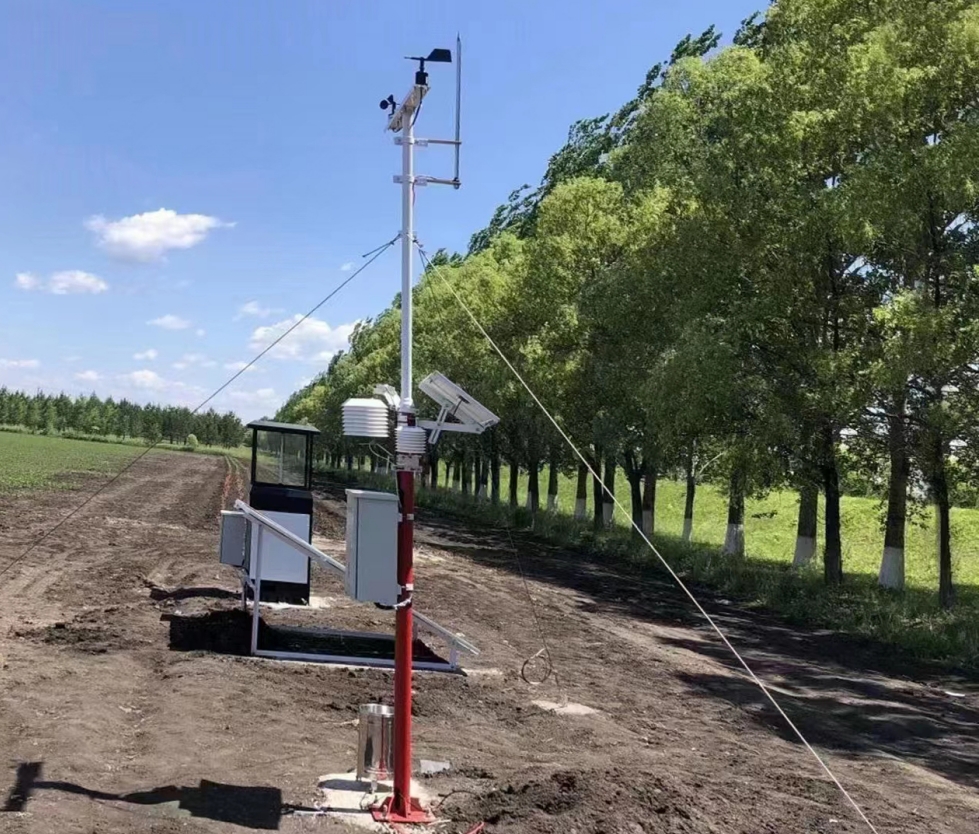
The system supports RS485 Modbus RTU protocol for local acquisition, combined with GPRS/4G or LoRa wireless links to ensure stable connectivity in remote farmlands. It facilitates seamless integration with SCADA, GIS, or agricultural decision support systems by integrators.
Meteorological elements serve as a "double-edged sword" in agricultural production—driving crop growth while inducing disasters. Under the trend of global warming, the frequency of extreme weather events in China has increased by 15% (according to the 2024 China Meteorological Administration report), posing higher risks to open-field planting. NiuBoL weather stations provide targeted solutions, highlighting engineering advantages in defense capabilities and efficiency optimization.
Disaster Defense and Risk Quantitative Management
Actual deployment data shows that the system provides real-time warnings for strong winds causing lodging or waterlogging through wind speed/rainfall thresholds, with response delay<5 seconds. Integrated meteorology-crop correlation models enable early prediction of frost (temperature <0℃ lasting="">2 hours) or dry-hot winds (wind speed >3 m/s + humidity<30%), reducing yield loss by 20-30%.
Precision Decision-Making and Efficient Resource Allocation
Data-driven optimization: accumulated temperature models guide sowing windows, humidity/radiation analysis enables precise quantitative fertilization/irrigation, wind speed assesses spray drift risks. Compared to traditional empirical judgment, the system improves water and fertilizer utilization by more than 15%, supporting low-emission agriculture under carbon neutrality goals.
System Robustness and Maintenance Optimization
Integrated protective box + stainless steel bracket, IP67 rating withstands extreme environments. Low-power mode (<3W average) combined with solar power extends maintenance cycle by 2 times compared to pump-type sensors. Remote diagnosis function reduces on-site intervention by 80%.
Compliance Standards and Industry Trend References
Design complies with the 2025 updated GB/T agricultural meteorological observation specifications and HJ 212 data transmission standards, ensuring data docking with national meteorological grid products. In response to rural revitalization digitalization requirements, it supports agricultural insurance meteorological index calculation and non-point source pollution monitoring trend analysis.
NiuBoL agricultural weather station specifications are shown in the table below, supporting project-specific customization.
| Element Category | Measurement Principle | Range | Accuracy |
|---|---|---|---|
| Air Temperature | Digital Integration | -40~80 ℃ | ±0.2 ℃ |
| Relative Humidity | Capacitive + Compensation | 0~100% RH | ±2% RH |
| Wind Speed | Ultrasonic | 0~70 m/s | ±2% or ±0.1 m/s |
| Wind Direction | Ultrasonic | 0~360° | ±1° |
| Rainfall | Optical | 0~9999 mm | ±2% |
| Atmospheric Pressure | Silicon Piezoresistive + Correction | 300~1100 hPa | ±0.1 hPa |
| Soil Temperature | Thermistor | -40~80 ℃ | ±0.5 ℃ |
| Soil Moisture | Dielectric Constant | 0~100% (volumetric water content) | ±2% (0~50% range) |
| Parameter Category | Specific Description |
|---|---|
| Power Supply Method | Solar + Lithium Battery (≥10 consecutive rainy days) |
| Output Interface | RS485 (Modbus RTU); GPRS/4G/NB-IoT Upload |
| Protection Rating | IP67 (Full System) |
| Installation Method | Stainless Steel Bracket Fixation, Modular Assembly |
| Data Storage | Local ≥2 Years; Cloud Unlimited |
| Operating Environment | -50~90 ℃, 0~100% RH |
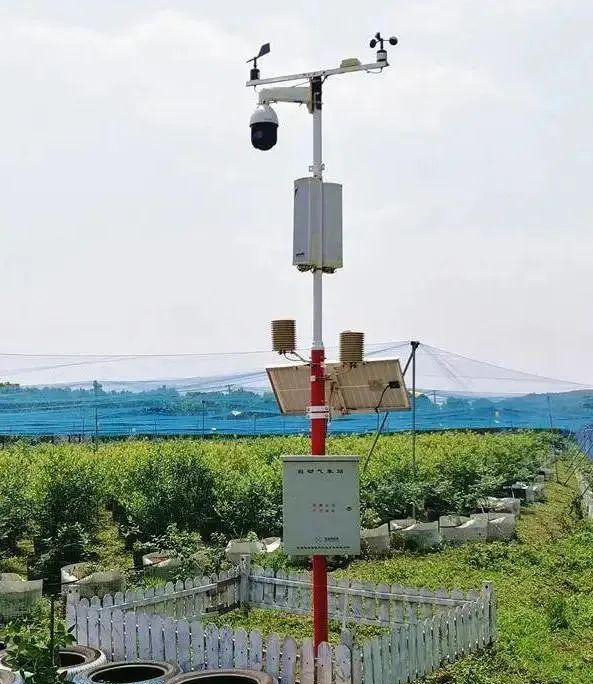
Engineering experience has validated the value of NiuBoL weather stations in multiple projects.
North China Corn High-Standard Farmland Case
In a 5,000-mu corn field project in Hebei, integrators deployed a 10-station grid system. During the 2024 flood season, rainfall warning accuracy reached 95%, automatically linking drainage pumps, with average per-mu loss reduction of 100 yuan. Soil moisture data optimized irrigation, achieving 25% water savings, with overall ROI recovered in 12 months.
Southwest Orchard Frost Prevention Case
In a Yunnan apple orchard project, the system monitored temperature/humidity thresholds to trigger anti-frost fans. During the 2025 winter, frost event response time<10 minutes, fruit loss rate reduced to below 5%, increasing yield by 15% compared to traditional methods.
These cases demonstrate the system's actual effectiveness from data collection to decision closed-loop, supporting rapid replication by clients.
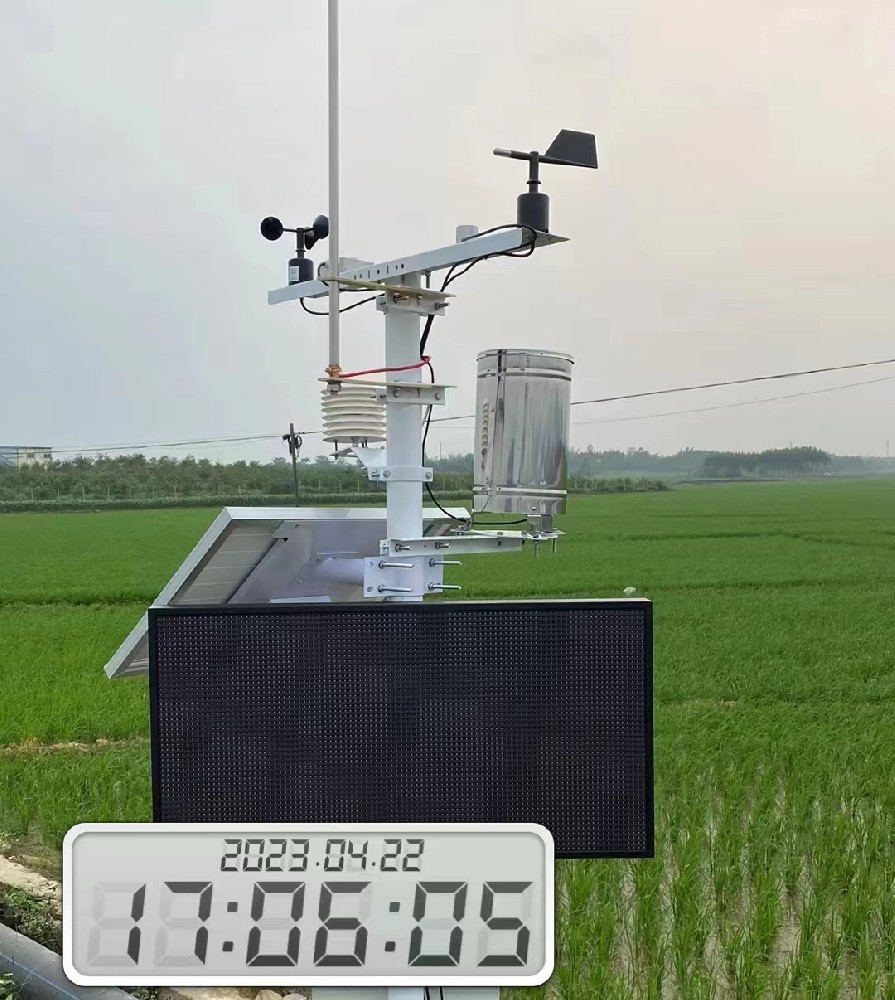
NiuBoL agricultural weather station adapts to diverse agricultural scenarios, helping engineering companies customize solutions.
Open-Field Crops Protection
Monitor rainfall/soil moisture to prevent waterlogging, wind speed warning for lodging. Linkage with intelligent irrigation and drainage systems for automated disaster response.
Facility Agriculture Environment Regulation
Integrate radiation/CO₂ sensors in greenhouses to optimize microclimate. Extreme weather warnings strengthen structures, reducing damage.
Cash Crops Precision Management
In orchards/tea gardens, accumulated temperature models guide harvesting, humidity analysis prevents diseases, improving quality consistency.
Regional Disaster Prevention and Insurance Support
Grid deployment generates heat maps for disaster diffusion simulation. Data access to government platforms supports agricultural insurance claims and joint prevention.
Scenarios focus on disaster loss reduction and sustainable efficiency improvement, reflecting engineering integration value.
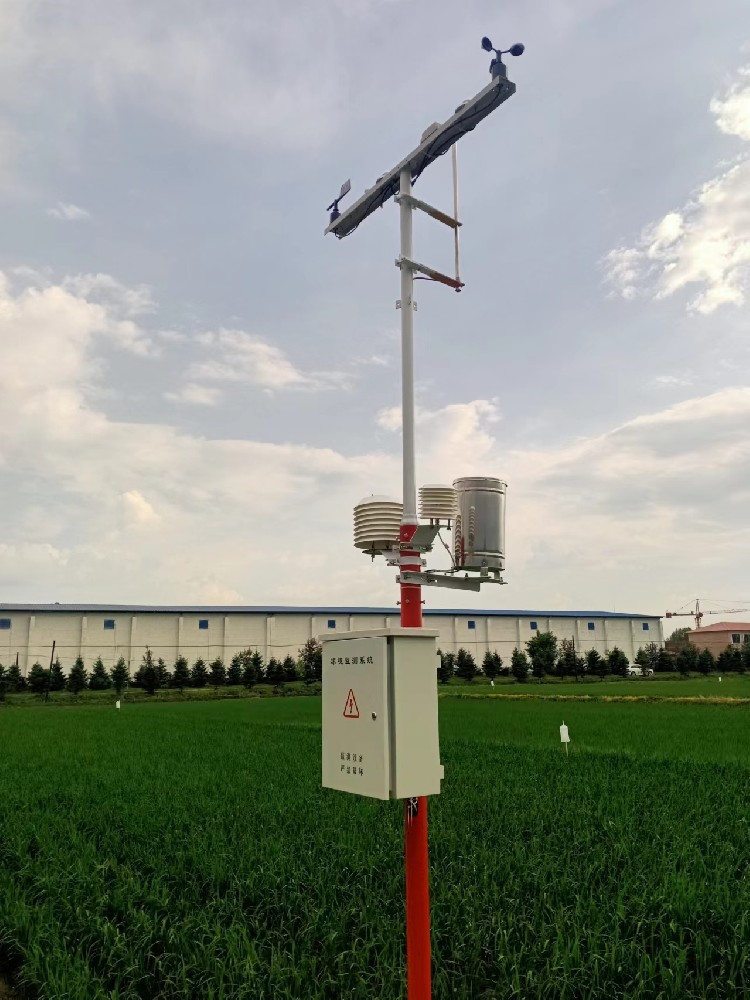
Deploying NiuBoL weather station requires optimized engineering practices to ensure seamless operation.
Site Selection and Installation Optimization
Open site selection with sensors at least 10 times height away from obstacles. Optical rain gauge avoids tree shade, soil probes multi-point layout for representative soil layers. Reinforced brackets against wind loads.
Power Supply and Communication Robust Configuration
Optimize solar panel tilt angle, match battery capacity to local meteorological statistics. NB-IoT preferred for low-power scenarios, RS485 shielded cable + terminal resistor for anti-interference.
Data Integration and Intelligent Calibration
Modbus mapping for PLC access, API for custom crop model thresholds. Quarterly automatic calibration algorithm, combined with traceable standard sample verification for accuracy.
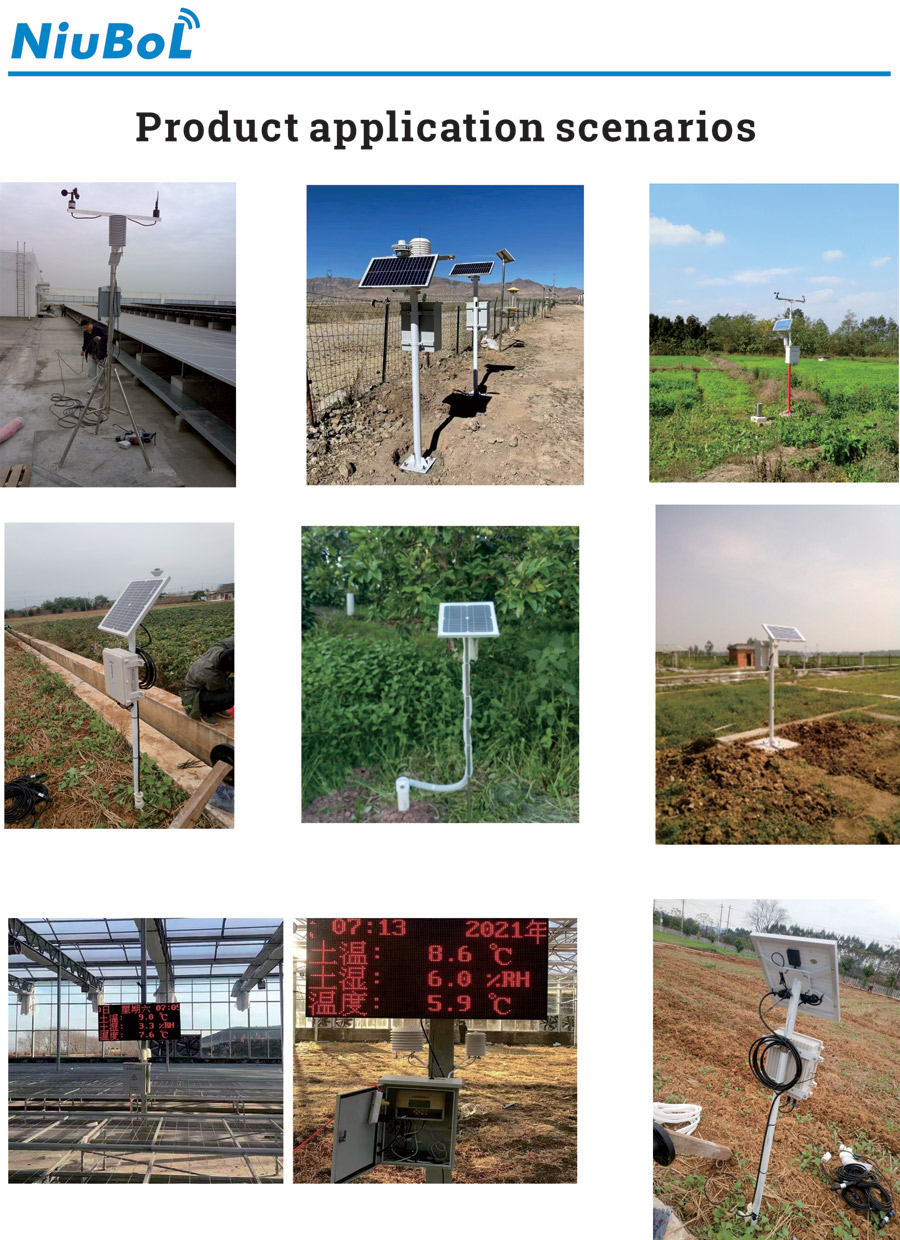
NiuBoL agricultural weather station, with advanced sensor optimization and intelligent platform as its core, provides efficient meteorological disaster defense and precision agriculture solutions for system integrators, IoT providers, and engineering companies. Through real-time multi-element monitoring and crop model integration, the system significantly reduces extreme weather risks, improves resource utilization, and demonstrates quantitative benefits in real-world projects. In open-field farmland, facility agriculture, and regional disaster prevention scenarios, its differentiated advantages such as optical anti-clogging design and robust transmission ensure engineering reliability. As a professional manufacturer, NiuBoL supports OEM/ODM customization, regulatory docking, and on-site validation to assist agricultural digital transformation and sustainable development. Welcome to obtain detailed case reports, technical specification books, or prototype testing schemes.
Prev:Agricultural Four-Conditions Monitoring System: NiuBoL Smart Agriculture IoT Solution
Next:Features and Advantages of NiuBoL Soil Moisture Monitoring System
Related recommendations
Sensors & Weather Stations Catalog
 Agriculture Sensors and Weather Stations Catalog-NiuBoL.pdf
Weather Stations Catalog-NiuBoL.pdf
Agriculture Sensors Catalog-NiuBoL.pdf
Water Quality Sensor Catalog-NiuBoL.pdf
Related products
 Combined air temperature and relative humidity sensor
 Soil Moisture Temperature sensor for irrigation|NBL-S-THR
 Soil pH sensor RS485 soil Testing instrument soil ph meter for agriculture |NBL-S-PH
 Wind Speed sensor Output Modbus/RS485/Analog/0-5V/4-20mA
 Tipping bucket rain gauge for weather monitoring auto rainfall sensor RS485/Outdoor/stainless steel
 Pyranometer Solar Radiation Sensor 4-20mA/RS485

Screenshot, WhatsApp to identify the QR code
WhatsApp number:+8615367865107
(Click on WhatsApp to copy and add friends)

