





— Blogs —
—Products—
 Consumer hotline +8618073152920
 WhatsApp:+8615367865107
Address:Room 102, District D, Houhu Industrial Park, Yuelu District, Changsha City, Hunan Province, China
Product knowledge
Time:2026-03-30 13:52:55 Popularity:543
In the context of global climate change and increasing water resource scarcity, agriculture, as a major water user, has made improving irrigation efficiency a top priority for industry transformation and upgrading. Traditional extensive irrigation not only leads to low water resource utilization (with annual water consumption in some regions accounting for more than 50%), but may also cause soil aeration deterioration, resulting in crop root hypoxia, root rot, and even death.
For IoT solution providers, system integrators, and project contractors, deploying highly reliable soil moisture monitoring stations is the first step in building smart agriculture systems. The tubular multi-layer soil moisture monitoring solution developed by NiuBoL provides scientific data support for precision irrigation by collecting real-time soil volumetric water content (VWC) and temperature data, breaking the limitations of traditional agriculture's "relying on the sky" and "irrigating by experience".
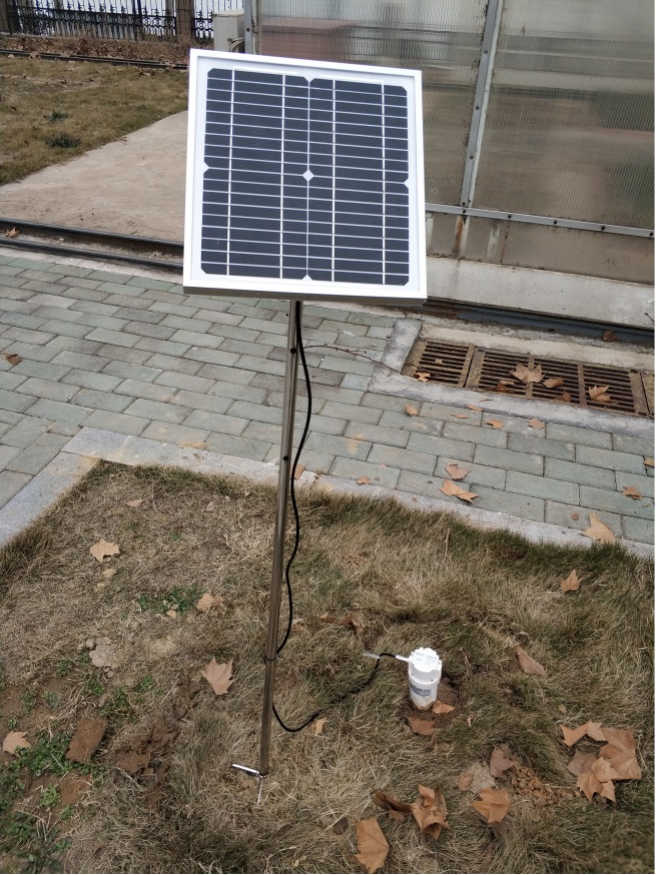
Soil moisture, i.e., soil water content, is the core physical quantity that determines crop yield. Different crops have significantly different water content requirements at different growth stages:
Cereal crops: Suitable soil water content is usually 60% to 70% of field capacity.
Legumes and potatoes: Higher water requirements, needing to be maintained between 70% and 80%.
When soil moisture is insufficient, plants will experience physiological wilting, and in severe cases, wither and die; excessive moisture will deteriorate soil aeration, inhibit microbial activity, and hinder root respiration. Through the NiuBoL online monitoring system, managers can grasp the dynamic changes of each soil layer in real time, ensuring that crops are always within the optimal growth wetting line range.
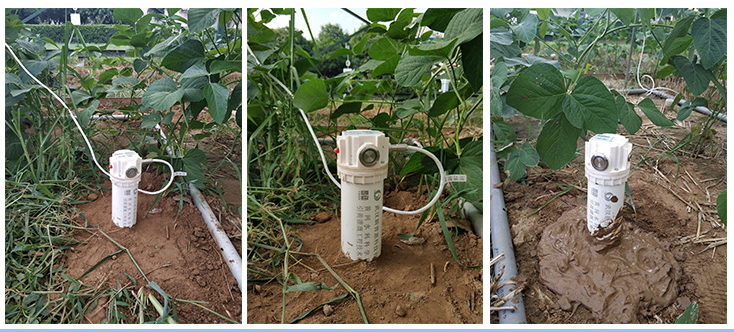
As the sensing core of the system, the NBL-S-TMSMS adopts the advanced Frequency Domain Reflectometry (FDR) principle, realizing non-destructive and high-precision measurement of soil water content by monitoring the frequency changes of electromagnetic waves in media with different dielectric constants.
| Parameter Item | Technical Specifications & Indicators | Remarks |
|---|---|---|
| Measurement Principle | FDR (Frequency Domain Reflectometry Principle) | High-frequency electromagnetic wave monitoring frequency changes |
| Monitoring Dimensions | Soil Volumetric Water Content (VWC), Soil Temperature | Optional tilt angle, vibration, GPS |
| Moisture Measurement Range | Dry soil to saturated soil (0-100% VWC) | Covers full growth cycle |
| Moisture Measurement Accuracy | ±3% (laboratory environment) | Ensures data reliability |
| Temperature Measurement Range | -40°C to 80°C | Adapts to extreme climates |
| Monitoring Layers | Standard 4 layers (10/20/30/40cm), up to 10 layers customizable | Multi-depth profile analysis |
| Power Supply Method | DC 12V or solar power supply system | Supports unattended field operation |
| Communication Protocol | RS485 (Modbus-RTU) / 2G / 4G wireless | Compatible with mainstream PLC and cloud platforms |
| Protection Level | Ground IP67, underground IP68 | Industrial-grade waterproof and corrosion-resistant |
| Static Power Consumption | Sleep state < 1mA | Suitable for long-term battery power supply |
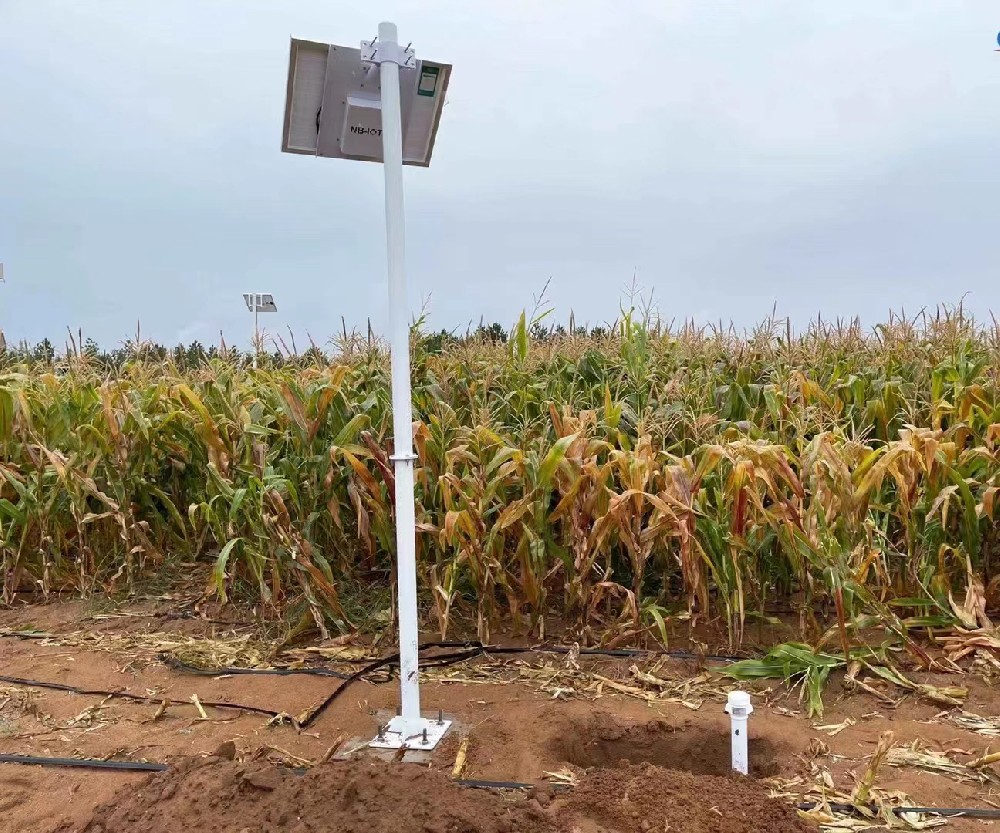
NiuBoL soil moisture monitoring stations have been optimized in hardware structure for engineering projects, solving pain points such as easy equipment damage and unstable data transmission in field environments:
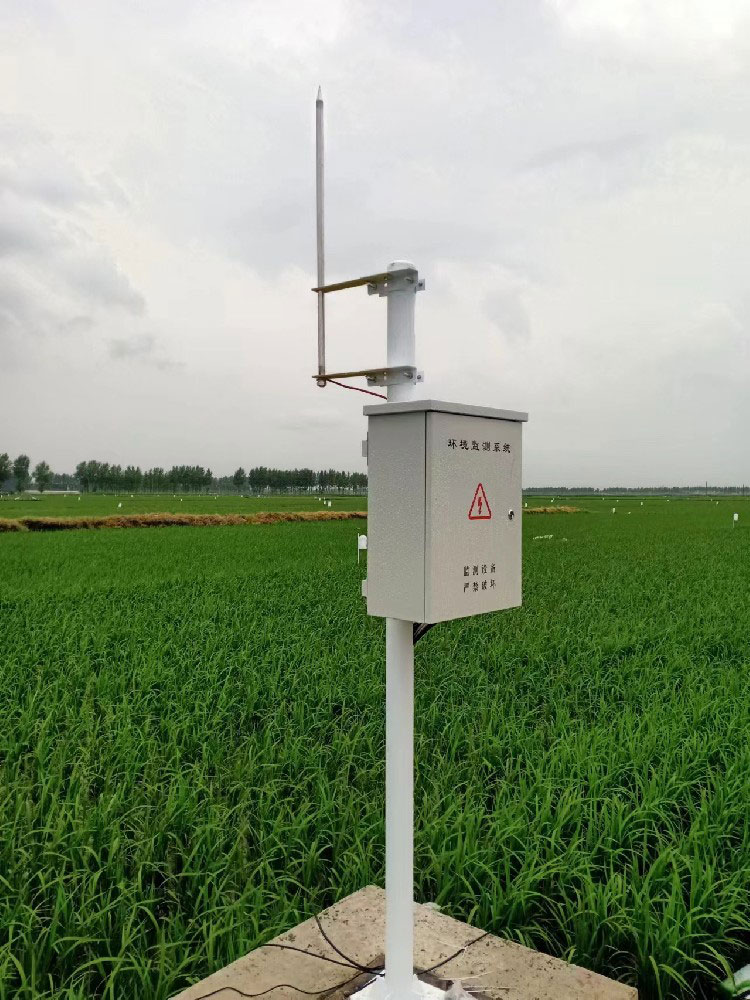
Embedded solar top cover design: Different from traditional hanging brackets, the embedded top cover design effectively reduces the wind resistance coefficient, improves the wind resistance level, and optimizes photoelectric conversion efficiency, allowing the system to maintain operation even in low-light environments.
MPPT power point tracking controller: Charging efficiency is increased by 20% compared to traditional controllers. Combined with large-capacity lithium batteries, it ensures the equipment can maintain 24-hour online monitoring even in continuous rainy weather.
Industrial-grade material selection: Sensor probes use stainless steel needles and epoxy resin encapsulation, resistant to acid, alkali, and salt corrosion, and can be buried underground for a long time without leakage risk. The external protective box uses anti-oxidation ABS material with a waterproof rating of IP66.
Geological disaster monitoring optional (electrostatic capacitance 3D-MEMS): For slope or mountainous projects, the built-in tilt sensor can monitor surface displacement and acceleration in real time, achieving dual functions of moisture monitoring and landslide warning.
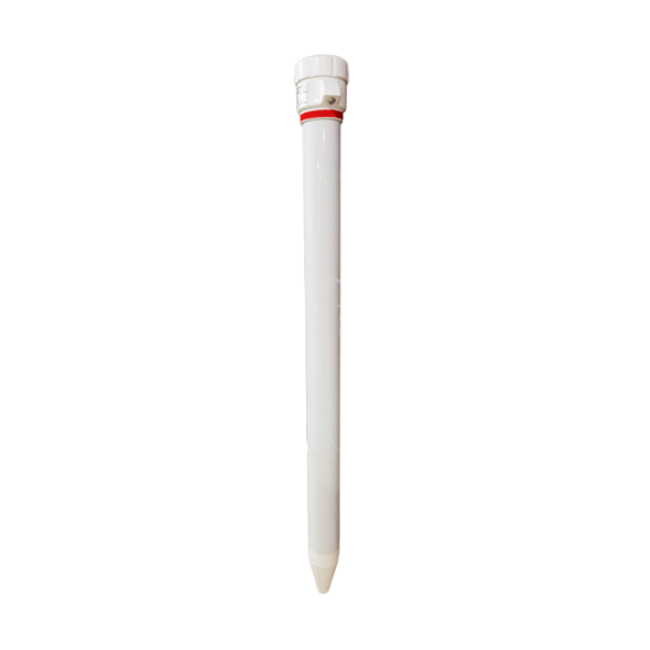
For multi-layer soil monitoring, installation quality directly determines the authenticity of the data. Adding this section reflects NiuBoL products' thoughtful consideration in engineering design.
Original soil protection process for tubular installation:
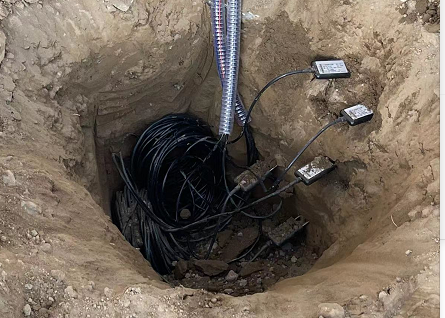
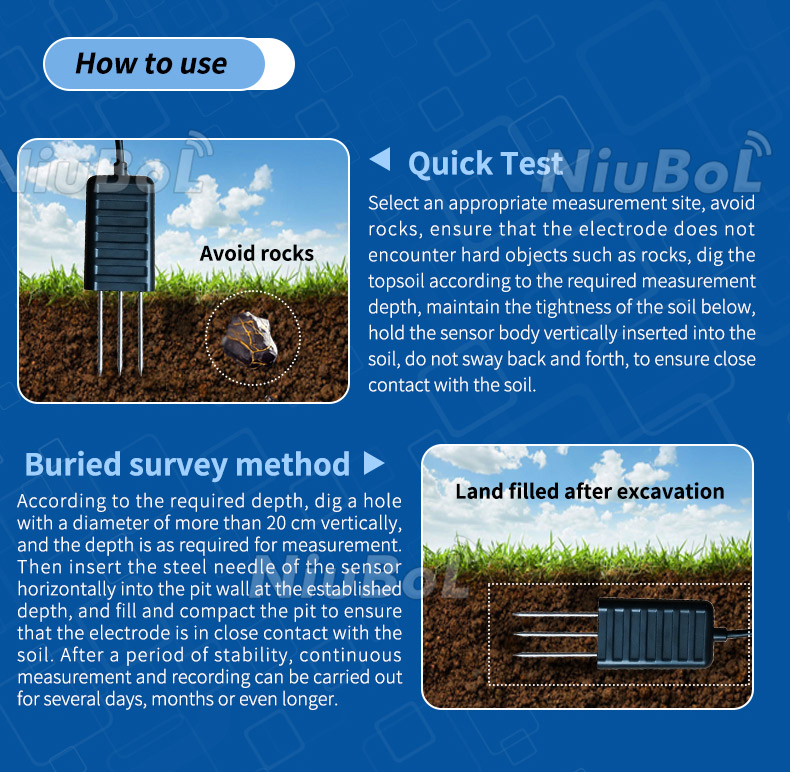
In smart agriculture projects, the fit between the sensor and soil is the key to avoiding the "pipe wall effect". NiuBoL tubular sensors recommend using a dedicated soil drilling process:
Compact drilling: The drill bit diameter precisely matches the outer diameter of the conduit (Φ63mm), ensuring seamless fit between the conduit and the hole wall after implantation, avoiding rainwater infiltration along the pipe wall that causes falsely high data.
Slurry backfill technology: In areas with uneven soil or containing stones, it is recommended to use fine soil mixed with water to make slurry for backfill, eliminating air gaps and ensuring that FDR electromagnetic waves can accurately penetrate to the target soil layer, restoring the true dielectric constant of the soil medium.
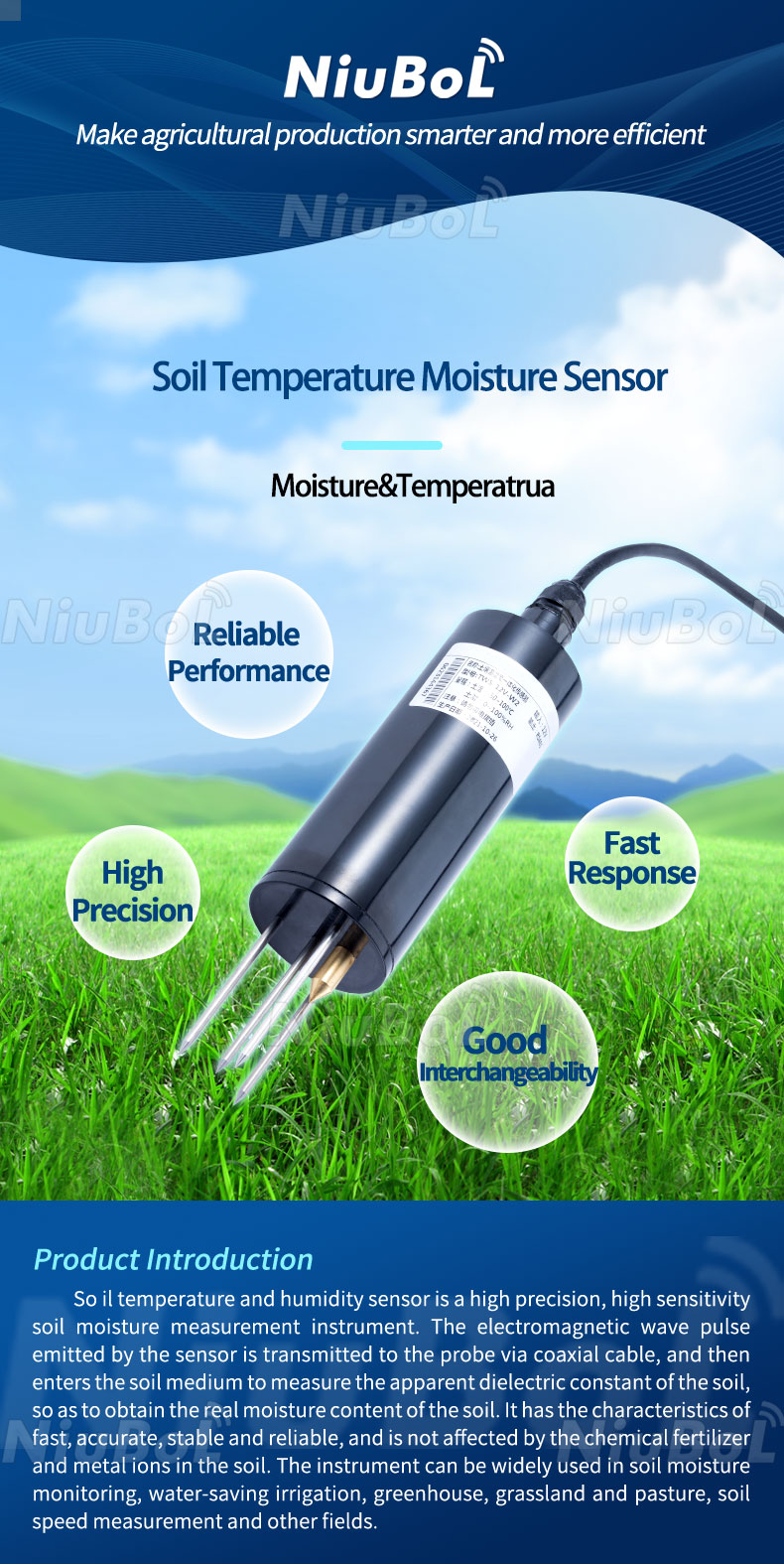
To ensure the representativeness of monitoring data, system integrators should follow the following engineering specifications during project implementation:
Representativeness principle: Sites should be located in the largest planting area within the region and the most representative flat plots of soil type.
Environmental avoidance: Avoid low-lying areas prone to water accumulation, and must maintain a safe distance of more than 50 meters from ditches and water supply pipelines to prevent lateral seepage water from interfering with monitoring results.
Deployment location: It is recommended to place them about 20 meters from the roadside or plot edge. In plain areas, the representative area should be greater than 10 mu; in hilly areas, select plots with smaller slopes.
Continuity guarantee: Once the monitoring location is determined, it should not be changed to ensure the continuity of historical data analysis and establish a regional soil moisture dynamic database.
NiuBoL soil moisture monitoring system, with its high scalability and stability, is widely used in the following fields:
1. Water-saving irrigation agriculture: Linkage with automated valves to automatically start and stop the irrigation system based on the water content of each soil layer, achieving "on-demand distribution".
2. Greenhouse and flower horticulture: Monitor deep soil moisture distribution and optimize the crop root development environment.
3. Geological disaster and hydrological monitoring: Deploy monitoring stations with tilt function on mountain slopes and dams to warn of safety hazards caused by soil saturation.
4. Scientific experiments and plant cultivation: Provide precise VWC and temperature time series data for agricultural research units to support research on water surplus and deficit patterns.
| Link | Engineering Support Provided by NiuBoL | Value to Integrators |
|---|---|---|
| Equipment Selection | Provide 1-10 layer depth customization, support tilt/GPS/vibration alarm | Meet diversified tender requirements from ordinary farmland to mountainous geological disaster monitoring |
| On-site Deployment | Lightweight tubular design, support multiple transmissions including 4G/RS485 | Reduce installation labor costs, adapt to no-signal or strong interference environments |
| System Integration | Open Modbus registers, support cloud-end data transparent transmission | Shorten software development cycle, quickly connect to smart agriculture large screens |
| Operation and Maintenance | IP68 protection, low-power MPPT strategy | Reduce after-sales inspection times, improve project ROI |
Q1. What are the advantages of the FDR principle compared to the TDR principle?
FDR (Frequency Domain Reflectometry) principle has obvious advantages in cost-effectiveness and response speed. It has lower sensitivity to soil salinity and can adapt to more types of soil through specific frequency calibration, making it suitable for large-scale deployment.
Q2. How to install the tubular sensor?
Usually, a dedicated soil drill is used for drilling, and the conduit is placed tightly against the hole wall. This installation method causes minimal disturbance to the soil layer and can measure the true original soil structure moisture distribution.
Q3. How does the system cope with monitoring during the winter freezing period in the north?
The sensor operating temperature covers -40°C to 80°C. During the soil freezing period, the dielectric constant will change significantly. The system data can be used as a reference for soil freezing status, but note that water content calculation during the ice period needs to be combined with a specific calibration curve.
Q4. How to connect the monitoring data to our existing smart agriculture platform?
NiuBoL provides a standard Modbus-RTU register manual, supporting docking via RS485 bus or 4G network (MQTT/TCP). Technical engineers can quickly complete protocol integration.
Q5. How long can the solar power supply last in continuous rainy days?
In a fully charged state, combined with the MPPT energy-saving strategy, the system can still support continuous data reporting for more than 7-10 days even with no sunlight at all.
Q6. What is the significance of tilt monitoring and vibration alarm for agricultural projects?
In slope orchard or tea garden projects, these functions can prevent soil and water loss or mountain landslides caused by heavy rain, and can also play a certain role in equipment anti-theft and anti-disassembly.
Q7. Is soil salinity (EC) monitoring a standard configuration?
Soil temperature and moisture are basic configurations, and soil salinity (electrical conductivity) monitoring is an optional item. For saline-alkali land improvement projects, it is recommended to select it.
Q8. What is the general service life of the sensor?
Thanks to epoxy resin sealing and stainless steel material, the design life of the sensor in normal soil environment usually exceeds 3-5 years.
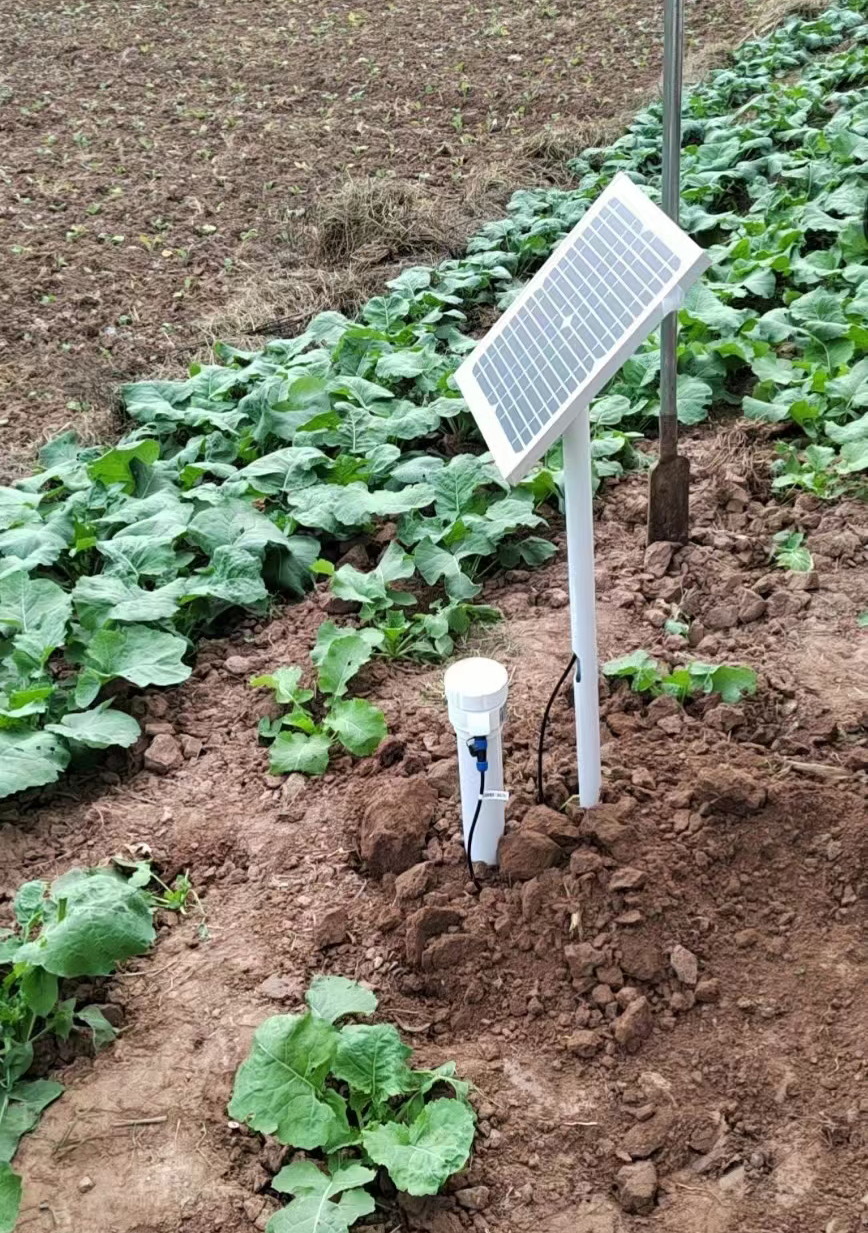
In the process of transitioning from traditional agriculture to digital agriculture, soil moisture monitoring stations are not just a stacking of hardware, but a reshaping of agricultural production logic. Through NiuBoL's high-precision tubular multi-layer sensors, system integrators can provide customers with more valuable irrigation strategy recommendations, thereby significantly reducing agricultural water costs and improving crop output quality.
As a professional agricultural sensor equipment manufacturer, NiuBoL is always committed to providing underlying hardware support for global project contractors. If you are looking for a stable, precise, and easy-to-integrate soil monitoring solution, please contact our engineering service team to obtain professional technical support tailored to your project.
 NBL-S-TMSMS-Tubular-Multi-depth-Soil-Moisture-Sensor-Instruction-Manual.pdf
NBL-S-TM-Soil-temperature-and-moisture-sensor-Instruction-Manual-4.0.pdf
NBL-S-THR-Soil-temperature-and-moisture-sensors-Instruction-Manual-V4.0.pdf
Related recommendations
Sensors & Weather Stations Catalog
Agriculture Sensors and Weather Stations Catalog-NiuBoL.pdf
Weather Stations Catalog-NiuBoL.pdf
Agriculture Sensors Catalog-NiuBoL.pdf
Water Quality Sensor Catalog-NiuBoL.pdf
Related products
 Combined air temperature and relative humidity sensor
 TDR Soil Moisture & Temperature Sensor for irrigation| RS485 |4-20mA| NBL-S-THR
 Soil pH sensor RS485 soil Testing instrument soil ph meter for agriculture |NBL-S-PH
 Wind Speed sensor Output Modbus/RS485/Analog/0-5V/4-20mA
 Tipping bucket rain gauge for weather monitoring auto rainfall sensor RS485/Outdoor/stainless steel
 Pyranometer Solar Radiation Sensor 4-20mA/RS485

Screenshot, WhatsApp to identify the QR code
WhatsApp number:+8615367865107
(Click on WhatsApp to copy and add friends)

