





— Blogs —
—Products—
 Consumer hotline +8618073152920
 WhatsApp:+8615367865107
Address:Room 102, District D, Houhu Industrial Park, Yuelu District, Changsha City, Hunan Province, China
Product knowledge
Time:2026-03-30 13:59:03 Popularity:596
In modern facility agriculture and high-standard farmland construction, soil moisture is a core environmental parameter that affects crop growth, irrigation decision-making, and disaster resistance. Accurately grasping soil volumetric water content (VWC), soil temperature, and electrical conductivity (EC) at different soil layers can significantly improve water-saving irrigation efficiency, optimize field management, and reduce the risk of drought or waterlogging. For system integrators, IoT solution providers, and project contractors, choosing a soil moisture monitoring station with mature measurement principles, open interfaces, high protection levels, and networking support is a key step in building a stable and reliable agricultural IoT system.
The NiuBoL soil moisture monitoring station is developed based on the FDR frequency domain reflectometry principle, focusing on engineering deployment needs and providing complete solutions from single-point to multi-depth profiles. This article analyzes technical selection points, core product parameters, typical application scenarios, and integration considerations to provide engineering projects with directly referenceable technical paths.
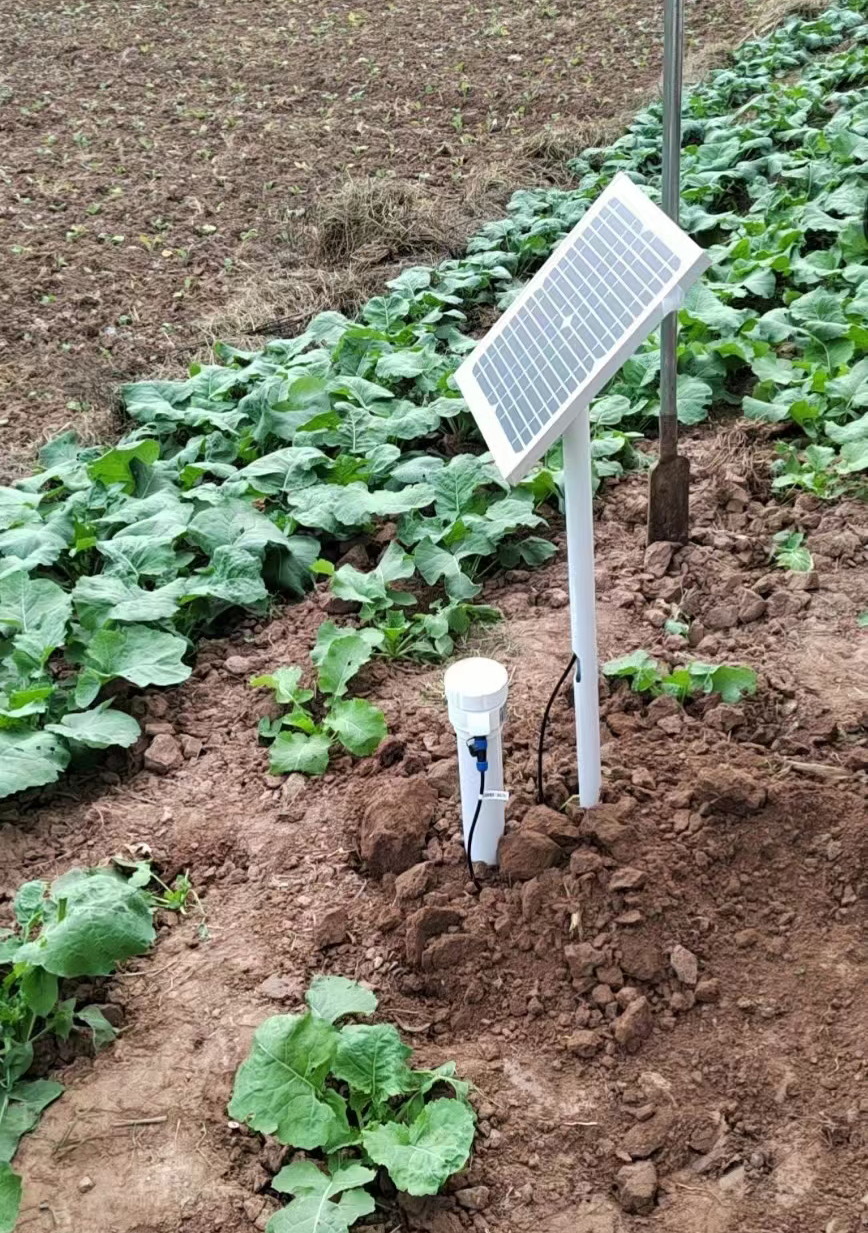
Soil moisture is directly related to crop root water absorption, nutrient transport, and microbial activity. Appropriate relative water content can maintain the coordination of soil water, fertilizer, air, and heat, while insufficient or excessive moisture can cause crop wilting, root hypoxia, or disease spread. In the production of major food crops such as winter wheat, moisture management during key growth periods is particularly important: sufficient moisture at sowing promotes emergence and tillering before winter; adequate water during jointing and booting stages ensures effective spike number and grain weight; suitable moisture during grain-filling and maturity stages improves grain plumpness.
Traditional manual sampling methods suffer from poor timeliness and insufficient representativeness, while automated soil moisture monitoring stations enable unattended continuous online monitoring. Through real-time data collection and remote transmission, integrators can connect moisture data to irrigation controllers, decision platforms, or SCADA systems to form closed-loop control solutions. At the same time, multi-parameter monitoring (moisture + temperature + EC) can also assist in saline-alkali land improvement and soil health assessment, providing a data foundation for large agricultural bases or regional smart agriculture projects.
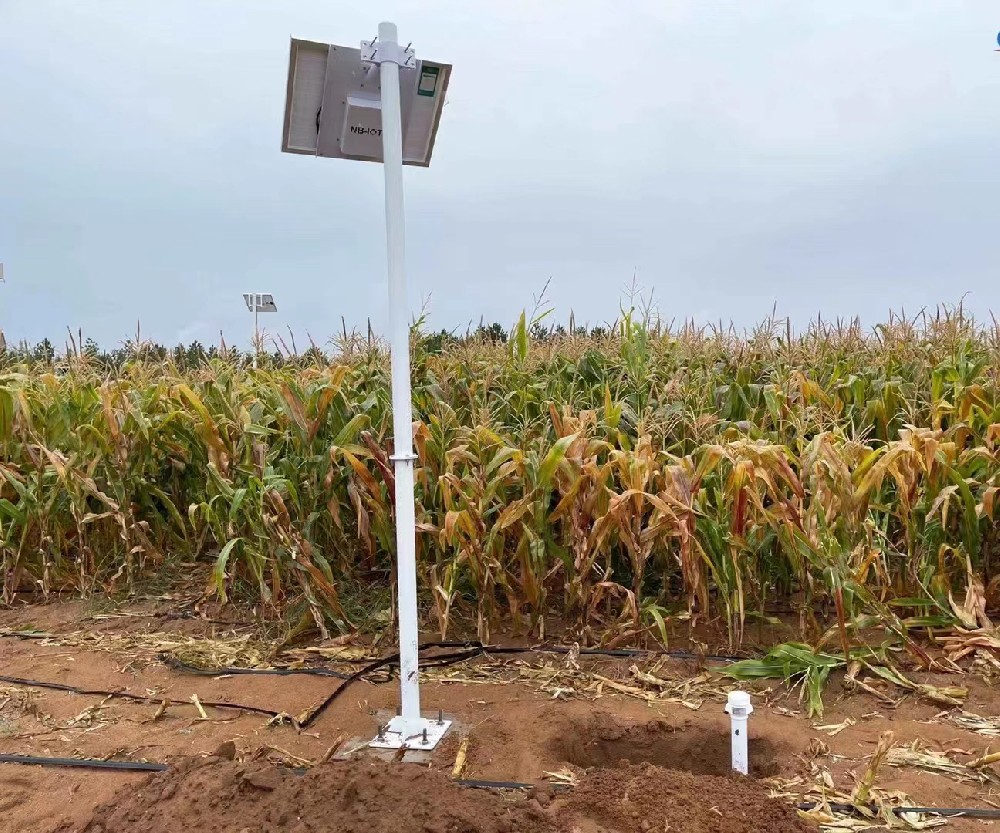
NiuBoL series products strictly follow engineering application requirements and use the FDR principle to measure soil apparent dielectric constant, achieving stable inversion of soil volumetric water content. This principle has strong resistance to salt interference and is suitable for soils of different textures. The equipment supports low-power design and, combined with solar power supply, can meet the needs of long-term field deployment. In terms of communication, RS485 (Modbus RTU protocol) is standard, with optional 4G/HTTP or MQTT transmission, facilitating connection to various IoT cloud platforms.
In protection design, the underground part reaches IP68 level and can be submerged in water for a long time; the ground part is IP67, adapting to complex field environments. Sensor probes use anti-corrosion materials and epoxy resin sealing, resistant to acid and alkali corrosion, ensuring long-term measurement consistency.
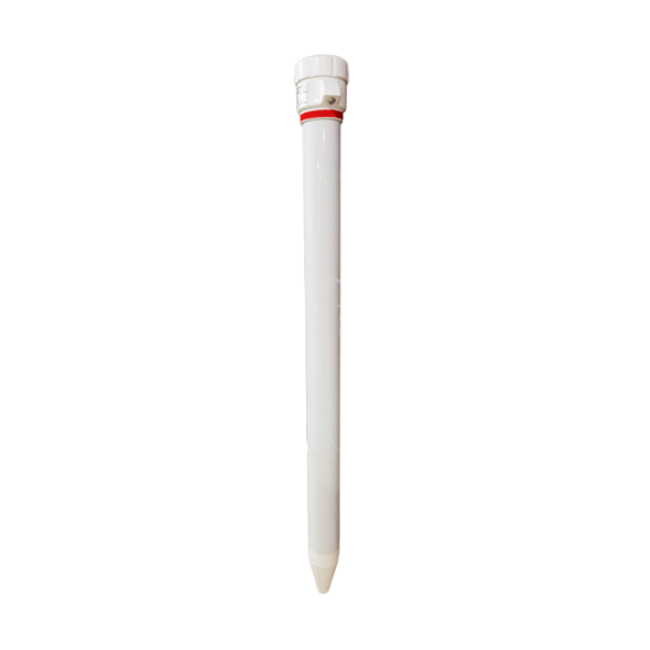
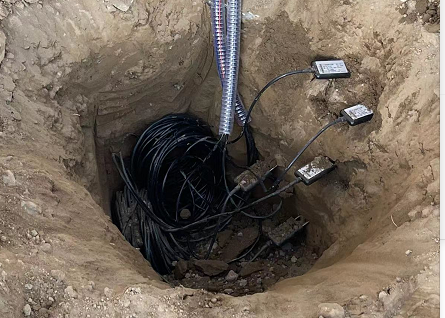
This model is the main equipment for profile monitoring. It adopts a tubular structure and can simultaneously monitor soil moisture and temperature changes at multiple depths. The standard configuration supports depths such as 10cm, 20cm, 30cm, and 40cm, and can be customized with up to 10 monitoring nodes to meet the needs of dynamic analysis of water at different levels of crop roots. The optional geological disaster version has built-in tilt sensors and vibration alarm functions, suitable for slopes or geologically sensitive areas.
Main technical parameters of the tubular multi-layer soil moisture sensor:
| Parameter | Measurement Range | Measurement Accuracy | Remarks |
|---|---|---|---|
| Soil Volumetric Water Content | Dry soil to saturated soil | ±3% (laboratory conditions) | FDR principle |
| Soil Temperature | -40℃~80℃ | ±0.5℃ | High-precision digital sensor |
| Power Supply Method | DC12V or solar power supply | - | Low power consumption design |
| Output Form | RS485 (Modbus protocol) or 4G wireless | - | Supports MQTT optional |
| Tilt Measurement (Optional) | - | Angle resolution 0.005° | 3-axis MEMS sensor |
| Overall Dimensions | Diameter ϕ63mm, length approximately 1000mm (standard) | - | Customized according to the number of nodes |
| Power Consumption | Sleep <1mA, sampling <70mA | - | Suitable for long-term unattended operation |
| Protection Level | Ground IP67, underground IP68 | - | Corrosion-resistant sealing |
The device is small in size, easy to install, and supports optional GPS positioning, greatly facilitating large-scale networking engineering deployment.
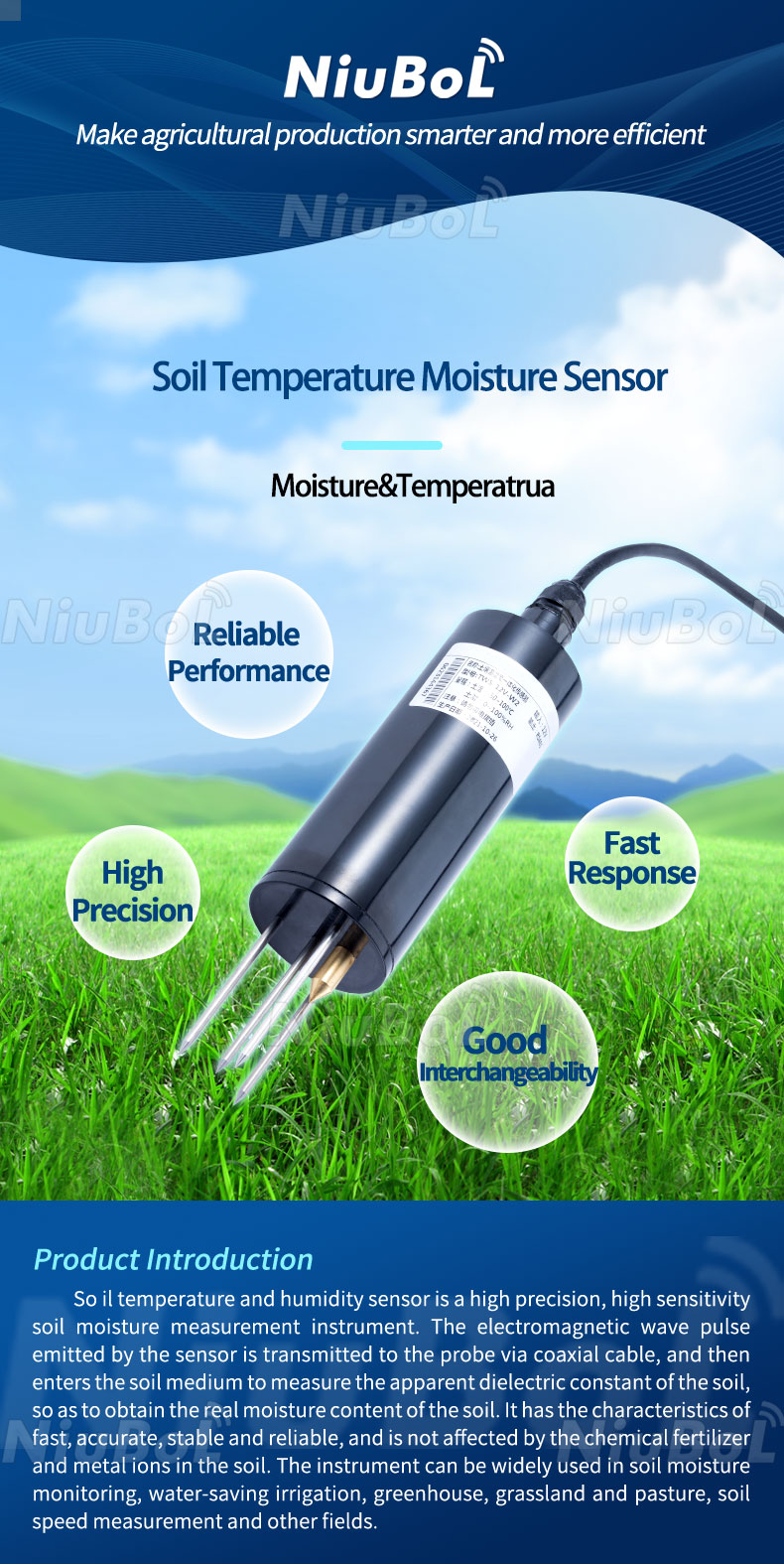
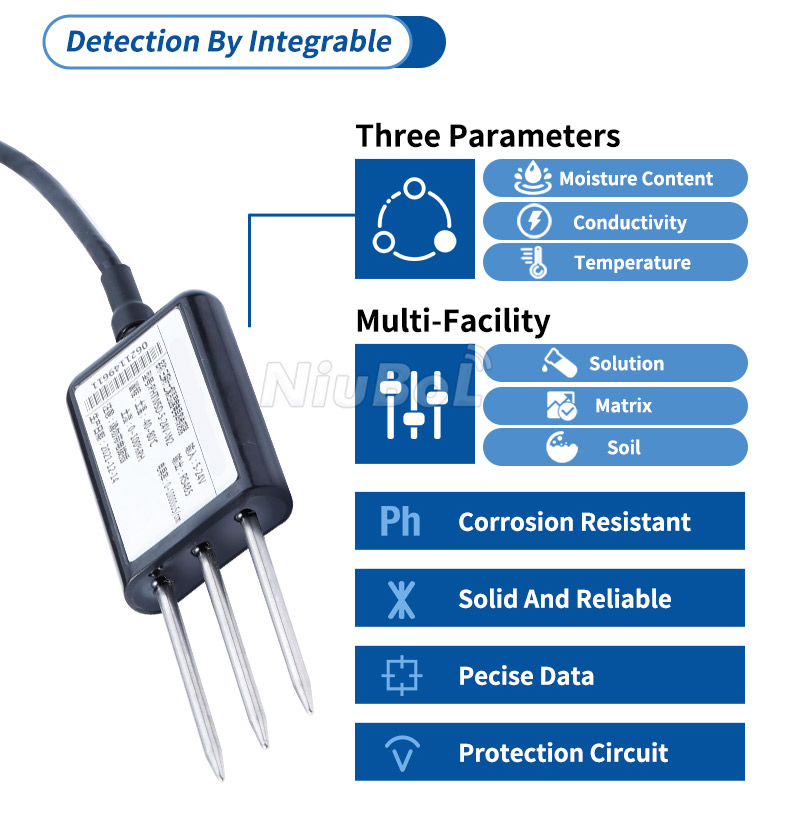
This single-point sensor is suitable for rapid deployment or dense monitoring point layouts and can simultaneously measure soil temperature and humidity. The electrodes use special alloy materials, which are impact-resistant and have good interchangeability. The fully sealed design supports long-term burial or submersion in water.
Main technical parameters:
| Parameter | Measurement Range | Measurement Accuracy | Remarks |
|---|---|---|---|
| Soil Temperature | -40~80℃ | ±0.5℃ | Stable response |
| Soil Moisture | 0-100% | ±5% | FDR method, volumetric water content |
| Supply Voltage | DC5V-24V | - | Wide voltage compatibility |
| Signal Output | RS485, Modbus protocol | - | Standard industrial interface |
| Protection Level | IP68 | - | Can be submerged in water for a long time |
| Probe Material | Anti-corrosion special electrode | - | Acid and alkali resistant |
| Overall Dimensions | 45*15*13*5mm | - | Probe length 50mm |
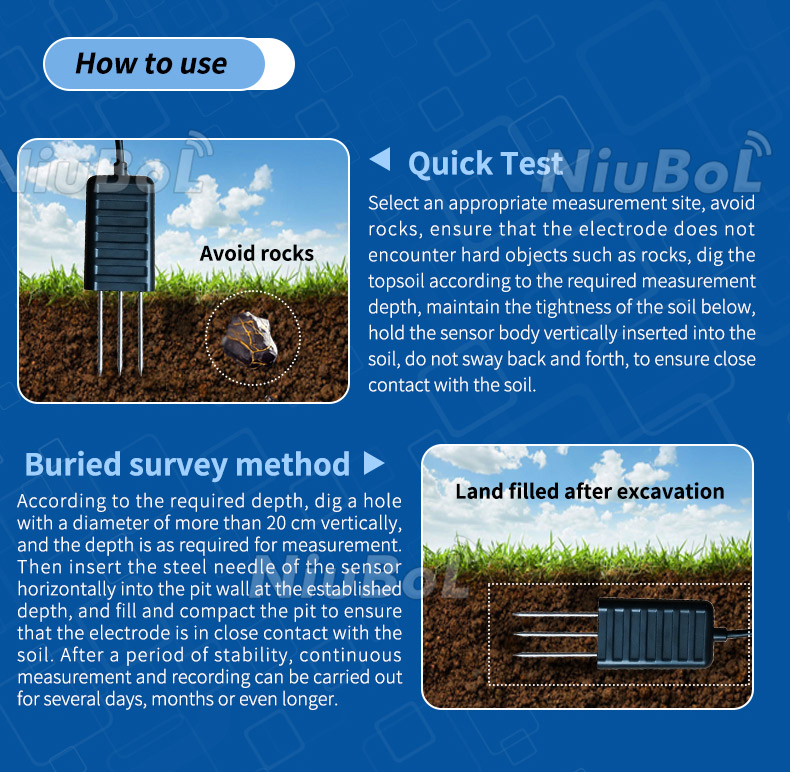
The installation method is flexible, supporting full burial or probe insertion. During long-term observation, data after irrigation or rainfall is closer to the real level; for quick measurements, it is recommended to take averages from multiple points to improve representativeness.
1. Facility agriculture and greenhouse environment control
In vegetable and fruit tree greenhouse projects, NiuBoL sensors can be deployed at key depths in the root zone to provide real-time feedback on soil moisture changes. Integrators can link the data with temperature and humidity stations. When moisture falls below the set threshold, automatic irrigation is triggered; when humidity is too high, ventilation or drainage systems are linked to reduce manual intervention and lower the probability of disease occurrence.
2. Water-saving irrigation projects
In large farmland or high-standard farmland construction, multi-layer tubular sensors can draw soil moisture profile maps to guide variable frequency irrigation or drip irrigation systems for precise water supply. Combined with historical data trend analysis, irrigation quotas can be optimized, significantly improving water use efficiency and providing engineering basis for regional water resource management.
3. Winter wheat and other food crop production bases
For key periods such as jointing, booting, and grain-filling of winter wheat, the monitoring station can provide continuous moisture data. When relative water content approaches the lower limit (for example, below 50% during sowing), the system issues a warning to guide supplementary irrigation; when moisture is too high during the rainy season, timely loosening or ditching and drainage is recommended to prevent waterlogging damage. Before cold waves arrive, pre-irrigating plots with insufficient moisture can buffer drastic changes in ground temperature and reduce the impact of frost damage.
4. Saline-alkali land improvement and soil health monitoring
Configurations with optional electrical conductivity parameters can simultaneously monitor soil salt dynamics and provide data support for improvement measures. Long-term networking data can also be used to establish local crop water production function models to support the construction of precision agriculture decision platforms.
5. Geological and ecological monitoring expansion
After the tubular products are equipped with optional tilt and vibration alarms, they can also take into account slope stability monitoring to meet the composite needs of some water conservancy or ecological restoration projects.
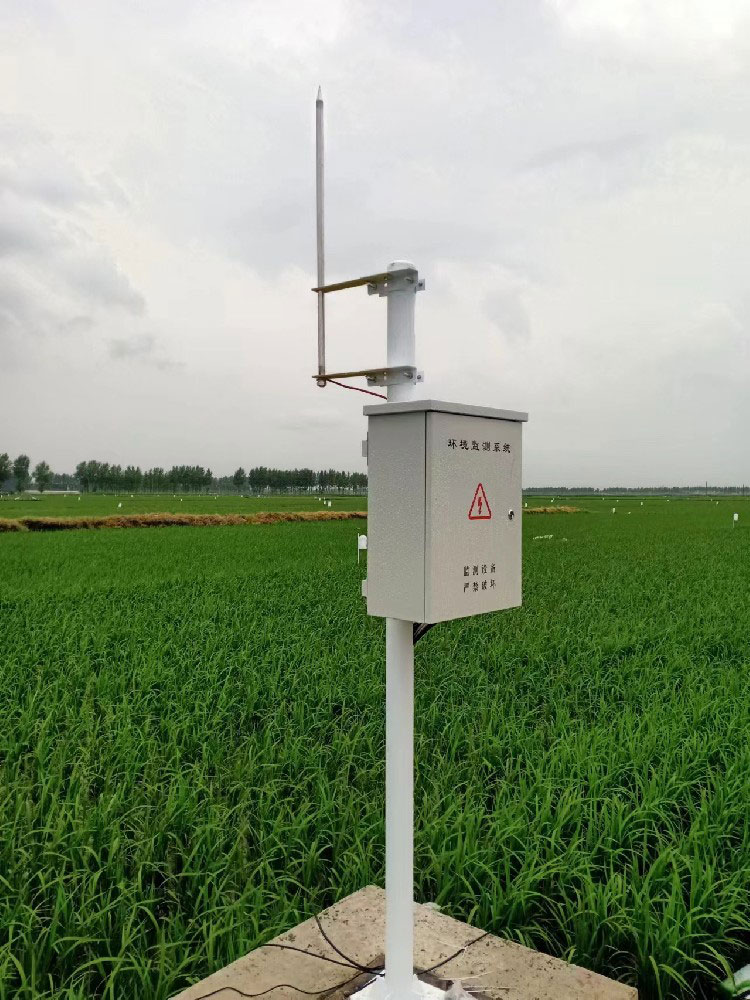
To facilitate project implementation, NiuBoL equipment provides standard Modbus protocols and open communication manuals, supporting seamless docking with mainstream PLC, DTU, or cloud platforms. It is recommended to adopt a solar + battery hybrid power supply solution to ensure data continuity in power outage scenarios. During installation, avoid hard objects such as stones, and compact the soil after burial to ensure close contact between the sensor and the medium. In strong sunlight, it is recommended to provide shading protection for the ground part to avoid temperature drift affecting measurements.
In large projects, it is recommended to combine LoRa or 4G networking to form a multi-point distributed monitoring network. Data can be uniformly uploaded to the IoT platform to achieve visual display, threshold alarms, and historical trend analysis, providing decision support for owners.
Q1. What measurement principle does the NiuBoL soil moisture monitoring station mainly use?
It adopts the FDR frequency domain reflectometry principle, inverting volumetric water content through changes in soil dielectric constant, suitable for most agricultural soil types.
Q2. What is the main difference between NBL-S-TMSMS and NBL-S-TM?
NBL-S-TMSMS is a tubular multi-layer profile monitoring type that supports simultaneous multi-depth measurement; NBL-S-TM is a single-point type, suitable for dense single-depth or rapid deployment scenarios.
Q3. Does the equipment support remote wireless transmission?
It supports 4G or MQTT protocols, which can push data to cloud platforms or mobile terminals in real time for convenient remote monitoring.
Q4. Can the protection level meet the needs of long-term field burial?
The underground part is IP68 and can be submerged in water for a long time; the ground part is IP67, with strong overall corrosion resistance and environmental adaptability.
Q5. How to connect sensor data to the existing irrigation control system?
It can be directly connected via RS485 Modbus RTU protocol, supporting standard industrial communication with a short integration cycle.
Q6. What is the maximum number of monitoring nodes supported by multi-layer sensors?
Standard support is 4 layers, and up to 10 layers can be customized according to project needs to meet different root depth monitoring requirements.
Q7. Is it recommended to select the electrical conductivity parameter in saline-alkali land projects?
Recommended. Electrical conductivity data can assist in judging soil salt conditions and jointly support improvement decisions with moisture and temperature data.
Q8. How does the equipment power consumption and power supply scheme match long-term unattended operation?
Sleep power consumption is as low as below 1mA. Combined with solar power supply, it can achieve stable operation for more than one year, suitable for large-scale farmland deployment.
Based on mature FDR technology, the NiuBoL soil moisture monitoring station provides flexible and highly reliable soil environment sensing solutions for system integrators and engineering companies by combining multi-layer profile and single-point monitoring. The NBL-S-TMSMS and NBL-S-TM series products meet the needs of modern agricultural IoT engineering in terms of accuracy, protection, and communication compatibility, effectively supporting water-saving irrigation, facility agriculture, and precision management projects for food crops.
Through open interfaces and low-maintenance design, this series of equipment can quickly integrate into various smart agriculture platforms, helping projects achieve upgrades from data collection to decision-making closed loops. In high-standard farmland construction and regional agricultural digital transformation, choosing NiuBoL means choosing stable, easy-to-integrate, and engineering-oriented soil moisture monitoring technical support. In the future, with the deepening of edge computing and 5G applications, such equipment will continue to provide more efficient data foundations for the agricultural engineering field.
 NBL-S-TMSMS-Tubular-Multi-depth-Soil-Moisture-Sensor-Instruction-Manual.pdf
NBL-S-TM-Soil-temperature-and-moisture-sensor-Instruction-Manual-4.0.pdf
NBL-S-THR-Soil-temperature-and-moisture-sensors-Instruction-Manual-V4.0.pdf
Next:Smart Fisheries: Application of NiuBoL Water Quality Online Monitoring System in Smart Aquaculture
Related recommendations
Sensors & Weather Stations Catalog
Agriculture Sensors and Weather Stations Catalog-NiuBoL.pdf
Weather Stations Catalog-NiuBoL.pdf
Agriculture Sensors Catalog-NiuBoL.pdf
Water Quality Sensor Catalog-NiuBoL.pdf
Related products
 Combined air temperature and relative humidity sensor
 TDR Soil Moisture & Temperature Sensor for irrigation| RS485 |4-20mA| NBL-S-THR
 Soil pH sensor RS485 soil Testing instrument soil ph meter for agriculture |NBL-S-PH
 Wind Speed sensor Output Modbus/RS485/Analog/0-5V/4-20mA
 Tipping bucket rain gauge for weather monitoring auto rainfall sensor RS485/Outdoor/stainless steel
 Pyranometer Solar Radiation Sensor 4-20mA/RS485

Screenshot, WhatsApp to identify the QR code
WhatsApp number:+8615367865107
(Click on WhatsApp to copy and add friends)

