





— Blogs —
—Products—
 Consumer hotline +8618073152920
 WhatsApp:+8615367865107
Address:Room 102, District D, Houhu Industrial Park, Yuelu District, Changsha City, Hunan Province, China
Product knowledge
Time:2026-03-02 13:31:46 Popularity:552
Compact weather station PLC integration is complete only when each received value has the correct quantity, unit, scale and validity. A successful RS485 reply can still produce a temperature ten times too large, a reversed wind direction or rainfall treated as an intensity instead of an accumulated amount. Verify the data at the PLC and final display, not just the connection.
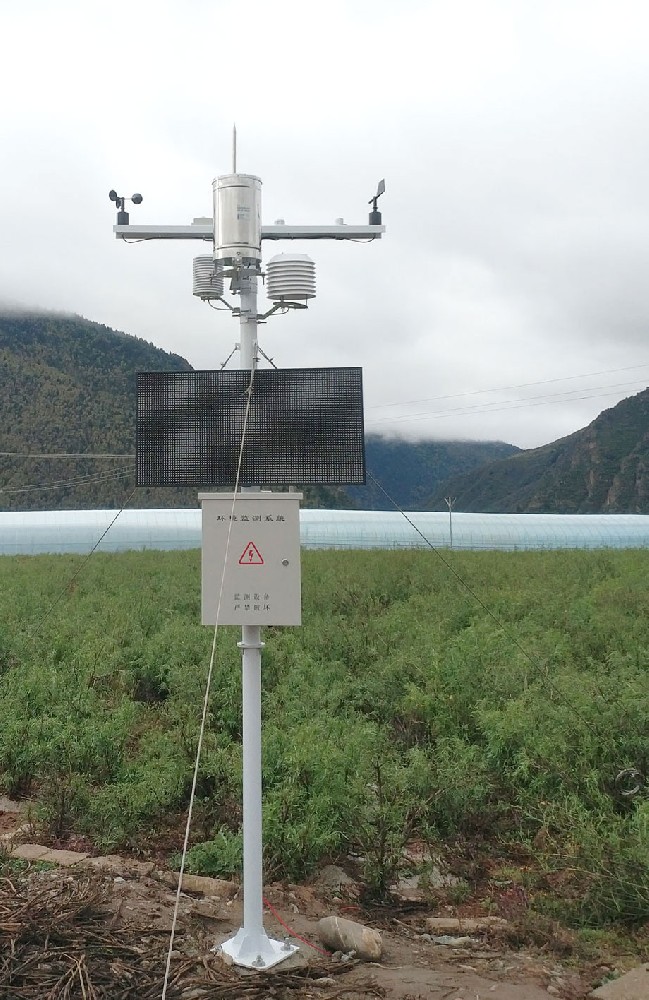
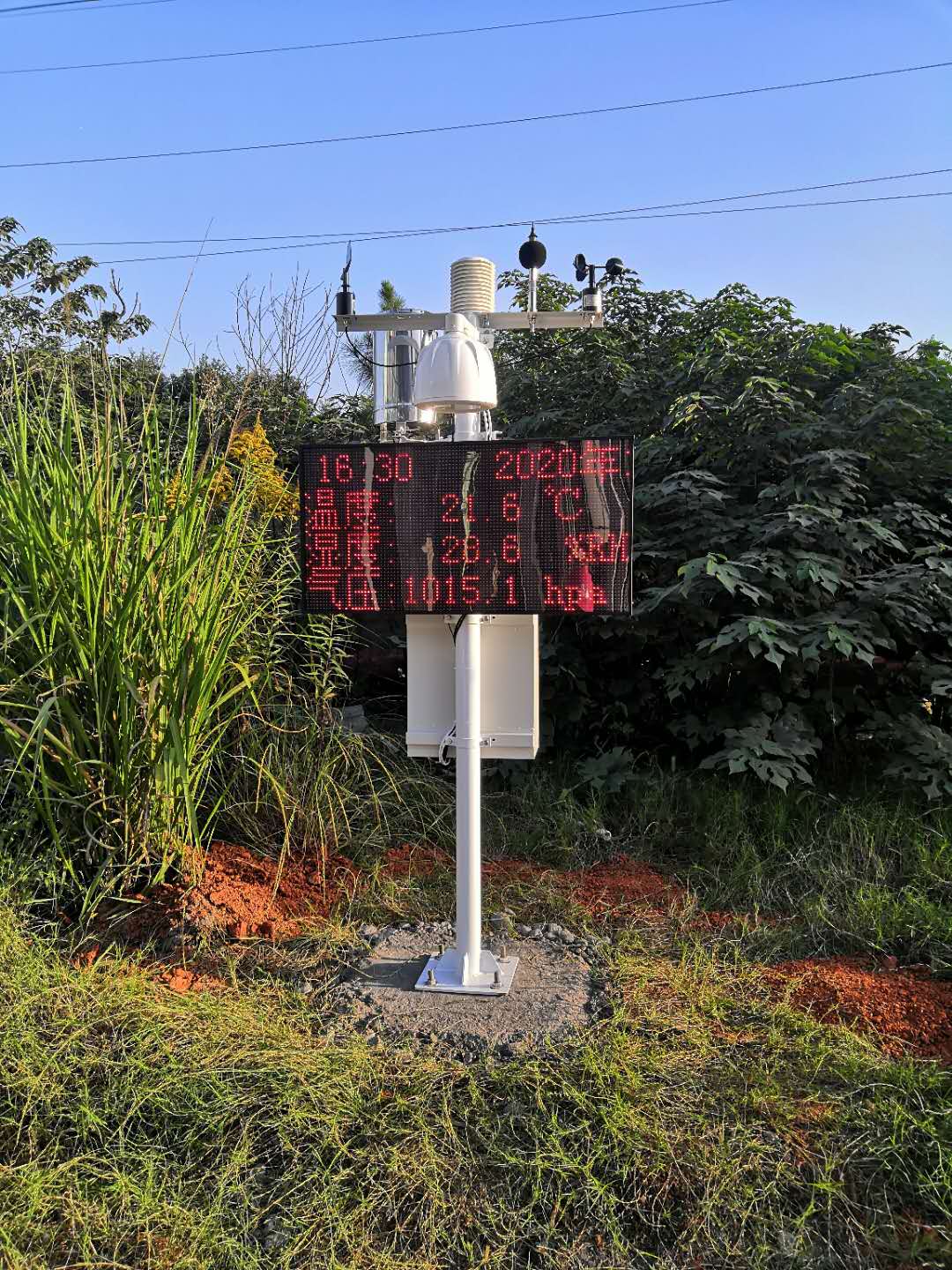
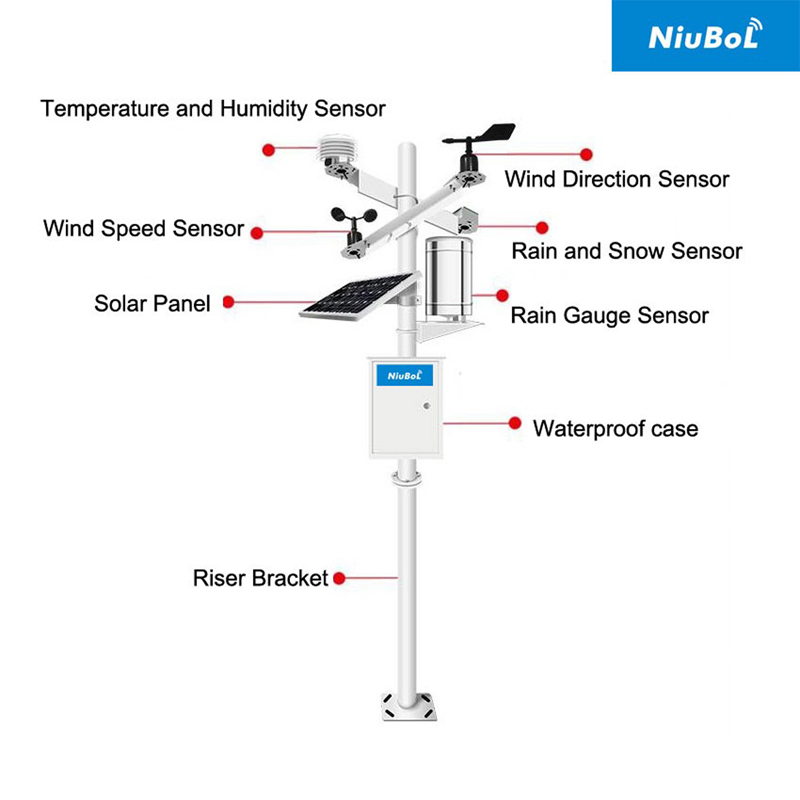
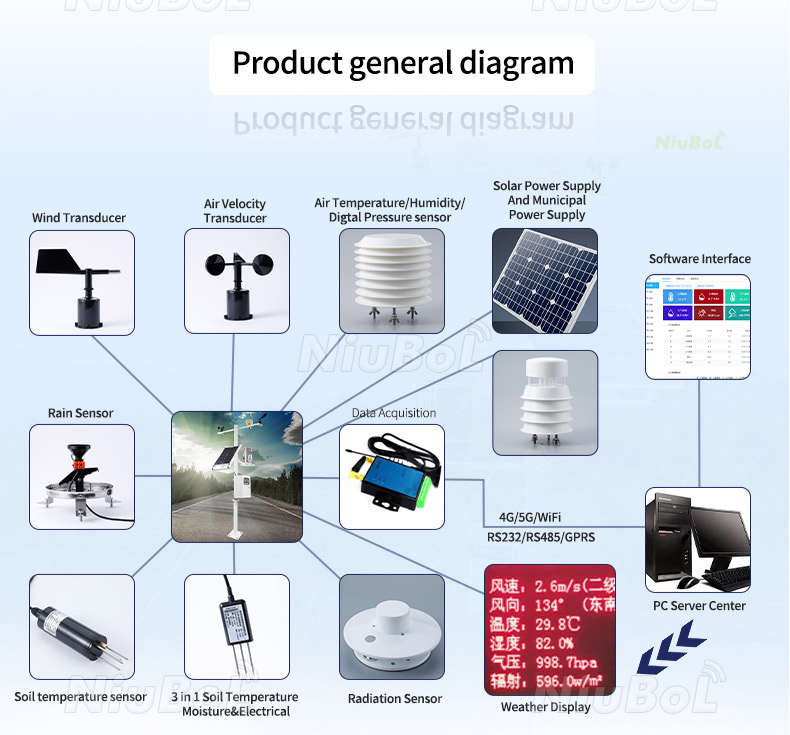
A compact station can use an integrated head or separate sensors connected to a logger. The PLC may read the sensor directly, read a combined logger map or receive values through a gateway. Determine which device actually owns the register definitions and performs any conversion.
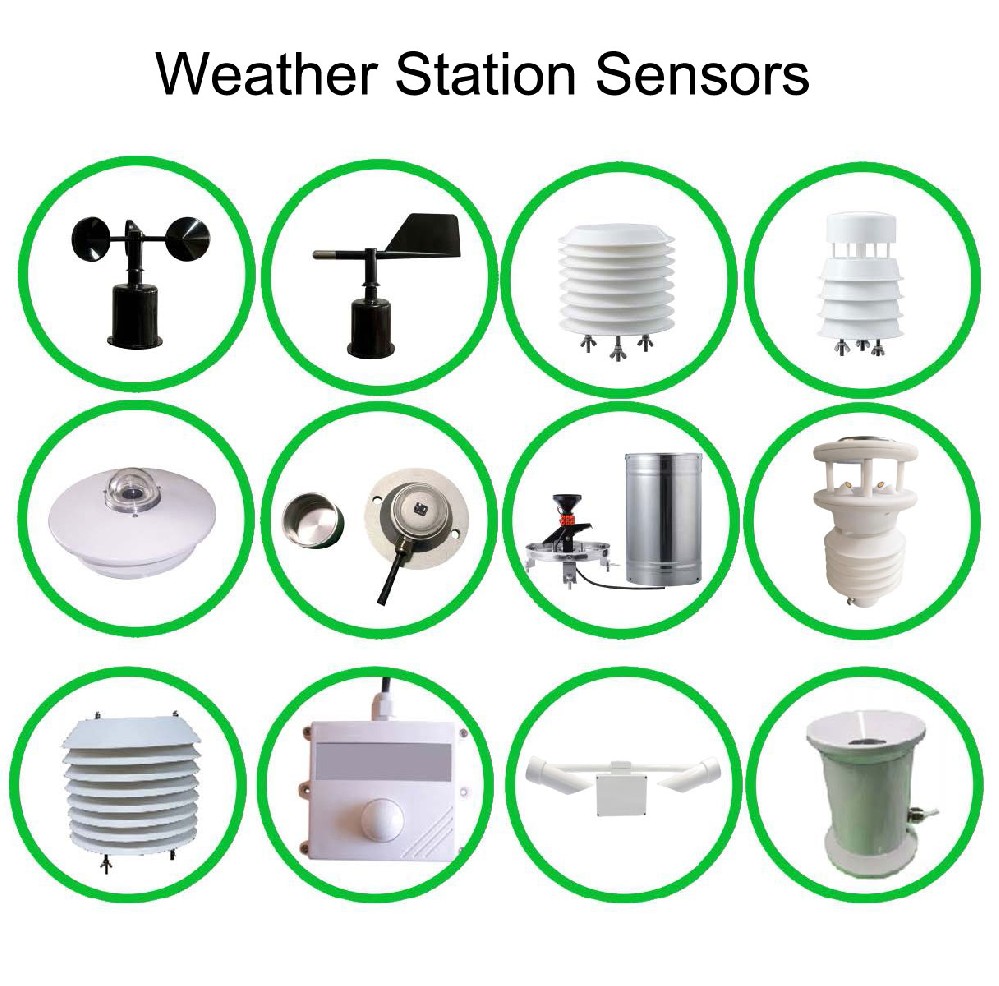
The NiuBoL weather station range includes configurations for different combinations of measurements. A general system diagram shows possible components, not a guarantee that every pictured channel is fitted. Match the ordered sensor list to the tags the PLC expects.
| Tag definition | Required information | Typical mismatch |
|---|---|---|
| Quantity | Temperature, pressure, speed, direction, rainfall amount or other measured value | Accumulated rainfall labelled as instantaneous intensity |
| Encoding | Data type, sign, scale and multi-register ordering where applicable | Valid bytes decoded with the wrong numeric interpretation |
| Unit | C, %RH, hPa, m/s, degrees or the specified alternative | Pressure converted twice or wind speed left in the wrong unit |
| Time and status | Update interval, sample definition and invalid-state behaviour | Old or failed data retained as a fresh valid reading |
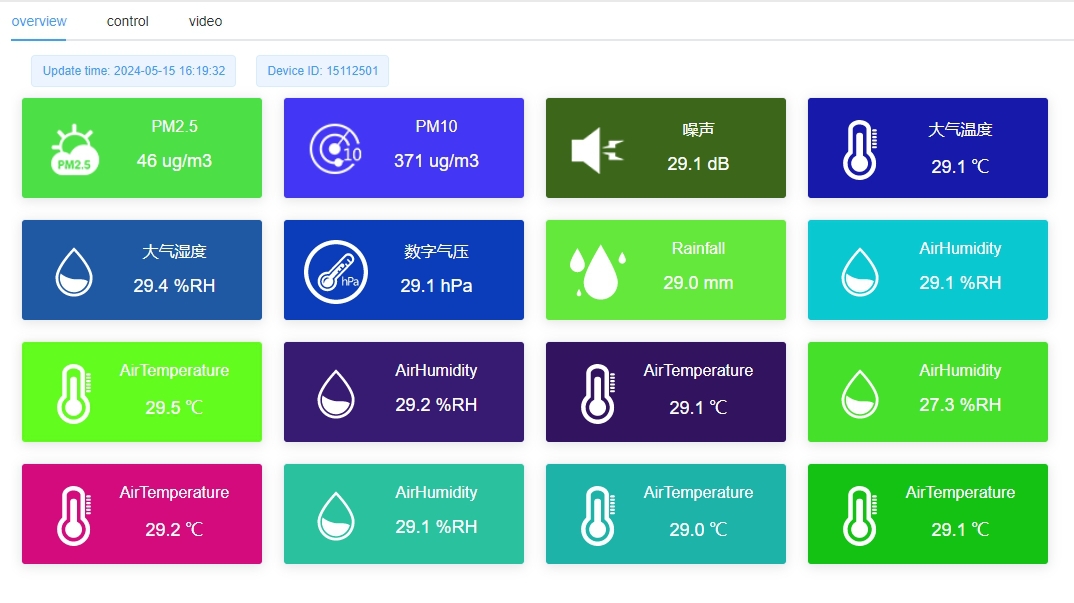
The NiuBoL NBL-W-LBTH provides air temperature, relative humidity and barometric pressure through a compact assembly. Its RS485 version supports Modbus RTU. Analog output is a different ordered configuration and requires the corresponding PLC input.
| NBL-W-LBTH item | Configuration parameter | PLC check |
|---|---|---|
| Air temperature | -40 to 80 C; accuracy ±0.5 C; resolution 0.1 C | Confirm signed negative values and engineering scaling |
| Relative humidity | 0-100%RH; accuracy ±5%RH; resolution 0.1%RH | Keep RH distinct from soil water content |
| Barometric pressure | 10-1200 hPa; accuracy ±1.5 hPa; resolution 0.1 hPa | Keep measured station pressure distinct from calculated sea-level pressure |
| Supply | 12-24 VDC | Check voltage at the sensor under the installed load |
| Digital configuration | RS485 Modbus RTU; polling interval at least 1000 ms | Use the ordered device's map and serial settings |
Wind, rainfall and radiation channels require their own model-specific specifications. Do not assign an output, enclosure rating or power consumption to the whole station from this atmospheric sensor. Cable length, jacket compatibility and supply demand belong in the actual component schedule.
For the documented LBTH example format, integer values are divided by ten: 180 represents 18.0 C and 10112 represents 1011.2 hPa in the corresponding channels. Confirm that the PLC driver or gateway has not already applied that conversion before adding another scale in the display.
Negative temperatures require the correct signed interpretation specified for the device. A generic illustrative integer of -55 with a 0.1 C scale represents -5.5 C, not a large positive temperature. This is a decoding example, not a register address or an instruction to apply that format to every NiuBoL sensor.
Unit conversion is separate from register scaling. For example, 1000 hPa equals 100,000 Pa. If a gateway already converted hPa to Pa, a second factor of 100 in the PLC creates a substantial error. Record which device performs each conversion.
NOAA's explanation of wind direction uses the direction the wind comes from: a west wind comes from the west. Confirm that the PLC or downstream application uses the same convention rather than the direction the air is travelling toward.
Check the instrument's north reference and any software rotation. Applying a mounting offset in both the sensor and the PLC rotates the result twice. Compare several known orientations using an appropriate commissioning method instead of checking only one direction.
Directions of 350 and 10 degrees are both near north. Their ordinary arithmetic mean is 180 degrees, which points south and is misleading. Use the specified circular or vector treatment for the intended wind statistic, and preserve how speed weighting and low-wind validity are handled.
Do not turn an invalid direction during weak wind into a valid north reading. Establish the sensor's output convention and the PLC's quality handling. Where a mechanical NBL-W-SS wind-speed sensor and NBL-W-DS wind-direction sensor are specified, use IP65 as their protection rating, not an assumed whole-station rating.
Polling faster than the sensor updates can return the same value repeatedly. Polling slowly can miss changes unless the instrument or logger retains the required statistic. Determine where wind averages, maxima and rainfall increments are formed and what time window each represents.
A maximum of occasional PLC readings is not automatically the specified meteorological gust. Likewise, rainfall accumulated since reset is not a current rainfall intensity. Name tags according to their actual definition so the application does not infer a statistic the station never measured.
Disconnect one sensor or use an approved fault simulation and observe the PLC's response. A timeout should not silently become a zero air temperature, zero wind or zero rain. Keep last-valid values distinguishable from current observations and apply the process's agreed fallback behaviour.
For a shared RS485 network, verify addresses and serial settings one device at a time before combining them. Check the actual electrical layout, cable routing, reference and isolation requirements. A shared connector style does not establish protocol or wiring compatibility.
If the PLC sends data through a gateway, compare local engineering values with the destination values and timestamps. An MQTT or API connection supplied by the gateway does not change the sensor into a native network endpoint. Confirm that retries and delayed records retain the intended channel identity.
Use the ordered sensors and receiving PLC configuration. If test values are injected, label them and restore normal acquisition before operation. Confirm thresholds only after the engineering values and quality states are correct; an alarm tested on a mis-scaled channel does not establish a useful installation.
For a NiuBoL integration enquiry, provide sensor models, output versions, PLC input or serial requirements, gateway format and the weather statistics needed. Request the matching maps and configuration details. This keeps the work focused on usable measurements instead of an unspecified promise of compatibility with every controller.
No. The bytes may be valid while type, scale, unit or tag assignment is wrong. Compare engineering values through the PLC and destination before relying on alarms or calculations.
Only where the exact map specifies it. An LBTH example uses a factor of 0.1, but wind, rainfall, radiation and other device versions can have different definitions.
Check from-versus-toward convention, physical north alignment and software offsets. More than one error can be present, so verify the complete path rather than adding an unexplained correction.
No. It may return repeated values and increase bus demand. Poll within the instrument's requirements and retain the sampling or statistical method needed by the application.
No, unless a clearly defined application-specific convention requires and identifies that state. Zero can be a valid weather observation; keep failure and staleness distinguishable.
Provide the exact models, output options, supply, PLC interfaces, intended register handling and destination requirements. Include required averages or maxima and fault behaviour, not just a list of weather elements.
Compact weather station PLC integration depends on correct data interpretation as well as a working bus. Validate scale and units, wind convention, statistical windows and channel faults using the ordered configuration. NiuBoL sensor data can then be integrated as defined engineering measurements rather than plausible but unverified display values.
Prev:Pest Monitoring Statistics: Separate Trap Counts, Incidence and Severity
Next:Compact Weather Station Maintenance: Sensor-Specific Service and Return Checks
Related recommendations
Sensors & Weather Stations Catalog
 Agriculture Sensors and Weather Stations Catalog-NiuBoL.pdf
Weather Stations Catalog-NiuBoL.pdf
Agriculture Sensors Catalog-NiuBoL.pdf
Water Quality Sensor Catalog-NiuBoL.pdf
Related products
 Combined air temperature and relative humidity sensor
 TDR Soil Moisture & Temperature Sensor for irrigation| RS485 |4-20mA| NBL-S-THR
 Soil pH sensor RS485 soil Testing instrument soil ph meter for agriculture |NBL-S-PH
 Wind Speed sensor Output Modbus/RS485/Analog/0-5V/4-20mA
 Tipping bucket rain gauge for weather monitoring auto rainfall sensor RS485/Outdoor/stainless steel
 Pyranometer Solar Radiation Sensor 4-20mA/RS485

Screenshot, WhatsApp to identify the QR code
WhatsApp number:+8615367865107
(Click on WhatsApp to copy and add friends)

