





— Blogs —
—Products—
 Consumer hotline +8618073152920
 WhatsApp:+8615367865107
Address:Room 102, District D, Houhu Industrial Park, Yuelu District, Changsha City, Hunan Province, China
Product knowledge
Time:2025-12-12 15:14:05 Popularity:862
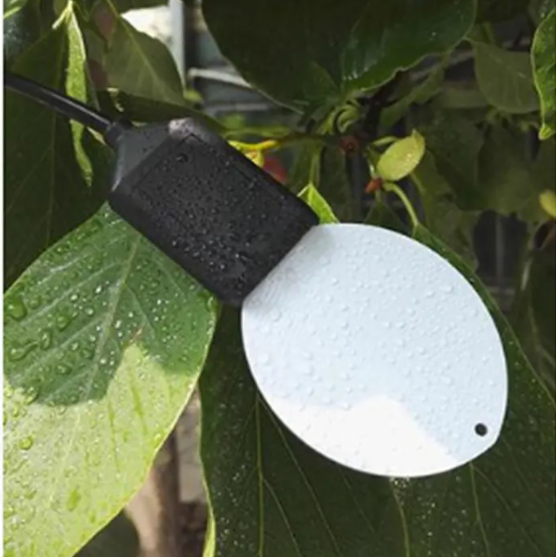
A leaf wetness sensor is a new-generation agricultural sensor used in crop growth research, pest & disease prevention and early warning, and spray irrigation control. It accurately measures moisture or ice crystal residue on plant leaf surfaces in real time.
Functions: Monitors changes in leaf surface moisture, condensation, fog, dew, and icing.
Significance: The duration of leaf surface wetness is a key condition for infection and spread of many fungal and bacterial diseases (e.g., downy mildew, powdery mildew). Precise monitoring of leaf wetness duration provides critical data for agricultural decision-making.
Leaf wetness sensors have extremely high value in modern agriculture:
Pest & Disease Early Warning: Combined with temperature/humidity data to predict spore germination and infection windows
Precision Pesticide Application: Controls pesticide droplet retention time on leaves for optimal efficacy
Smart Irrigation & Fertilization: Adjusts spray systems based on dew to avoid over-irrigation
Agricultural Research: Studies plant growth, development, and micro-environmental response
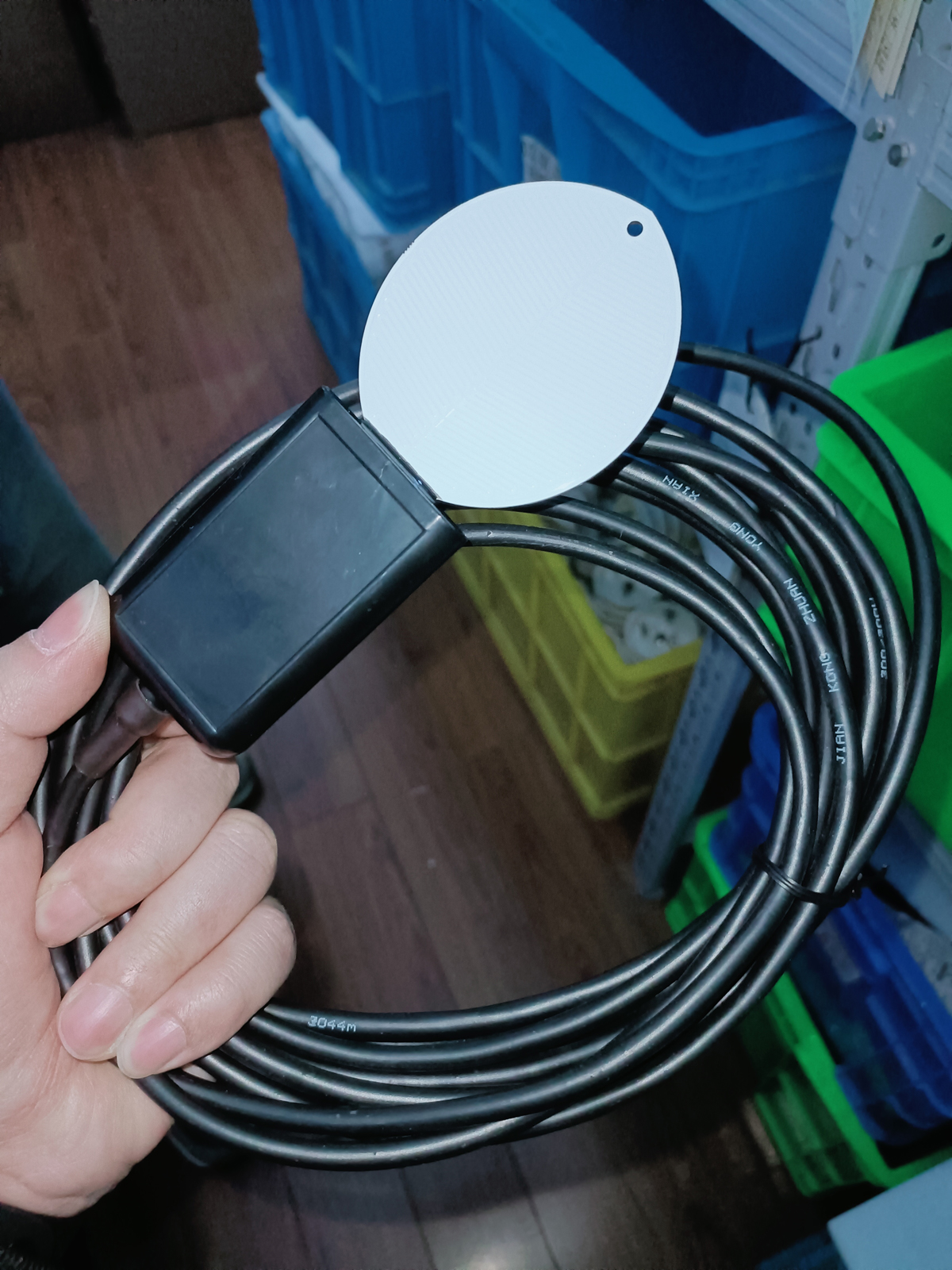
The leaf wetness sensor works by measuring changes in capacitance on the leaf surface — specifically the dielectric constant change of the surface medium.
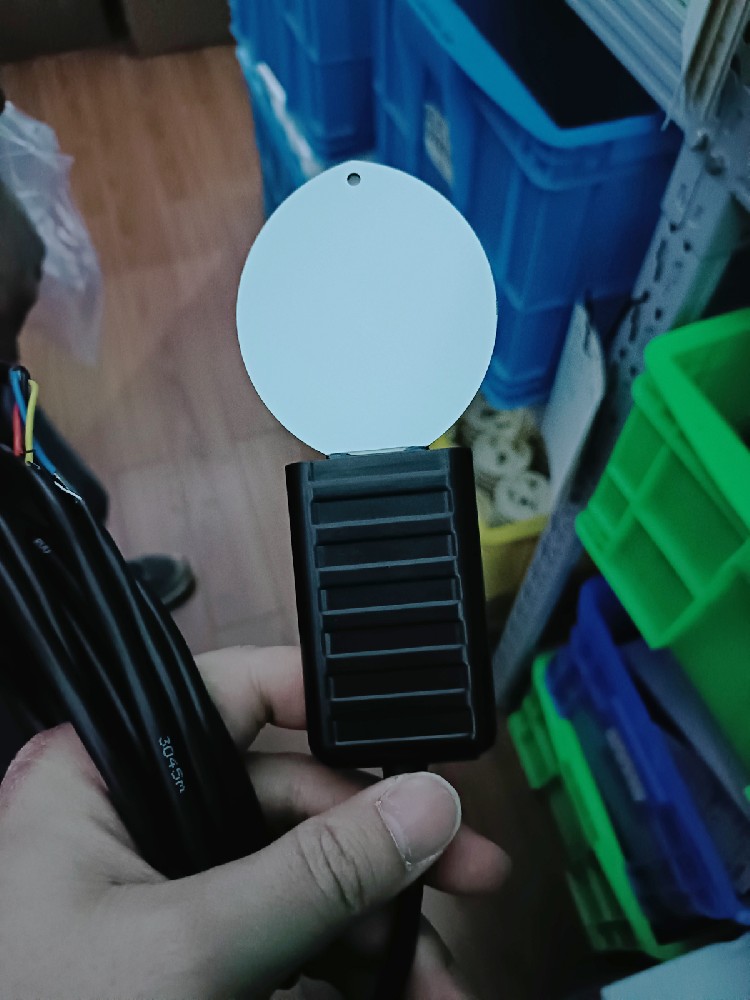
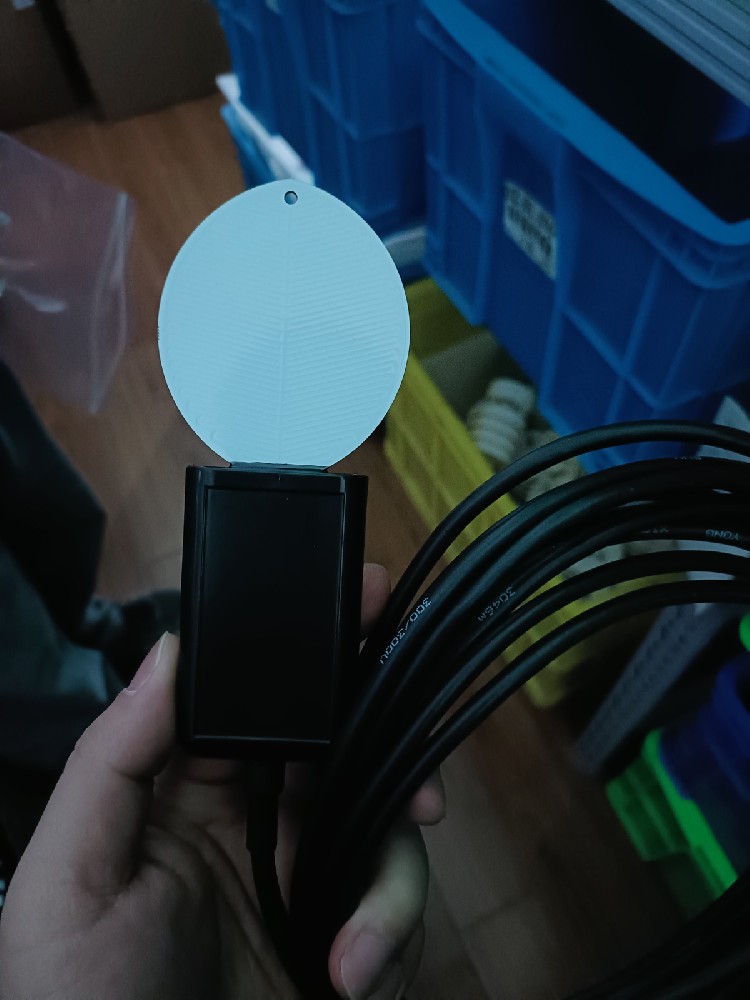
Sensor Structure: NiuBoL NBL-W-LM adopts a leaf-shaped design with high-precision interdigitated electrodes forming a capacitor.
Dielectric Change: Dry state = low dielectric constant. When dew, fog, rain, or ice crystals adhere, high-dielectric-constant water replaces low-dielectric-constant air/leaf surface.
Signal Conversion: The sensor measures this significant capacitance change and converts it to voltage or RS485 digital signal, accurately reflecting leaf wetness level.
Bionic Design: Mimics real leaf shape for evaporation rate close to actual crop leaves
Temperature & Humidity Integration: Simultaneously monitors both, accurately distinguishing liquid water vs. solid ice crystals
All-Round Detection: Detects fog, dew, freezing, condensation, and rainfall moisture
High Stability: Excellent waterproof sealing, RS485 digital output, strong anti-interference
| Parameter | Specification | Notes |
|---|---|---|
| Power Supply | DC 12–24 V | Suitable for solar/battery field power |
| Communication | RS485 (Modbus customizable) | Industrial standard, easy integration |
| Power Consumption | Standby 72 mW, Peak 120 mW | Extremely low, ideal for long-term monitoring |
| Temperature Range/Accuracy | -40 to 80 °C / ±0.5 °C | Enables ice crystal detection |
| Humidity Range/Accuracy | 0–100% RH / ±5% RH | Covers dew, fog, water film states |
Location: Near leaves representative of crop micro-environment
Fixing & Angle: Secure with non-metallic wire; match actual leaf angle (usually 30–60°)
Connection: Connect RS485 to data logger or control system
Calibration: Zero calibration in dry state; full-scale check when wet
Data Application: Real-time monitoring of leaf wetness duration — core indicator for disease warning
| Symptom | Possible Cause | Solution |
|---|---|---|
| Reading stuck at 0/low | Power or wiring issue; RS485 A/B reversed | Check 12–24 V power and correct A/B lines |
| Reading stuck at high | Surface covered with dirt/biofilm | Gently clean with water and soft cloth — never use hard objects or solvents |
| Shows wet after leaf dried | Sensor too flat → slow evaporation | Increase tilt angle to match natural leaf evaporation |
Price varies by technology, accuracy, integration, and brand:
Basic analog output models: Lower cost
Professional NBL-W-LM (with temperature, RS485, bionic design): Approximately ¥500–¥1000 RMB (exact price depends on quantity and configuration — contact NiuBoL for quote)
Prioritize reliability, lifespan, and data accuracy to ensure effective disease warning systems.
1. What is the essential difference between leaf wetness and air humidity sensors?
A: Air humidity measures water vapor in air; leaf wetness measures liquid water or ice crystals attached to the surface.
2. How does NBL-W-LM distinguish water from ice crystals?
A: Integrated temperature sensor + algorithm: high humidity + temperature<0°C = ice/frost.
3. Does it need to touch the leaf?
A: No. Install near leaves in the same micro-environment with matching angle for realistic evaporation.
4. Why RS485 output?
A: Long-distance (up to 1000 m), strong anti-interference — perfect for large fields.
5. Does surface dirt affect accuracy?
A: Yes. Dirt/biofilm alters dielectric constant and moisture behavior → clean regularly with water/soft cloth.
6. Why mimic leaf shape?
A: Ensures condensation, adhesion, and evaporation rates closely match real leaves for biologically representative data.
7. What is the benefit of ultra-low power?
A: 72 mW standby enables long-term operation on small solar panels/batteries in remote areas.
8. Is ±5% RH accuracy sufficient for agriculture?
A: Yes. Key is detecting water film presence and duration — response speed matters more than absolute RH precision.
9. Besides disease warning, what else can it guide?
A: a) Irrigation control (avoid spraying when dew present); b) Optimal pesticide timing for sufficient leaf retention.
10. Can cable length be customized?
A: Yes — professional manufacturers like NiuBoL offer custom cable lengths.
11. What certifications does NiuBoL have?
CE, ISO9001, RoHS, and nationally recognized meteorological calibration certificates.
With its advanced dielectric constant measurement principle and integrated bionic design, the NiuBoL NBL-W-LM leaf temperature & humidity sensor serves as “bright eyes” for precision agriculture. It converts complex leaf micro-environment changes into quantifiable data, effectively guiding pest control and water/fertilizer management — a key technology for improving crop health and agricultural efficiency.
Are you planning to integrate this leaf wetness sensor into an existing system? I can provide detailed communication protocol documentation and integration recommendations.
 NBL-W-LM-Leaf-Temperature-and-Humidity-Sensor-Instruction-Manual.pdf
Prev:What is the Working Principle of a Rain/Snow Sensor? What is Its Role?
Next:Water Turbidity Sensor: Working Principle, Role & NiuBoL Technical Analysis
Related recommendations
Sensors & Weather Stations Catalog
Agriculture Sensors and Weather Stations Catalog-NiuBoL.pdf
Weather Stations Catalog-NiuBoL.pdf
Agriculture Sensors Catalog-NiuBoL.pdf
Water Quality Sensor Catalog-NiuBoL.pdf
Related products
 Combined air temperature and relative humidity sensor
 TDR Soil Moisture & Temperature Sensor for irrigation| RS485 |4-20mA| NBL-S-THR
 Soil pH sensor RS485 soil Testing instrument soil ph meter for agriculture |NBL-S-PH
 Wind Speed sensor Output Modbus/RS485/Analog/0-5V/4-20mA
 Tipping bucket rain gauge for weather monitoring auto rainfall sensor RS485/Outdoor/stainless steel
 Pyranometer Solar Radiation Sensor 4-20mA/RS485

Screenshot, WhatsApp to identify the QR code
WhatsApp number:+8615367865107
(Click on WhatsApp to copy and add friends)

