





— Blogs —
—Products—
 Consumer hotline +8618073152920
WhatsApp:+8615367865107
Address:Room 102, District D, Houhu Industrial Park, Yuelu District, Changsha City, Hunan Province, China
Product knowledge
Time:2026-02-09 14:44:08 Popularity:611
A greenhouse sensor comparison helps determine whether a climate difference comes from the growing environment, the instrument or the acquisition system. Before changing a humidity or temperature setpoint, compare suitable instruments under shared conditions and check the data scale. Otherwise, a biased or poorly exposed sensor can lead the operator to adjust ventilation, heating or enrichment for a condition that has not been established.
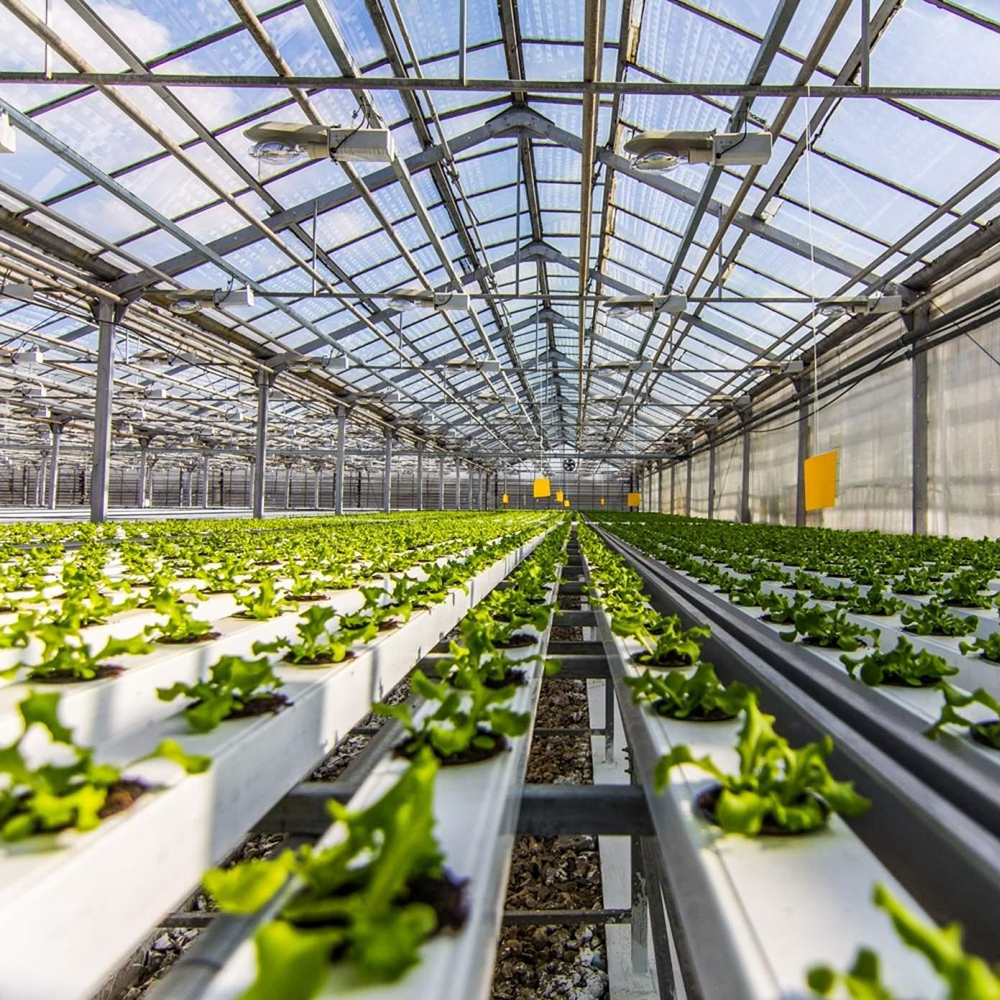
Record which quantity differs, by how much, at what times and under which operating conditions. Two air sensors in different bays can disagree because of actual climate variation. A probe beside a pipe, vent, fogger or CO2 outlet may also respond differently from one near the crop. A location difference is not automatically a calibration fault.
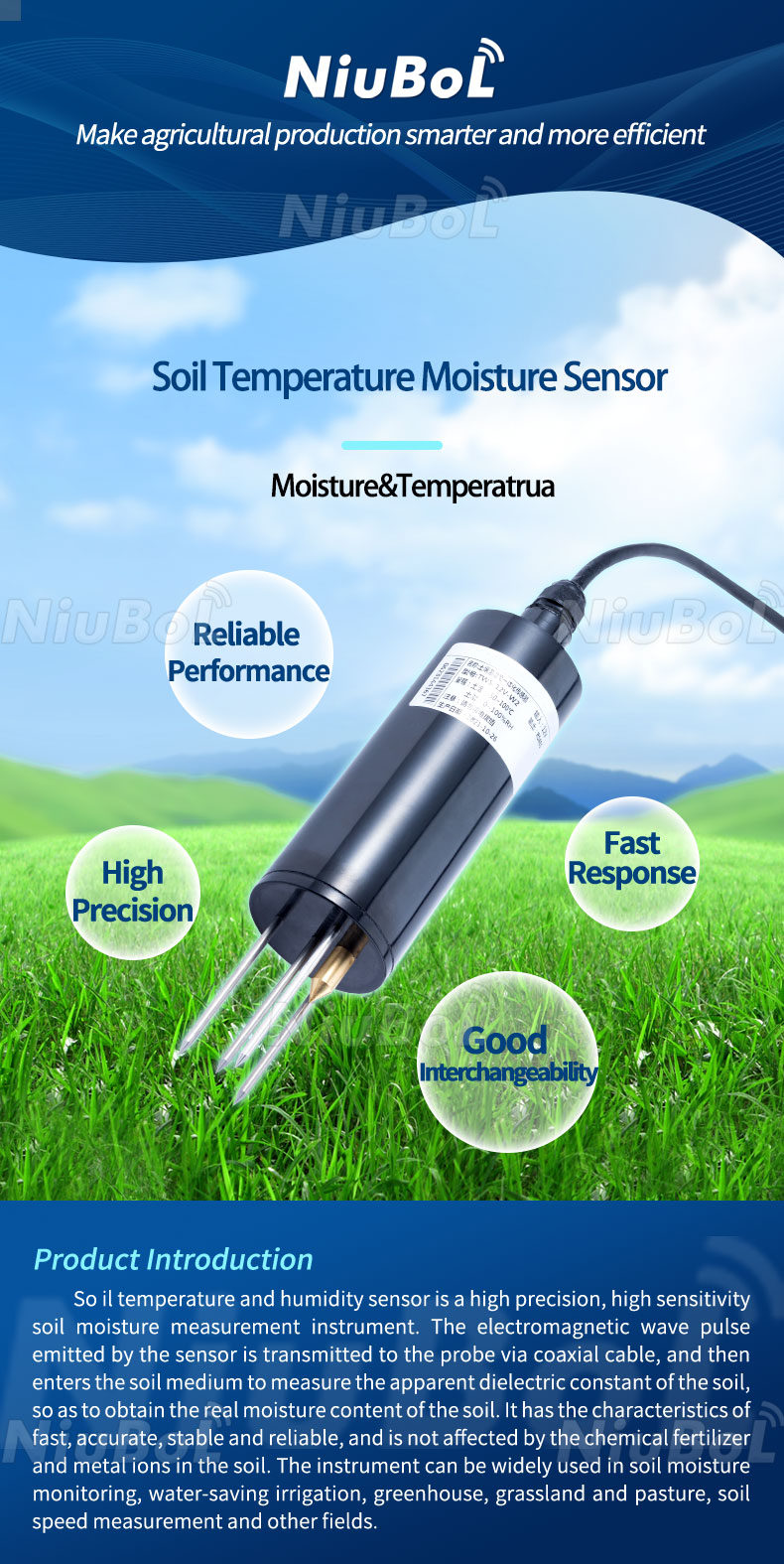
Check whether the comparison is between equivalent quantities. Air relative humidity is not leaf wetness, soil water content or substrate water potential. The soil probe illustrated below belongs to a separate root-zone measurement. Its behavior can support irrigation assessment but cannot serve as a reference for the air sensor beside it.
| Symptom | First comparison | Avoid |
|---|---|---|
| Constant offset | Shared-condition comparison and acquisition scale | Changing setpoints to hide an unexplained bias |
| Difference during sunlight | Shielding, airflow and nearby heated surfaces | Assuming the electronic calibration alone is responsible |
| Slow recovery after fogging | Condensation, contamination and sensor response | Using a wet sensor as an unquestioned reference |
| Sudden change after controller work | Raw value, units and channel mapping | Adjusting the probe before checking software |
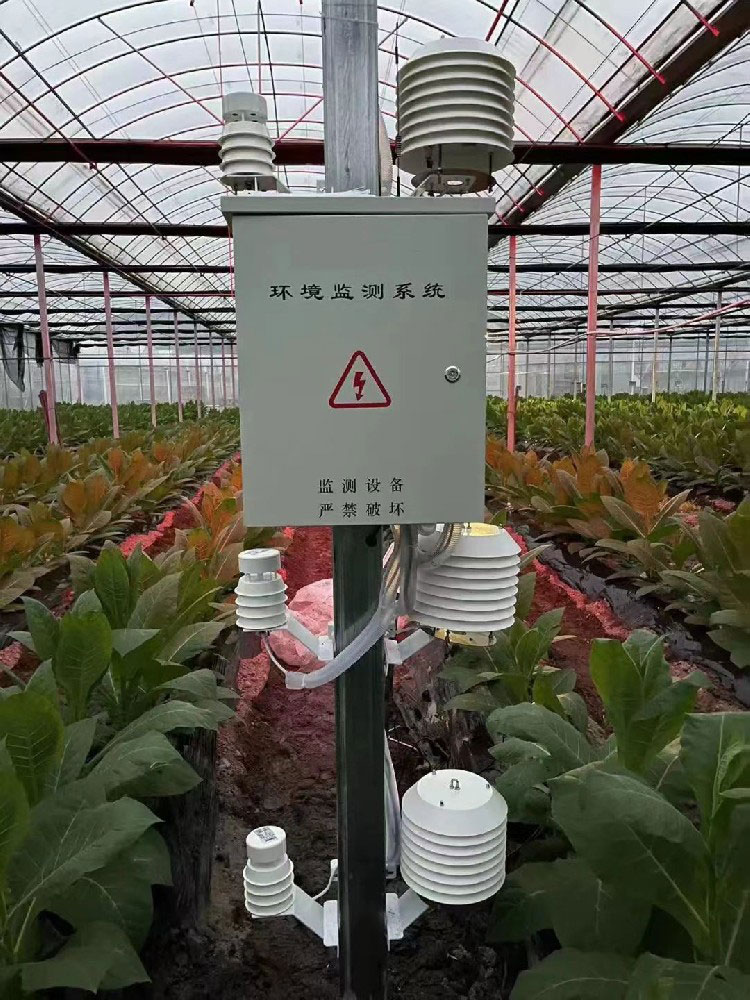
Place the candidate and reference instruments close enough to share representative air, without obstructing either sensing surface or changing the intended ventilation. Keep their exposure as comparable as practicable and allow them to stabilize after moving. Record whether heating, ventilation or fogging changes during the comparison.
Agreement between two similar sensors does not establish absolute accuracy; both can have a similar bias. Disagreement does not identify the faulty instrument without a suitable reference or further investigation. Select a reference and method capable of resolving the difference that matters to the project, including its uncertainty and applicable conditions.
Retain observations over useful operating conditions rather than comparing only one screen value. A sensor can agree under steady conditions and diverge during rapid changes because of response or exposure. Distinguish that behavior from a persistent offset before applying a software correction.
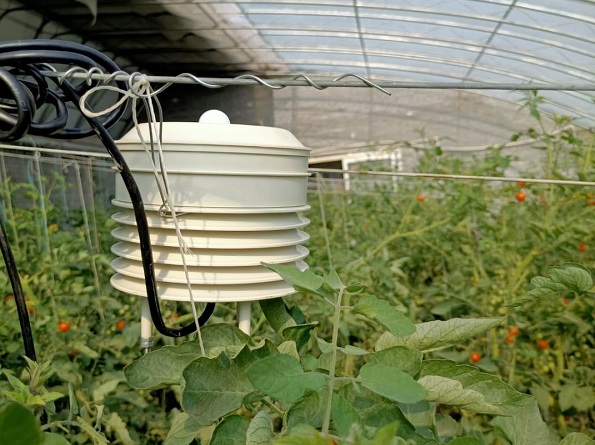
The NiuBoL NBL-W-THPLC combines air temperature, humidity, pressure, illuminance and CO2 measurements. It does not include PAR or soil moisture merely because those values appear elsewhere in a greenhouse dashboard. The following parameters describe the identified configuration, not every sensor in a complete station.
| THPLC quantity | Range and specification |
|---|---|
| Temperature | -50 to +100 C; +/-0.5 C; 0.1 C resolution |
| Relative humidity | 0-100% RH; +/-5% RH; 0.1% RH resolution |
| Pressure | 10-1,100 hPa; +/-0.3 hPa; 0.1 hPa resolution |
| Illuminance | 0-200,000 lux; +/-7%; 10 lux resolution |
| CO2 | 0-2,000 ppm; +/-(40 ppm + 2% FS); 1 ppm resolution |
| Supply and output | Selected 12 V or 24 V DC configuration; RS485 Modbus RTU |
For the 2,000 ppm CO2 span, 2% FS is 40 ppm, so that accuracy expression gives an 80 ppm numerical allowance. It is not a universal +/-50 ppm claim. Confirm the offered version and relevant conditions before using the expression in a project acceptance tolerance.
Resolution and accuracy remain different. A display increment of 0.1% RH does not imply that the actual humidity is known within 0.1 percentage point. A combined head also shares one exposure: the convenient position for its light detector may not automatically be the right location for every climate observation.
Air vapor-pressure deficit can be estimated from temperature and RH, but it is a derived quantity rather than an additional direct sensor measurement. Using the FAO saturation-vapor-pressure relationship, saturation pressure at 25 C is approximately 3.17 kPa. Air VPD can then be calculated as that pressure multiplied by one minus RH expressed as a fraction.
At 25 C and 80% RH, the illustrative air VPD is about 0.63 kPa. Holding temperature fixed, 75% RH gives about 0.79 kPa and 85% RH about 0.48 kPa. This shows how a five-percentage-point RH difference affects the calculation. It is not a complete uncertainty budget: temperature error, exposure and correlation between inputs also matter.
These values are not recommended crop setpoints. Air VPD is also not the same as the leaf-to-air vapor-pressure difference when leaf temperature differs from air temperature. Keep the calculation method and inputs visible so an operator does not mistake an additional decimal place in software for improved instrument accuracy.
For illumination, confirm whether the task concerns lux or plant-light photon measurements. A lux channel cannot become PPFD by changing its label, and a conversion depends on the light spectrum. If the crop-light decision needs PAR measurements, specify a suitable instrument rather than using the THPLC illuminance value as an unqualified substitute.
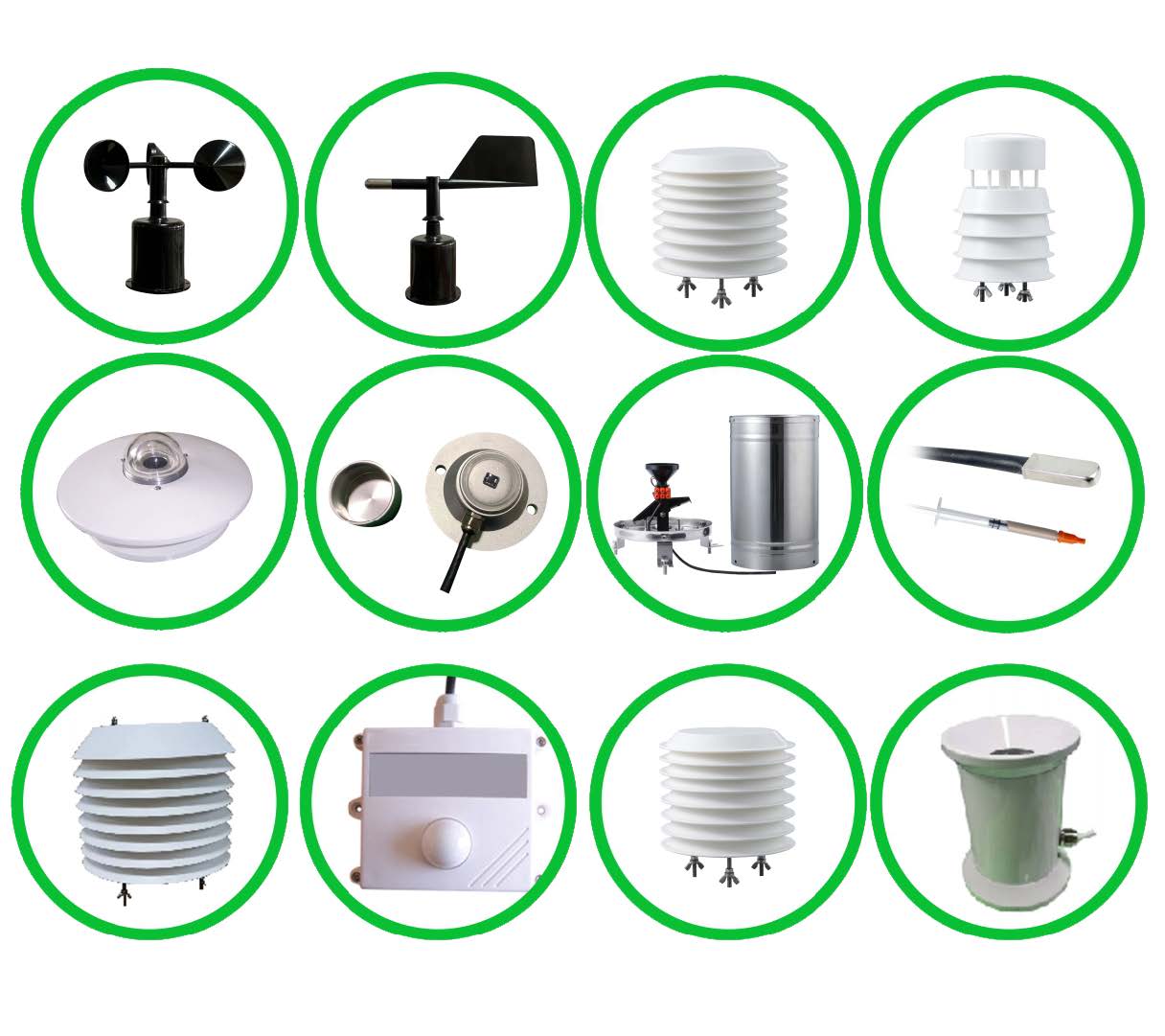
Compare a raw device response with the logger and displayed engineering value. Confirm units, channel identity, scale factor and timestamp. A temperature decimal or humidity scale error can produce a credible-looking but wrong trend. Keep instrument corrections separate from display formatting and controller offsets.
For THPLC serial acquisition, match the supplied Modbus RTU definition and 9600 bps configuration. Keep at least 1,000 ms between communications for the documented arrangement. Do not copy a register map or invalid-data code from another NiuBoL head because the housing looks similar.
A CO2 comparison needs a suitable reference method. Do not assume that any outdoor sample is a fixed calibration concentration, or that an undocumented automatic-baseline feature exists. If reference gases or a service adjustment are required, use the applicable procedure and record the intervention rather than forcing agreement with an arbitrary ambient value.
After the shared-condition comparison, reinstall each instrument at its intended location. Recheck representative crop height, shielding, airflow, cleaning access and separation from direct spray or injection. If the instruments agreed together but differ again in their zones, investigate the spatial climate difference rather than transferring the reference offset automatically.
Record any approved correction, replaced instrument or changed location with an effective date. Avoid overwriting the original observations. A later analyst should be able to distinguish improved measurement from a changed software offset or altered setpoint.
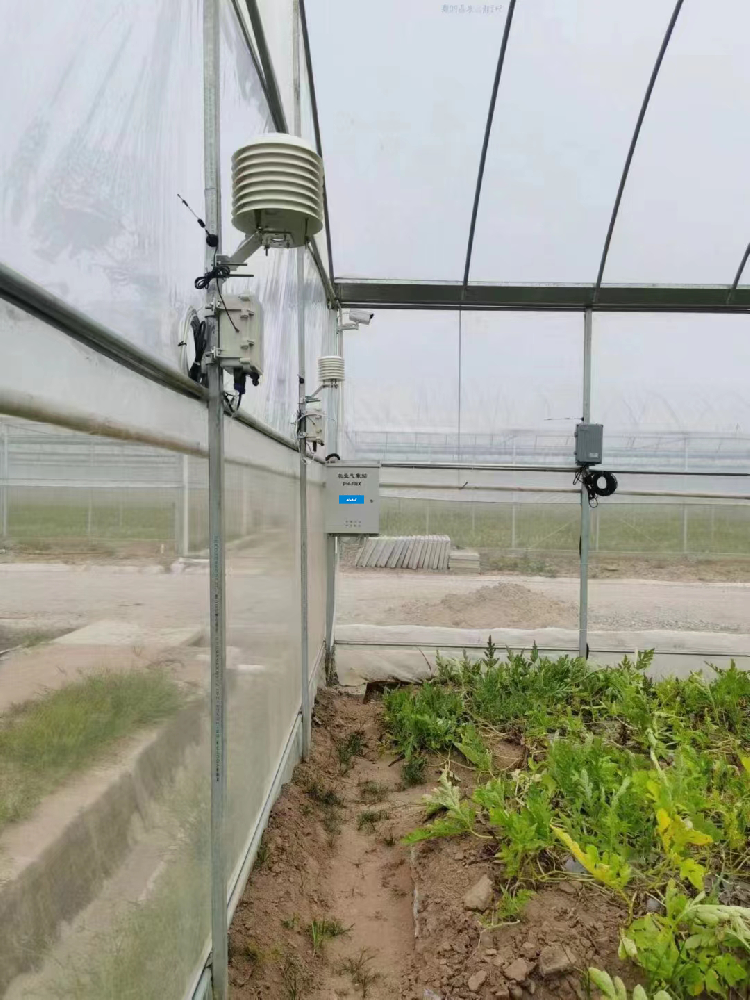
For acceptance, compare the measurement difference against a tolerance that accounts for the reference, candidate and field conditions. Do not demand zero difference between instruments or automatically add catalogue accuracy limits and call the result a statistical confidence interval. Establish the comparison method and decision rule before declaring a pass or failure.
A useful greenhouse sensor comparison enquiry includes model and output version, raw and displayed records, reference details, photographs of exposure and the control action being considered. NiuBoL can review the measurement configuration and interface requirements without promising crop gains or energy savings from the sensors alone.
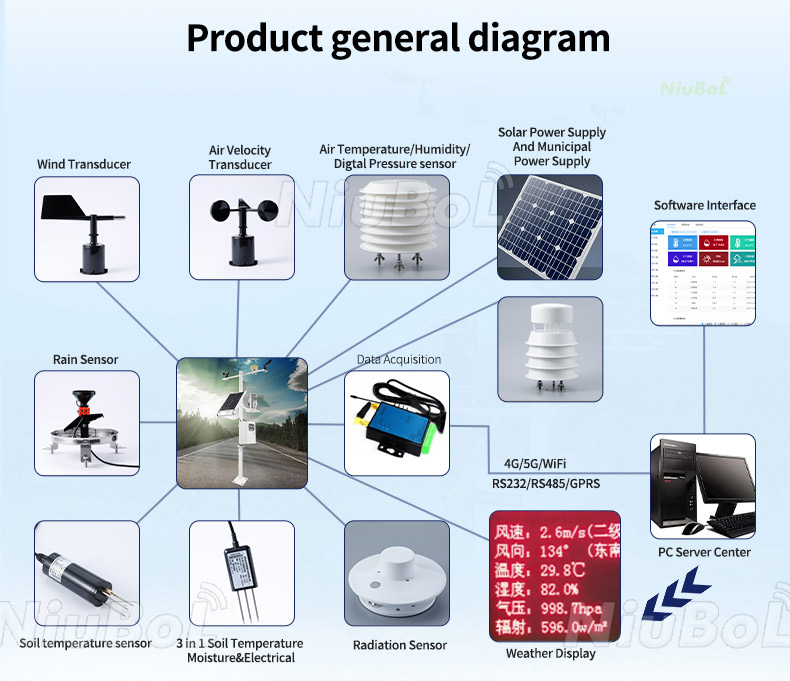
First determine whether the difference is environmental, instrumental or digital. A setpoint adjustment can hide a scale or exposure error and change the actual crop conditions unnecessarily.
No. It helps identify relative agreement under shared conditions. An absolute assessment needs an appropriate reference and a decision rule that considers uncertainty and the comparison conditions.
The configuration described here has a +/-5% RH specification and 0.1% RH resolution. Do not substitute the resolution or a specification from another probe for the offered instrument's accuracy.
Its listed light channel measures illuminance in lux. PAR or PPFD requires the appropriate measurement instrument or a justified spectrum-dependent method, not a renamed lux tag.
No. Leaf temperature and local conditions affect condensation. An air-derived indicator can support assessment but does not directly measure every leaf surface or establish a disease forecast.
A greenhouse sensor comparison should explain the disagreement before it changes crop-control settings. Check shared exposure, a suitable reference, actual accuracy and the full acquisition chain. Retain correction and location history so NiuBoL measurement data can support a defensible operating decision rather than an unexplained setpoint change.
Prev:Rain and Snow Sensor Integration for Weather Monitoring
Next:Solar Radiation Component Closure: Check GHI, DNI and DHI
Related recommendations
Sensors & Weather Stations Catalog
 Agriculture Sensors and Weather Stations Catalog-NiuBoL.pdf
Weather Stations Catalog-NiuBoL.pdf
Agriculture Sensors Catalog-NiuBoL.pdf
Water Quality Sensor Catalog-NiuBoL.pdf
Related products
 Combined air temperature and relative humidity sensor
 TDR Soil Moisture & Temperature Sensor for irrigation| RS485 |4-20mA| NBL-S-THR
 Soil pH sensor RS485 soil Testing instrument soil ph meter for agriculture |NBL-S-PH
 Wind Speed sensor Output Modbus/RS485/Analog/0-5V/4-20mA
 Tipping bucket rain gauge for weather monitoring auto rainfall sensor RS485/Outdoor/stainless steel
 Pyranometer Solar Radiation Sensor 4-20mA/RS485


Screenshot, WhatsApp to identify the QR code
WhatsApp number:+8615367865107
(Click on WhatsApp to copy and add friends)

