





— Blogs —
—Products—
 Consumer hotline +8618073152920
 WhatsApp:+8615367865107
Address:Room 102, District D, Houhu Industrial Park, Yuelu District, Changsha City, Hunan Province, China
Product knowledge
Time:2026-02-05 11:28:39 Popularity:816
Micro agricultural weather station commissioning should show that a valid observation reaches the intended person or controller, and that a failed observation cannot silently become a crop-management command. A sensor responding on a workshop bench is only the start. For a NiuBoL installation, test channel identity, field location, alarm handling and outage recovery before relying on irrigation or environmental alerts.
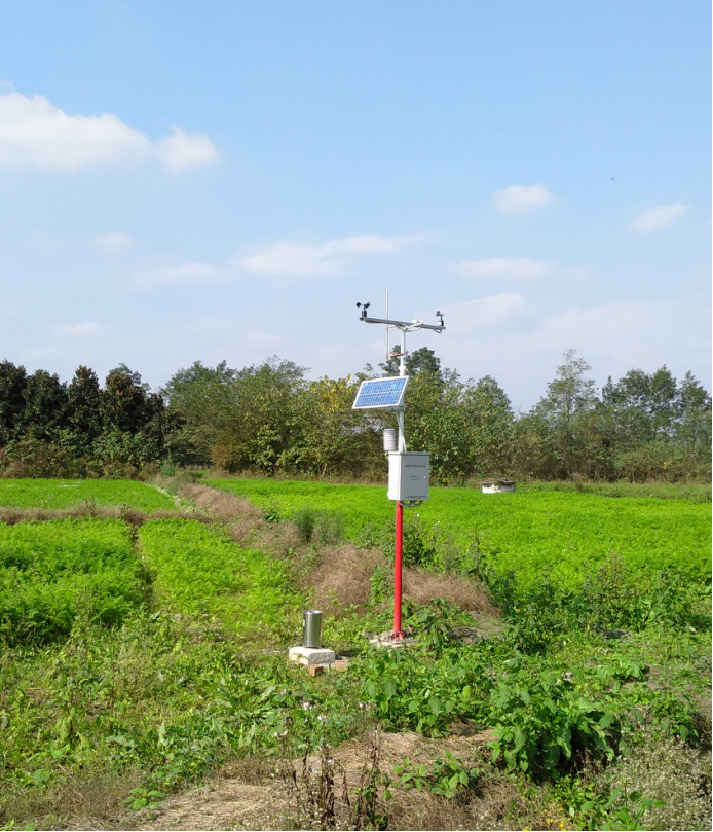
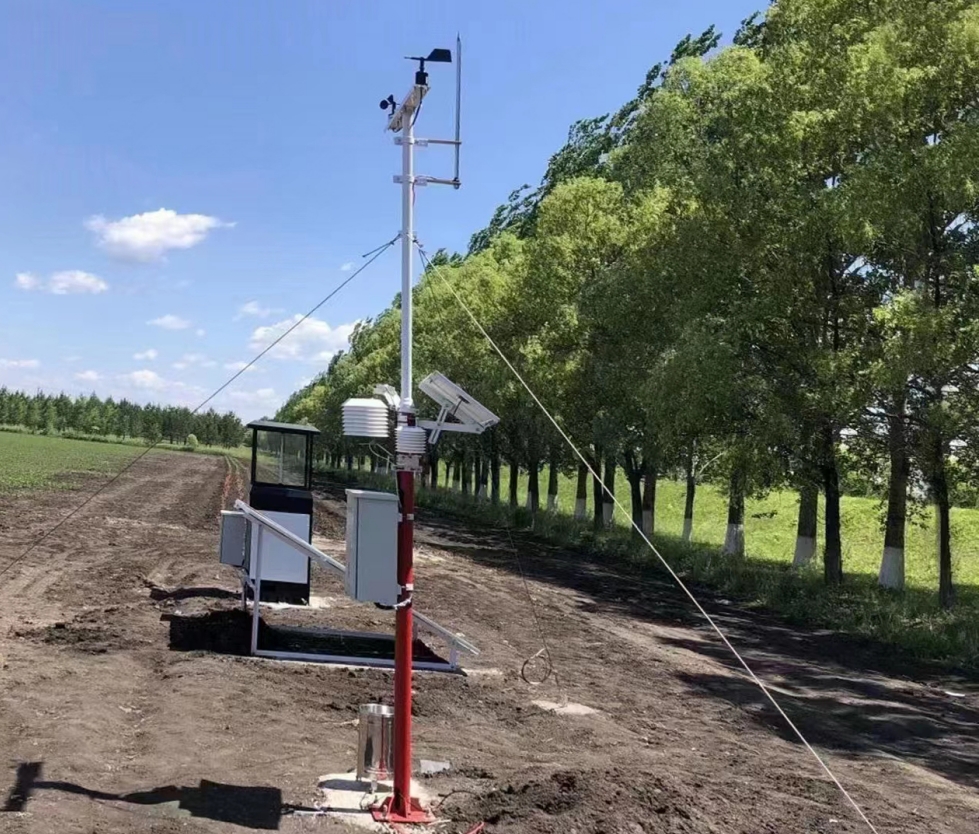
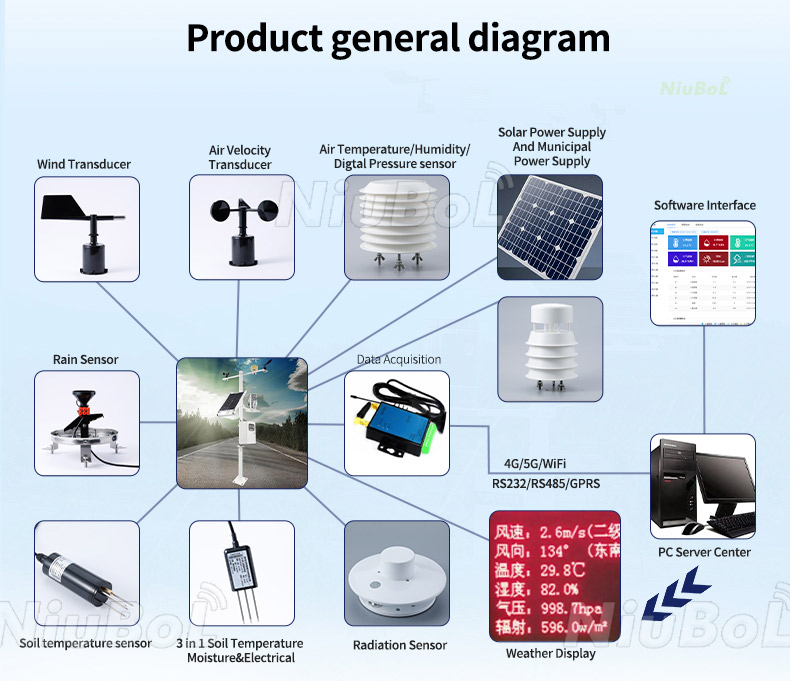
A compact weather head measures its installed environmental channels. A data logger records observations; a gateway supplies the selected upstream connection; application software may calculate an alert; a PLC or other controller operates equipment. These functions can be packaged together or supplied separately, but they need to remain identifiable in the acceptance test.
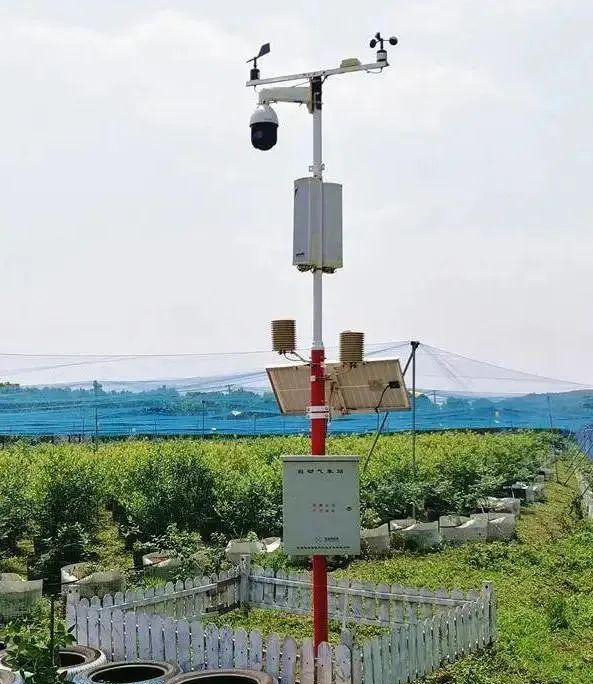
The modular field installations pictured here illustrate alternative arrangements, not a single fixed five-channel assembly. If a compact NBL-W-51MUWS head is selected, its core channels are horizontal wind speed, wind direction, air temperature, relative humidity and pressure. Rainfall, soil moisture, PAR and leaf wetness require the corresponding instruments or explicitly supplied options. A dashboard entry for an absent channel is not a measurement.
For each point, record the physical sensor, location, output version, units, scale, observation interval and maximum accepted data age. Add who receives an alarm and whether it only requests inspection or enters a control sequence. Do not assume a humidity warning directly specifies safe ventilation, or a soil reading establishes an irrigation duration without crop and delivery information.
| Example input | Field check | Separate response to verify |
|---|---|---|
| Air temperature | Is this the required crop or reference exposure? | Notification recipient and the approved cold-event procedure |
| Soil water content | Does the tag identify the correct zone and depth? | Permitted irrigation request and actual valve or flow feedback |
| Rainfall | Is the value cumulative or an interval amount? | Defined rain-related adjustment, not an assumed effective-rain total |
| Wind | Are speed, bearing and validity interpreted correctly? | Site-approved equipment restrictions or advisory action |
Use a zone-specific identifier rather than a generic soil sensor name. A valid observation from another block is not a safe substitute for a missing local probe. Keep deliberate shared-reference channels separate from measurements of the particular crop or root zone. Label any forecast input as a forecast rather than treating it as an observation collected by the station.
The NBL-W-51MUWS five-channel sensor provides an example for a compact-head acceptance schedule. Use its supplied revision and register map rather than a generic 5-9-in-1 table. In particular, the documented wind-speed range is 0-40 m/s, not the 0-60 m/s range of another ultrasonic instrument.
| 51MUWS item | Configuration information |
|---|---|
| Supply and average power | 12-24 V DC; 0.3 W |
| Wind speed | 0-40 m/s; +/-(0.5 m/s + 2% FS); 0.01 m/s resolution |
| Wind direction | 0-359 degrees for the documented protocol version; +/-3 degrees; 1 degree resolution |
| Temperature and RH accuracy | +/-0.5 C; +/-5% RH |
| Pressure accuracy | +/-1.5 hPa; confirm the offered measuring interval |
| Interface | RS485 Modbus RTU; 9600 bps |
| Operating environment | -40 to +80 C; 0-95% RH |
| Construction | ABS; IP65; standard 2.5 m cable |
The instrument load is not the station load. At 0.3 W continuously, the head uses 7.2 Wh per day before logger, modem and conversion losses. Check the whole supplied system when sizing power. Its operating rating does not establish that every additional sensor or battery shares the same limits, or that an obstructed ultrasonic path remains valid in all weather.
Read the five channels directly and compare them with the values shown by the logger and receiving platform. In the documented format, wind speed is scaled by 0.01, direction is in degrees, and temperature, humidity and pressure use their specified scale. Verify the actual map, serial settings and request timing. The interval between communications must be at least 1000 ms for this interface.
Check the 0x7FFF invalid or missing marker before scaling it. As an unsigned integer it is 32767; blindly applying a temperature scale of 0.1 would display 3276.7 C instead of an unavailable measurement. The negative temperature example FF 3D represents -195 in signed 16-bit form, giving -19.5 C. Test both invalid handling and signed interpretation rather than clamping an unexpected value into a plausible range.
Confirm that each channel remains independent. A failed humidity observation should not erase a functioning wind record, but a failed shared head may affect several measurements together. Keep channel validity and last-valid time available to the application. A numeric value that has not changed can be genuine; an old observation repeatedly forwarded with a new receipt time is a different condition.
Use approved test inputs or a separate replay mode to check a threshold crossing, persistence, clearing and acknowledgment. Keep simulated values out of production measurements, and isolate physical actuators where required by the commissioning procedure. Do not wait for a real frost or force soil conditions just to demonstrate software logic.
For an illustrative timing test, suppose observations are taken every 60 seconds and an operational condition must persist for three minutes. A single high reading does not establish continuous exceedance for that entire duration. Define whether the rule uses sample count or elapsed time and what happens if one observation is missing. These timing values test implementation; they are not recommended crop thresholds or warning delays.
Check the recipient as well as the rule. A stored alarm, a sent message and a received notification are separate events. Include station identity, location, observation time and the specific channel in the message. A phone notification saying only temperature low is difficult to act on when the project contains several greenhouses or terrain positions.
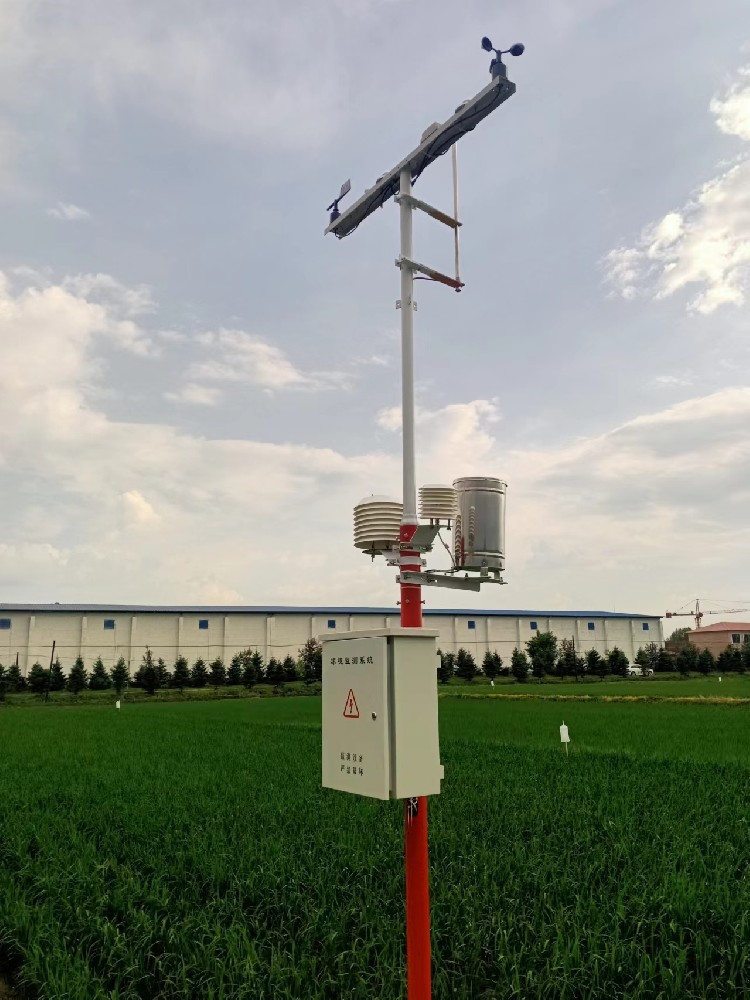
First interrupt the sensor connection under a safe procedure. Verify that the receiver recognizes unavailable observations, retains the last valid time and avoids substituting zero. Next interrupt the upstream network while local acquisition remains powered. Check whether any included local storage continues recording, and verify backfill on reconnection rather than assuming it from an IoT description.
Finally test station power loss and recovery. Confirm time recovery, configuration retention, new observation arrival and the initial validity state. A logger that restarts correctly does not prove that a remotely commanded valve returned to the intended state. Inspect controller and actuator behavior separately with the responsible engineer.
Late historical observations must retain their original times. They should not trigger a current irrigation or cold-event action merely because the server receives them now. Distinguish recalculation of an historical event from a live operational notification. If a platform cannot make that distinction, resolve the limitation before enabling automatic responses.
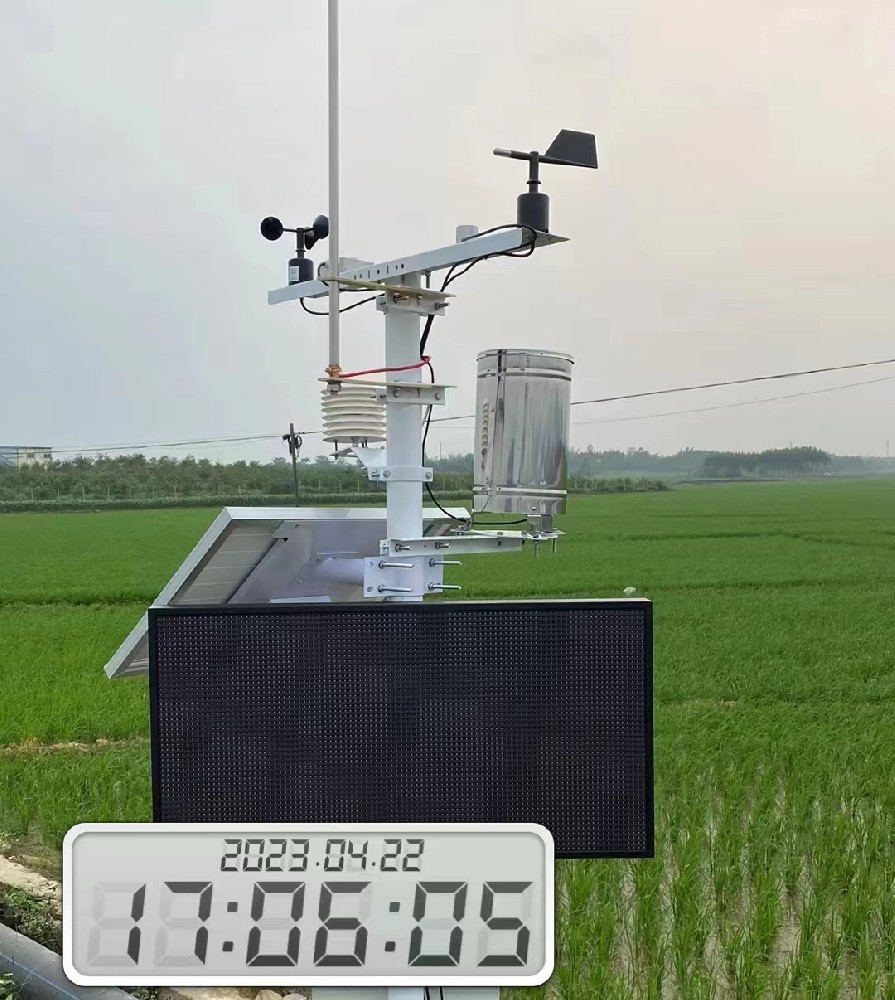
For irrigation, a software command does not prove that a valve opened or water reached the intended zone. Use suitable valve state, flow information or a supervised field check as required by the installation. The controller's protections and approved fallback behavior remain necessary when sensor data are missing, a pump is unavailable or water delivery is interrupted.
For greenhouse equipment or cold protection, follow the site's approved operating sequence and safeguards. A weather head is not a universal autonomous crop-protection controller. Define manual override, return from maintenance and which person authorizes automatic operation. Keep the actual physical outcome distinguishable from an alarm or a message accepted by software.
For a NiuBoL commissioning proposal, provide the supplied channel list, locations, existing PLC or logger, upstream interface and intended operational responses. State whether the scope includes monitoring only or equipment control, and identify the parties responsible for actuator tests. This avoids promising a fixed saving, coverage distance or return on investment from the station hardware alone.
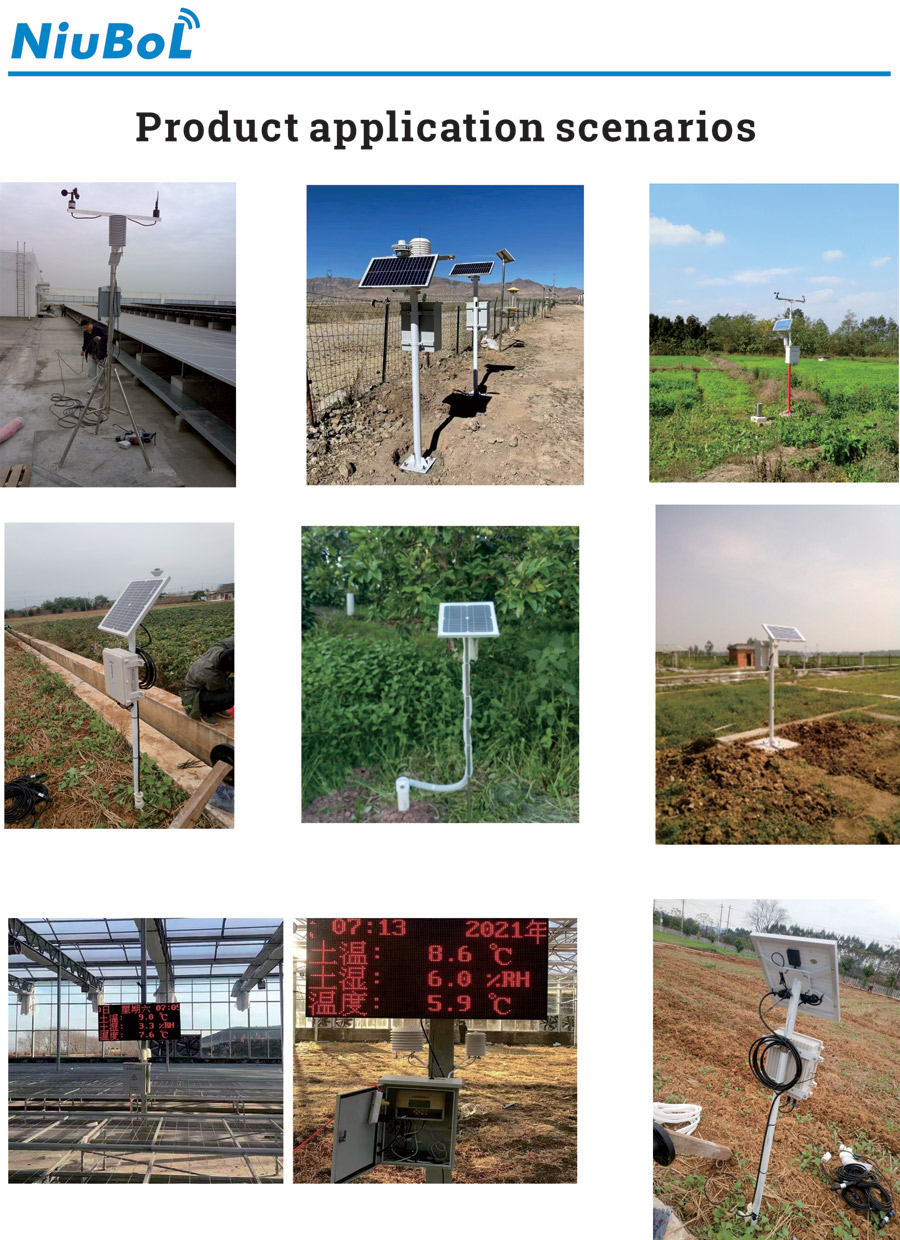
Verified physical channels, correct data interpretation and demonstrated alarm and outage behavior for the purchased scope. Where control is included, the actuator and safeguards need their own accepted tests. A powered display alone is not completion.
Not in the core 51MUWS configuration described here. Add and identify the appropriate devices or supplied options, then test their separate data maps. Do not populate absent dashboard channels with zero as if it were a measurement.
It is an invalid or missing marker in this documented interface. Converting it as an ordinary reading produces a false extreme value. Preserve the validity condition and follow the intended outage response instead.
That depends on the supplied acquisition equipment and configuration. Test local recording and control behavior separately from remote access. Backfill, retention and fallback functions should be demonstrated, not assumed.
Historical records need their original times and separate processing. A late record should not be mistaken for a current crop condition. Define and test that distinction before enabling event-driven control.
Identify who accepts field measurements, logger and network functions, software rules and physical equipment response. Include the required records and unresolved limitations so monitoring acceptance is not confused with acceptance of the whole irrigation or greenhouse system.
Micro agricultural weather station commissioning should establish a trustworthy path from a named observation to an appropriate response. Verify NiuBoL model-specific data, test sensor, network and power failures separately, and confirm physical actions independently. That provides practical project value without treating a station as a guaranteed source of crop gains or autonomous protection.
Prev:Farm Weather Station Accuracy: Specifications and Field Error
Next:Roadside Visibility Sensor Placement and Fault Checks: NBL-W-VS
Related recommendations
Sensors & Weather Stations Catalog
 Agriculture Sensors and Weather Stations Catalog-NiuBoL.pdf
Weather Stations Catalog-NiuBoL.pdf
Agriculture Sensors Catalog-NiuBoL.pdf
Water Quality Sensor Catalog-NiuBoL.pdf
Related products
 Combined air temperature and relative humidity sensor
 TDR Soil Moisture & Temperature Sensor for irrigation| RS485 |4-20mA| NBL-S-THR
 Soil pH sensor RS485 soil Testing instrument soil ph meter for agriculture |NBL-S-PH
 Wind Speed sensor Output Modbus/RS485/Analog/0-5V/4-20mA
 Tipping bucket rain gauge for weather monitoring auto rainfall sensor RS485/Outdoor/stainless steel
 Pyranometer Solar Radiation Sensor 4-20mA/RS485

Screenshot, WhatsApp to identify the QR code
WhatsApp number:+8615367865107
(Click on WhatsApp to copy and add friends)

