





— Blogs —
—Products—
 Consumer hotline +8618073152920
 WhatsApp:+8615367865107
Address:Room 102, District D, Houhu Industrial Park, Yuelu District, Changsha City, Hunan Province, China
Product knowledge
Time:2026-02-05 11:33:27 Popularity:671
Roadside visibility sensor placement determines which stretch of road a measurement can represent. The sensor is an input, not a traffic-control decision by itself. A sudden low reading can be caused by fog, rain, spray, a dirty optical window or an obstruction close to the instrument. Before setting warning signs or dispatching staff, the integrator must decide how the control system will distinguish a real visibility event from an invalid measurement.
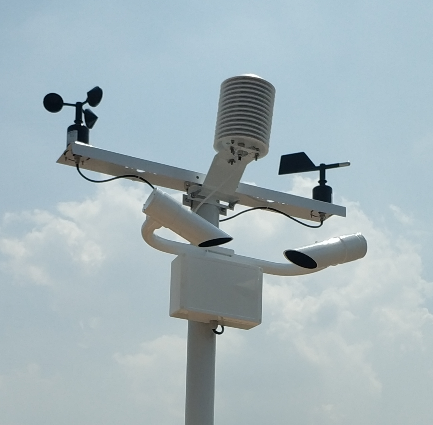
The NiuBoL NBL-W-VS atmospheric visibility sensor reports meteorological optical range (MOR), an estimate of the distance over which a visual contrast is attenuated by the atmosphere. For a highway operator, it can inform a warning rule; for a weather station, it is an observation channel. It is not a particle-concentration meter, and a low MOR value cannot be converted into PM2.5 without an independent, validated relationship. It also is not runway visual range, which has a different operational definition and may require a separate aviation-compliant system.
Define the receiving system first: roadside controller, PLC, RTU or weather-station logger; display update interval; alarm review; and who is authorized to change signs or operating restrictions. Thresholds should come from the road operator's approved procedure, not from a sensor brochure. Include a data-quality state so the operator can see when the measurement is unavailable or suspect.
NBL-W-VS uses forward-scattering optics. Light from its emitter intersects the receiver's field in a local sampling volume; airborne water droplets and particles scatter that light, and the instrument estimates MOR. The small sampling volume permits compact installation but makes siting important. A unit directly beside exhaust, irrigation spray, a cooling tower or a reflective surface may describe that local plume rather than the approach road.
Select an open position representative of the route segment and document height, offset from the carriageway, nearby structures and service access. Keep the optical paths clear of branches, signs, handrails and snow build-up. Consider the direction of vehicle spray and road maintenance operations. A high pole may avoid splash but could sample a different fog layer from driver eye level. If terrain creates several microclimates, one station may not represent the whole corridor.
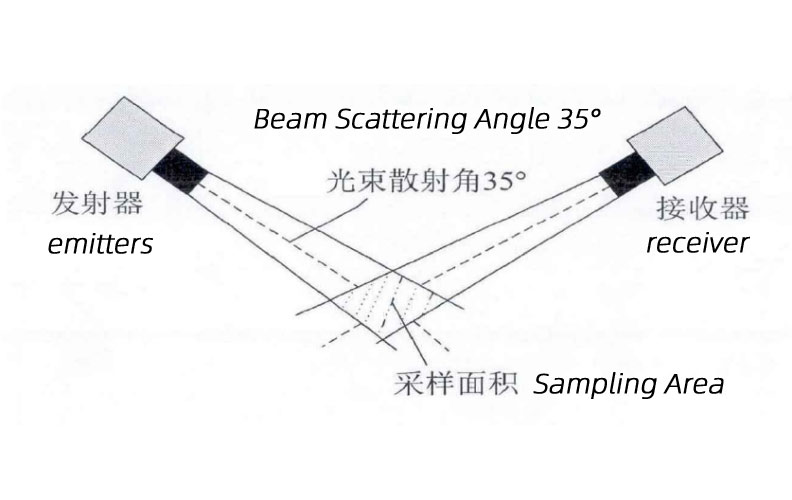
An optical-principle diagram can explain the transmitter-receiver arrangement, but installation dimensions and acceptance criteria must come from the specified NBL-W-VS configuration. Do not infer the instrument's scattering angle or mounting clearance from an illustrative image alone.
| Parameter | NBL-W-VS listing | Engineering implication |
|---|---|---|
| Measured variable | Meteorological optical range, 5 m-10 km | Check required warning and normal-visibility ranges. |
| Principle | Aerosol forward scattering | Keep the optical sampling volume free from local obstruction. |
| Accuracy | 2% at up to 2 km; ±10% from 2 to 10 km | Set thresholds with measurement uncertainty and decision delay in mind. |
| Power | 12 VDC; average 0.8 W | Budget station power, communications and any heater or other accessories separately. |
| Output | RS485 Modbus RTU; default 9600 bps | Confirm register map, address and serial format at the receiving controller. |
| Environmental limits | -40 to 80 °C; 0-95% RH; IP65 | Specify enclosure, connectors and maintenance access for the actual site. |
| Standard cable | 10 m | Survey the pole-to-cabinet route before ordering. |
Do not interpret the stated accuracy as a promise that one roadside point represents every bend and low-lying section nearby. The monitoring-system error includes site representativeness, optical cleanliness, sampling interval, data transport and the decision rule. If the instrument is part of a solar station, the 0.8 W value is only the sensor's average draw.
Feed MOR and any available status values to a logger or roadside controller via RS485 Modbus RTU. Record the sensor address, polling interval, units and scaling; compare a local readout with the platform display. Timestamp the observation at acquisition. If a poll fails, the controller should show a communications fault and preserve the age of the last valid value. A frozen number should never continue to operate a current warning rule as though it were new.
Use a confirmation rule that is appropriate to the route: for example, require persistence or agreement with nearby observations before a high-consequence action, while still allowing a genuinely rapid deterioration to alert an operator. The precise rule belongs to the road authority's operating procedure. Log the raw MOR, filtered value, fault state and sign command separately. This allows later review of whether the sensor, the rule or the downstream sign equipment caused an unexpected action.
Start with the physical installation. Verify pole rigidity, bracket security, orientation, clearance and cable strain relief. Protect the connector and field splice separately from the IP65 instrument housing. Inspect the optical windows for packing residue, fingerprints or moisture and confirm the field of view is unobstructed. Photograph the completed geometry so a future repair can restore the same position.
Then validate the data path. Read a live value locally and at the logger, disconnect the RS485 line to test fault behavior, and confirm the recovery sequence. Compare observed fog or rain events with nearby weather observations and an on-site visual record. A visual comparison is useful for plausibility, not a substitute for a traceable calibration method. If the project specifies formal meteorological acceptance, define the reference equipment and method before purchase.
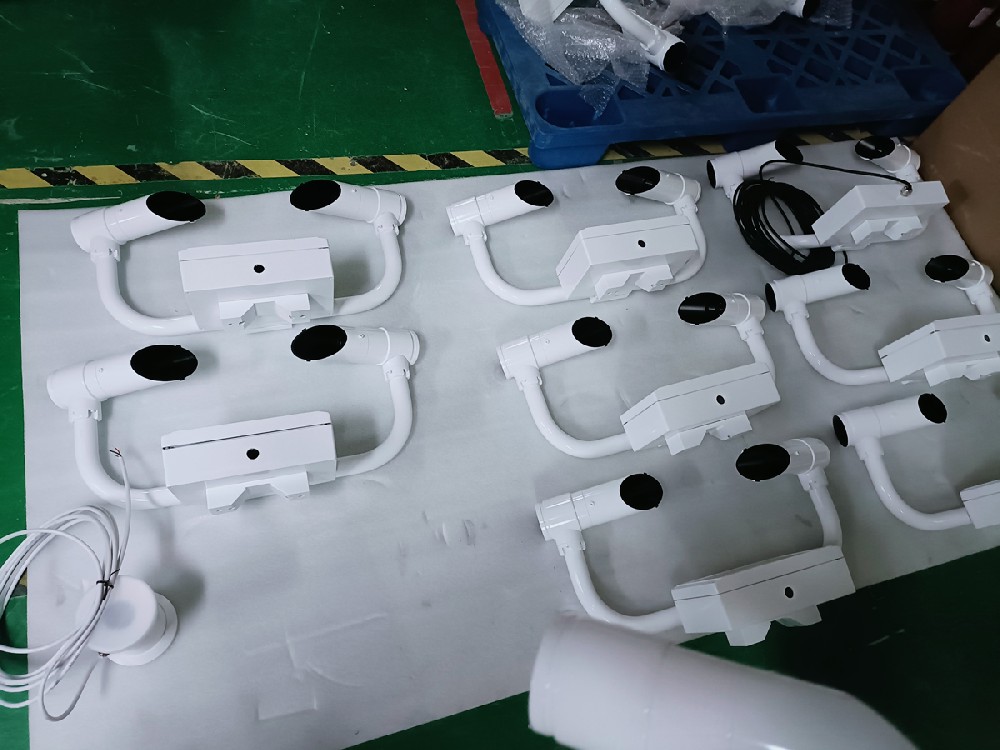
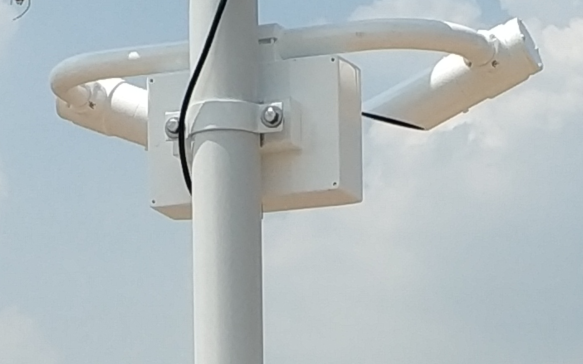
Before the equipment goes up the pole, check the optical assemblies and mounting parts against the order. Record the serial number, cable length and accessories against the site schedule. This is also the point to identify a damaged window or missing clamp, when replacement is far simpler than after installation.
Clean the optical windows according to the installed environment. Road dust, salt spray, insects and rain residue can create a persistent low or erratic MOR reading. Compare as-found and post-cleaning values before recalibration or replacement. Inspect bracket position, cable joints and nearby new obstructions at the same visit. Set the inspection interval from observed contamination and alarm criticality, not a universal calendar copied from another site.
When a value changes abruptly, ask whether the event occurred along the road, at the optical path or in the data chain. If nearby stations and camera views show the same visibility deterioration, treat it as a possible real event. If one station remains low after weather clears, inspect its windows and local exhaust or spray exposure. If the value is perfectly flat through changing weather, check power, communication and held-value behavior. Keep the distinction between bad visibility and invalid data visible to operators.
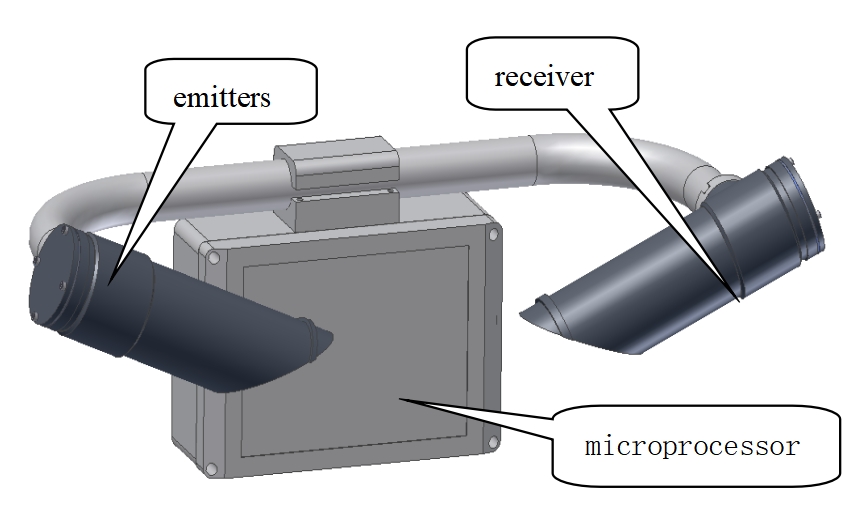
The NBL-W-VS can add MOR to a highway, port, coastal or general automatic weather-station package. For a roadside proposal, specify the protected road segment, number of monitoring points, pole locations, controller interface, power, communication path, alarm rules and maintenance access. In an airport application, clarify whether the requirement is routine MOR information or an operational runway visual range system; the two should not be quoted as interchangeable.
An offer should identify the sensor, bracket, cable route, cabinet and surge-protection scope, logger or PLC connection, software work and commissioning. Ask for the exact NBL-W-VS register document and physical installation drawing with the order. This avoids assuming that a 10 m standard cable or the sensor alone covers a longer roadside cabinet run and a complete warning system.
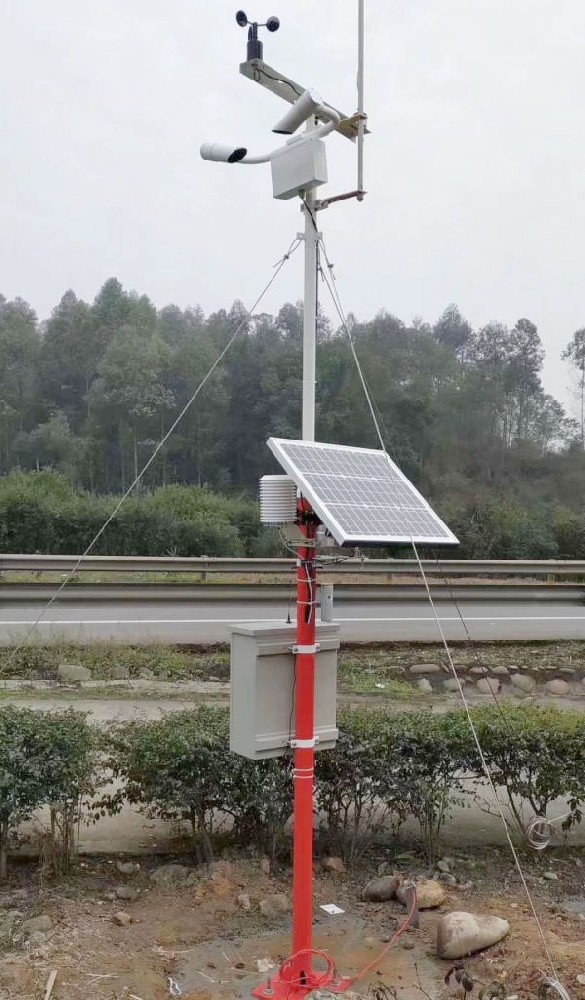
Where a broader station is needed, combine visibility with weather variables only when each additional channel has a stated operating purpose. Rainfall and wind observations can help interpret a visibility event; they do not replace the local MOR measurement. Keep each sensor's status separate so a failed rain gauge does not automatically invalidate a healthy visibility channel, or vice versa.
Q1. Is MOR the same as PM2.5 concentration?
A1. No. MOR describes atmospheric optical attenuation; particulate mass concentration is a different measurement. Fog droplets and precipitation can reduce visibility without the corresponding PM2.5 relationship.
Q2. Can one NBL-W-VS control highway signs directly?
A2. It supplies a Modbus measurement to a controller or logger. Sign commands require approved thresholds, confirmation logic, fault handling and the road operator's authority and procedure.
Q3. What should be checked if a single station reads low on a clear day?
A3. Inspect the optical windows, nearby exhaust or spray, obstruction and bracket position. Compare raw Modbus data with the platform and nearby observations before changing calibration.
Q4. Does the sensor provide runway visual range?
A4. No. It reports MOR. An aviation project requiring operational RVR or specific regulatory compliance needs a separately evaluated system and acceptance method.
Q5. How should the Modbus link be accepted?
A5. Confirm address, serial format, register, scaling and update age at the roadside controller. Simulate a communication loss and verify that the platform flags invalid data rather than displaying a stale reading as current.
Q6. What belongs in the quotation beyond the sensor?
A6. State pole and bracket, cabinet, cable length, power, surge protection, logger or PLC integration, software rules, commissioning and maintenance access. The required station scope depends on where the controller is located.
Q7. How often should optical windows be cleaned?
A7. Use the site's as-found contamination and data drift to set the interval. Dusty roads and salt-exposed sites may need more frequent inspection than protected weather stations; verify the interval after initial operation.
Roadside visibility monitoring works when the instrument samples a representative location and the controller can tell low MOR from bad data. NBL-W-VS provides an RS485 Modbus RTU visibility input; siting, optical care, threshold governance and end-to-end fault testing determine whether that input supports a reliable operating decision.
Prev:Micro Agricultural Weather Station Commissioning: Alarm and Outage Tests
Next:Forward Scattering Visibility Sensor: Compare Measurement Methods
Related recommendations
Sensors & Weather Stations Catalog
 Agriculture Sensors and Weather Stations Catalog-NiuBoL.pdf
Weather Stations Catalog-NiuBoL.pdf
Agriculture Sensors Catalog-NiuBoL.pdf
Water Quality Sensor Catalog-NiuBoL.pdf
Related products
 Combined air temperature and relative humidity sensor
 TDR Soil Moisture & Temperature Sensor for irrigation| RS485 |4-20mA| NBL-S-THR
 Soil pH sensor RS485 soil Testing instrument soil ph meter for agriculture |NBL-S-PH
 Wind Speed sensor Output Modbus/RS485/Analog/0-5V/4-20mA
 Tipping bucket rain gauge for weather monitoring auto rainfall sensor RS485/Outdoor/stainless steel
 Pyranometer Solar Radiation Sensor 4-20mA/RS485

Screenshot, WhatsApp to identify the QR code
WhatsApp number:+8615367865107
(Click on WhatsApp to copy and add friends)

