





— Blogs —
—Products—
 Consumer hotline +8618073152920
 WhatsApp:+8615367865107
Address:Room 102, District D, Houhu Industrial Park, Yuelu District, Changsha City, Hunan Province, China
Product knowledge
Time:2026-02-05 11:23:18 Popularity:644
Farm weather station accuracy is meaningful only in relation to the field decision. A small display increment cannot prove that a station can distinguish a small temperature change, and an accurate probe in the wrong place can describe the wrong crop environment. For a NiuBoL agricultural project, specify the required variable, useful measuring interval and installed comparison before accepting a general high-precision claim.
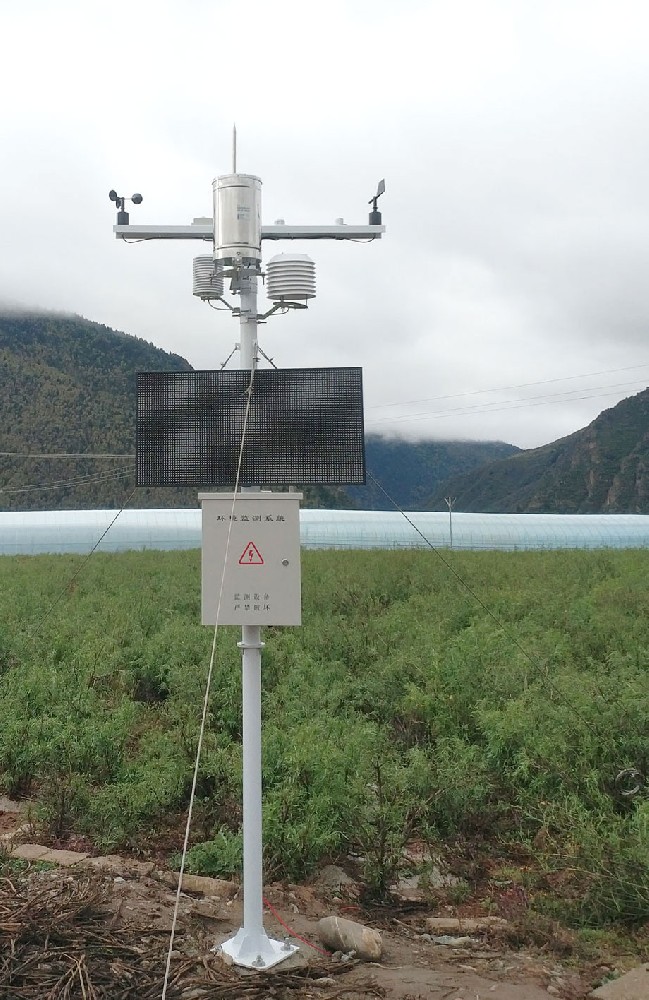
Ask what observation will change a decision. An open-field irrigation review may need rainfall and root-zone water content; a greenhouse investigation may need local air conditions and light; an orchard cold-event assessment may need observations at several exposed crop positions. These tasks do not share one universal sensor accuracy, mounting height or trigger value.
State the variable and units before selecting equipment. Air temperature, leaf temperature and fruit-surface temperature are different quantities. Volumetric water content and soil water potential are also different. A field station can combine them where suitable instruments are installed, but software cannot create an absent measurement by changing the label on an existing channel.
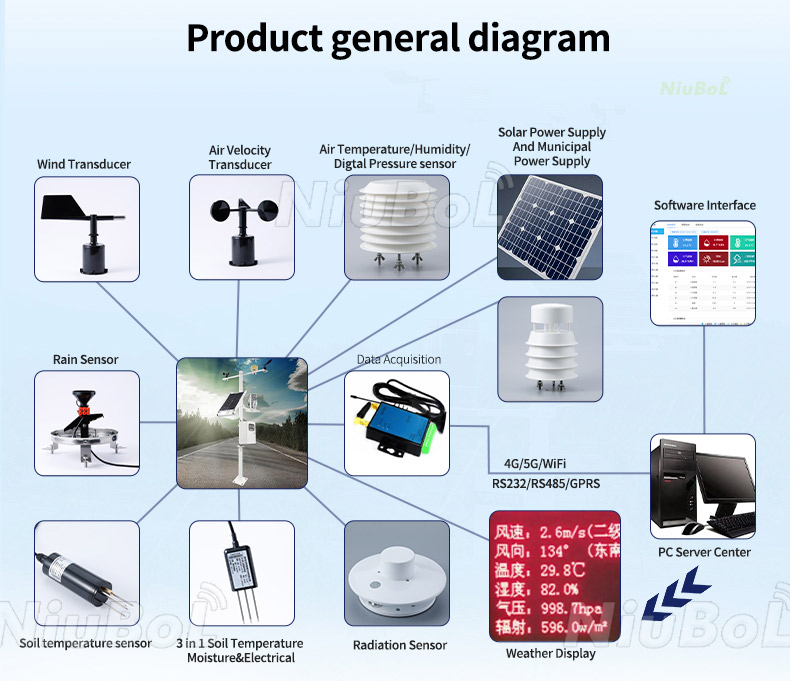
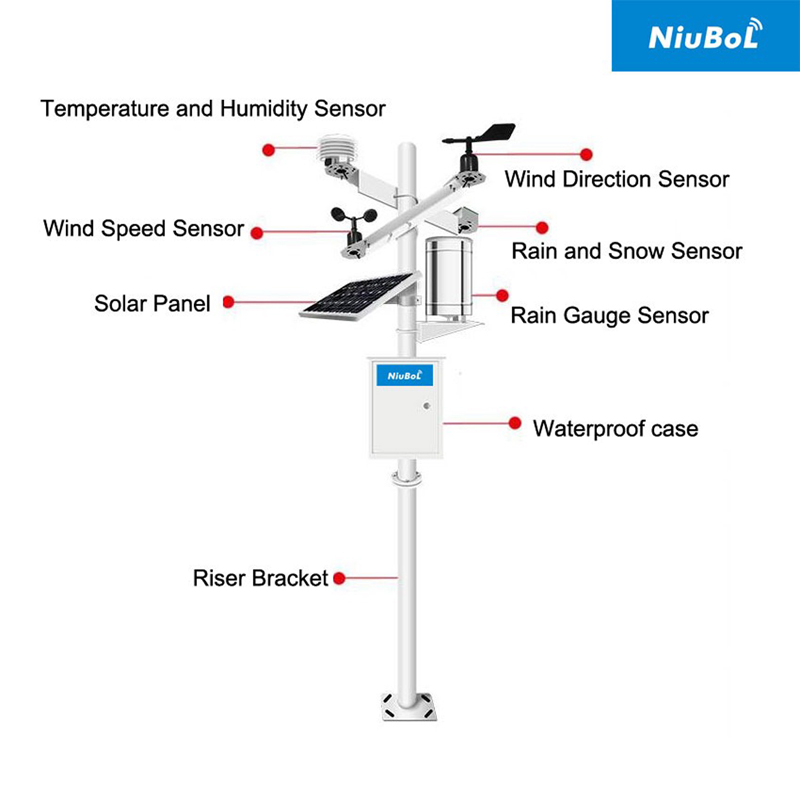
The equipment diagram below shows a modular arrangement, not proof that every element is present in a particular quotation. Specify the actual sensor models, outputs and locations. Likewise, neither an integrated housing nor an additional decimal place establishes that the complete installation has a particular accuracy class.
The NiuBoL NBL-W-LBTH atmospheric sensor illustrates the distinction. Its temperature resolution is 0.1 C and its stated temperature accuracy is +/-0.5 C. Displaying a value to one decimal place does not reduce that error statement to one tenth of a degree. The field installation adds exposure and comparison considerations beyond the instrument's specification.
| Quantity | Range and resolution | Stated accuracy |
|---|---|---|
| Air temperature | -40 to +80 C; 0.1 C | +/-0.5 C |
| Relative humidity | 0-100% RH; 0.1% RH | +/-5% RH |
| Atmospheric pressure | 10-1200 hPa; 0.1 hPa | +/-1.5 hPa |
| Supply and output | 12-24 V DC configuration; RS485 or selected 4-20 mA version | Match the supplied version and receiving input |
Consider a hypothetical display reading of 1.2 C. Using only the +/-0.5 C instrument statement gives an indicative interval of 0.7-1.7 C before adding other errors; it is not a statistical confidence interval. If a crop decision depends on distinguishing 1.0 C from 1.3 C, the 0.1 C display increment alone cannot establish that capability. Define the needed method, margin and site evidence rather than assuming precision from the digits.
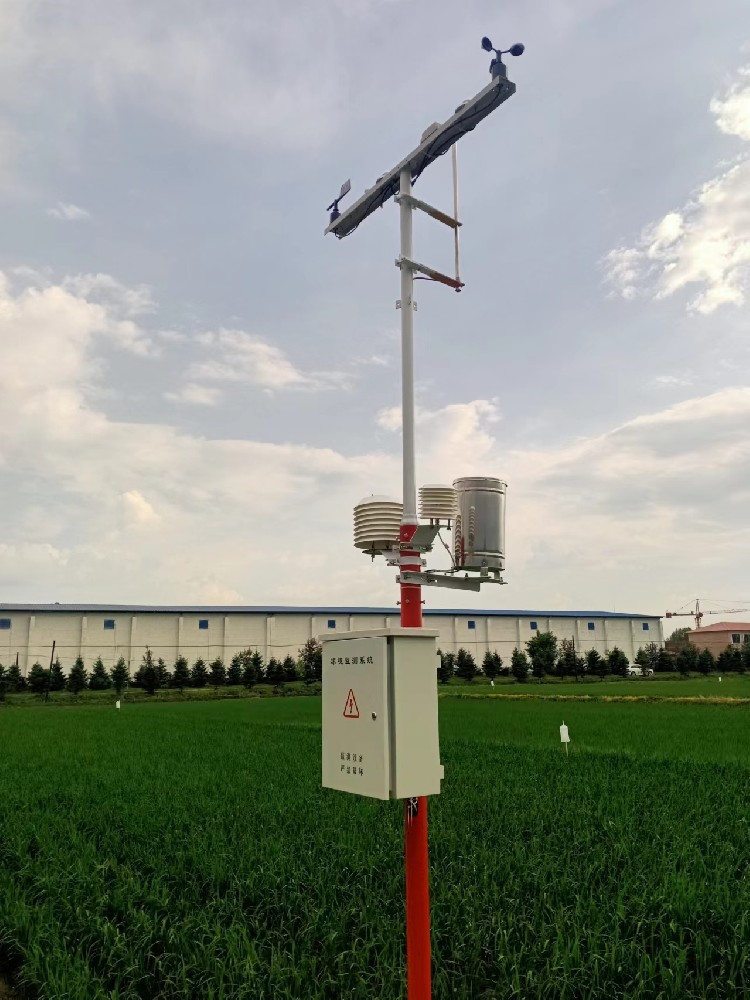
Direct sun, a warm enclosure, poor ventilation and nearby wet surfaces can influence an air-temperature or humidity measurement. Inspect the shield and mounting before attributing a difference to sensor drift. A comparison performed with one probe exposed and the other shielded does not isolate their instrument errors.
A reference position outside a greenhouse and a sensor within the canopy should not be forced to agree. They represent different air. Record height, canopy development, nearby fans, vents, doors and irrigation. Revisit the exposure after crop growth or equipment changes. A more accurate instrument does not correct a location that fails to represent the monitored control zone.
For orchard cold-event monitoring, crop stage and local conditions determine the relevant assessment. An air reading is not proof of bud or fruit temperature. Do not apply a single cooling-rate threshold or surface-temperature trigger to every crop, and do not treat a generic station alert as authorization to start fans or frost-protection irrigation. Those actions need a separate site-specific operating procedure.
The NBL-S-THR soil temperature and moisture sensor reports a dielectric-based soil water-content measurement and temperature. Its documented TDR configuration has 0-100% moisture range, 0.1% moisture resolution and a +/-3% moisture accuracy statement. Confirm the applicable error basis and soil conditions with the offered configuration; it is not a universal +/-1% specification merely because the method is TDR.
A tension measurement in kPa describes a different property from volumetric water content in percent. FDR sensing likewise estimates water content from dielectric behavior; it does not directly become a soil-water-potential measurement. The FAO discussion of soil-water characteristics explains why field capacity and available water depend on the soil. Do not convert a water-content percentage into one irrigation tension threshold without a suitable soil relationship.
| THR item | Model information | Field check |
|---|---|---|
| Soil moisture | 0-100%; 0.1% resolution; +/-3% accuracy statement | Confirm basis and comparison in representative soil |
| Soil temperature | -50 to +100 C; 0.1 C resolution; +/-0.5 C accuracy | Do not confuse measuring span with ambient operating limits |
| Power | 12-24 V DC; approximately 0.3 W | Include all field devices and acquisition loads |
| Output options | RS485 Modbus RTU, 4-20 mA or 0-5 V version | Match units and scaling at the receiver |
| Operating environment | -40 to +80 C; IP68 probe | Protect exposed cable joints and terminations separately |
Check soil contact, air gaps, stones, salinity and position relative to the wetted zone. Two valid probes at different distances from a dripper can differ because the soil differs. Repeated readings at one point are not independent spatial samples of an entire field. Choose depth and replication for the root zone and irrigation method, not a universal 10/20/40 cm pattern.
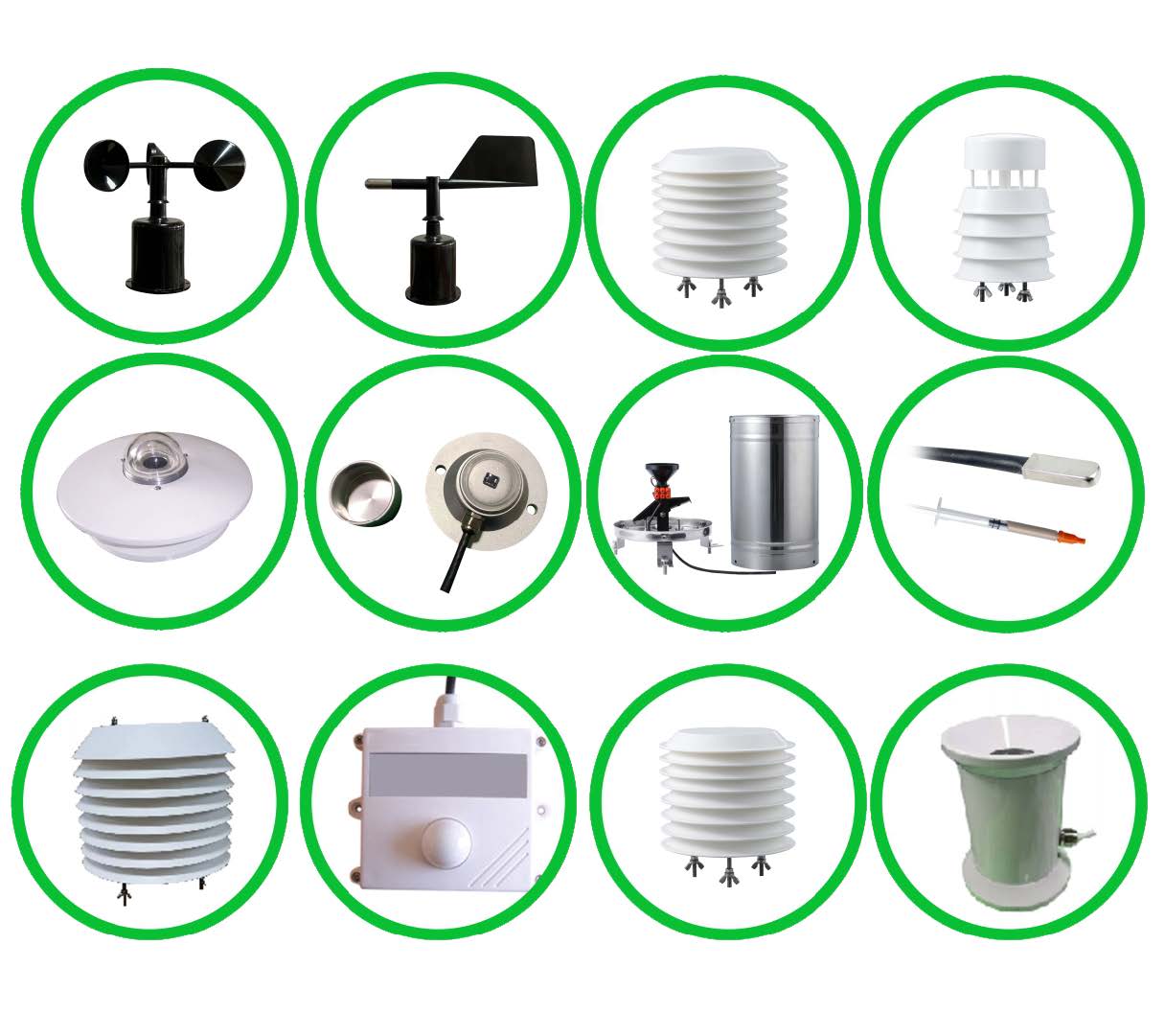
For air channels, use suitable references in comparable exposure and allow sufficient stabilization. Compare across conditions relevant to the decision, not just one comfortable indoor point. Record reference uncertainty, elapsed time and location. A difference between two displays does not establish which is correct.
For soil water content, a gravimetric sample measures water mass relative to dry soil mass. Conversion to volumetric content also needs dry bulk density. In a hypothetical example, gravimetric content of 0.20 kg/kg and bulk density of 1.30 Mg/m3 give approximately 0.26 m3/m3, or 26% VWC, using water density of 1.00 Mg/m3. Comparing the unconverted 20% mass value directly with a 26% volumetric reading would create an artificial discrepancy.
Keep the sample and probe measurements close in location, depth and time while recognizing the volumes they represent. Do not recalibrate a probe solely to match a disturbed or poorly characterized sample. Retain the original check and the reason for any adjustment so the field relationship remains traceable.
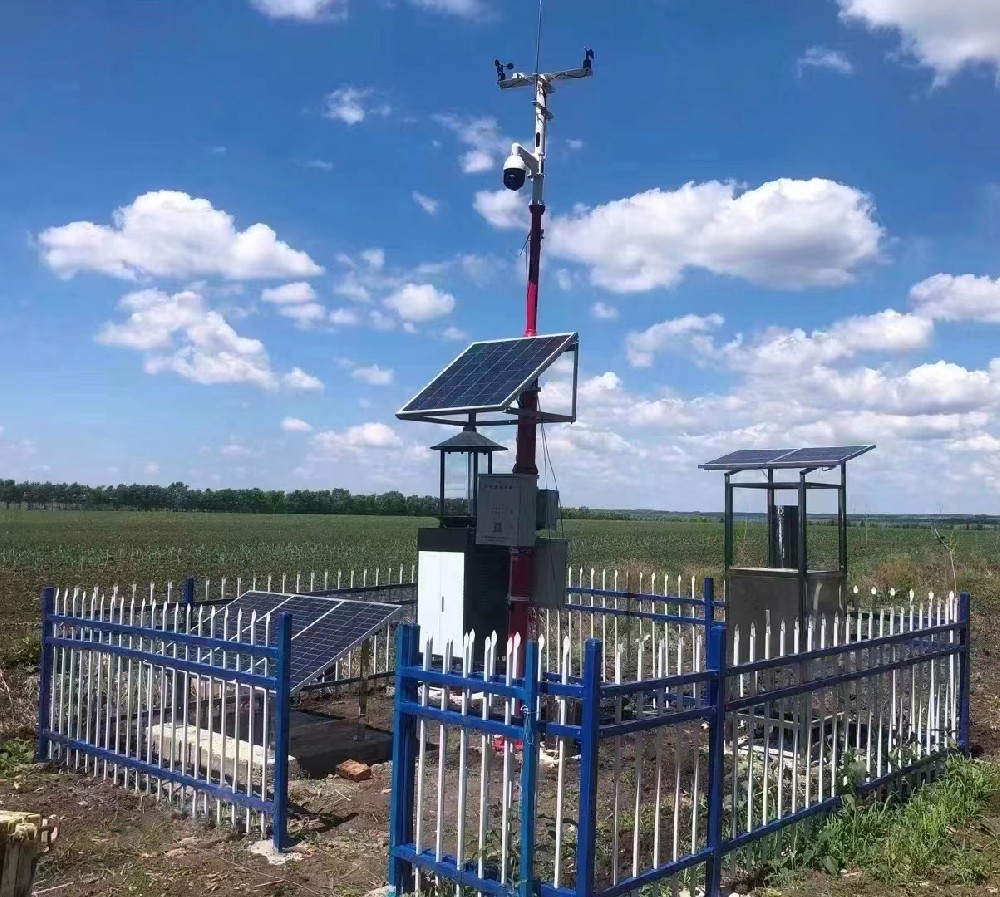
Verify raw values, engineering units and scale at the PLC, RTU or data logger. A tenfold conversion error is not improved by selecting a finer sensor. For RS485 Modbus RTU, confirm the actual device map and invalid-data representation. A disconnected channel must not become a measured zero or an apparently fresh last value.
Avoid smoothing away the event being investigated. Averaging can reduce short-term fluctuations while delaying a threshold crossing; it does not remove systematic error or fix poor exposure. Retain source observations and document the averaging period. For radiation inputs, a PAR or lux instrument must retain its own quantity rather than be relabeled broadband solar irradiance.
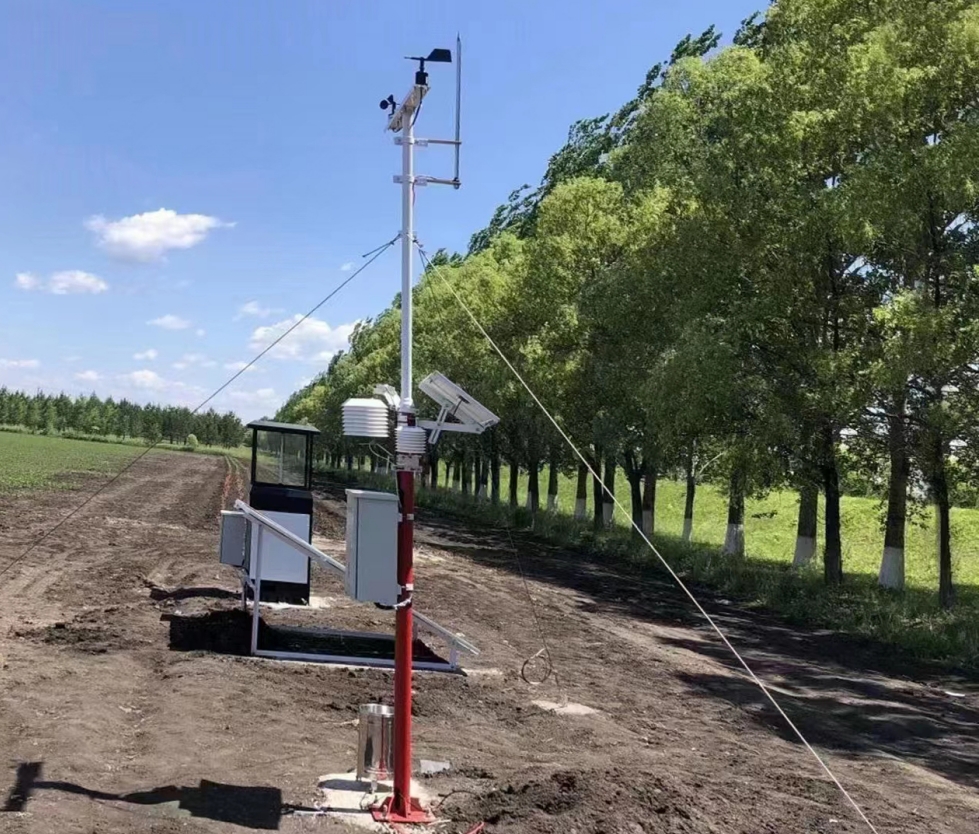
Define acceptance around the intended conditions, applicable reference and permitted differences. Include sensor identity, exposure record, field comparison and receiving-system checks. An IP rating describes ingress protection, not immunity to hail, chemical damage or drift. A protective mesh over an optical instrument can change its response and should not be added without assessing the measurement effect.
Where NBL-W-SS and NBL-W-DS wind sensors are selected, specify IP65 for those devices rather than assigning an invented rating to the whole station. Confirm cable materials, protection, supply capacity and network functions for the ordered assembly. No fixed calibration period, multi-year battery life or radio coverage follows from the word industrial.
For a NiuBoL inquiry, send the agricultural decision, required variable and discrimination, crop environment, proposed locations and available acquisition equipment. Ask for model-specific specifications and the comparison work needed to demonstrate suitability. This gives a more useful quotation than requesting the highest precision without defining what the project must distinguish.
No. Resolution is the displayed increment. Compare the stated accuracy, reference quality and installed exposure with the required decision. Finer digits cannot compensate for a larger error or a location that measures the wrong air.
These dielectric methods estimate water content in the configurations discussed here. Water potential is a different quantity requiring an appropriate measurement or validated soil relationship. Keep percent and kPa channels distinct.
They can sample different soil, depth, contact or wetting conditions. Inspect the installation and compare representative samples before changing calibration. One point cannot establish the water condition of every irrigation zone.
The mass-based result needs appropriate bulk-density information for conversion to volumetric content. Align the sample location and timing with the probe, and include the uncertainties of the sampling and conversion.
It should connect a named instrument and exposure to the required field decision, with an appropriate reference test and correct receiving-system values. A generic precision label or a single favorable comparison is insufficient.
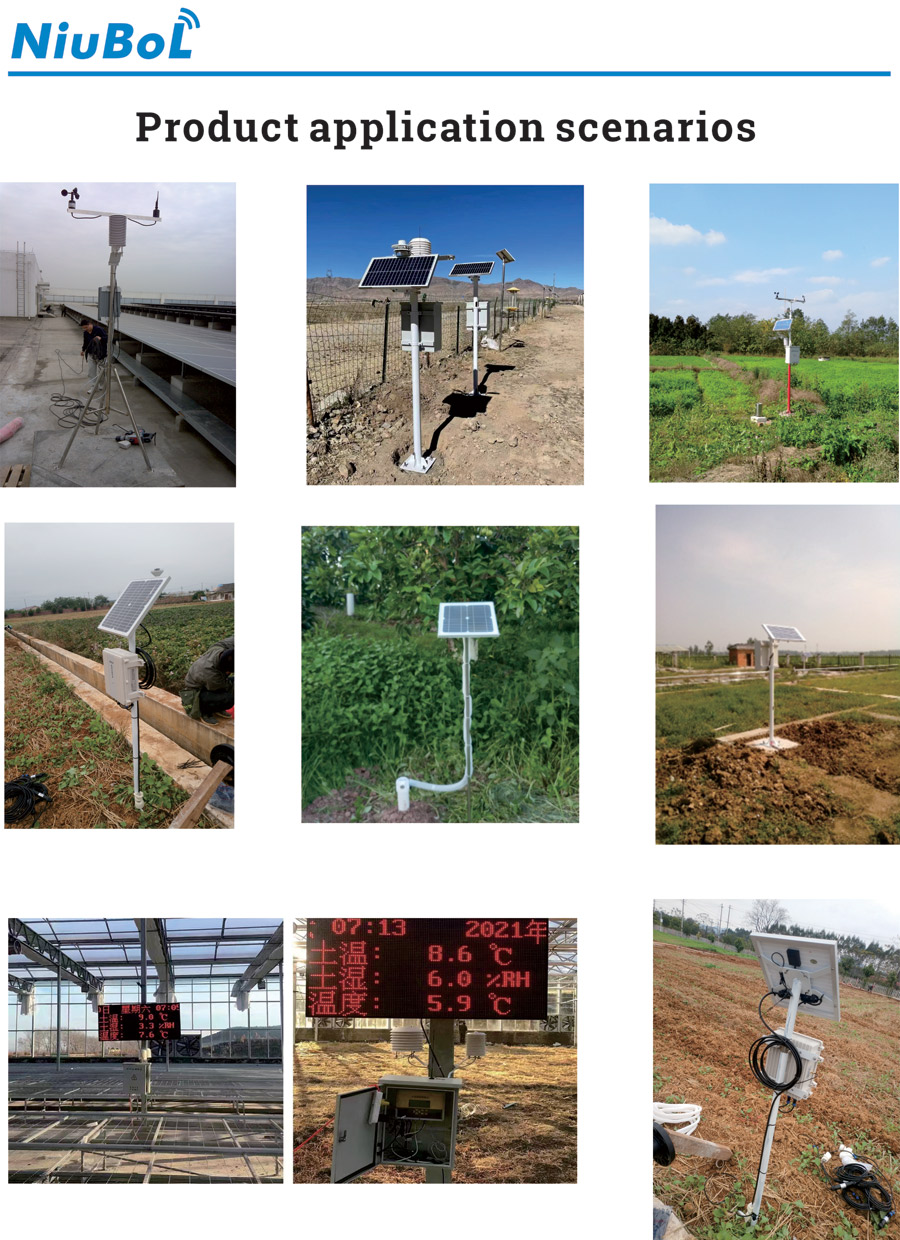
Farm weather station accuracy depends on the specified quantity, instrument limits, exposure and complete data path. Use model-specific NiuBoL specifications, compare like quantities and verify the installation in relevant conditions. Better decisions come from a defensible measurement arrangement rather than extra decimals or a universal crop threshold.
Prev:Rain Gauge Comparison Test: Tipping Bucket and Piezoelectric Records
Next:Micro Agricultural Weather Station Commissioning: Alarm and Outage Tests
Related recommendations
Sensors & Weather Stations Catalog
 Agriculture Sensors and Weather Stations Catalog-NiuBoL.pdf
Weather Stations Catalog-NiuBoL.pdf
Agriculture Sensors Catalog-NiuBoL.pdf
Water Quality Sensor Catalog-NiuBoL.pdf
Related products
 Combined air temperature and relative humidity sensor
 TDR Soil Moisture & Temperature Sensor for irrigation| RS485 |4-20mA| NBL-S-THR
 Soil pH sensor RS485 soil Testing instrument soil ph meter for agriculture |NBL-S-PH
 Wind Speed sensor Output Modbus/RS485/Analog/0-5V/4-20mA
 Tipping bucket rain gauge for weather monitoring auto rainfall sensor RS485/Outdoor/stainless steel
 Pyranometer Solar Radiation Sensor 4-20mA/RS485

Screenshot, WhatsApp to identify the QR code
WhatsApp number:+8615367865107
(Click on WhatsApp to copy and add friends)

