





— Blogs —
—Products—
 Consumer hotline +8618073152920
 WhatsApp:+8615367865107
Address:Room 102, District D, Houhu Industrial Park, Yuelu District, Changsha City, Hunan Province, China
Product knowledge
Time:2026-01-25 11:46:47 Popularity:633
In modern precision agriculture, large-scale farmland water conservancy projects, and water-saving irrigation initiatives, multi-depth dynamic monitoring of soil profile (Soil Profile) moisture and temperature has become a key technical approach to improve irrigation efficiency, optimize crop yield, and reduce water and fertilizer inputs. Traditional single-point or shallow monitoring can no longer meet the refined requirements of large-scale agricultural projects for root zone (0–60 cm or deeper) moisture gradients, temperature gradients, and dynamic changes.
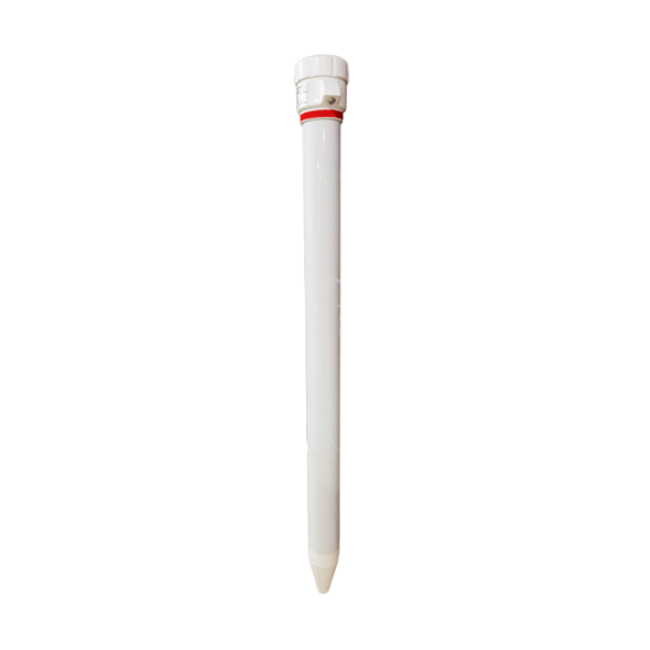
The NiuBoL NBL-S-TMSMS tubular multi-layer soil moisture and temperature sensor adopts the FDR (Frequency Domain Reflectometry) principle combined with high-precision digital temperature sensors to achieve simultaneous high-precision measurement of volumetric water content (VWC) and temperature at up to 10 layers (standard 5–6 layers, customizable) within a single probe rod. This series of sensors features low power consumption, industrial-grade corrosion resistance, and flexible RS485/4G output, tailor-made for agricultural IoT (Agri-IoT) system integrators, agricultural engineering general contractors, and precision agriculture solution providers. This article, from the perspective of system integration, details the value of multi-depth soil sensors in large-scale agricultural projects, key selection points, integration practices, and bulk supply advantages, helping project teams build reliable and scalable soil environment monitoring networks.
Crop root systems are typically concentrated in the 0–60 cm soil layer. The non-uniform distribution of soil moisture and temperature at different depths directly affects root water uptake, nutrient absorption, and crop growth and development. Single-depth monitoring easily leads to:
False irrigation decisions due to upper-layer over-wetness and lower-layer drought
Failure to capture temperature gradients, resulting in deviations in accumulated temperature calculations
Inability to accurately assess deep percolation and evapotranspiration losses
According to FAO and China's Ministry of Agriculture and Rural Affairs water-saving irrigation technical specifications, multi-layer soil profile monitoring can increase irrigation water use efficiency by 15%–30% and reduce ineffective irrigation by more than 20%. In large-scale farmlands (thousands of acres and above), facility agriculture clusters, desertification control, and saline-alkali land improvement projects, the deployment of multi-depth Soil moisture and temperature sensors has become a necessary condition for meeting precision drip irrigation, variable-rate irrigation, and intelligent integrated water and fertilizer control.
The NiuBoL NBL-S-TMSMS achieves synchronized measurement at multiple layers (standard configuration: 10 cm, 20 cm, 30 cm, 40 cm, 50 cm, 60 cm; up to 10 layers customizable) through a single probe rod, avoiding installation complexity and spatial data inconsistency caused by multi-point deployment, and providing high-quality soil profile datasets for SCADA and agricultural IoT platforms.
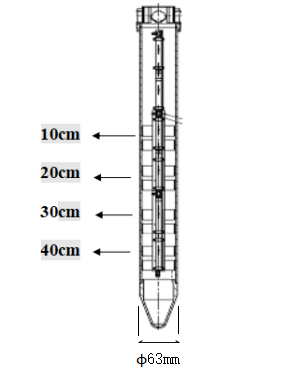
The NBL-S-TMSMS uses the FDR principle, measuring volumetric water content (VWC) based on the propagation characteristics of electromagnetic waves in media with different dielectric constants, combined with DS18B20 or equivalent precision digital temperature sensors for integrated moisture and temperature acquisition. Key technical advantages include:
Multi-depth integrated design: Multiple probe layers integrated into a single rod, standard depth 10–60 cm (5–6 layers), customizable up to 10 layers according to project needs
Reliable measurement accuracy: Soil moisture accuracy ±2%–3% (VWC), temperature accuracy ±0.5℃
Corrosion resistance and long service life: High-quality engineering plastic outer tube + full epoxy resin sealing, suitable for long-term immersion and resistant to acid, alkali, and salt corrosion
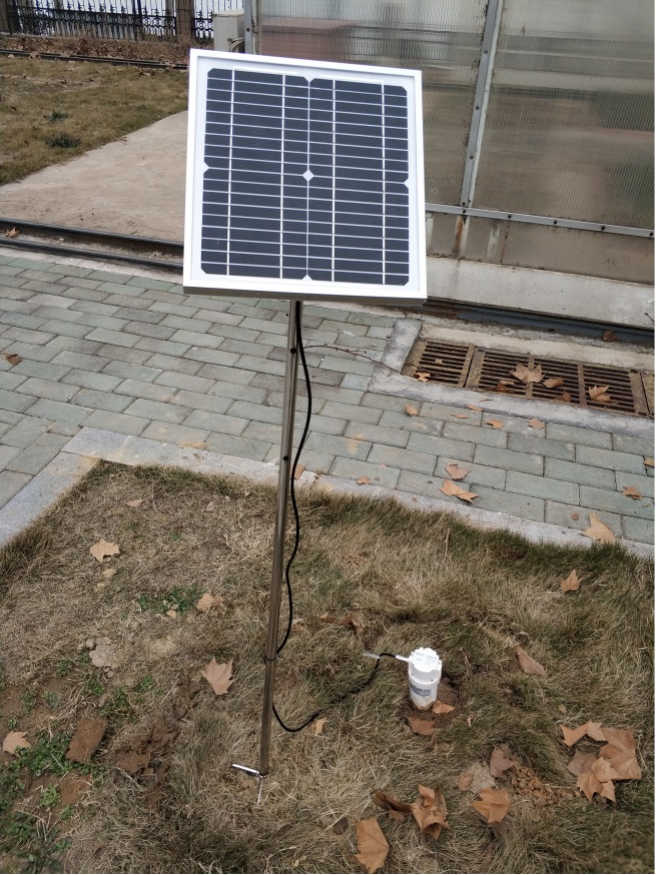
Low power consumption and flexible power supply: Average low power consumption, supports DC 5–24V wide voltage input, compatible with solar-powered nodes
Output and communication: Standard RS485 (Modbus RTU protocol), optional 4G wireless module (with built-in lithium battery solution), supports remote IoT platform access
Extended functions: Optional GPS positioning, 3D-MEMS tilt sensor (for geological disaster monitoring version), vibration alarm, suitable for slopes, terraces, or geohazard-prone areas
Easy installation: Tubular design, vertical hole drilling installation, minimizing soil disturbance
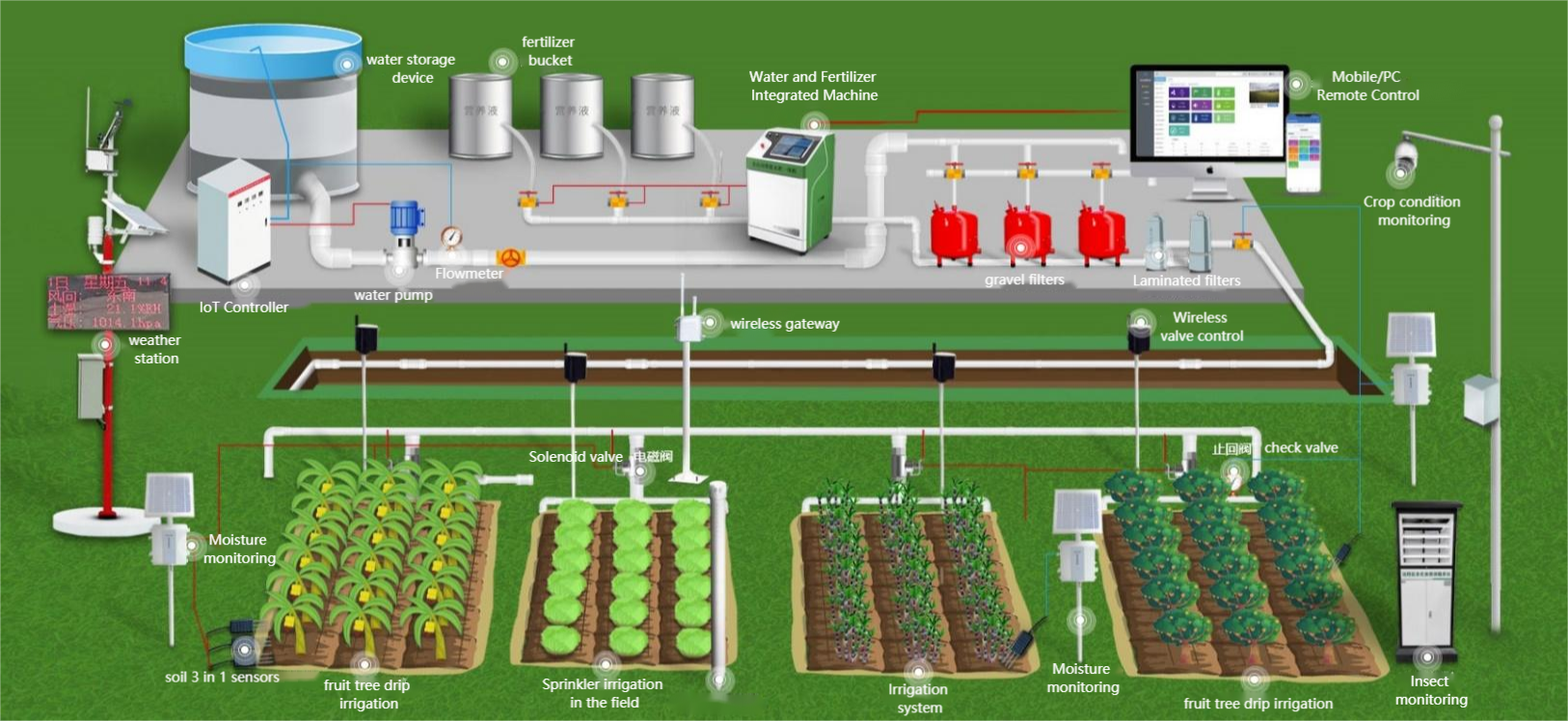
This sensor is particularly suitable for linkage with weather stations, drip irrigation controllers, and valve controllers to form a closed-loop precision irrigation system.
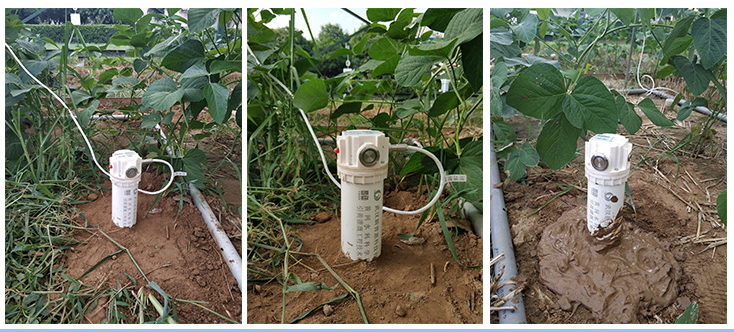
1. Large-scale water-saving irrigation projects: Deploy multiple NBL-S-TMSMS units across thousands of acres of contiguous farmland to form a soil moisture gradient monitoring network, connected to agricultural IoT platforms for zoned variable-rate irrigation, significantly reducing water resource consumption.
2. Facility agriculture clusters (greenhouses/greenhouse complexes): Multi-layer monitoring of root zone moisture and temperature changes supports automated irrigation and ventilation control, optimizing vegetable and flower yield and quality.
3. Grassland pastures and ecological restoration: Monitoring deep soil moisture and temperature supports grass species selection, supplemental watering timing, and degraded grassland recovery assessment.
4. Saline-alkali land improvement and desertification control: Combined with tilt and GPS functions, real-time monitoring of soil moisture dynamics and surface stability provides data support for engineering measures.
5. Research and demonstration bases: Multi-layer high-density profile data supports crop model validation, root distribution studies, and climate change adaptation experiments.
NiuBoL sensor RS485 interface is compatible with mainstream PLCs, gateways, and cloud platforms, facilitating integration into existing agricultural information systems.
When selecting, evaluate in the following priority order:
1. Monitoring depth and number of layers: Root zone distribution determines the number of layers (common 0–60 cm, 5–6 layers); deep-rooted crops or saline-alkali land require customization to 8–10 layers.
2. Measurement accuracy and range: VWC 0–100% (accuracy ±2%–3%), temperature -40℃~+80℃ (accuracy ±0.5℃).
3. Communication and power supply: RS485 Modbus as mainstream; for remote unattended scenarios, select 4G wireless + lithium battery solution.
4. Environmental adaptability: Fully sealed design, resistant to acid, alkali, and salt; slope projects select optional tilt sensor.
5. Extended functions: GPS for asset management, vibration alarm for anti-theft or geological early warning.
6. Bulk pricing and lead time: Tiered discounts starting from 50 units, standard products delivered within 4 weeks, customized products 6–8 weeks.
NiuBoL provides complete Modbus register tables and testing support for quick verification by system integrators.
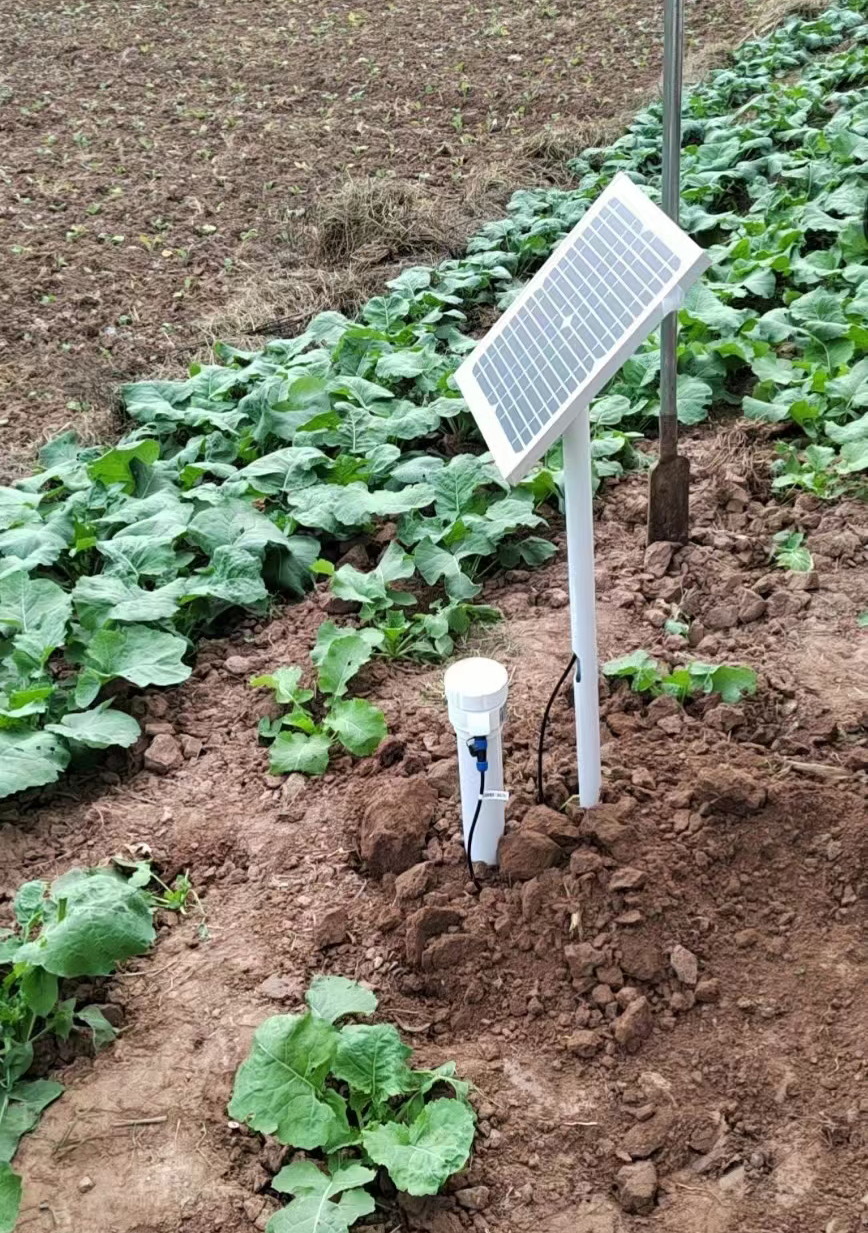
Installation depth calibration: Insert probe rod vertically, mark layer depths corresponding to actual soil layers; use dedicated hole puncher to reduce disturbance.
Soil calibration: Different soil types (sandy, loamy, clay) have significant dielectric differences; recommend on-site sampling calibration or use manufacturer default curves with later software correction.
Communication wiring: RS485 bus uses shielded twisted-pair cable, length<1200 m, add terminating resistors to prevent reflection; 4G solution requires ensured signal coverage.
Power management: When combining solar + lithium battery, configure low-voltage protection and overcharge protection.
Data processing: At the platform level, implement moisture gradient maps, temperature contour lines, crop water requirement calculation (refer to FAO-56 dual crop coefficient method), support threshold alarms and automatic irrigation linkage.
Maintenance strategy: Regularly check probe rod surface scaling, perform on-site calibration every 1–2 years.
Following the above practices can elevate soil data reliability to a level suitable for agricultural research and production decision-making.
NiuBoL supports:
OEM private labeling (LOGO, housing silk-screening, packaging customization)
Depth/layer count/probe rod length customization (up to 2 m+)
Interface expansion (LoRa, 4–20mA, etc.)
Integrated photovoltaic weather station or multi-parameter soil station (moisture + temperature + EC + salinity + tilt)
Bulk supply (minimum order 50 units, better discounts for 500+ units)
Fast delivery and strict factory testing (temperature-humidity cycling, immersion test, EMC test)
These services help integrators gain differentiated competitiveness in government agricultural projects, PPP models, and large farm tenders.
North China Plain 10,000-acre water-saving wheat-maize rotation project: Deployed 120 sets of NBL-S-TMSMS (6-layer standard), connected to local agricultural IoT platform, achieving zoned drip irrigation control, annual water savings of about 28%, and fertilizer utilization efficiency increase of 18%.
Northwest facility vegetable base cluster: Over 200 sets of 4G wireless multi-layer sensors, combined with meteorological data for automatic irrigation and ventilation adjustment, average yield increase of 12% per mu, and reduced manual inspection costs.
Q1: What is the core advantage of multi-layer soil moisture and temperature sensors compared to single-point sensors?
A: Single probe rod achieves synchronized multi-depth (up to 10 layers) measurement, avoiding spatial deviation and installation complexity of multi-point deployment, providing true soil profile gradient data.
Q2: How is accuracy ensured with FDR principle across different soil types?
A: NiuBoL adopts high-frequency FDR design to reduce interference from soil salinity/temperature; recommend on-site calibration at project start or use manufacturer-provided soil type correction coefficients.
Q3: How to connect the sensor to agricultural IoT platforms or SCADA systems?
A: Standard RS485 Modbus RTU protocol, supports standard Modbus register tables; 4G version connects directly to the cloud, SDK and API documentation also available.
Q4: What factors affect the bulk purchase price of Soil moisture and temperature sensor?
A: Mainly depends on number of layers, communication method (RS485 vs. 4G), inclusion of GPS/tilt, order quantity; obvious discounts starting from 100 units.
Q5: How to use multi-layer data to optimize irrigation strategies?
A: Calculate average available moisture in root zone, monitor deep percolation, combine with crop water requirement model (ETc = ETo × Kc) and threshold control to achieve precision variable-rate irrigation.
Q6: Is the sensor reliable in saline-alkali or acidic soils?
A: Uses corrosion-resistant engineering plastic + epoxy sealing design, capable of long-term resistance to acid, alkali, and salt environments; validated in multiple saline-alkali land improvement projects.
In large-scale agricultural projects, multi-depth Soil moisture and temperature sensors are core components for achieving precision irrigation, water-saving efficiency gains, and data-driven decision-making. The NiuBoL NBL-S-TMSMS series, with its integrated multi-layer design, industrial-grade reliability, and flexible integration capabilities, has become a reliable choice for agricultural system integrators and engineering contractors.
If you are advancing water-saving irrigation, facility agriculture, precision agriculture IoT, or ecological restoration projects, welcome to contact the NiuBoL engineering team. We can provide soil calibration guidance, customized solution discussions, and bulk quotes tailored to project scale. We look forward to collaborating with you to build an efficient and sustainable modern agricultural monitoring system.
 NBL-S-TMM-Tubular-Multi-Layer-Soil-Moisture-Sensor-Meter.pdf
Related recommendations
Sensors & Weather Stations Catalog
Agriculture Sensors and Weather Stations Catalog-NiuBoL.pdf
Weather Stations Catalog-NiuBoL.pdf
Agriculture Sensors Catalog-NiuBoL.pdf
Water Quality Sensor Catalog-NiuBoL.pdf
Related products
 Combined air temperature and relative humidity sensor
 TDR Soil Moisture & Temperature Sensor for irrigation| RS485 |4-20mA| NBL-S-THR
 Soil pH sensor RS485 soil Testing instrument soil ph meter for agriculture |NBL-S-PH
 Wind Speed sensor Output Modbus/RS485/Analog/0-5V/4-20mA
 Tipping bucket rain gauge for weather monitoring auto rainfall sensor RS485/Outdoor/stainless steel
 Pyranometer Solar Radiation Sensor 4-20mA/RS485

Screenshot, WhatsApp to identify the QR code
WhatsApp number:+8615367865107
(Click on WhatsApp to copy and add friends)

