





— Blogs —
—Products—
 Consumer hotline +8618073152920
 WhatsApp:+8615367865107
Address:Room 102, District D, Houhu Industrial Park, Yuelu District, Changsha City, Hunan Province, China
Product knowledge
Time:2026-01-25 11:40:28 Popularity:596
In smart agriculture, urban landscaping, and large-scale environmental engineering projects, precise underlying data is the lifeline of the entire decision-making system. For system integrators (SI), IoT solution providers, and engineering contractors, selecting Soil Moisture and Temperature Sensors has long gone beyond simple “parameter comparison” — it is now a strategic balance involving system compatibility, long-term underground reliability, and post-deployment maintenance costs.
As a soil sensor manufacturer, NiuBoL focuses on providing industrial-grade sensing hardware to global B2B partners. This article analyzes the selection logic for high-performance Soil Monitoring Sensors from the in-depth perspectives of engineering practice and system integration.
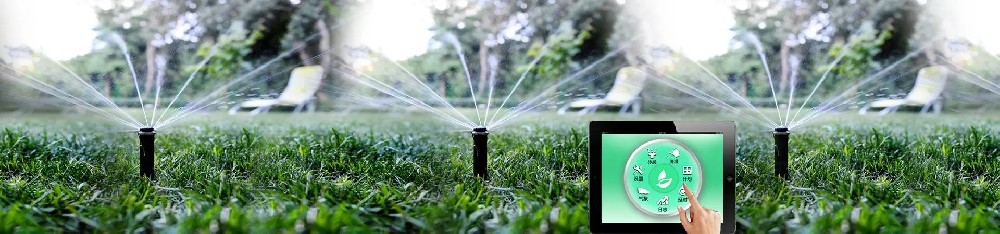
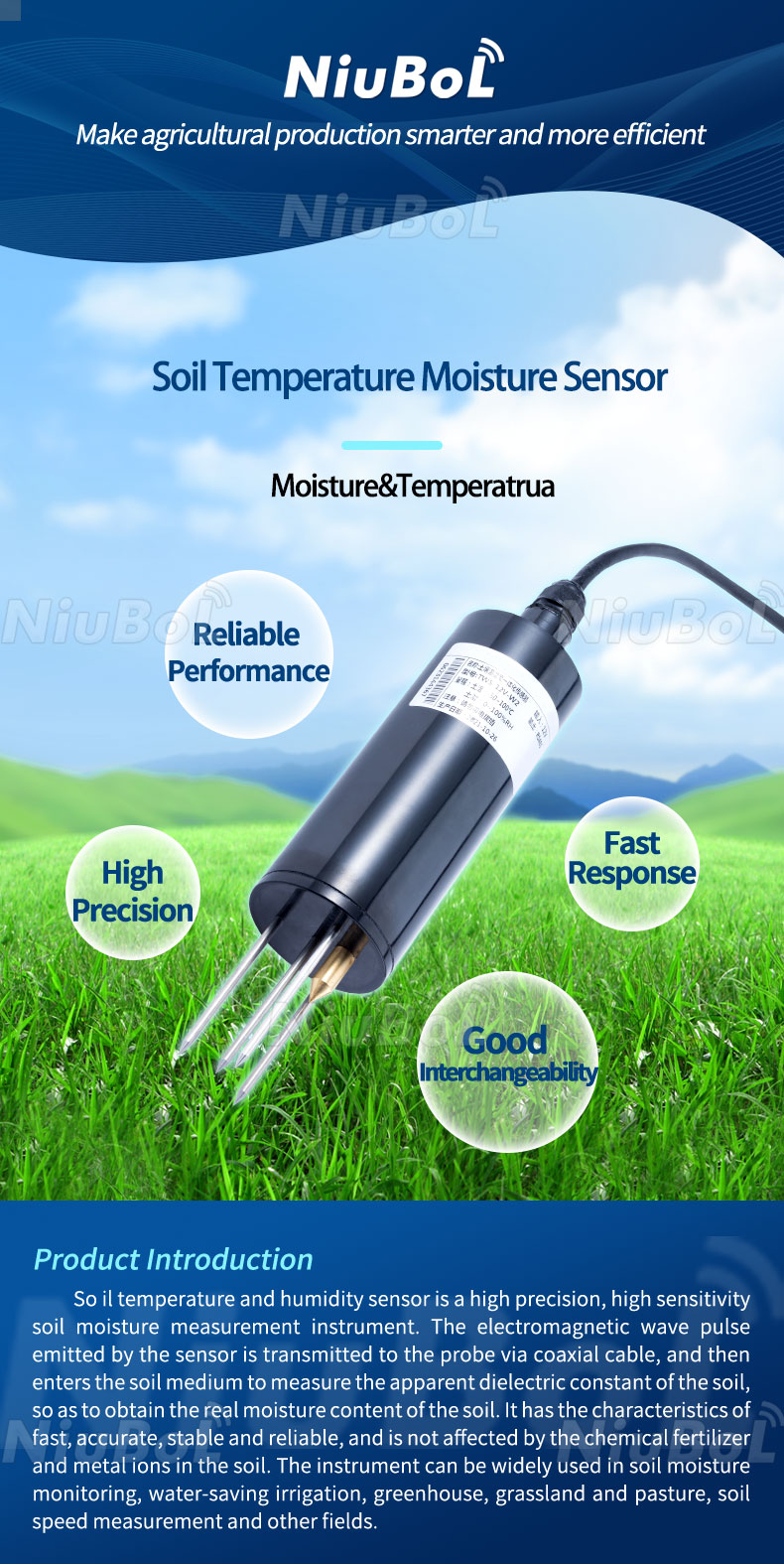
In the field of soil measurement, two mainstream technologies dominate: TDR (Time Domain Reflectometry) and FDR (Frequency Domain Reflectometry).
TDR (Time Domain Reflectometry): Although it performs excellently in laboratory environments, its complex circuitry, extremely high power consumption, and expensive unit price often cause budgets to exceed limits in large-scale irrigation projects involving hundreds of monitoring points.
FDR (Frequency Domain Reflectometry): Measures soil moisture content by detecting changes in the soil's dielectric constant. NiuBoL's FDR solution, after algorithmic optimization, maintains extremely high response speed while achieving low power consumption and excellent cost-performance — currently the industry-recognized standard for large-scale soil moisture sensor integration solutions.
Soil moisture sensor range: Full-range coverage from 0–100%, with accuracy error within ±2% (core range 0–50%).
Response time: Less than 1 second. In automated irrigation logic, this real-time performance enables PLCs to trigger solenoid valves in milliseconds, achieving true precision irrigation.
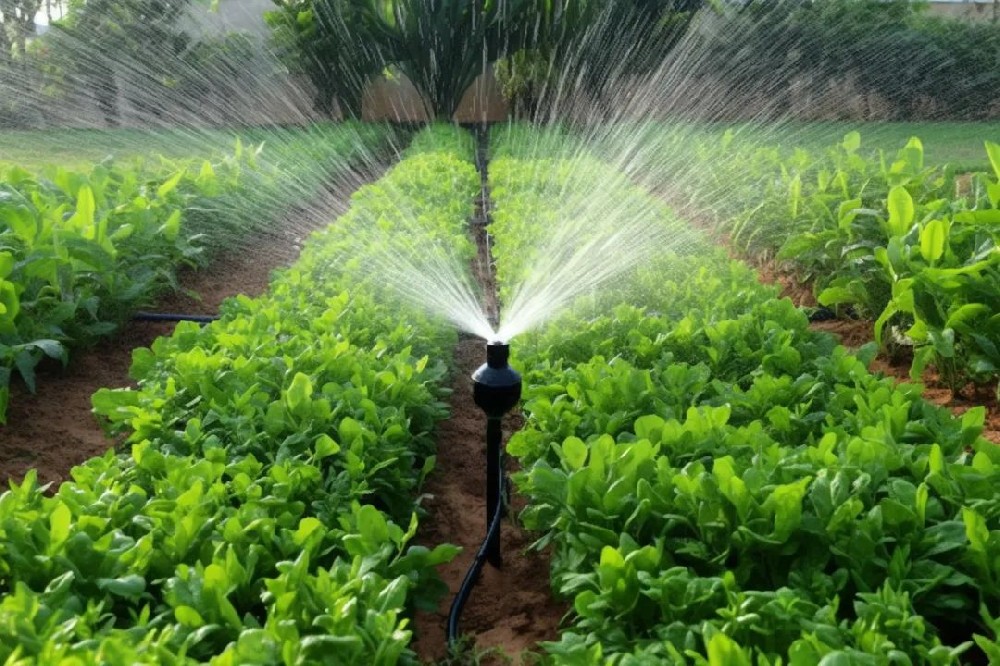
The essential difference between industrial-grade soil moisture sensors and consumer-grade products lies in their “survivability.”
1. Material and Corrosion Resistance
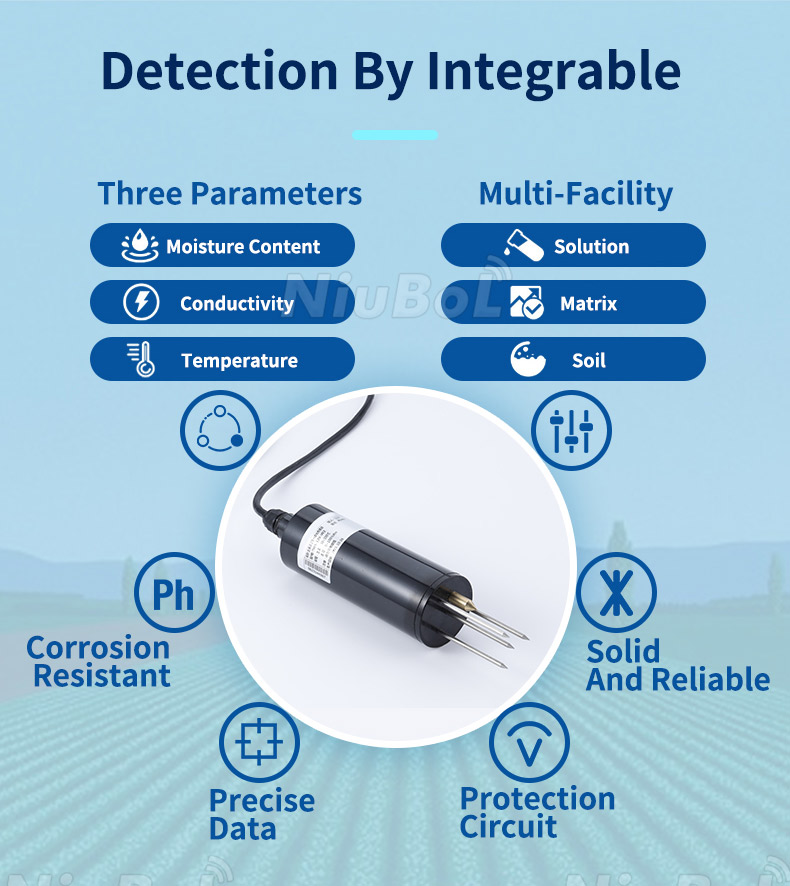
Underground environments are highly corrosive due to fertilizer application, salinization, and microbial activity. NiuBoL uses top-grade 316L stainless steel electrodes. Compared to ordinary stainless steel or copper probes, 316L material does not develop oxide layers or electrolytic corrosion during long-term burial, ensuring no physical drift in readings over a 3–5 year service life.
2. Sealing and Protection Process (IP68)
Underground sensors face continuous hydrostatic pressure and soil compression. We employ a high-density epoxy resin vacuum potting process. This not only achieves absolute IP68 waterproofing but also ensures that the internal core circuitry does not produce condensation under extreme temperature fluctuations, completely eliminating the risk of circuit shorting.
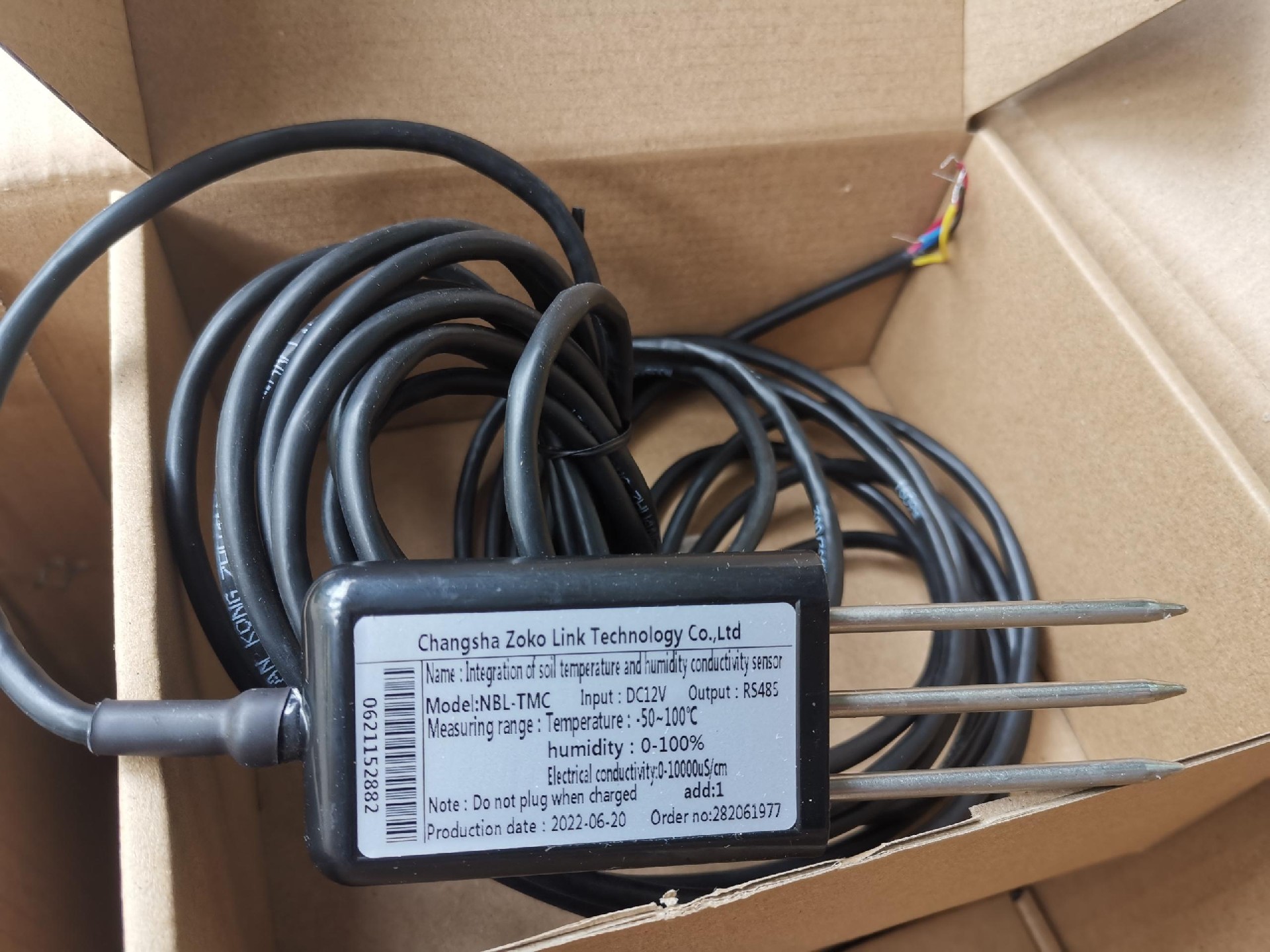
For integrators, interface stability determines project delivery speed.
RS485 soil moisture sensors form the core of industrial automation networks. Their advantages include:
Long-distance transmission: Using differential signaling, reliable transmission distances of up to 1200 meters are achievable with standard shielded twisted-pair cable, significantly reducing wiring complexity in large farms and orchards.
Multi-node cascading: A single RS485 port can support dozens of sensors, greatly saving port resources on PLCs, IoT gateways, or data acquisition devices.
Low-power operation: Static current as low as milliamp level, ideal for solar-powered wireless stations and unattended field monitoring sites.
| Parameter | Industrial Specification | Integration Advantage |
|---|---|---|
| Communication Protocol | Modbus RTU | Standard industrial protocol, fast integration with host computer software |
| Power Supply Voltage | 5V–24V DC (wide voltage) | Compatible with industrial PLC power, batteries, and solar systems |
| Static Power Consumption | < 15mA @ 12V | Extends battery life of wireless field monitoring stations |
| Baud Rate | 2400/4800/9600 (adaptive/selectable) | Flexible matching with various data link rates |
| Output Signal | RS485 digital signal | Strong anti-interference capability, lossless long-distance data transmission |
Sensor hardware is only the first step — proper engineering installation determines the ultimate value of the data.
Layered Monitoring Layout: In large-scale irrigation projects, it is recommended to install sensors at 20 cm (dense root zone), 40 cm (moisture infiltration zone), and 60 cm (water storage layer) to build a complete “soil moisture profile.”
Avoid Edge Effects: Use a hole puncher to pre-set installation positions. Never forcibly hammer the sensor into dry, hard soil, as this can bend the electrodes. Backfill soil should be layered and compacted to ensure tight contact between the Moisture sensor for soil probe and the soil with no air gaps.
Lightning and Surge Protection: In open outdoor areas, RS485 buses should be equipped with dedicated lightning protection modules. While NiuBoL sensors have built-in surge protection to a certain level, it is recommended to add additional shielded grounding at the system level.
B2B buyers should focus on the full lifecycle cost of the project, not just the unit price.
Reduced Maintenance Costs: Low-quality sensors with high failure rates often require frequent on-site technician visits for replacement, where labor costs can be several times the hardware price. NiuBoL's industrial-grade stability minimizes these “hidden costs.”
Calibration Stability: Our sensors exhibit extremely low time drift, reducing the need for frequent on-site recalibration and lowering long-term operational burden.
As a global soil sensor manufacturer, our products have been deeply integrated into:
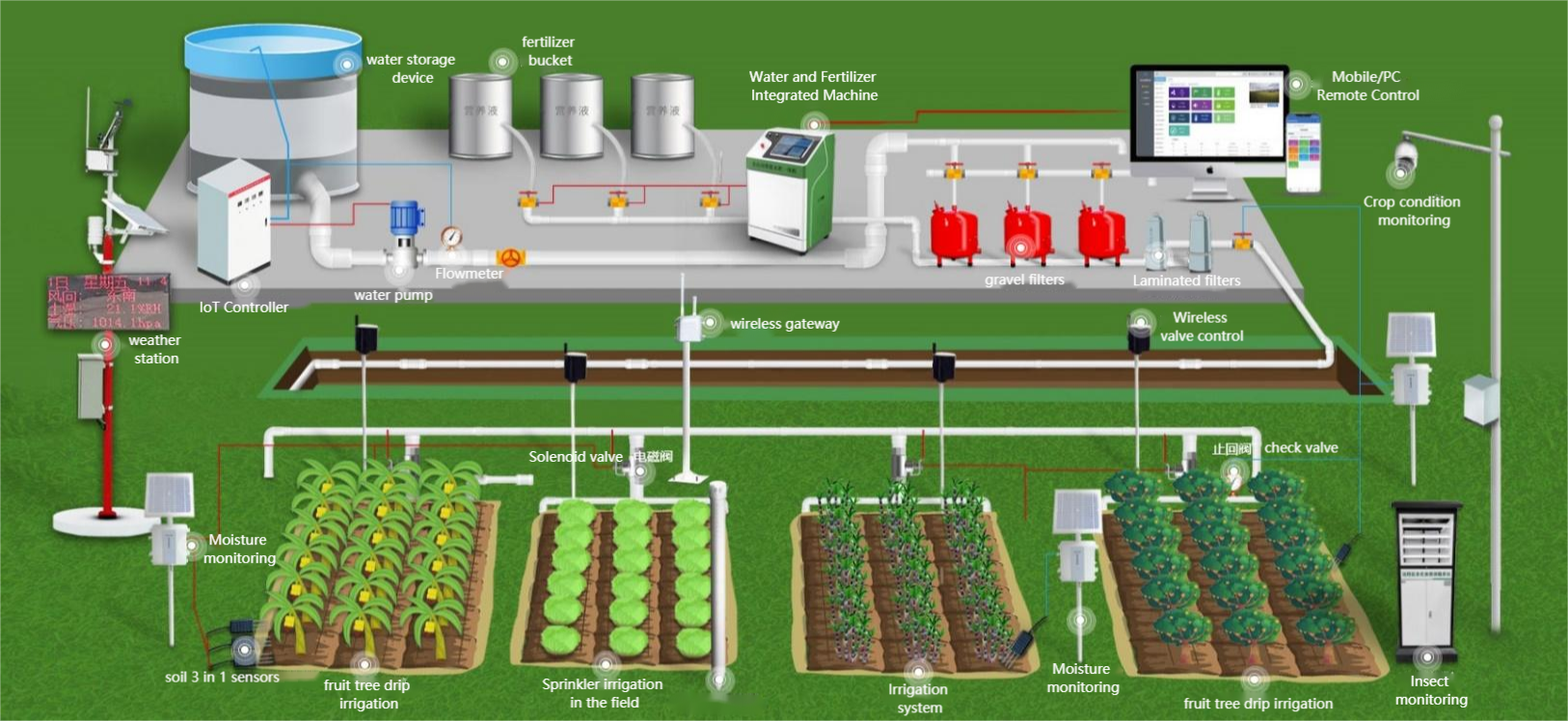
Urban smart greening: Integrated into streetlight poles or intelligent control boxes for automated sprinkler systems.
Landfill monitoring: Leveraging high-corrosion protection to monitor moisture changes in leachate layers.
Geological disaster early warning: Monitoring slope soil moisture content to provide foundational data for debris flow warning systems.
High-value greenhouses: Providing high-sensitivity Soil temperature and humidity sensors for soilless cultivation substrates.
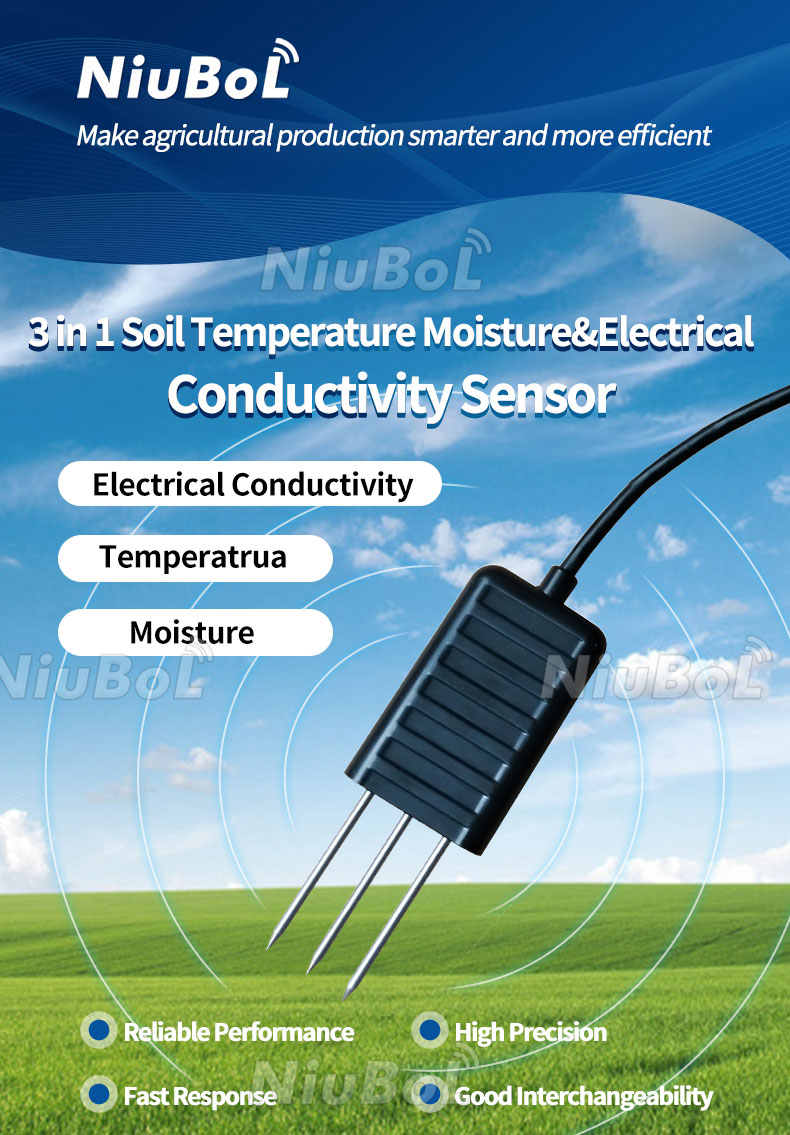
1. How does the NiuBoL sensor handle differences in soil textures (e.g., clay vs. sandy soil)?
We provide standard calibration coefficients. For large-scale projects, we can supply mathematical conversion models specific to soil types. System integrators only need to add compensation parameters in the PLC or backend software to achieve very high absolute measurement accuracy.
2. Does the sensor support OEM customization?
Yes. As an original manufacturer, we support cable length customization, electrode configuration adjustments, and brand LOGO OEM services to help integrators build their own branded product lines.
3. Will sensor readings be affected in extremely high saline-alkali environments?
FDR technology has stronger resistance to saline-alkali interference than traditional resistive sensors. However, in extreme saline-alkali conditions (very high EC values), we recommend joint calibration with our conductivity sensor for the most accurate moisture readings.
4. Will the sensor be damaged if operated in freezing conditions?
No. NiuBoL sensors are designed to operate down to -40°C. The vacuum potting process ensures no internal air pockets, preventing circuit damage from thermal expansion/contraction. Although ice has a different dielectric constant than liquid water (causing lower moisture readings), hardware performance fully recovers after thawing.
5. Does the sensor support wireless transmission?
The sensor outputs standard RS485 signals and can seamlessly connect to LoRaWAN, NB-IoT, or 4G DTU gateways. We can provide complete end-to-end integration recommendations.
6. What is the typical service life of this industrial-grade sensor?
Under normal buried conditions, our sensors are designed for a service life of 3–5 years.
7. Do you offer integrated brackets or supporting equipment for multi-depth installation?
Yes. In addition to single-point sensors, we also provide tubular soil moisture monitoring systems to facilitate rapid collection of deep profile data by system integrators.
8. Is there a soil volume requirement for accurate measurement?
Yes. The effective sensing zone of the sensor is typically within 3–5 cm around the probe. During installation, ensure that the soil structure in this area is intact, with no gravel or large air pockets.
In bidding for large-scale irrigation projects and industrial IoT contracts, hardware reliability is the key to winning contracts and ensuring smooth project acceptance. NiuBoL provides Soil Monitoring Sensors that meet industrial standards, feature IP68 protection, and support RS485 Modbus communication, offering robust technical support to global integrators.
Looking for a high-quality hardware supply partner? Contact NiuBoL for the latest product catalog and bulk purchase quotes. We don’t just provide sensors — we deliver the underlying hardcore technology that empowers your system solutions.
1.NBL-S-THR Soil Temperature Moisture Sensor datasheet
 NBL-S-THR-Soil-temperature-and-moisture-sensors-Instruction-Manual-V4.0.pdf
2. NBL-S-TMC Soil Temperature Moisture EC Sensor datasheet
NBL-S-TMC-Soil-temperature-and-moisture-conductivity-sensor.pdf
3. NBL-S-TM Soil Temperature Moisture Sensor datasheet
NBL-S-TM-Soil-temperature-and-moisture-sensor-Instruction-Manual-4.0.pdf
4. NBL-S-TMCS Soil Temperature, Moisture, Conductivity and Salinity Integrated Sensor
NBL-S-TMCS-Soil-Temperature-Humidity-Conductivity-and-Salinity-Sensor.pdf
Related recommendations
Sensors & Weather Stations Catalog
Agriculture Sensors and Weather Stations Catalog-NiuBoL.pdf
Weather Stations Catalog-NiuBoL.pdf
Agriculture Sensors Catalog-NiuBoL.pdf
Water Quality Sensor Catalog-NiuBoL.pdf
Related products
 Combined air temperature and relative humidity sensor
 TDR Soil Moisture & Temperature Sensor for irrigation| RS485 |4-20mA| NBL-S-THR
 Soil pH sensor RS485 soil Testing instrument soil ph meter for agriculture |NBL-S-PH
 Wind Speed sensor Output Modbus/RS485/Analog/0-5V/4-20mA
 Tipping bucket rain gauge for weather monitoring auto rainfall sensor RS485/Outdoor/stainless steel
 Pyranometer Solar Radiation Sensor 4-20mA/RS485

Screenshot, WhatsApp to identify the QR code
WhatsApp number:+8615367865107
(Click on WhatsApp to copy and add friends)

